



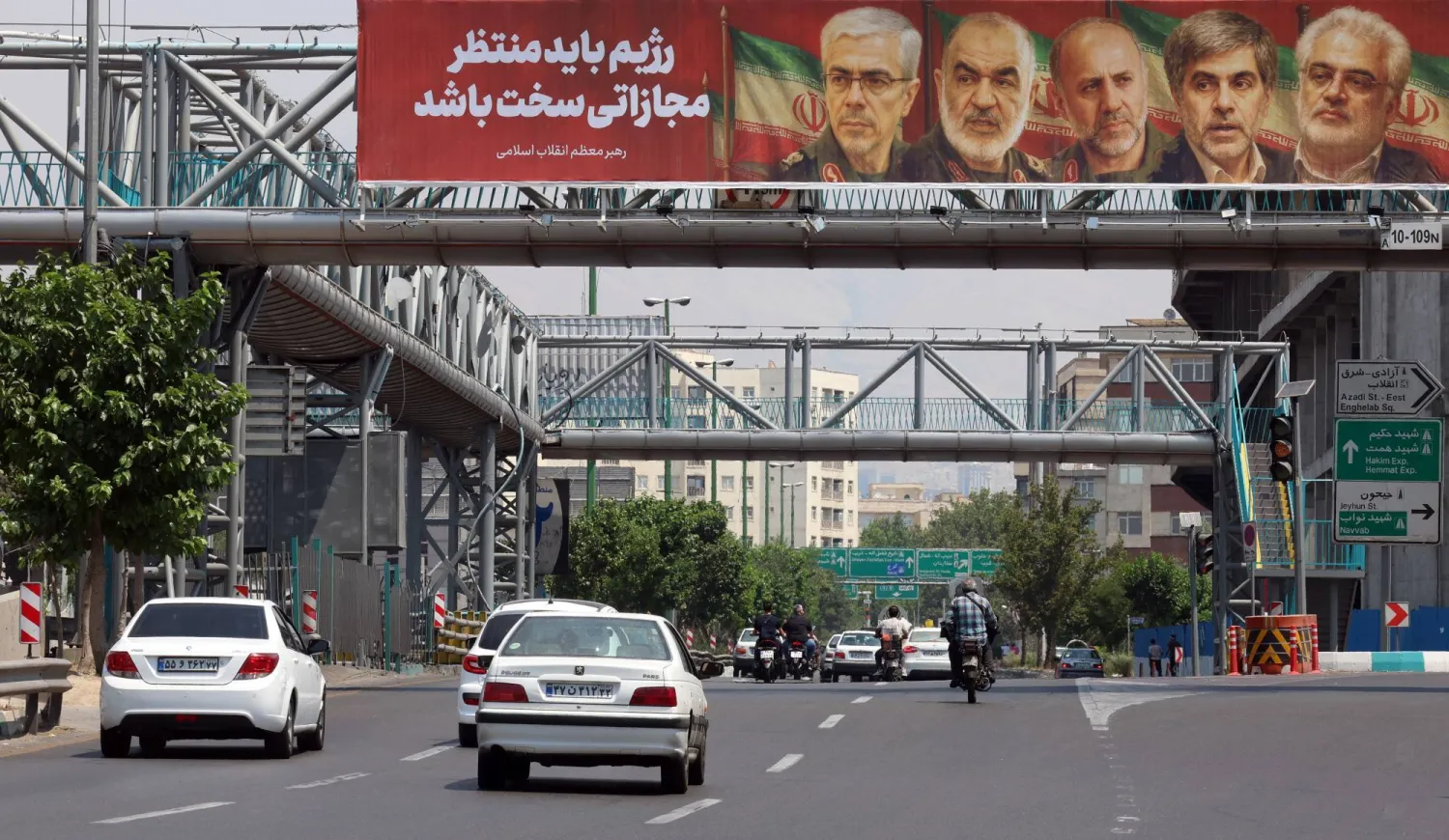

Spokesperson of the Iranian Armed Forces Brigadier General Abolfazl Shekarchi said on Tuesday that his country’s naval, ground, and missile forces are ready to confront any threat or hostile scenario.
Speaking at a meeting at Sharif University, Shekarchi said much of Iran’s military capabilities have not yet been utilized, in a direct threat to Israel amid escalating regional tension that followed the June war.
“Iran’s defense doctrine is based on deterrence,” he said, emphasizing that his country does not initiate wars, but responds decisively to aggression.
“Any offensive action would be intended to punish an aggressor rather than to start a conflict,” Shekarchi said, according to the Daneshjoo News Agency, a semi-official Iranian news outlet primarily managed by the University Students' Basij Organization.
Referring to the June war with Israel, Shekarchi said Iran’s adversaries employed a comprehensive hybrid strategy combining military and non‑military tools but failed to achieve their objectives.
But he added that the Basij forces, as well as the naval and ground forces, remains “fully prepared and unused.”
In an indirect reference to Western reports saying Iran is restoring damaged ballistic missile production capabilities, Shekarchi said Iran has continued to strengthen its power and has never suspended its military activities, even at the height of tensions.
He said Iran’s Fattah missiles were able to penetrate advanced air defense systems and struck targets in Israel with high precision.
“These missiles did not strike blindly or wander off course,” Shekarchi said. “They hit exactly the predetermined targets,” he added, noting that the missile strikes demonstrated accuracy and operational effectiveness.
In his speech, the spokesperson also spoke about the nature of hostility against Iran, which has increasingly shifted toward “soft warfare”, including media campaigns, propaganda and psychological operations aimed at undermining public morale and hope rather than direct military confrontation.
At the local security level, Shekarchi revealed that Iranian authorities dismantled a large espionage network. He said around 2,000 people linked to hostile intelligence services were arrested several months before the start of the war and until its end.
He said the network took years of planning, training and financial investment, with large sums spent on organizing and supporting its members.
“It will take years and lots of money to rebuild such a network,” he said.
His comments come as US and Israeli officials warn that Tehran is ramping up its missile and nuclear production efforts.
On Monday, Israeli Prime Minister Benjamin Netanyahu indicated that Israel is watching Iran and warned of a tough response to any aggression.
“We know that Iran has been doing exercises lately. We are following this, and we are making the necessary preparations. I want to make it clear to Iran here, any action against Israel will be met with a very harsh response,” he warned.


