


Yemeni Government Welcomes Saudi Statement on Hadhramaut, Al-Mahra

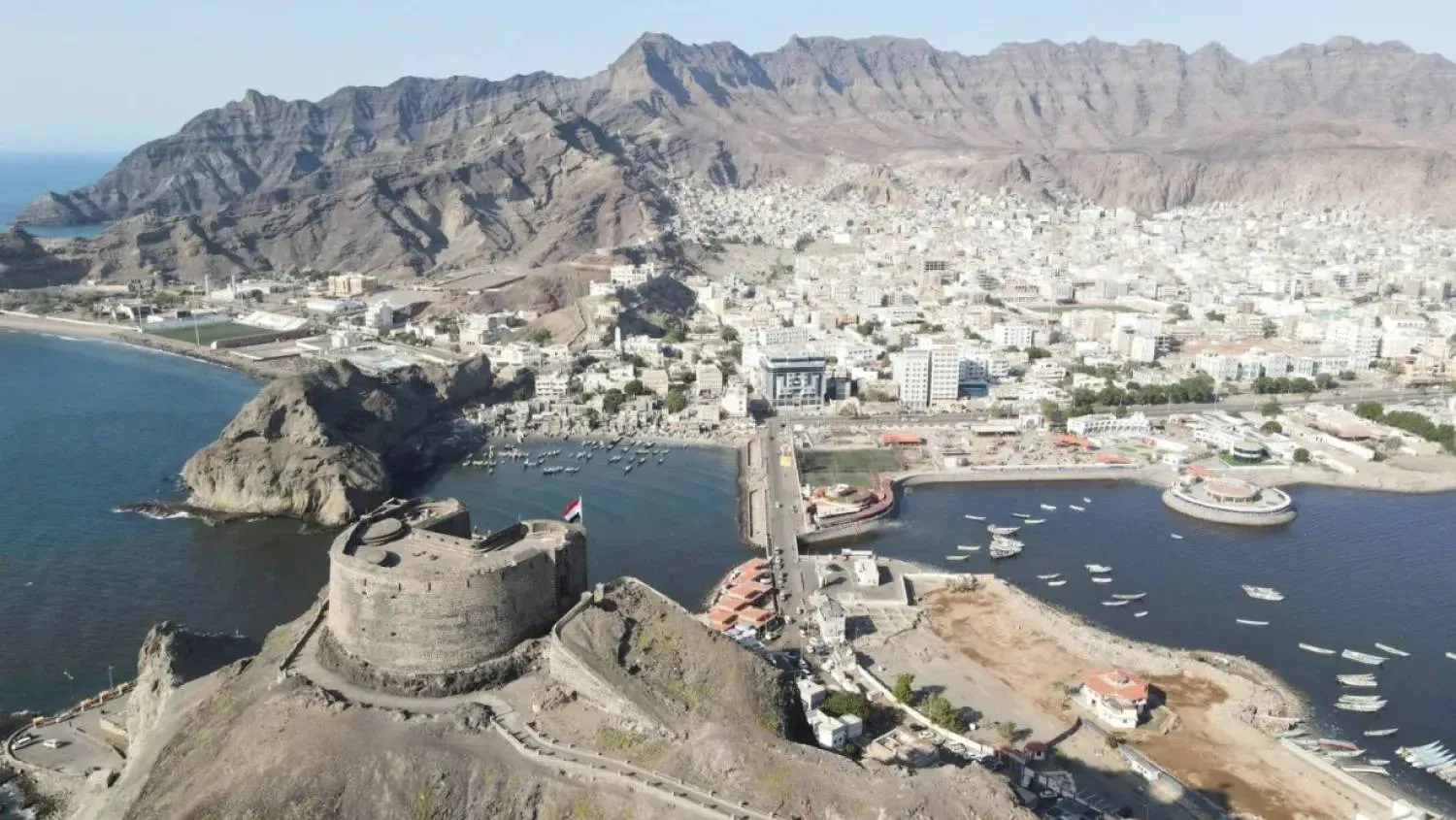
A view of Yemen's interim capital Aden. (Reuters)
TT

Yemeni Government Welcomes Saudi Statement on Hadhramaut, Al-Mahra

A view of Yemen's interim capital Aden. (Reuters)

The Yemeni government welcomed on Thursday the statement by the Saudi Ministry of Foreign Affairs, praising its "clear and responsible stance on recent developments in Hadhramaut and Al-Mahra governorates."

The government acknowledged the Kingdom’s "persistent efforts to contain the escalation, protect the interests of the Yemeni people, and maintain security and stability in the eastern governorates."

In a statement carried by the official news agency SABA, the government commended "the leading role of Saudi Arabia, in coordination with the United Arab Emirates, in supporting the de-escalation process, restoring normalcy, upholding the state’s institutional frameworks, and reinforcing the role of local authorities, all under the supervision of the coalition forces."

The government reiterated "its full support for the Kingdom’s efforts, emphasizing the importance of prioritizing the public interest, exercising restraint, and urgently ending the escalation to restore peace, social security, and national unity."

The stability of Hadhramaut and Al-Mahra and the integrity of their social fabric remain a top national priority, it added.

"Any security or military measures taken outside the state’s constitutional and institutional frameworks, or without coordination with the Presidential Leadership Council, the government, and local authorities, are unacceptable and create unnecessary tension during this sensitive period," it warned.

The government underlined Yemen’s "firm stance on the Southern cause, describing it as a just cause with historical and social dimensions."

It noted that "significant progress has been achieved through national consensus, ensuring justice, partnership, and the preservation of social peace, far from any logic of dominance or escalation."



Saudi FM, Russian Counterpart Discuss Regional Developments

Saudi Minister of Foreign Affairs Prince Faisal bin Farhan bin Abdullah/File Photo
TT

Saudi FM, Russian Counterpart Discuss Regional Developments

Saudi Minister of Foreign Affairs Prince Faisal bin Farhan bin Abdullah/File Photo

Saudi Minister of Foreign Affairs Prince Faisal bin Farhan bin Abdullah held a phone call with Russian Minister of Foreign Affairs Sergei Lavrov, during which they discussed the latest developments in the region, the Saudi Press Agency said on Thursday.

The discussion comes amid heightened tensions in parts of the Middle East, prompting continued diplomatic engagement between major international stakeholders.


Gulf States Pursue IRGC, Hezbollah Cells Amid Ongoing Attacks

 Suspects identified as fugitives abroad (Bahrain’s Interior Ministry) 
Suspects identified as fugitives abroad (Bahrain’s Interior Ministry) 
TT

Gulf States Pursue IRGC, Hezbollah Cells Amid Ongoing Attacks

 Suspects identified as fugitives abroad (Bahrain’s Interior Ministry) 
Suspects identified as fugitives abroad (Bahrain’s Interior Ministry) 

Gulf Cooperation Council states are pursuing hunting down terrorist cells linked to Tehran and Lebanon’s Hezbollah, as they continue to counter Iranian attacks, intercepting more than 6,246 missiles and drones, according to the Gulf Research Center.

Monitoring by Asharq Al-Awsat shows that within 30 days, Gulf security services uncovered nine cells tied to Iran or its allies, particularly Hezbollah, across four countries: Qatar, Bahrain, Kuwait, and the UAE.

The first cell was announced in Qatar on March 3, and the latest on March 30—meaning all nine were dismantled within 27 days, or roughly one Iran-linked cell every three days.

Seventy-four suspects across nine Iranian cells

About 74 individuals were arrested or identified across the nine cells, according to official data. They include nationals of Kuwait, Lebanon, Iran, and Bahrain.

According to official statements and confessions, the suspects were involved in coordinating with operatives abroad in ways that undermine state sovereignty and endanger public safety. Charges include raising funds for attacks, plotting assassinations targeting leaders and public figures, damaging strategic interests, infiltrating national economies, and executing schemes that threaten financial stability.

They also face accusations of espionage, collecting intelligence on military and critical sites, and possessing drones and coordinates of sensitive locations.

“Exporting the revolution”

The activities and charges mirror previously uncovered Iran-linked networks in the Gulf. Gulf security specialist Dhafer Alajmi said Iran has pursued a policy of exporting its 1979 revolution, turning sleeper cells into an existential threat to Gulf states.

Gulf countries began dismantling such networks early in the current conflict. The first announced operation came less than 72 hours after the outbreak of US, Israeli, and Iranian military confrontations, reflecting heightened security vigilance.

In Bahrain, authorities uncovered three cells involving 14 individuals, including 12 detained and two identified as fugitives abroad.

In Kuwait, three cells linked to the banned Hezbollah group involved 45 individuals, some arrested and others identified overseas.

The UAE announced the dismantling of a network linked to Hezbollah and Iran comprising five members.

Qatar, the first to act on March 3, said two cells working for the Revolutionary Guards involved 10 suspects.

A three-dimensional strategy

Alajmi said Tehran relies on a three-dimensional strategy to encircle the region: local terrorist cells, recruitment within Gulf states to carry out bombings and assassinations, and regional armed proxies such as the Houthis and Hezbollah to exert missile and drone pressure.

He also pointed to “nuclear blackmail,” using nuclear facilities as cover for destabilizing activities and as leverage against the international community.

He said Gulf states have demonstrated exceptional efficiency through preemptive operations that foiled dozens of plots and uncovered weapons and explosives linked to the Revolutionary Guard.

He cited strict anti-money laundering and counterterrorism financing laws that have constrained Iran-linked networks financially, alongside defense alliances, enhanced security coordination such as the Peninsula Shield Force, and advanced air defense systems.

He added that public awareness has denied such cells a supportive environment, turning them from pressure tools into losing assets.

“An old, renewed tactic”

Bahraini writer Faisal Al-Sheikh said targeting Bahrain and the wider Gulf through terrorist cells and proxy networks is a long-standing Iranian tactic central to its proxy warfare strategy, aimed at undermining states from within and spreading instability.

He described it as a system built on recruiting agents and exploiting weak loyalties, calling it “organized betrayal.”

Lebanese political analyst Ibrahim Raihan said Tehran uses such cells to destabilize Gulf states and signal that any attack on it would trigger broader regional chaos.

Developments since the start of hostilities show Gulf forces have not only intercepted attacks in the air but are also engaged in a parallel ground campaign to dismantle Iran-linked networks operating within their borders.


Russia Stresses its Support to Saudi Arabia’s Sovereignty, Security

Prince Mohammed bin Salman bin Abdulaziz Al Saud, Crown Prince and Prime Minister, and Russian President Vladimir Putin. (Asharq Al-Awsat)
TT

Russia Stresses its Support to Saudi Arabia’s Sovereignty, Security

Prince Mohammed bin Salman bin Abdulaziz Al Saud, Crown Prince and Prime Minister, and Russian President Vladimir Putin. (Asharq Al-Awsat)

Prince Mohammed bin Salman bin Abdulaziz Al Saud, Crown Prince and Prime Minister, held telephone talks on Thursday with Russian President Vladimir Putin on the rapid developments in the region amid the military escalation.

They tackled the negative repercussions of the escalation and its impact on marine navigation and the global economy.

Putin stressed to Crown Prince Mohammed Russia’s support to Saudi Arabia’s sovereignty and security.

The leaders also exchanged views on several regional and international issues of common interest.