Power Supply across Kurdistan Drops Due to Technical Issue at Iraq's Khor Mor Gas Field

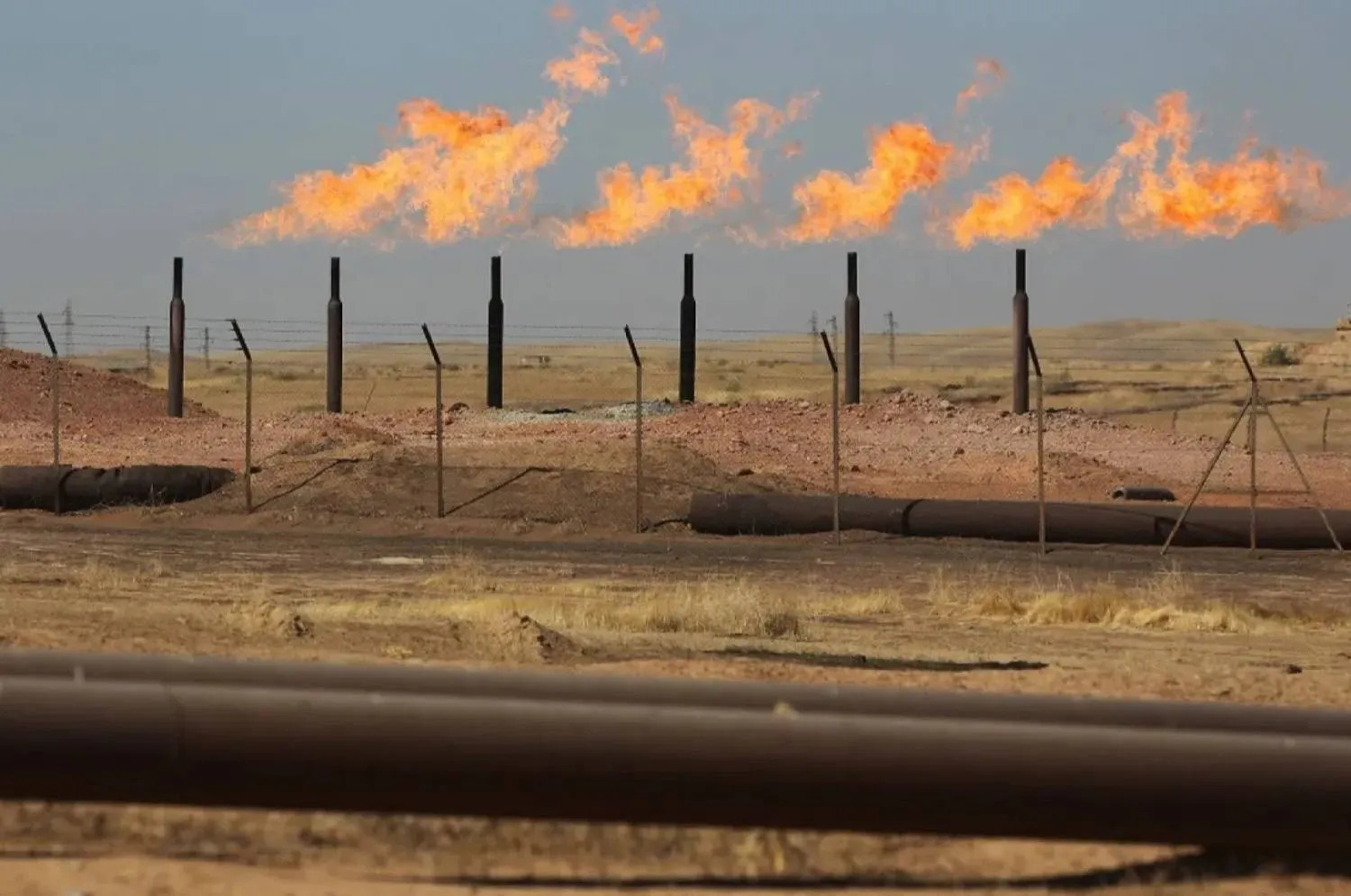
Representation photo: This file photo taken on October 17, 2017 shows excess flammable gasses burning from gas flares at the Bai Hassan oil field, west of the multi-ethnic northern Iraqi city of Kirkuk. (AFP)
TT

Power Supply across Kurdistan Drops Due to Technical Issue at Iraq's Khor Mor Gas Field

Representation photo: This file photo taken on October 17, 2017 shows excess flammable gasses burning from gas flares at the Bai Hassan oil field, west of the multi-ethnic northern Iraqi city of Kirkuk. (AFP)

Electricity supply across Kurdistan dropped by 1,000 megawatts due to a "technical issue” at Khor Mor gas field, one of the largest in the Kurdish region, the Kurdish ministry of electricity said on Thursday.

The Ministry of Natural Resources, together with the UAE's Dana ‌Gas teams, which ‌jointly operate ‌the ⁠field, are making efforts ‌to address the problem and restore stability, the ministry of electricity said.

A source at the field also said the technical glitch is under repair and expected to be resolved ⁠in a few hours, reported Reuters.

The ministry's statement did ‌not elaborate on what ‍the technical issue ‍was, but said the supply ‍of 250 million standard cubic feet of gas has been reduced.

In November, a rocket hit a storage tank at the gas field, leading to a shutdown in production and extensive power cuts. ⁠Operations resumed days later.

The attack was the most significant since a series of drone attacks in July hit oilfields and cut production from the region by around 150,000 barrels per day.

The Kurdistan Regional Government exercises autonomy in northern Iraq, where US companies have significant investments in energy.


Fuel Shortage Forces Gaza Hospital to Suspend Most Services

The sun sets behind a makeshift tent camp for displaced Palestinians set up in an area of al-Bureij camp, in the central Gaza Strip, Wednesday, Dec. 24, 2025. (AP)
TT

Fuel Shortage Forces Gaza Hospital to Suspend Most Services

The sun sets behind a makeshift tent camp for displaced Palestinians set up in an area of al-Bureij camp, in the central Gaza Strip, Wednesday, Dec. 24, 2025. (AP)

A major Gaza hospital has suspended several services because of a critical fuel shortage in the devastated Palestinian territory, which continues to face a severe humanitarian crisis, it said.

Devastated by more than two years of war, the Al-Awda Hospital in the central Gaza district of Nuseirat cares for around 60 in-patients and receives nearly 1,000 people seeking medical treatment each day.

"Most services have been temporarily stopped due to a shortage of the fuel needed for the generators," said Ahmed Mehanna, a senior official involved in managing the hospital.

"Only essential departments remain operational: the emergency unit, maternity ward and pediatrics."

To keep these services running, the hospital has been forced to rent a small generator, he added.

Under normal conditions, Al-Awda Hospital consumes between 1,000 and 1,200 liters of diesel per day. At present, however, it has only 800 liters available.

"We stress that this shutdown is temporary and linked to the availability of fuel," Mehanna said, warning that a prolonged fuel shortage "would pose a direct threat to the hospital's ability to deliver basic services".

He urged local and international organizations to intervene swiftly to ensure a steady supply of fuel.

Despite a fragile truce observed since October 10, the Gaza Strip remains engulfed in a severe humanitarian crisis.

While the ceasefire agreement stipulated the entry of 600 aid trucks per day into Gaza, only 100 to 300 carrying humanitarian assistance can currently enter, according to the United Nations and non-governmental organizations.

The remaining convoys largely transport commercial goods that remain inaccessible to most of Gaza's 2.2 million people.

- Health hard hit -

On a daily basis, the vast majority of Gaza's residents rely on aid from UN agencies and international NGOs for survival.

Gaza's health sector has been among the hardest hit by the war.

During the fighting, the Israeli miliary repeatedly struck hospitals and medical centers across Gaza, accusing Hamas of operating command centers there, an allegation the group denied.

International medical charity Doctors Without Borders now manages roughly one-third of Gaza's 2,300 hospital beds, while all five stabilization centers for children suffering from severe malnutrition are supported by international NGOs.

The war in Gaza was sparked on October 7, 2023, following an unprecedented Hamas attack on Israel that resulted in the deaths of 1,221 people, most of them civilians, according to an AFP tally based on official Israeli figures.

In Israel's ensuing military campaign in Gaza, at least 70,942 people - also mostly civilians - have been killed, according to the health ministry in the Hamas-run territory.


Israel Army Says Striking Hezbollah Targets in Lebanon

FILED - 27 November 2025, Lebanon, Mahmoudieh: Smoke billows after Israeli air raids on Hezbollah positions in the southern Lebanese village of Mahmoudieh. Photo: Stringer/dpa
TT

Israel Army Says Striking Hezbollah Targets in Lebanon

FILED - 27 November 2025, Lebanon, Mahmoudieh: Smoke billows after Israeli air raids on Hezbollah positions in the southern Lebanese village of Mahmoudieh. Photo: Stringer/dpa

The Israeli military announced a series of strikes on Hezbollah targets in Lebanon on Friday, including weapons depots and a training complex. 

"A number of weapons storage facilities and terrorist infrastructure sites were struck, which were used by Hezbollah to advance terror attacks against the state of Israel," a military statement said. 

Lebanon's National News Agency (NNA) reported a "series of airstrikes" by Israeli aircraft on mountainous areas in Nabatiyeh and Jezzine districts in the south, and the Hermel district in the east of the country. 

Despite a November 2024 ceasefire that was supposed to end more than a year of hostilities between Israel and the Iran-backed Hezbollah group, Israel has continued to strike in Lebanon and has maintained troops in five areas it deems strategic. 

More than 340 people have been killed by Israeli fire in Lebanon since the ceasefire, according to an AFP tally of Lebanese health ministry reports. 

The strikes on Friday come a day after similar Israeli attacks near the Syrian border and in southern Lebanon left three people dead. 

The Israeli military had reported on Thursday it had killed a member of arch-foe Iran's elite Quds Force in a strike in Lebanon. 

On Friday, the military said it had struck several military structures of Hezbollah, warning it would "remove any threat posed to the state of Israel". 

Under heavy US pressure and fears of expanded Israeli strikes, Lebanon has committed to disarming Hezbollah, starting in the south of the country near the frontier. 

Lebanon's army plans to complete the disarmament south of the Litani River -- about 30 kilometers (19 miles) from the border with Israel -- by year's end. 

Israel has questioned the Lebanese military's effectiveness and has accused Hezbollah of rearming, while the group itself has rejected calls to surrender its weapons. 


Russia Mediating between Syria, Israel to Reach Security Agreement

Israeli military vehicles return from the buffer zone with Syria, near the Druze village of Majdal Shams in the Golan Heights on Dec. 10, 2024. (AFP via Getty Images)
TT

Russia Mediating between Syria, Israel to Reach Security Agreement

Israeli military vehicles return from the buffer zone with Syria, near the Druze village of Majdal Shams in the Golan Heights on Dec. 10, 2024. (AFP via Getty Images)

Political sources in Tel Aviv revealed that Russia is secretly mediating between Syria and Israel to reach a security agreement between them with the United States' blessing.

Israel's Kan 11 state radio said Azerbaijan was hosting and leading meetings and discussions with Syrian and Israeli officials visiting Baku.

An informed security source said Moscow and Damascus were working on bolstering their relations, reported Kan. Russia last month dispatched soldiers and equipment to Syria's coastal Latakia region.

The sources revealed that Israel prefers that Russia, not Türkiye, consolidate its position in Syria.

Syrian Foreign Minister Asaad al-Shaibani was in Moscow this week where he held talks with President Vladimir Putin on Tuesday and his counterpart Sergei Lavrov on Wednesday.

Shaibani said the visit sought to elevate relations between Syria and Russia to the strategic level.

Putin had on October 15 welcomed Syrian interim President Ahmed al-Sharaa in Moscow with the leaders stressing the importance of bolstering strategic and political ties, as well as cooperation in various fields.

Israel enjoys warm ties with Russia and is trying to reach an understanding with it over dividing interests in Syria, while Tel Aviv has been wary of Ankara's influence.

Putin and Israeli Prime Minister Benjamin Netanyahu have held four long telephone calls since May to discuss several issues, including Syria.

Following one of the phone calls in May, a Syrian Foreign Ministry statement said Putin had stressed during his meetings with Syrian officials Russia's "categorical rejection" of Israeli meddling or attempts to divide Syria.

He underscored Moscow's commitment in supporting Syria's reconstruction and efforts to restore stability.

In Tel Aviv, Israeli media spoke about "joint interests with Moscow in Syria to counter Turkish influence."

The Maariv daily said the Russians enjoy good relations with Türkiye and Israel and are keen on making sure they don't deteriorate.

At the same time, Russia wants to maintain its positions in Syria with Ankara and Tel Aviv's approval and is doing so in coordination with them, as well as with Damascus.

The US has also been trying to strike security understandings between Syria and Israel and has not opposed positive contributions from other parties, including Russia.

Michael Harari, an expert on Syria and the Middle East, said Sharaa was wisely leading Syria, allowing it to be embraced by the region and international community.

Israel, meanwhile, must not appear as though it wants chaos to persist in Syria, he wrote in Maariv.

For it to well manage its interests, it must strike a security deal with Damascus, he urged, explaining that it should translate its military gains in the latest war to political ones.

To do so, it can no longer maintain its current policy towards Syria, he added.