


Israel’s Mossad Tells Iranian Protesters ‘We Are with You'

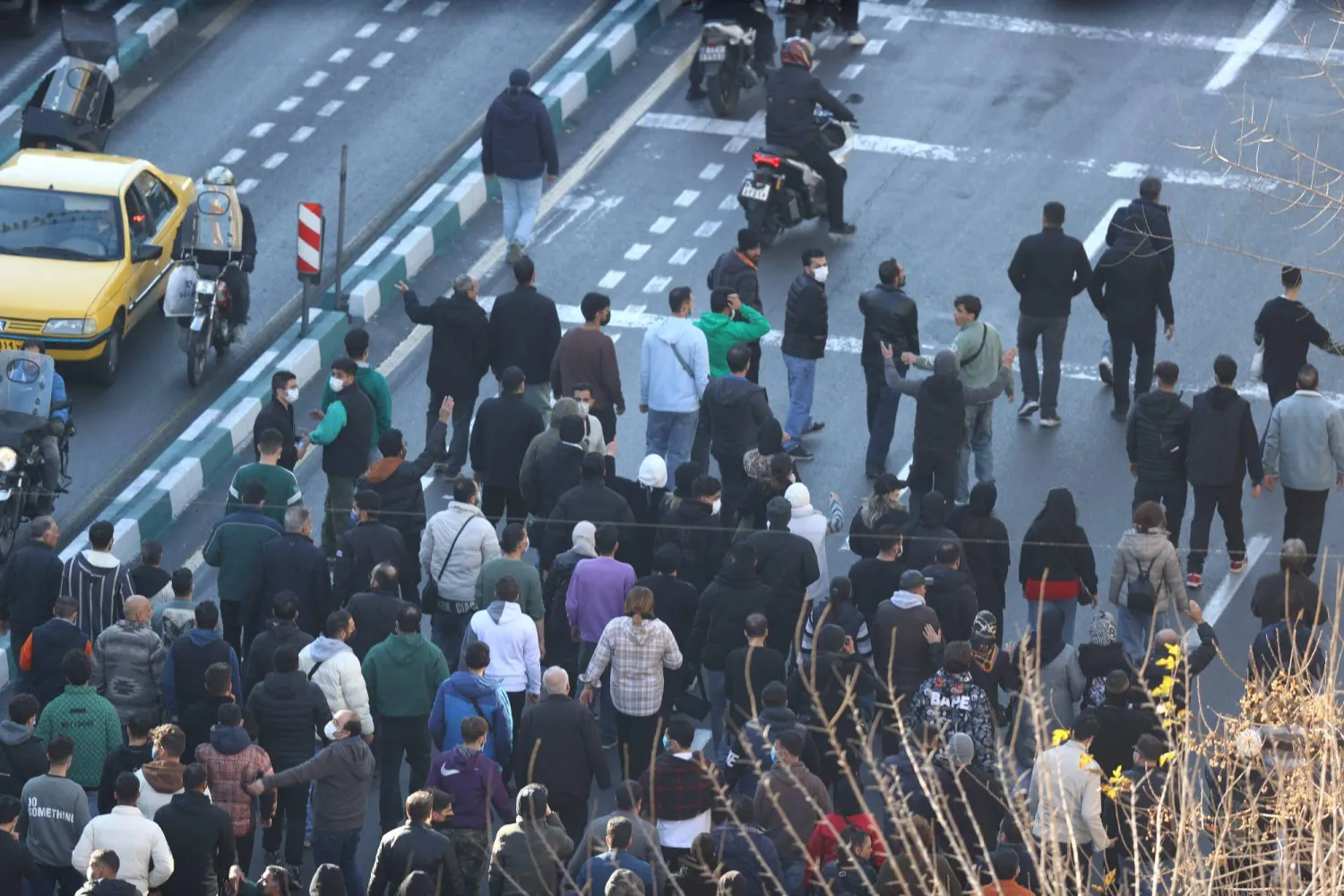
Shopkeepers and traders protest in the street against the economic conditions and Iran's embattled currency in Tehran on December 29, 2025. (Handout / Fars News Agency / AFP)
TT

Israel’s Mossad Tells Iranian Protesters ‘We Are with You'

Shopkeepers and traders protest in the street against the economic conditions and Iran's embattled currency in Tehran on December 29, 2025. (Handout / Fars News Agency / AFP)

Israel's Mossad spy agency issued a direct call urging Iranians to press on with protests, saying it was supporting them "on the ground" as demonstrations spread in capital Tehran and other Iranian cities.

"Go out into the streets together. The time has come. We are with you," Mossad wrote in a post on its Farsi-language X account, Israel's army radio reported on Wednesday.

"Not just from a distance or through words. We are also with you on the ground."

Protests that began on Sunday with Tehran shopkeepers rallying against Iran's worsening economy have spread to other cities, drawing in students as well.

The Iranian rial has dropped against the US dollar and other world currencies, forcing up import prices and hurting retail traders.

The appeal also came after talks this week between Israeli Prime Minister Benjamin Netanyahu and US President Donald Trump, following which Trump warned Iran of fresh strikes if it rebuilt its nuclear or ballistic missile programs.

Arch-foes Iran and Israel fought a 12-day war earlier this year, after Israel launched a wave of strikes on Iranian nuclear facilities as well as residential areas, saying it aimed to cripple the country's atomic research and ballistic missile capabilities.

Iran responded with drone and missile attacks on Israel. Later in the conflict, the United States joined Israel in briefly targeting Iranian nuclear sites before a ceasefire was declared.

Iran, which does not recognize Israel, has long accused it of conducting sabotage operations against its nuclear facilities and assassinating its scientists.

It also backs militant groups around the region as part of its so-called "Axis of Resistance", including Lebanon's Hezbollah and the Palestinian movement Hamas, both of which Israel has fought major wars with Israel in the past two years.

Former Hamas leader Ismail Haniyeh was assassinated in Tehran in July 2024 in an attack attributed to Israel.



EU Moves to Sanction Iran over Hormuz Blockade

Traffic through Hormuz, a vital global shipping conduit, has come under Iranian control since the outbreak of war with Israel and the United States on February 28. (Photo by AFP) /
TT

EU Moves to Sanction Iran over Hormuz Blockade

Traffic through Hormuz, a vital global shipping conduit, has come under Iranian control since the outbreak of war with Israel and the United States on February 28. (Photo by AFP) /

European Union nations moved Friday towards imposing sanctions on Iranian officials and others responsible for blocking the Strait of Hormuz, the EU said.

Tehran effectively closed the key shipping lane for global gas and oil in retaliation to US-Israeli strikes launched in February.

Deeming the blockade "contrary to international law", EU governments took a technical step to extend the scope of its existing Iran sanctions regime allowing for more individuals to be targeted under it.

"The EU will now be able to introduce further restrictive measures in response to Iran's actions undermining the freedom of navigation in the Strait of Hormuz," the European Council representing EU nations said.

Brussels' punitive measures on Iran previously targeted the country's military support for Russia in its war against Ukraine and for armed groups across the Middle East.

The European Union has also imposed sanctions over human rights violations in the country.

The EU did not immediately name any individual or entities that would be targeted by the new sanctions, consisting of travel bans and asset freezes.

EU citizens and companies will also be banned from making funds, financial assets or other economic resources available to those listed.

The Iran war and the closure of Hormuz, which normally carries a fifth of global oil production, have sent ripples across the global economy, sending energy prices soaring.


Rubio Cites Some Progress on Iran Talks but 'We're Not There Yet'

United States Secretary of State Marco Rubio during a signing ceremony on the sidelines of a meeting of NATO foreign ministers in Helsingborg, Sweden, Friday, May 22, 2026. Julia Demaree Nikhinson/Pool via REUTERS
TT

Rubio Cites Some Progress on Iran Talks but 'We're Not There Yet'

United States Secretary of State Marco Rubio during a signing ceremony on the sidelines of a meeting of NATO foreign ministers in Helsingborg, Sweden, Friday, May 22, 2026. Julia Demaree Nikhinson/Pool via REUTERS

The United States has seen some progress in talks with Iran and is in constant communication with the Pakistani mediators, but there is more work to be done, Secretary of State Marco Rubio said on Friday.

"There's been some progress. I wouldn't exaggerate it. I wouldn't diminish it," Rubio told reporters after a NATO ministers meeting in Sweden.

"There's more work to be done," he added. "We're not there yet. I hope we get there."

President Donald Trump would prefer to do a good deal, Rubio said. The core concern remains that Iran cannot have a nuclear weapon and the issue of future uranium enrichment needs to be discussed as well as reopening the Strait of Hormuz, he said.

"We're dealing with a very difficult group of people, and if it doesn't change, then the president's been clear he has other options," Rubio said.

"He prefers the negotiated option and having a good deal, but he himself has expressed concern that maybe that's not possible. But we're going to keep trying."

Rubio said the United States was in constant communication with the Pakistanis who are facilitating the talks with Iran.

There was no specific ask from the US on Friday for help from NATO on the Strait of Hormuz but there needs to be a Plan B if Iran refuses to reopen the supply route, Rubio said after the close of the NATO meeting.


Netherlands to Ban Imports from Israel's Jewish Settlements

The Neve Yaakov settlement north of East Jerusalem, with the Israeli wall visible separating the Palestinian neighborhood of al-Ram in the West Bank (AFP). 
TT

Netherlands to Ban Imports from Israel's Jewish Settlements

The Neve Yaakov settlement north of East Jerusalem, with the Israeli wall visible separating the Palestinian neighborhood of al-Ram in the West Bank (AFP). 

The Dutch government has agreed to impose a ban on imports of goods produced in Jewish settlements in Israeli-occupied Palestinian territories, Dutch Prime Minister Rob Jetten said on Friday.

The ban is meant to prevent "any contribution through economic activities by the Netherlands to the unlawful occupation", Jetten said.

The previous Dutch government last year said it was planning the ban, which is now expected to take effect in the second half of the year.

The Netherlands is a leading global buyer of Israeli goods, but the government has never disclosed what volume of goods are currently imported from Jewish settlements.

Most world powers deem Israel's settlements, on land it captured in a 1967 war, illegal. Numerous UN Security Council resolutions have called on Israel to halt all settlement activity.

Israel disputes this, saying it has historical and biblical ties to the land.