A Timeline of How the Protests in Iran Unfolded and Grew
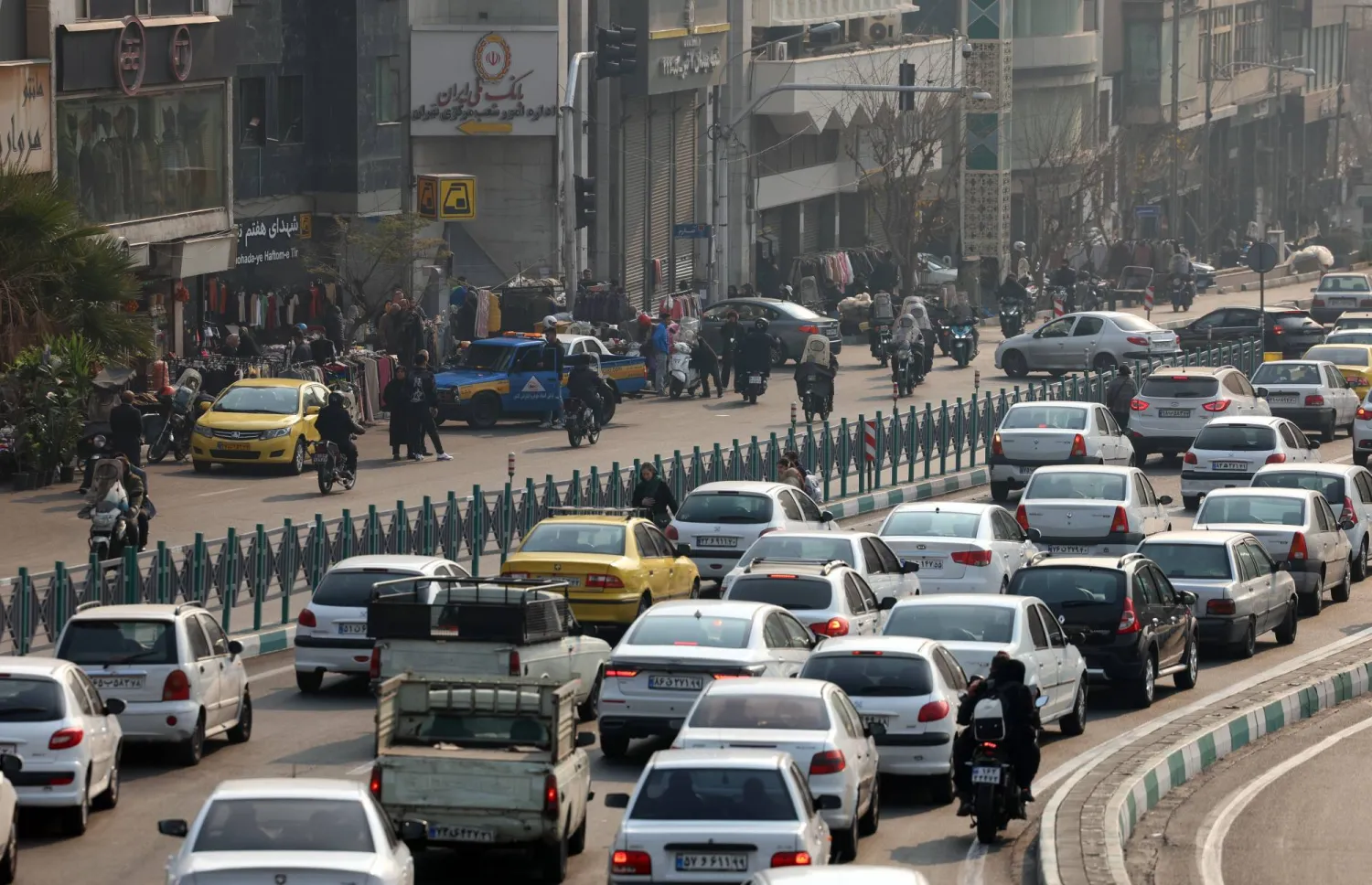
A general view from a street in Tehran, Iran, 08 January 2026. (EPA)
TT
TT
A Timeline of How the Protests in Iran Unfolded and Grew
A general view from a street in Tehran, Iran, 08 January 2026. (EPA)
Demonstrations broke out in Iran on Dec. 28 and have spread nationwide as protesters vent their increasing discontent over the country's faltering economy and the collapse of its currency.
Dozens of people have been killed and thousands arrested as the daily protests have grown and the government seeks to contain them.
While the initial focus had been on issues like spikes in the prices of food staples and the country's staggering annual inflation rate, protesters have now begun chanting anti-government statements as well.
Here is how the protests developed:
Dec. 28: Protests break out in two major markets in downtown Tehran, after the Iranian rial plunged to 1.42 million to the US dollar, a new record low, compounding inflationary pressure and pushing up the prices of food and other daily necessities. The government had raised prices for nationally subsidized gasoline in early December, increasing discontent.
Dec. 29: Central Bank head Mohammad Reza Farzin resigns as the protests in Tehran spread to other cities. Police fire tear gas to disperse protesters in the capital.
Dec. 30: As protests spread to include more cities, as well as several university campuses, Iranian President Masoud Pezeshkian meets with a group of business leaders to listen to their demands and pledges his administration will “not spare any effort for solving problems” with the economy.
Dec. 31: Iran appoints Abdolnasser Hemmati as the country's new central bank governor. Officials in southern Iran say that protests in the city of Fasa turned violent after crowds broke into the governor's office and injured police officers.
Jan. 1: The protests' first fatalities are officially reported, with authorities saying at least seven people have been killed. The most intense violence appears to be in Azna, a city in Iran’s Lorestan province, where videos posted online purport to show objects in the street ablaze and gunfire echoing as people shouted: “Shameless! Shameless!”
The semiofficial Fars news agency reports three people were killed. Other protesters are reported killed in Bakhtiari and Isfahan provinces while a 21-year-old volunteer in the paramilitary Revolutionary Guard’s Basij force was killed in Lorestan.
Jan. 2: US President Donald Trump raises the stakes, writing on his Truth Social platform that if Iran “violently kills peaceful protesters,” the United States “will come to their rescue.” The warning, only months after American forces bombed Iranian nuclear sites, includes the assertion, without elaboration, that: “We are locked and loaded and ready to go.”
Protests, meantime, expand to reach more than 100 locations in 22 of Iran's 31 provinces, according to the US-based Human Rights Activists News Agency.
Jan. 3: Iran's Supreme Leader Ali Khamenei says “rioters must be put in their place,” in what is seen as a green light for security forces to begin more aggressively putting down the demonstrations. Protests expand to more than 170 locations in 25 provinces, with at least 15 people killed and 580 arrested, HRANA reports.
Jan. 6: Protesters conduct a sit-in at Tehran's Grand Bazaar until security forces disperse them using tear gas. The death toll rises to 36, including two members of Iranian security forces, according to HRANA. Demonstrations have reached over 280 locations in 27 of Iran’s 31 provinces.
Jan. 8 to 9: Following a call from Iran's exiled crown prince, a mass of people shout from their windows and take to the streets in an overnight protest. The government responds by blocking the internet and international telephone calls, in a bid to cut off the country of 85 million from outside influence. HRANA says violence around the demonstrations has killed at least 42 people while more than 2,270 others have been detained.
Voluntary Return or Pushed Out Against their Will? Migrants in Tunisia Go Homehttps://english.aawsat.com/features/5320317-voluntary-return-or-pushed-out-against-their-will-migrants-tunisia-go-home
Voluntary Return or Pushed Out Against their Will? Migrants in Tunisia Go Home
African migrants during a protest demanding to be repatriated because of the harsh conditions they are living under in Tunisia (AFP)
Less than a year after arriving in Tunisia, Michael Oppona had not planned to return to Ghana.
But, faced with increasingly harsh pressure from local authorities, he is among thousands of sub-Saharan migrants seeking to head home.
Many, like Oppona, have registered for a free return to their countries of origin.
But humanitarians say many migrants and refugees are being pushed out against their will.
Oppona, 37, had crossed the Sahara with his wife and two toddlers before arriving in Tunis but Europe proved out of reach after a 2023 deal with Tunis to curb migrant departures.
"The people here, the government... they treat us like we're not human," said Oppona, waiting for a "voluntary return" appointment near the International Organization for Migration headquarters in Tunis.
Many sub-Saharan migrants in Tunisia face increasingly harsh conditions following a speech by President Kais Saied in 2023 in which he said "hordes of illegal migrants" were posing a demographic threat.
The IOM told AFP it had helped 4,965 migrants return to their countries of origin from January 1 to August 31.
The IOM's program is separate from a namesake program run by the Tunisian government, and operates a major "return hub" near the city of Sfax.
Authorities did not respond to several requests by AFP for interviews and a visit the center.
In June, a Tunisian National Guard official told AFP that nearly 5,000 migrants had been sent to their home countries in the preceding 12 months and that "near-daily" return flights were now scheduled.
But humanitarian sources say these returns should not be considered "voluntary", arguing that socio-economic and political pressures including racism were deliberately forcing migrants to leave Tunisia.
"These are clearly expulsions," one source said.
Humanitarian sources also said migrants were at times coerced to leave even when it was unsafe for them in their home country.
"Authorities say that migrants stay at the so-called 'return hubs' for about two weeks, whereas we know that that process can take months, especially with people without documentation," one said.
The sources also said the conditions in which migrants were held were unclear, adding that some might have been sent to the wrong country.
"We've seen that more people have been arriving in Libya lately," one said.
UN experts in July said they were alarmed by an "alleged system of mass detention, expulsion and trafficking" at the Tunisia-Libya border.
Neither Tunisian nor Libyan authorities have commented on the allegations.
The humanitarian sources to whom AFP spoke also raised concerns over the lack of official information regarding the government's return program.
"We don't know how the authorities have been repatriating people who hold no documents, for example," one source said.
More than 40 global NGOs have said that refugees and migrants in Tunisia faced harsh mistreatment, including rape, according to testimonies they gathered.
In a joint statement in July, the NGOs -- including Human Rights Watch and Amnesty International -- said "refugees, asylum seekers and migrants have faced racist violence" in Tunisia, added to "arbitrary detention, collective expulsions, abuse, torture and other ill-treatment".
Their statement marked the three-year anniversary of a controversial deal the European Union signed with Tunisia to provide Tunis with financing, equipment and training to stop irregular departures.
The groups said the deal came at "a significant cost to human rights and dignity" and called the EU "complicit".
Campaigners say Tunisia's crackdown on organizations that supported migrants, compounded by the suspension of the UN refugee agency's operations in 2024, have barred thousands from receiving help.
Using pseudonyms, 24-year-old Moussa and 22-year-old Karim from Guinea also waited for an IOM "voluntary return" appointment in Tunis.
The two friends said they came to Tunis three years ago with one aim: to cross to Europe.
"But it's impossible to go now, and impossible to stay," said Karim.
Moussa said there was "more pressure now", his voice shaking.
"You're not free. The police prevent you from going anywhere -- to work or get something to eat," he said.
"So why not go back home?"
Can Sudan's Health Sector Rise from the Rubble?https://english.aawsat.com/features/5319449-can-sudans-health-sector-rise-rubble
Entrance to the Trauma and Emergency Complex at Omdurman Hospital (Asharq Al-Awsat)
Between hospitals that have reopened after being destroyed and looted, and facilities still struggling with shortages of electricity, equipment, medicines, and staff, two contrasting pictures of Sudan's health system are emerging after more than three years of devastating war.
In Khartoum, major referral hospitals have begun gradually resuming operations as residents return and fighting recedes from large parts of the capital. Elsewhere, however, the picture is much bleaker in Darfur, Kordofan, and other areas, where ongoing fighting, funding shortages, and difficulties accessing facilities continue to deny large segments of the population access to healthcare.
Data from the World Health Organization indicates that around 37 percent of health facilities in Sudan are not functioning, while around 21 million people need medical services, amid shortages of medicines and rising costs of accessing treatment.
At the same time, the organization is monitoring improvements in some states as early recovery efforts and the rehabilitation of facilities begin. This contradiction makes the question more complex: "Has Sudan's health system actually begun to recover, or is what is happening merely a partial restoration of services in areas where the war has receded?"
Hospitals Recovering
At Omdurman Teaching Hospital, one of the capital's largest referral hospitals, signs of a return to activity are evident. Its Director General, Abdel Moneim Ali Al-Qasim, told Asharq Al-Awsat that the hospital suffered extensive wartime destruction affecting its infrastructure, equipment, electrical networks, cables, and generators. In 2024, rehabilitation began on the emergency department to allow it to receive patients, while other parts of the hospital remained destroyed.
With support from the King Salman Humanitarian Aid and Relief Centre and its national partner, Kafaat Organization, the hospital received a 730-kilovolt-ampere generator in July 2025, along with intensive care, emergency, and laboratory equipment. Al-Qasim said the support was worth around $1 million.
According to Al-Qasim, the stabilization of the electricity supply had a direct impact on services. The waiting time for laboratory test results fell from four to six hours to around one hour and 15 minutes. Around 500 surgical procedures were performed during the first month of the support, before the number rose to between 1,000 and 1,500 procedures per month, averaging between 40 and 50 procedures a day.
The hospital currently receives around 600 patients a day. Eleven of its 15 intensive care beds are now operational, while the remaining four are being prepared for service.
The hospital also received an integrated oxygen production unit and opened a prosthetics center with a production capacity of up to 50 prosthetic limbs per month during a single shift. That capacity can be doubled by operating two shifts.
But the return of activity does not mean the problems are over. According to its director, the hospital still suffers from a shortage of wards and a need for fuel, in addition to unstable electricity. The return of residents is also increasing pressure on facilities that have resumed operations.
Buildings Have Returned... But Shortages Remain
The same picture is repeated at Bahri Teaching Hospital, which was rebuilt and reopened after suffering extensive destruction during the war. Its Director General, Ahmed Al-Bashir, told Asharq Al-Awsat that the hospital, with a capacity of 640 beds and 20 operating rooms, still needs intensive care equipment to increase its capacity to handle cases around the clock, as well as a backup power source.
The hospital also needs to complete its sewage system and connect it to the public network, or provide tankers to dispose of wastewater. Meanwhile, the administration is seeking to convert the emergency complex into a continuing vocational training center to make up for some of the staff the hospital lost during the war.
These details reveal one of the major challenges of rebuilding the health system: repairing a building and reopening its doors does not necessarily mean restoring its full capacity to provide services.
A Bleaker Picture Outside Major Hospitals
A short distance from the major referral hospitals that have begun to resume operations, the picture can be very different, even within Khartoum State itself. In Fattasha, west of Omdurman, Eman waited for three days while her son suffered from a high fever and worsening cough because the nearest health facility could not provide the services he needed.
Eman said in testimony published by the United Nations Children's Fund, UNICEF, in December 2025 that the area's only health center had just one health worker and offered no vaccination, nutrition, medicines, pharmacy, or laboratory services. The mother had no choice but to wait for a UNICEF-supported mobile clinic that visits the area twice a month. Despite the time that has passed since that testimony, the same hardship continues, revealing the wide gap between the return of major hospitals in the heart of the capital and those on the outskirts of the state.
The gap becomes even clearer outside Khartoum. At Al-Thawra Health Center in New Halfa locality, Kassala State, Noor, who is pregnant with her eighth child, says she previously had to buy the iron supplements prescribed by doctors during pregnancy. At times, however, she stopped taking them because she could not afford them.
In testimony published by UNICEF in July 2025, Noor said that the free provision of medicines had become a major relief for the family after the cost of treatment had prevented her from obtaining the medication.
At the same center, Aisha, a mother who received medicines for her children, said that receiving treatment for free represented significant assistance given the economic circumstances facing families.
In White Nile State, families face another problem: distance. In January 2026, UNICEF documented the journey of Zahra and her nine-month-old daughter, Amina, to obtain vaccinations.
Zahra takes around two hours to reach the nearest health facility from her home. Previously, she had been forced to travel to the city of Al-Jabalain in search of the service.
In the same area, another mother named Amina arrived with her two-year-old daughter, Aisha, after the child developed severe diarrhea and vomiting and became so weak that she could no longer walk. After being admitted to a stabilization center and receiving treatment and therapeutic milk, the girl began to regain her strength.
El Fasher... Giving Birth Under a Tree
The hardship reaches its most severe levels in areas affected by war and displacement. Amani, a displaced mother from North Darfur, recounted how she was forced to move with her family to escape fighting in El Fasher while she was in the final months of pregnancy.
In testimony published by UNICEF in August 2025, she said the family went days without food or water or anyone to help them. During their displacement journey between Sharika and Tawila, she went into labor, with no hospital or health workers nearby.
Amani gave birth to her daughter by the roadside, under a tree and on a small mat, with the help of her mother and some local residents. She said that during the delivery she did not know whether she would live or die, or what would happen to her children if she died.
After giving birth, she was too weak to carry her newborn or continue the journey. She was forced to stop for about a week before she was able to reach Tawila with her family.
Her experience represents the exact opposite of the picture presented by hospitals resuming activity in Khartoum. In areas affected by war, the issue is not simply the quality of services or the availability of equipment, but whether a health facility exists at all.
Disagreement Over the Definition of "Collapse"
These disparities lie at the heart of the disagreement over how to characterize the condition of the sector. Médecins Sans Frontières has warned that cuts to aid funding are pushing more health facilities to close and depriving millions of Sudanese of essential care.
The organization says the Sudan Humanitarian Response Plan, which amounts to $2.87 billion, had received only around 41 percent of the required funding as of August 11.
Sudanese Health Minister Haitham Mohamed Ibrahim, however, believes the Médecins Sans Frontières report focuses largely on the organization's activities and working conditions. He told Asharq Al-Awsat that it "does not by itself reflect the reality of the health sector in the country."
Omdurman Hospital Director Abdel Moneim Al-Qasim likewise rejects describing the system as "on the verge of collapse." He says the sector is indeed suffering from a major shortage of resources, but has begun to recover gradually as a result of efforts by the state and national, regional, and international organizations.
Bahri Hospital Director Ahmed Al-Bashir agrees that "the description of collapse is inaccurate," while acknowledging at the same time the need to expand support for referral hospitals and provide specialized equipment and medical specialties.
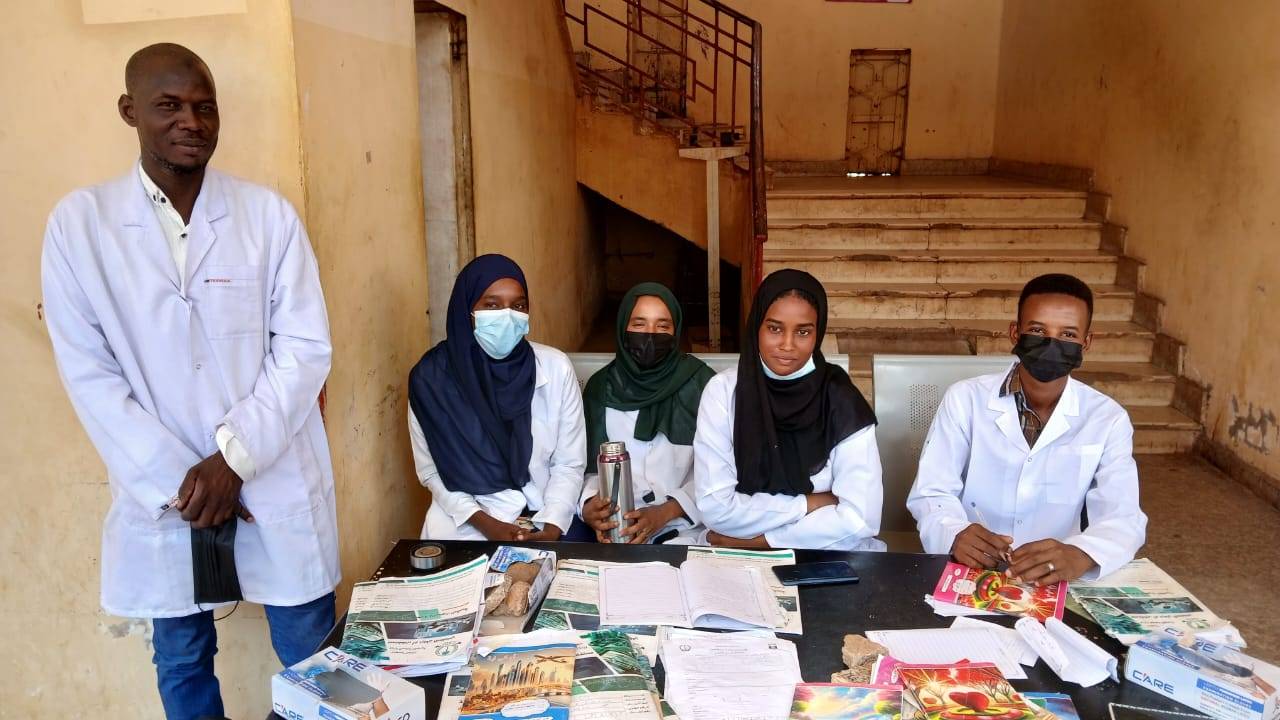
Health workers inside Omdurman Teaching Hospital (Asharq Al-Awsat)
Cancer Patient Searches for Medicine
For patients, recovery is not measured solely by the number of hospitals that have reopened, but by whether they can find the treatment they need when they reach them. In July 2026, Naela Hamad, who has cervical cancer, was receiving chemotherapy at Khartoum Oncology Hospital, known as "Al-Dhura," while her daughter, Ithar Al-Sir, was searching outside the hospital for a medicine needed alongside the treatment that was not available there.
Ithar said in testimony documented by Reuters that the family found the medicine outside the hospital for around 180,000 Sudanese pounds, or about $45 at the time, at the prevailing market price. Her mother needs it with each chemotherapy dose every 21 days.
The costs do not end with the medicine. She said she also pays 40,000 pounds for the bed where her mother receives her dose, asking how the family can afford these expenses when there is no work or income.
Naela says the family had previously struggled to afford food and is now struggling to obtain both food and medicine, while her home was destroyed and she was forced to stay with neighbors.
Reuters quoted Mona Abdel Rahman, head of pharmacy at Khartoum Oncology Hospital, as saying that some patients' doses had been delayed by two weeks or more after the free provision of some medicines stopped because they could not afford to buy them themselves.
The economic crisis is also affecting diagnostic services. Medical laboratory specialist Al-Tayeb Youssef told Asharq Al-Awsat that the rise in the price of the dollar has directly affected the sector, given laboratories' reliance on imported reagents and supplies purchased in foreign currency.
He added that many laboratory owners who returned to Khartoum had been forced to start "from scratch" after losing their premises and equipment and having to face the costs of maintenance, rent, and purchasing equipment again.
The high costs have prompted some laboratory owners to purchase equipment through partnerships and pool it at a single location rather than having each laboratory maintain its own equipment. This is viewed as a temporary solution that helps keep services running.
Expensive Medicine and Factories on the Road to Recovery
The situation in the pharmaceutical market is not very different. Pharmacist Mahmoud Al-Naeem told Asharq Al-Awsat that rising prices and complaints from citizens have worsened since the war, as a result of the destruction of several local pharmaceutical factories, disruptions to external supply chains, and the reliance on imports requiring foreign currency.
He noted that the National Medicines and Poisons Board has begun encouraging the registration of new pharmaceutical products and companies, considering that increased competition could help lower prices.
Some factories in Khartoum have begun returning to production, although they are operating below full capacity. This opens the door to gradual relief if local production and supply chains stabilize.
Epidemics... A Risk That Has Not Gone Away
Alongside destruction, funding shortages, and the high cost of treatment, the health system faces the threat of epidemic diseases. The director of Omdurman Hospital says rates of watery diarrhea, malaria, and dengue fever among the cases treated at the hospital have declined, with epidemic-control campaigns continuing and an isolation center established to handle cases of cholera, dengue fever, and other diseases.
The director of Bahri Hospital says malaria, as an endemic disease in Sudan, cannot be tackled by hospitals alone. It requires coordination among the federal health system, states, localities, and communities, from awareness, prevention, and vector control to diagnosis and treatment.
These risks remain more severe in areas affected by displacement and fighting, where disease and malnutrition coincide with weak water and sanitation services and difficulties accessing health facilities.
Thus, the current picture may not show a sector that has completely collapsed, but neither does it show a health system that has overcome the effects of the war. In Khartoum, hospitals have returned to service, surgeries and intensive care and laboratory services have resumed, and rehabilitation and oxygen production projects have begun. In Kassala and White Nile, there are examples of facilities that have regained their ability to provide free services or services closer to local populations.
But Eman is still waiting for the mobile clinic to treat her son, Zahra still travels two hours to reach a health center, Amani gave birth to her daughter under a tree while fleeing the war, and Naela reached one of the capital's largest cancer treatment centers only to find that the medicine she needed was unavailable.
A Look at How Tariffs Have Shaped India-US Ties under Trumphttps://english.aawsat.com/features/5319376-look-how-tariffs-have-shaped-india-us-ties-under-trump
(FILES) This aerial view shows shipping containers stacked at the Port of Baltimore on April 10, 2025, in Baltimore, Maryland. (Photo by Jim WATSON / AFP)
A Look at How Tariffs Have Shaped India-US Ties under Trump
(FILES) This aerial view shows shipping containers stacked at the Port of Baltimore on April 10, 2025, in Baltimore, Maryland. (Photo by Jim WATSON / AFP)
A sweeping US sanctions and tariff bill has emerged as the latest flashpoint between New Delhi and Washington, adding pressure to ties already strained by US tariffs on Indian goods and Washington's close engagement with India's neighbor Pakistan, Reuters said.
Here is a look at the twists and turns that have shaped India-US ties through President Donald Trump's second term.
FEBRUARY 2025
Trump announced a new tariffs system whereby the US would charge the same tariff rates as India charged.
The countries also agreed to work toward a limited trade deal and set a target of doubling their bilateral trade to $500 billion by 2030.
APRIL 2025
New Delhi and Washington finalized the terms of reference for bilateral trade talks.
The US imposed a 26% tariff on several Indian imports but paused it for 90 days soon after, instead maintaining a 10% duty on all imports.
JULY 2025
Trump announced a 25% tariff on all Indian goods that he then raised to 50% in August, citing New Delhi's continued purchases of Russian oil.
New Delhi termed the tariff "unfair" and vowed to defend its national interests.
FEBRUARY 2026
Trump announced a trade deal that would cut US tariffs on Indian goods to 18% in exchange for India halting Russian oil purchases and lowering trade barriers.
The countries also released an interim framework for their trade deal.
Later, the US Supreme Court struck down Washington's emergency tariffs, after which Trump announced a temporary 10% duty on India and other countries for 150 days.
JULY 2026
On the expiry of the 150-day period, Trump announced a fresh 10% tariff on imports from India, saying it was among several economies that had not curbed imports made with forced labor.
India said about 45% of its exports to the US constituted products exempted from the duty, adding it remained engaged with Washington on their bilateral trade pact.
SEPTEMBER 2026
The US House of Representatives passed a sanctions and tariff bill intended to increase economic pressure on Russia over its invasion of Ukraine and to expand sanctions on Iran.
The legislation also authorized Trump to impose tariffs of up to 100% on goods from countries including India to reduce their dependence on Russian oil and gas.
New Delhi said it had warned Washington that such moves could impact ties, adding it would work with trade and industry bodies to deal with the bill's implications.
لم تشترك بعد
انشئ حساباً خاصاً بك لتحصل على أخبار مخصصة لك ولتتمتع بخاصية حفظ المقالات وتتلقى نشراتنا البريدية المتنوعة