
Saudi Arabia Urges Collective Action to Boost Mineral Supplies, Future Jobs

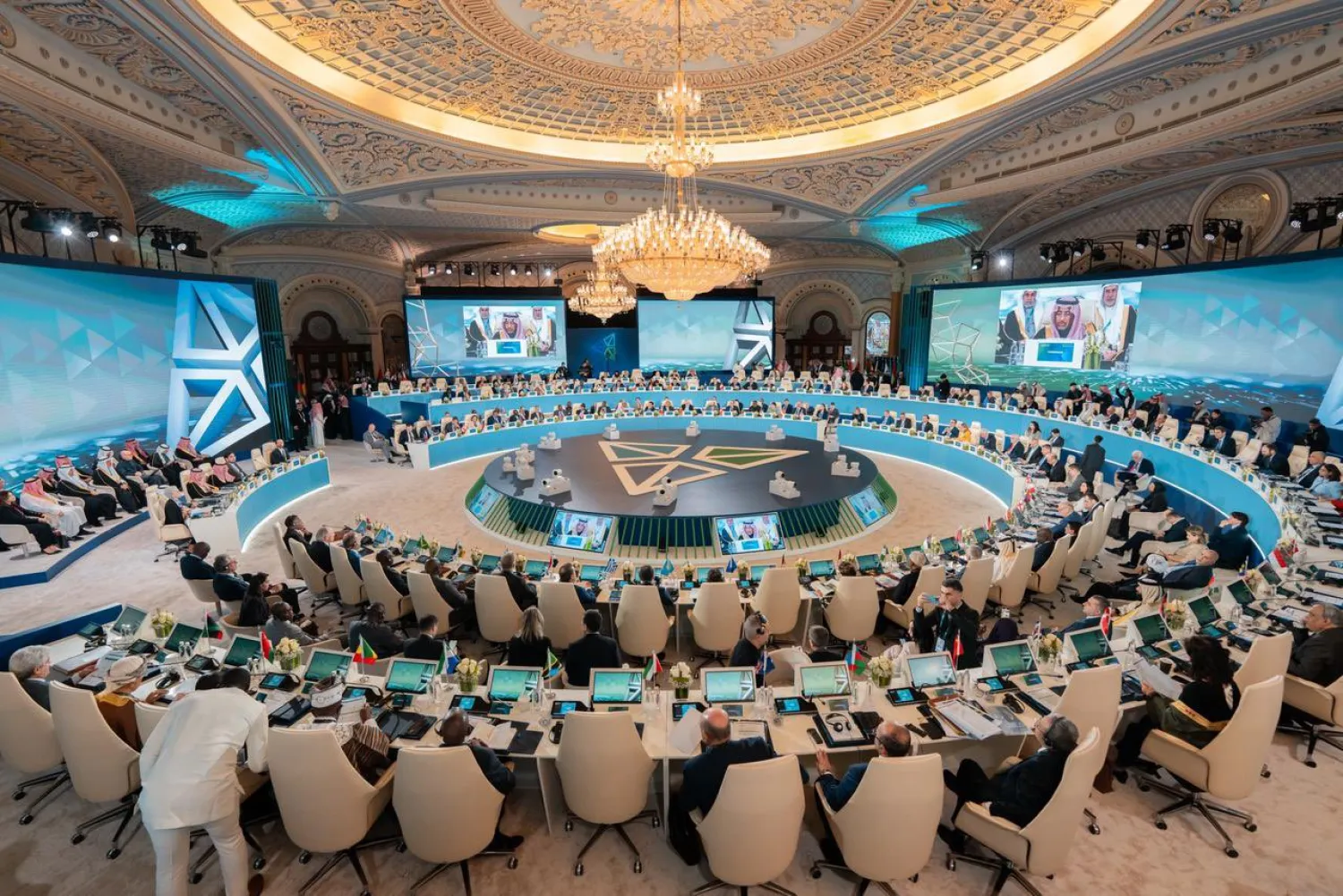
Representatives from 100 governments and 70 international organizations gathered on Tuesday to develop a roadmap for securing the flow of critical minerals the world needs to achieve its digital and green transitions. (Saudi Minister of Industry and Mineral Resources Bandar Alkhorayef on X)
TT

Saudi Arabia Urges Collective Action to Boost Mineral Supplies, Future Jobs

Representatives from 100 governments and 70 international organizations gathered on Tuesday to develop a roadmap for securing the flow of critical minerals the world needs to achieve its digital and green transitions. (Saudi Minister of Industry and Mineral Resources Bandar Alkhorayef on X)

Under the patronage of Custodian of the Two Holy Mosques King Salman bin Abdulaziz, Riyadh has emerged as the “global capital of mining” by hosting the fifth ministerial roundtable of the Future Minerals Forum 2026.

The meeting was not merely a forum for discussion, but a platform to launch a new phase of international cooperation under the theme “Minerals: Meeting the Challenges of a New Era of Development.”

Representatives from 100 governments and 70 international organizations gathered on Tuesday to develop a roadmap for securing the flow of critical minerals the world needs to achieve its digital and green transitions.

The gathering marked a significant shift in collective action, reviewing progress since the launch of three initiatives in 2023 and urging governments to join the Future Minerals Framework.

The framework is not simply an agreement but a vital mechanism to strengthen partnerships between supplier and consumer countries, and to build an investment ecosystem capable of attracting public and private financing.

This momentum culminated in an announcement by Saudi Minister of Industry and Mineral Resources Bandar Alkhorayef of the appointment of a permanent ministerial steering committee of 17 founding member states, selected to ensure geographic balance and representation of both supplier and consumer countries.

The committee will provide strategic guidance, oversee implementation of initiatives, and ensure the continuity of dialogue between major producing and consuming powers.

Ministerial guidance

Alkhorayef stated that achieving countries’ economic, industrial, and energy ambitions depends on the availability of secure and resilient mineral supplies, stressing that such supplies cannot be guaranteed without substantial investments and the adoption of innovative technologies, which require significant financing.

He said mineral resources are at the core of technologies driving electrification and digitalization, and form the foundation of industrial development and future jobs in both producing and consuming countries, making them a key driver of global growth.

Alkhorayef noted that joint work over the past five years had delivered progress beyond expectations, adding that details of these achievements were documented in a booklet provided to participants.

He cited cooperation with the World Bank to address the financing gap in mineral exploration and the elevation of infrastructure financing on the global agenda.

He said efforts also included leading a new dialogue focused on transparency and supply chain traceability, developing standards that reflect current realities, and establishing a network of centers of excellence to build capabilities in talent, sustainability, and technological empowerment.

These initiatives, he said, embody the roundtable’s goal of finding common ground on difficult issues, aligning supplier and consumer countries, and bringing governments, industry, and multilateral organizations under one roof.

The minister praised the participation of a large number of ministers and representatives, whether attending for the first time or regular participants, saying the turnout reflected the importance of joint international action.

He recalled that the first Future Minerals ministerial roundtable, hosted in 2022, brought together 32 countries and focused on what was then known as the “greater region,” encompassing Africa, West, and Central Asia.

Today, senior representatives from over 100 countries and 70 international organizations are participating.

Global development
The expanded participation came in response to requests from countries in other regions, such as Latin America, reflecting the global importance of the dialogue and participants’ ability to shape solutions, Alkhorayef added.

He pointed to growing interest from consuming countries in engaging in the discussion, noting that the table today brings together representation from all G20 countries alongside producers and consumers, underscoring that the right dialogue is taking place with the right parties at the right time and place.

This presence reflects a shared responsibility to shape a new era of global development, prosperity, and stability through the use of minerals, he remarked, emphasizing that minerals are the cornerstone of global development.

At the same time, the minister acknowledged challenges including slow project development, fragmented global policies, infrastructure gaps, financing constraints, and a lack of trust in the sector.

None of these challenges can be addressed individually, he explained, adding that genuine, well-designed cooperation among the countries gathered can make a difference.

Alkhorayef urged participants to use their shared time wisely, adopt a long-term mindset, and engage in frank, practical discussions that lead to a vital action agenda for the planet’s future, emphasizing that collective action is the foundation for securing the mineral supplies the world needs.

Supply chains

Saudi Vice Minister of Industry and Mineral Resources for Mining Affairs Khalid Al-Mudaifer reviewed progress made in 2025 across the three ministerial roundtable initiatives: developing an international framework to scale up infrastructure financing and align enabling government policies, building capabilities in emerging supply regions through a network of centers of excellence, and enhancing transparency of mineral supply chains through traceability.

He stated that the world requires more than $5 trillion to meet its energy needs by 2035, encompassing both electricity and infrastructure, noting that this capital requirement applies to over 20 mining companies amid significant financing challenges.

Al-Mudaifer spoke about developing the Global Mining Framework announced by Saudi Arabia last year to maximize value creation in supplier countries, stressing the importance of cooperation at the meeting to confront this major challenge and agree on key enablers to seize opportunities.

He outlined policies that support supply chain development, value creation for the sector, enabling infrastructure, responsible mining practices, skills development for a qualified workforce, the technology needed to make operations safer and more productive, and easier access to reliable geological data to attract investors and accelerate exploration.

Future minerals framework

He presented for discussion a draft of the Future Minerals Framework, which outlines principles and objectives and initiates a process to enhance cooperation between supplier and consumer countries to develop mineral supplies.

The framework aims to boost cooperation between producing and consuming countries by creating an inclusive, multi-stakeholder space that brings together decision-makers to discuss complex challenges and identify solutions to secure the minerals needed for development.

It seeks to attract investment to develop mineral value chains and infrastructure in the “super region” spanning Africa, West and Central Asia, and other supply regions, maximize regional mineral value chains, and drive local value creation through infrastructure financing and cross-border partnerships.

It aims to establish an attractive investment ecosystem for public and private financing, promote responsible supply through transparency and traceability, integrate sustainability priorities across all stages of mineral value chains, build capacities and policy frameworks, and empower emerging supplier countries to maximize the benefits of their mineral wealth.

The framework is based on voluntary participation, consensus-based decision-making, transparency, accountability, and fair benefit sharing, as well as adherence to international responsible sourcing frameworks and cooperation with industry, multilateral partners, and civil society.

The framework represents the culmination of work carried out by the Future Minerals Forum since 2023, with initiatives reaching a level of maturity that requires active state participation in implementation through an agreed structure and mechanism overseen by the steering committee.

It also allows for the integration of new initiatives adopted by the ministerial roundtable.

The World Bank Group presented a new minerals strategy focused on supporting countries in strengthening mineral development and value chains, from extraction and processing to regional manufacturing, to create greater local value and jobs.

The strategy is built on three pillars: policies, governance and institutions, core infrastructure, and private sector mobilization and innovation.

Participants welcomed the strategy and stressed the importance of the forum’s partnerships with multilateral organizations, including the World Bank Group, in developing innovative mechanisms to finance infrastructure that supports the resilience of global supply chains.

Voluntary standard

The voluntary standard will complement existing standards and draw on the forum’s sustainability framework, which is built on four priorities identified by countries: development, cooperation, capacity building, and performance.

The development of the voluntary standard is expected to take approximately two years, enabling countries to design legal, policy, and regulatory frameworks that enhance supply chain transparency and boost investor confidence.

The work will be coordinated through a sustainability center being established at Mohammed VI Polytechnic University in Morocco.

The sustainability center is one of the outcomes of the forum’s initiative to create a network of centers of excellence for capacity building in supply regions.

Participants praised the achievement and underscored its role in delivering tangible benefits to enhance mineral supply transparency, pledging to encourage national standards bodies in their countries to take part in the process.


Critical Minerals as Strategic Assets...Saudi Arabia Leads Major Transformation of Global Value Chains

The International Mining Conference in Riyadh. (Asharq Al-Awsat)
TT

Critical Minerals as Strategic Assets...Saudi Arabia Leads Major Transformation of Global Value Chains

The International Mining Conference in Riyadh. (Asharq Al-Awsat)

At a time when geopolitical and economic changes are accelerating, and global competition for critical minerals are intensifying, supply chains are undergoing a profound reshaping of their traditional rules.

This transformation is driven by an unprecedented surge in demand, coupled with mounting constraints on supply.

Asharq Al-Awsat held an interview on the sidelines of the International Mining Conference - currently under way in Riyadh under the patronage of Custodian of the Two Holy Mosques, King Salman bin Abdulaziz- with Nikolaus Lang, Managing Director and Senior Partner at Boston Consulting Group, Global Leader of the BCG Henderson Institute, and the Global Vice Chair for the firm’s Global Advantage Practice, along with Marcin Lech Managing Director and Partner at the firm.

The two figures offered an in-depth assessment of the global critical minerals landscape. They also addressed the role of artificial intelligence, Saudi Arabia’s position within these supply chains, and the key risks and opportunities shaping the sector’s outlook.

Supply Chains

Nikolaus Lang said that global minerals supply chains are being redrawn because demand is rising sharply at the same time as supply is becoming more constrained, concentrated, and politicized. Demand for critical minerals linked to energy transition, electrification, and advanced manufacturing is expected to grow 2–3× by 2040, with markets such as EVs and batteries alone driving multiples of today’s lithium, nickel, cobalt, copper, and rare earth demand.

Yet supply remains structurally tight: in several key minerals, 20–30% of future supply required by 2035 has not yet been identified or financed, while processing is heavily concentrated—often in a single country.

He added that the concentration is now translating directly into geopolitical risk. Recent years have seen export restrictions by China on gallium, germanium, and rare earth-related technologies, Indonesia’s nickel export bans, and rising resource nationalism in parts of Latin America.

For investors, this has changed the mindset fundamentally. Critical minerals are no longer viewed as cyclical commodities, but as strategic assets exposed to policy, trade, and security risk, with higher price volatility and longer development timelines challenging traditional project economics.

Artificial Intelligence

Lang stated that artificial intelligence is becoming one of the most important enablers in the race for critical minerals, precisely because the industry faces three simultaneous pressures: the need to expand the project pipeline, shorten development cycles, and improve success rates while controlling costs and risks. Traditional mining models simply cannot deliver the scale and speed required for the energy transition without fundamentally higher productivity.

In exploration, AI is already changing the odds. Machine-learning models can now analyze geological, geophysical, satellite, and historical drilling data simultaneously, identifying targets that would take human teams years to assess. Leading miners report that AI-supported targeting can increase discovery success rates by 2–3× and materially reduce exploration costs. This matters when global exploration pipelines have declined by nearly 40% since 2012, even as demand accelerates.

AI is also becoming critical in risk management—arguably the most underestimated lever. Advanced analytics can integrate commodity prices, supply-chain bottlenecks, permitting timelines, water and energy availability, and geopolitical signals to stress-test projects before capital is committed. In a world of volatile prices and policy-driven shocks, this ability to anticipate risk earlier is increasingly central to investment decisions.

That said, adoption is not without challenges. Many mining companies still struggle with fragmented data, legacy systems, and skills gaps, while regulatory uncertainty and concerns around explainability and ESG compliance slow deployment. AI only works when it is trained on high-quality, interoperable data—and much of the sector is still catching up on basic digital foundations.

Saudi Wealth

On the position of Saudi Arabia in the global critical minerals supply chain, Marcin Lech said that the Kingdom today sits at an inflection point in the global critical minerals supply chain. While it is not yet a dominant upstream producer across most critical minerals, it is rapidly emerging as a credible mining and processing ecosystem builder, with a strategy that spans domestic exploration, competitive processing, downstream demand, and international partnerships.

On the fundamentals, the Kingdom already has scale, he stated. Saudi Arabia is a top-five global producer of phosphate rock and among the top ten globally by phosphate reserves, while bauxite is another established pillar. More importantly, the exploration story is accelerating: recent work has highlighted new rare earth potential, alongside new gold and copper discoveries.

Lech added that what sets Saudi Arabia apart is the ecosystem it has deliberately put in place. The Mining Investment Law materially improved transparency, licensing timelines, and investor protections. That shift is reflected externally: in the Fraser Institute’s Annual Survey of Mining Companies, Saudi Arabia has been cited as one of the most improved jurisdictions globally over recent years, with a Policy Perception Index ranking now in the mid-20s globally, ahead of many longer-established mining regions. This is a meaningful signal for international investors.

Economically, Saudi Arabia brings competitive advantages few peers can match – with meaningful processing cost advantage versus major demand centers, driven by low-cost energy, industrial infrastructure, and scale.

Strategically, the Kingdom’s ambition is to become a critical minerals hub, not just a mining jurisdiction—connecting feedstock from Africa and Central Asia with processing, financing, and downstream demand. Saudi Arabia’s geopolitical neutrality and ability to work with both Eastern and Western partners is a real differentiator, particularly as supply chains fragment and investors seek diversification away from single-country dependence.

Risks and Chances

Marcin Lech said that looking ahead to 2025, the biggest risk for the global minerals sector is not demand — demand is clearly there — but whether supply can be mobilized fast enough in an increasingly fragmented world. We are entering a period where export controls, localization requirements, carbon border measures, and resource nationalism are becoming more common.

While many of these policies are understandable from a national security perspective, their cumulative effect risks undermining project economics, increasing volatility, and discouraging long-term investment at exactly the moment when the world needs more capital, not less.


Oil Drops as Trump Calms Iran Fears; Tech Stocks Slide in Asia

The Iranian flag and 3D printed oil barrels miniature are seen in this illustration taken June 23, 2025. (Reuters)
TT

Oil Drops as Trump Calms Iran Fears; Tech Stocks Slide in Asia

The Iranian flag and 3D printed oil barrels miniature are seen in this illustration taken June 23, 2025. (Reuters)

Oil prices retreated from multi-month highs on Thursday and gold eased from a record peak after US President Donald Trump calmed market anxiety over potential US military action against Iran.

A selloff in tech stocks extended into Asian trading, following declines on Wall Street, as investors rotated out of high-flying chip and artificial intelligence-related names while searching for bargains in other parts of the market.

Currencies paused for breath after the yen dropped to its weakest point since July 2024 against the US dollar overnight and then bounced back sharply amid warnings of possible intervention by Japanese authorities, Reuters said.

Japanese bond yields eased back from record peaks following a spike driven by speculation - which was later confirmed - ‌that the government will ‌call snap elections, a scenario that is expected to lead to ‌bigger ⁠fiscal stimulus.

Brent crude ‌futures dropped 3.4% to $64.25 and Nymex futures sank 3.4% to $59.89, after vaulting as high as $66.82 and $62.36, respectively, in the previous session.

Trump said on Wednesday afternoon that he had been told that killings in Iran's crackdown on nationwide protests were subsiding and he believed there was currently no plan for large-scale executions.

Gold fell 0.5% to around $4,598 per ounce. On Wednesday, it reached an unprecedented $4,642.72.

Stocks in Asia were mixed, but tech shares were met with more selling.

In Japan, the tech-heavy Nikkei eased 0.9% after hitting an all-time peak in ⁠the previous session, though the broader Topix extended its own record high on Thursday with a 0.8% advance.

Taiwan's TAIEX sank 0.4% and Hong ‌Kong's Hang Seng slipped 0.5%, with tech shares weighing.

Chinese blue ‍chips edged 0.1% lower, while South Korea's KOSPI ‍added as much as 1.3% to a fresh record high. The Bank of Korea left interest ‍rates unchanged on Thursday, as expected by economists, and signaled an end to its current easing cycle to prioritize financial stability.

FTSE futures pointed 0.6% higher, suggesting the cash index would open with an extension of its record high from Wednesday. Pan-European STOXX 50 futures tacked on 0.3%.

S&P 500 E-mini futures were flat after the cash index sank 0.5% overnight. The tech-focused Nasdaq Composite dropped 1%.

"There’s a rotation playing out on Wall Street that’s ultimately weighing on indices but indicates that the internals of the market ⁠are holding up reasonably well," said Kyle Rodda, an analyst at Capital.com.

"The strength in cyclicals, in no small part due to the positive outlook for the US economy, is propping up stocks and providing constructive signals to market participants of broadening market strength."

The US dollar was steady against its major peers on Thursday, with the dollar index up very slightly at 99.137.

It was unchanged at 158.44 yen after surging as high as 159.45 yen on Wednesday before pulling back sharply.

Japanese Finance Minister Satsuki Katayama issued another verbal warning on Wednesday, saying officials would take "appropriate action against excessive FX moves without excluding any options."

Prime Minister Sanae Takaichi plans to dissolve parliament's lower house next week and call a snap parliamentary election as early as February 8.

Expectations of bigger fiscal stimulus on an improved mandate have spurred investors to sell the yen ‌and government bonds, sending longer-dated yields to record highs in recent days.

Japan's 20-year yield shed 2.5 basis points on Thursday to 3.135% after vaulting to an unprecedented 3.165% in the prior session.


Saudi Arabia Expands Int’l Partnerships with Three Countries to Develop Metals Industry

Saudi Minister of Industry and Mineral Resources Bandar Alkhorayef delivers the opening address at the Future Minerals Forum in Riyadh (Asharq Al-Awsat)
TT

Saudi Arabia Expands Int’l Partnerships with Three Countries to Develop Metals Industry

Saudi Minister of Industry and Mineral Resources Bandar Alkhorayef delivers the opening address at the Future Minerals Forum in Riyadh (Asharq Al-Awsat)

Saudi Arabia has expanded its network of international partnerships after the Ministry of Industry and Mineral Resources signed three memorandums of understanding on cooperation in mineral resources with Chile, Canada, and Brazil, aimed at strengthening frameworks for technical and investment cooperation in the mining and metals industry in a way that serves shared interests.

The move coincides with the launch on Wednesday of the fifth edition of the Future Minerals Forum in Riyadh, held under the patronage of King Salman bin Abdulaziz, and drawing unprecedented international participation of more than 20,000 attendees and around 400 speakers, including ministers, experts, executives from major global mining companies, international organizations, academic institutions, and financial bodies.

In his opening remarks, Minister of Industry and Mineral Resources Bandar Alkhorayef stressed that the forum would continue to play a pivotal role, noting its evolution from a platform for dialogue into a global decision-making hub that influences policy and mobilizes investment.

Alkhorayef said the fifth edition marks a qualitative milestone in the forum’s journey as a central platform for shaping decisions and building partnerships across the entire mineral value chain, adding that the major transformations the world is witnessing, including artificial intelligence applications and the energy transition, cannot be achieved without securing minerals and their associated supply chains in a responsible and sustainable manner.

Exploration licenses

On the domestic front, he stated that the kingdom continues to play its role in enhancing the resilience of global mineral supplies, in line with Vision 2030, through a thriving and sustainable mining sector that is attractive to investment, supports economic diversification, and creates jobs.

Alkhorayef said Saudi Arabia has allocated more than 33,000 square kilometers to local and international companies through competitive rounds for exploration and mining licenses, noting that the ninth round alone saw the award of 172 mining sites to 24 companies, the largest licensing round to date.

He also said geophysical and geochemical surveying of the Arabian Shield has been completed at a rate of 100 percent, and that spending on exploration has grown by more than fivefold since 2020, rising from one million riyals to 1.052 billion riyals, about $280 million, in 2024.

He reaffirmed the kingdom’s commitment to accelerating investment in its estimated mineral potential of around 9.4 trillion riyals, about $2.5 trillion, by offering competitive exploration opportunities in 2026 and 2027.

As part of efforts to enable investment and reduce risk, Alkhorayef announced the launch of a mining infrastructure enablement initiative in partnership with the Saudi Authority for Industrial Cities and Technology Zones, commonly referred to as Modon.

Its first project will involve building a 75-kilometer treated water pipeline to support development in the Jabal Sayid area and accelerate the implementation of mining projects.

The launch of the forum’s fifth edition also coincides with the announcement of two new private funds designed to support opportunities across the mineral value chain in the kingdom, reflecting investor confidence and the sector's increasing maturity.

The initiatives include strategic partnerships to support mining projects and midstream value chain projects, as well as the launch of a new investment fund to back mineral and industrial opportunities.

On the research front, national bodies involved in research and development are signing strategic agreements with international partners to enhance innovation in exploration, processing, and digitalization, thereby supporting higher efficiency in the mining sector and facilitating the faster adoption of advanced solutions.

Capital flows

In a panel discussion, Finance Minister Mohammed al-Jadaan said the mining sector plays a pivotal role in attracting capital, underscoring the need for clear, stable, and well-defined policies to support long-term investment.

He noted that global markets are experiencing rising uncertainty due to economic changes and geopolitical developments.

Al-Jadaan stated that many countries view minerals as strategic assets due to the significant opportunities they offer for growth and development. In the current climate of global volatility, he added, the sector requires greater reliability and predictability, as well as disciplined investment decisions when selecting countries and minerals most suitable for investment.

He said geopolitical tensions have become the main source of uncertainty hanging over the global economy, with their impact clearly visible in sectors that require long-term investment, foremost among them mining, which needs high levels of stability and predictability given its long operating cycles.

Despite the challenges, he said the environment offers opportunities if handled correctly by states or investors, noting that many countries now view minerals as a national or, at the very least, economic security issue, opening the door to partnerships with host countries or even third parties.

Al-Jadaan stressed the importance of discipline in seizing these opportunities through careful selection of investment destinations and target minerals, particularly in light of current geopolitical and economic challenges.

He said the mining sector cannot focus solely on the near term, but needs a forward-looking vision extending to 2040.

He described current global conditions as only the beginning of what could be expected in 2026, stressing that credibility, predictability, and certainty are the main drivers of major investment decisions, and that their absence at present poses a real challenge to capital inflows.

He urged investors to exercise discipline by carefully choosing target countries and strategic minerals, noting that partnerships with third parties could be an effective way to overcome the economic and political volatility the world is currently experiencing.

Mining investment

In another panel, Investment Minister Khalid al-Falih stated that estimates by global institutions, including McKinsey and IHS, indicate that the global mining sector will require approximately $5 trillion in investment over the next decade, encompassing the entire value chain, including supporting infrastructure.

He said a gap remains between the amount of capital available globally and the investment required to expand mining activity, noting that while the investment community has ample liquidity, the challenge lies in directing that funding toward a sector that is essential rather than optional.

Al-Falih said the sector’s importance stems from geopolitical considerations that require diversification and resilience in supply chains, in addition to the demands of the energy transition and changes driven by artificial intelligence and digital technologies, all of which depend on rare and critical minerals that can only be supplied by a mining sector capable of exploration, development, and production.

He said the sector includes leading global companies with the expertise and capabilities required, alongside the availability of promising geological areas that remain underexplored, such as the Arabian Shield in Saudi Arabia and other regions in what he described as the super region stretching from Central Asia to West Africa.

Al-Falih also touched on the financial market performance of Maaden and its positive results, which have been reflected in its market valuation, stressing the need to inject the investments required to support the sector’s growth.

He said the biggest challenge lies in perceived risks, ranging from exploration risk to environmental risk, as well as social, and governance obligations. He noted that Saudi Arabia has worked to address the risk-return gap through an investment strategy, an investment law, and an active government role in reducing risk.

He added that mining revenues and fees are redirected to a dedicated fund to address gaps not covered by the private sector, and said transparent data is a key factor in reducing risk, particularly after the completion of a comprehensive geological survey and the availability of its data to investors.

He concluded by saying that Saudi Arabia has developed railways, ports, and industrial cities to ease the burden on companies, as part of an integrated strategy that addresses regulation, policy, and financing, and helps set the kingdom’s experience apart from global trends.

New discoveries

Maaden Chief Executive Robert Wilt said Saudi Arabia has a strong foundation as it moves into diversification models under Vision 2030 and seeks to leverage all of the country’s resources.

He said that on the back of this foundation, the company plans to invest $110 billion over the next decade, doubling its aluminum and phosphate businesses and tripling gold exploration.

Wilt said the scale of infrastructure required demands strong government enablers, and that by working with multiple ministries to implement mining policies in Saudi Arabia, significant capital is available for construction and development.

He said the company expects to announce a partnership this week with a global firm to attract thousands of developers and engineers from leading international companies.

He also referred to the government’s announcement last year of the discovery of 7.8 million ounces of gold in the kingdom, while disclosing global exploration programs.

“We can achieve 30 percent in our portfolio by growing partnerships that result from enhancing mineral exploration capabilities in the kingdom,” he said.

Panel discussions

Other sessions highlighted key themes on strengthening the role of mining in building the national economy. The chairman of Chile’s Codelco stated that the country’s economy is built on copper, with one of the world’s largest reserves. Copper forms a major part of its exports, cementing its position as one of the world’s leading copper producers.

David Copley, special assistant to the US president on the National Security Council, said minerals have become a priority for the national economy and are the building blocks for everything countries need to reindustrialize.

The forum’s program includes a wide range of events, including the Mining Investment Journey, the Finance Gateway in partnership with the Bank of Montreal, MinGen workshops aimed at youth and women in mining, the MinValley innovation and technology platform, and a knowledge exchange platform that brings together leading experts to share the latest developments in geology, technology, sustainability and skills development.

The forum will conclude with the announcement of winning teams and the honoring of partners in a closing ceremony highlighting the outcomes of the Future Minerals Pioneers competition, celebrating innovators, boosting the competitiveness of the mining and metals sector, supporting Vision 2030 targets, and reinforcing Saudi Arabia’s position as a global innovation hub in this vital sector.

As part of efforts to promote innovation, the forum will also see the launch of the Start-Up Derby, organized by the National Industrial Development and Logistics Program, as an event held at the Minerals Café in the outdoor exhibition area on January 14 and 15.

The initiative serves as an open platform to showcase emerging technologies and innovative business models in mining, critical minerals, and processing, with direct links between innovators and investors.