



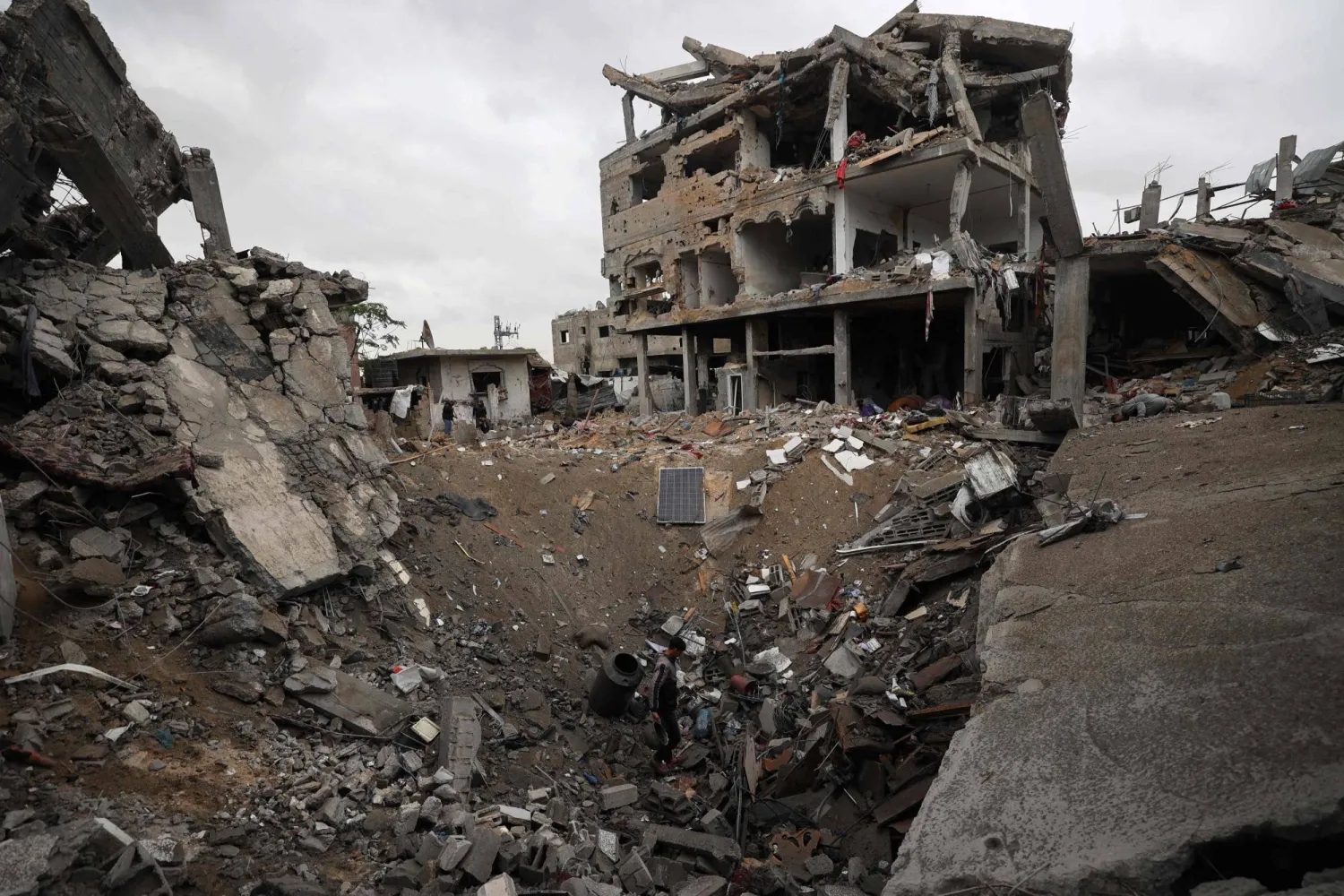

A Palestinian source from the Fatah movement told Asharq Al-Awsat on Tuesday that “indirect” meetings among Palestinian factions have begun in Cairo to discuss advancing the second phase of the Gaza ceasefire agreement, particularly the formation of the committee to run the enclave, ahead of a broader meeting scheduled for Wednesday.
The second phase of the ceasefire, which came into force on Oct. 10, includes key provisions such as the disarmament of Hamas, the formation of a Board of Peace to oversee the peace process in the territory, the establishment of a technocratic committee to run Gaza’s affairs, and the deployment of an international stabilization force.
The Palestinian source stated that eight Palestinian factions are currently in Cairo, including Fatah and Hamas, to explore ways to advance the stalled second phase.
Fatah may skip the factions’ meeting
The source said discussions include the formation of the technocratic committee, the Palestinian police force to be deployed in the enclave, and related structures, noting that differences remain and that Fatah refuses to meet directly with Hamas.
A second informed Fatah source told Asharq Al-Awsat that the movement may not take part in Wednesday’s planned factions’ meeting.
A Palestinian source stated on Monday that consultations in Cairo were expected to finalize the administration committee and present factions with proposed names, particularly following recent developments involving changes to some nominees in response to Israeli objections.
On Tuesday, another informed Palestinian source stated that an agreement had been reached on the names of most members of the technocratic committee.
In televised remarks late on Sunday, Hamas politburo member Mohammed Nazzal said a delegation from the movement would discuss follow-up on the implementation of the ceasefire agreement amid “major difficulties hindering its application and continued Israeli violations.”
Mediators’ contacts
The Gaza administration committee has moved to the forefront of ceasefire mediation efforts, amid anticipation of decisive US decisions on announcing the Board of Peace and the technocratic committee, as well as Wednesday’s factions’ meeting in Cairo.
Those intensive contacts by mediators “require real US pressure and Palestinian consensus to translate them into momentum for the second phase and to overcome Israeli obstacles,” an Egyptian expert told Asharq Al-Awsat.
Qatari Foreign Ministry spokesman Majed Al Ansari said at a press conference on Tuesday that Doha is working with mediators to accelerate progress toward the second phase of the ceasefire, accusing Israel of obstructing the deal.
“Israel must answer one question: why is the Gaza agreement delayed?” Al Ansari said, adding that “the complexities on the table today require moving forward to the second phase of the agreement, and our contacts are continuous and daily to push the deal ahead.”
Qatari Prime Minister Sheikh Mohammed bin Abdulrahman Al Thani and Egyptian Foreign Minister Badr Abdelatty stressed during a phone call the importance of announcing the formation of the temporary Palestinian technocratic committee, in parallel with establishing the international stabilization force, ensuring the flow of humanitarian aid, and creating conditions for early recovery and reconstruction, said a statement by Egypt’s Foreign Ministry on Tuesday.
Abdelatty and Turkish Foreign Minister Hakan Fidan also agreed during a phone call on Tuesday on “the need to intensify regional and international efforts to ensure the consolidation of the ceasefire and to move forward with the transition to the second phase of the US president’s plan.”
In a separate call with Palestinian Vice President Hussein al-Sheikh, Abdelatty reaffirmed Egypt’s support for deploying the international stabilization force and technocratic committee, which would help create the conditions necessary for restoring the Palestinian Authority’s role.
Abdelatty also spoke by phone with German Foreign Minister Johann Wadephul, who is close to Israel, to discuss Gaza.
Mukhtar Ghobashi, Secretary General of the Al-Farabi Center for Strategic Studies, said mediators’ contacts must be followed by genuine and serious US pressure to announce second-phase decisions, whether on forming the administration committee or the Board of Peace.
Ghobashi said Cairo is keen to push the second phase forward, as reflected in the intensive contacts, but that progress hinges on US pressure, Palestinian consensus, and imminent US decisions this week to end the tragedy in the enclave, for which Israel bears full responsibility.


