
Syria Asks Lebanon to Hand Over Assad-Era Officers

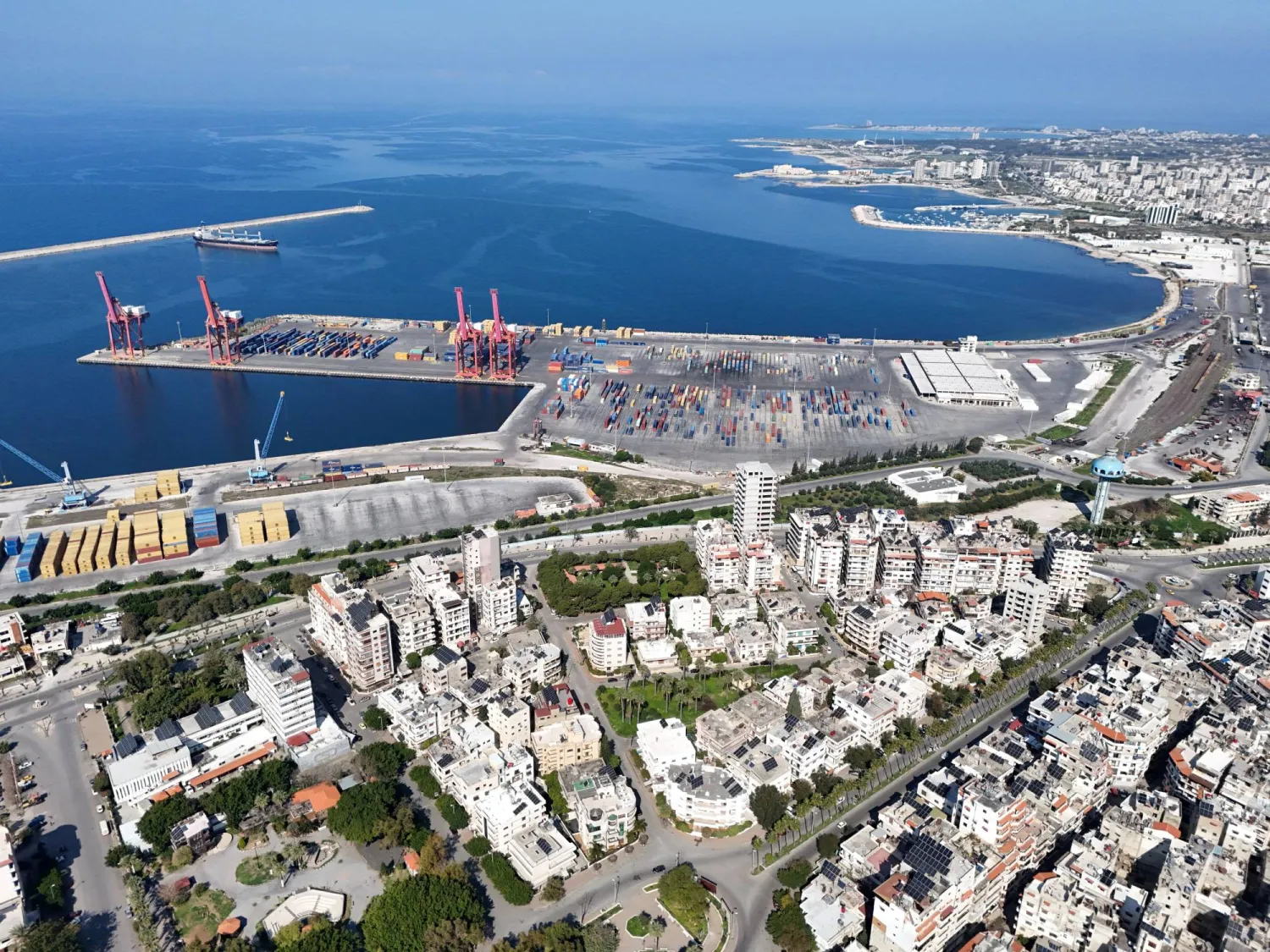
A drone view shows the port of the coastal city of Latakia, Syria, March 11, 2025. (Reuters)
TT

Syria Asks Lebanon to Hand Over Assad-Era Officers

A drone view shows the port of the coastal city of Latakia, Syria, March 11, 2025. (Reuters)

Syrian authorities have asked Lebanese security forces to hand over more than 200 senior officers who fled to Lebanon after the fall of Bashar al-Assad, following a Reuters investigation that showed how the neighboring country was a hub for insurgent plotting.

On December 18, a ​top Syrian security official, Brig. Abdul Rahman al-Dabbagh, met with his Lebanese counterparts in Beirut to discuss the exiled Assad-era officers, according to three senior Syrian sources, two Lebanese security officials, and a diplomat with knowledge of the visit.

The meetings came days after a Reuters investigation detailed rival plots being pursued by Rami Makhlouf, the billionaire cousin of the ousted president, and Maj. Gen. Kamal Hassan, former head of military intelligence, both living in exile in Moscow, to finance potential Alawite militant groups in Lebanon and along the Syrian coast. Syria and Lebanon share a 375-kilometer border.

The two rival camps aim to undermine the new Syrian government under President Ahmed al-Sharaa. Reuters found they are sending money to intermediaries in Lebanon to try and stir uprisings that would divide Syria and allow the plotters to regain control over the coastal areas. The population of those areas is dominated ‌by Alawites, the minority ‌sect associated with the Assad family and the dictatorship’s ruling elite.

Al-Dabbagh, an aide to the ‌head ⁠of ​internal security ‌in Syria’s Latakia province, an Alawite stronghold, met with Lebanese intelligence chief Tony Kahwaji and Major General Hassan Choucair, head of the General Security Directorate, and presented them with the list of senior officers wanted by Syria.

The visit focused on gathering information about the whereabouts and legal status of the officers, as well as trying to find ways to prosecute or extradite them to Syria, according to the Syrian sources.

They described it as a direct request from one security agency to another, rather than a demand for extradition.

Three senior Lebanese security officials confirmed the meetings. One of the Lebanese officials denied receiving any demands from the Syrians to hand over the officers. Two others acknowledged receiving a list of names but said none were senior officers.

One of the Lebanese security ⁠officials said there is no evidence of any insurgency being planned, despite the threats against Syria’s new government detailed in the Reuters reporting.

All the officials spoke on condition of anonymity to reveal details of ‌a highly sensitive cross-border issue.

Among the names handed over by Syrian officials to ‍Lebanon were several high-ranking figures acting as intermediaries for Makhlouf or Hassan in ‍Lebanon, according to a Syrian source who saw the list.

A Lebanese judicial official said Syria had not made a formal extradition request to ‍Lebanon, typically done through the two countries’ justice and foreign ministries.

Accompanying Dabbagh on his Beirut visit was Khaled al-Ahmad, a former Assad advisor and childhood friend of Sharaa, who is leading the government’s efforts to win over the Alawite community through development projects and aid, according to two witnesses who saw the men together on that mid-December day.

According to the two witnesses, who are both ex-Assad officers, al-Ahmad and Dabbagh went together to an upscale Beirut restaurant that is popular among Assad’s ​men. The two witnesses said they and others interpreted the outing as a warning to those trying to influence Alawites to rise up against Syria’s new leaders that Lebanon is no longer a haven.

In a January 2 post on X, Lebanese Deputy Prime Minister Tarek Mitri called on his government’s security agencies to verify the information circulating in the media and take action against the Lebanon-based agents for Assad’s former insiders, Makhlouf and Hassan.

“It is incumbent upon them, and upon all of us, to avert the dangers of any actions that undermine Syria’s unity or threaten its security and stability, whether in Lebanon or originating from it,” the tweet read.

In response to questions from Reuters, Lebanon’s General Security referred to January 11 remarks by Lebanese President Joseph Aoun, who said Lebanon’s military intelligence and other security agencies had carried out raids in several areas of the country’s north and east.

Aoun said the raids did not produce evidence of the presence of officers linked to the Assad dictatorship and said Lebanon was continuing to coordinate with Syria on the issue.

Syrian government officials did not respond to requests for comment.

From January 3 to January 6, Lebanese soldiers raided locations and shelters housing displaced Syrians. The Lebanese Army said 38 Syrians were arrested during the raids on different charges such as possession of drugs or weapons, or entering the country illegally.

A senior Lebanese security official told Reuters those ‌raids were linked to the exiles’ plots.

Another senior Lebanese security official emphasized that there was no arrest warrant for the Syrian officers in Lebanon, nor Interpol requests for them.

“We can't do anything against them,” the official added.


Famine Spreads to More Towns in Sudan’s Darfur Region, Hunger Experts Warn as War Rages on

People who fled the Zamzam camp for the internally displaced walk in a makeshift encampment in an open field near the town of Tawila in war-torn Sudan's western Darfur region on April 13, 2025. © AFP
TT

Famine Spreads to More Towns in Sudan’s Darfur Region, Hunger Experts Warn as War Rages on

People who fled the Zamzam camp for the internally displaced walk in a makeshift encampment in an open field near the town of Tawila in war-torn Sudan's western Darfur region on April 13, 2025. © AFP

Famine is spreading in war-torn Sudan's western Darfur region and has now engulfed two more towns there, a global hunger monitoring group said Thursday. The announcement came after the group said last year that people in Darfur’s major city of el-Fasher, overrun by the RSF forces after an 18-month siege, were enduring famine.

Since April 2023, war has gripped much of Sudan after a power struggle erupted between the East African country’s military and the powerful Rapid Support Forces. The conflict has triggered what the United Nations calls the world’s worst humanitarian crisis.

The report on the spread of famine by the Integrated Food Security Phase Classification, or IPC, came as an attack Thursday by the RSF on a military hospital in southern Sudan killed 22 people, including the hospital’s medical director and another three members of the medical staff.

The attack, in the town of Kouik in South Kordofan province, also left eight people wounded, the Sudan Doctors’ Network, a group of medical professionals tracking the war said. It was not immediately clear how many of the casualties were civilians.

In a statement, the network said the attack was “not an isolated incident, but rather part of a series of attacks that have plagued South Kordofan" and have left "several hospitals inoperable.”

The UN estimates that over 40,000 people have been killed in the war in Sudan, but aid agencies consider that the true number could be many times higher. Over 14 million people have been forced to flee their homes.

The IPC report said famine has now been detected in the towns of Umm Baru and Kernoi in Darfur. In November, the group said el-Fasher — a major city in the region — was enduring famine and also the city of Kadugli in South Kordofan. At the time, it also said 20 other areas across Sudan were at risk of famine.

In Umm Baru, nearly 53% of children between aged between 6 months and nearly 5 years suffered from acute malnutrition, while 32% of children in Kernoi face the same ordeal.

“These alarming rates suggest an increased risk of excess mortality and raise concern that nearby areas may be experiencing similar catastrophic conditions,” the report said.

The fall of el-Fasher in October 2025 to the RSF set off an exodus of people to nearby towns, straining the resources of neighboring communities and driving up food insecurity rates, the report said.

The IPC has confirmed famine only a few times, most recently in 2025 in northern Gaza during the Israel-Hamas war. It also confirmed famine in Somalia in 2011, and in South Sudan in 2017 and 2020.

With this report, the total number of famine-stricken areas in Sudan rises to nine. In 2024, famine had struck five other areas in North Darfur and also Sudan’s Nuba Mountains region.

The IPC report also warned that more people might face extreme hunger in Kordofan, where the conflict has disrupted food production and supply lines in besieged towns and isolated areas.

“An immediate and sustained ceasefire is critical to avert further destitution, starvation, and death in the affected parts of Sudan,” pled the Rome-based group.

According to experts, famine is determined in areas where deaths from malnutrition-related causes reach at least two people, or four children under 5 years of age, per 10,000 people; at least one in five people or households severely lack food and face starvation; and at least 30% of children under age 5 suffer from acute malnutrition based on a weight-to-height measurement — or 15% based on upper-arm circumference.

On Tuesday, the Sudanese military announced that it had opened a crucial road between Dilling and Kadugli, which had been under siege by the RSF since the start of the war. The RSF launched a drone attack Tuesday that hit a medical center in Kadugli, killing 15 people including seven children, according to Sudan Doctors Network.


US Troops to Leave Al-Shaddadi Base in Syria

US soldiers patrol the countryside of Rumaylan in Syria's northeastern Hasakeh province on June 7, 2023. (AFP) 
TT

US Troops to Leave Al-Shaddadi Base in Syria

US soldiers patrol the countryside of Rumaylan in Syria's northeastern Hasakeh province on June 7, 2023. (AFP) 

US troops at Al-Shaddadi base in Syria's northeastern Al-Hasakah province are preparing to withdraw completely in the coming hours.

“The US forces at the base are preparing for a complete withdrawal outside Syrian territories in the next 24 hours,” a source told Syria TV on Wednesday.

Earlier, the Hasaka Media Center reported that a truck convoy belonging to the international coalition entered from Iraq through the Yaarabiya crossing and headed to Al-Shaddadi base south of Al-Hasakah province.

Civilian sources in the area said the empty trucks were sent to load military equipment from the base.

Local eyewitnesses also reported that the international coalition is evacuating the Kharab al-Jir base, a key United States military installation located in northeastern Al-Hasakah.

Since Tuesday, the sources added, the sound of drones in Qamishli were heard. They said gunshots were also heard intermittently, signaling that international coalition forces were destroying some of their positions in the Kharab al-Jirb base.

Late last month, the Turkish Anadolu Agency said heightened military activity was seen at Al-Shaddadi air base, which is used by the US-led anti-ISIS coalition, according to local sources.

It said observers have reported the landing of a US cargo aircraft.

Syrian government forces entered the Kurdish-majority city of Qamishli on Tuesday as part of a deal agreed last week to gradually integrate the Kurds' forces and institutions into the state and began preparing to take over the airport.

Kurdish forces have ceded swathes of territory to advancing government troops in recent weeks following months of tension and sporadic clashes as Syria's new authorities have sought to impose their authority across the country.

“A convoy of internal security forces began entering the city of Qamishli,” the official SANA news agency said.

Sources explained that the Syrian security forces stopped at the entrance of the Qamishli airport in preparation to enter the facility, in addition to government buildings.

Few people were seen on the streets inside the city amid a curfew in place until Wednesday morning, with Kurdish security forces also lightly deployed.


Saudi Support Puts Yemen’s Socotra Back on Global Tourism Map

Direct Jeddah-Socotra flights aim to revive Yemen archipelago economy (X)
TT

Saudi Support Puts Yemen’s Socotra Back on Global Tourism Map

Direct Jeddah-Socotra flights aim to revive Yemen archipelago economy (X)

Saudi Arabia has taken a new step to restore Yemen’s Socotra Archipelago to international air traffic by launching a direct flight linking the island with Jeddah, following the resumption of operations at the governorate’s public hospital and government university under a Saudi-backed development program.

The move was described as a qualitative shift that restores the archipelago to the global tourism map.

Yemen’s national carrier, Yemenia Airways, operated its first direct flight between King Abdulaziz International Airport and Socotra International Airport, marking the return of Socotra to international air traffic after years of absence, during which tourism flights were limited to a small number of regional routes.

The direct air link is expected to help revive tourism and open broader prospects for the flow of foreign tourists who visit the island each year, drawn by its pristine nature and rare environmental diversity.

Officials from the local authority in the Socotra Archipelago governorate and the Ministry of Transport said the launch of the route represents a qualitative addition to strengthening air connectivity, supporting tourism and service activities, and easing residents' movement.

They added that the move also carries economic and development dimensions that enhance the archipelago’s stability and sustainable development.

Socotra International Airport hosted an official reception ceremony for the first group of tourists arriving on the new route, attended by Mohammed Al-Yahya, representative of the Saudi Program for the Development and Reconstruction of Yemen, along with several Yemeni officials.

The event included artistic and heritage performances reflecting the island’s unique cultural legacy, in a message underscoring Socotra’s readiness to receive global tourism.

Yemeni officials said relevant authorities are working to operate direct flights from several Arab countries in the coming phase, which would help double visitor numbers and stimulate accommodation, services, and eco-tourism sectors.

They said the launch of the new air route would open promising economic horizons, ease travel for citizens, and enhance the archipelago’s integration into its regional and international surroundings.

This development coincides with the Saudi Program for the Development and Reconstruction of Yemen announcing the resumption of operations at Socotra General Hospital, with full coverage of its operating costs, as part of a package of vital development projects provided by the Kingdom to Yemen.

The program said restarting the hospital would enhance its capacity to meet the growing health needs of residents and help reduce medical referrals outside the governorate, easing the burden on citizens.

Deputy Governor of the Socotra Archipelago governorate, Raed Al-Juraibi, praised the step, saying it represents an essential addition to reviving tourism and strengthening the archipelago’s presence as a global tourist destination, given its natural assets and unique environmental diversity.

The deputy director of Socotra International Airport also commended the Saudi role in facilitating procedures for operating the route and linking Socotra with the Kingdom, confirming the airport’s readiness to receive flights and provide the necessary facilities for passengers.

This followed the reopening of the University of Socotra Archipelago, which resumed operations after a several-week suspension due to a funding halt, following the withdrawal of Emirati forces from the governorate at the request of the Yemeni government.

The university’s return marked a pivotal step in supporting higher education and maintaining stability in the archipelago's educational process.

The Saudi-led coalition supporting legitimacy continues efforts to normalize life in the temporary capital Aden, improve services, oversee the restructuring of security agencies, and remove military camps from the city.

In this context, work has begun on rehabilitating and upgrading the main runway at Aden International Airport, less than a week after the foundation stone for the third phase of the rehabilitation project was laid.

The phase includes supplying modern navigation equipment and communications systems, raising the readiness of infrastructure and logistics services, and improving passenger experience and service quality.

Acting Minister of Transport Nasser Sharif said rehabilitating the airport would improve its operational efficiency and strengthen its position as the country's main air gateway.

Amid improving security and services in Aden, Minister of State and Aden Governor Abdul Rahman Sheikh renewed his call on the UN to relocate the headquarters and operations of international organizations from Houthi-controlled areas to Aden, saying this would improve the effectiveness of humanitarian work and ensure aid reaches those who need it.

During a meeting with the UN senior adviser for security and safety, Jorge Alturas, the governor discussed ways to enhance joint coordination with international organizations, affirming the local authority’s readiness to provide necessary facilities to help ease citizens’ suffering and promote stability.