


Sources to Asharq Al-Awsat: Gaza Committee Members to Meet Mladenov at US Embassy in Cairo

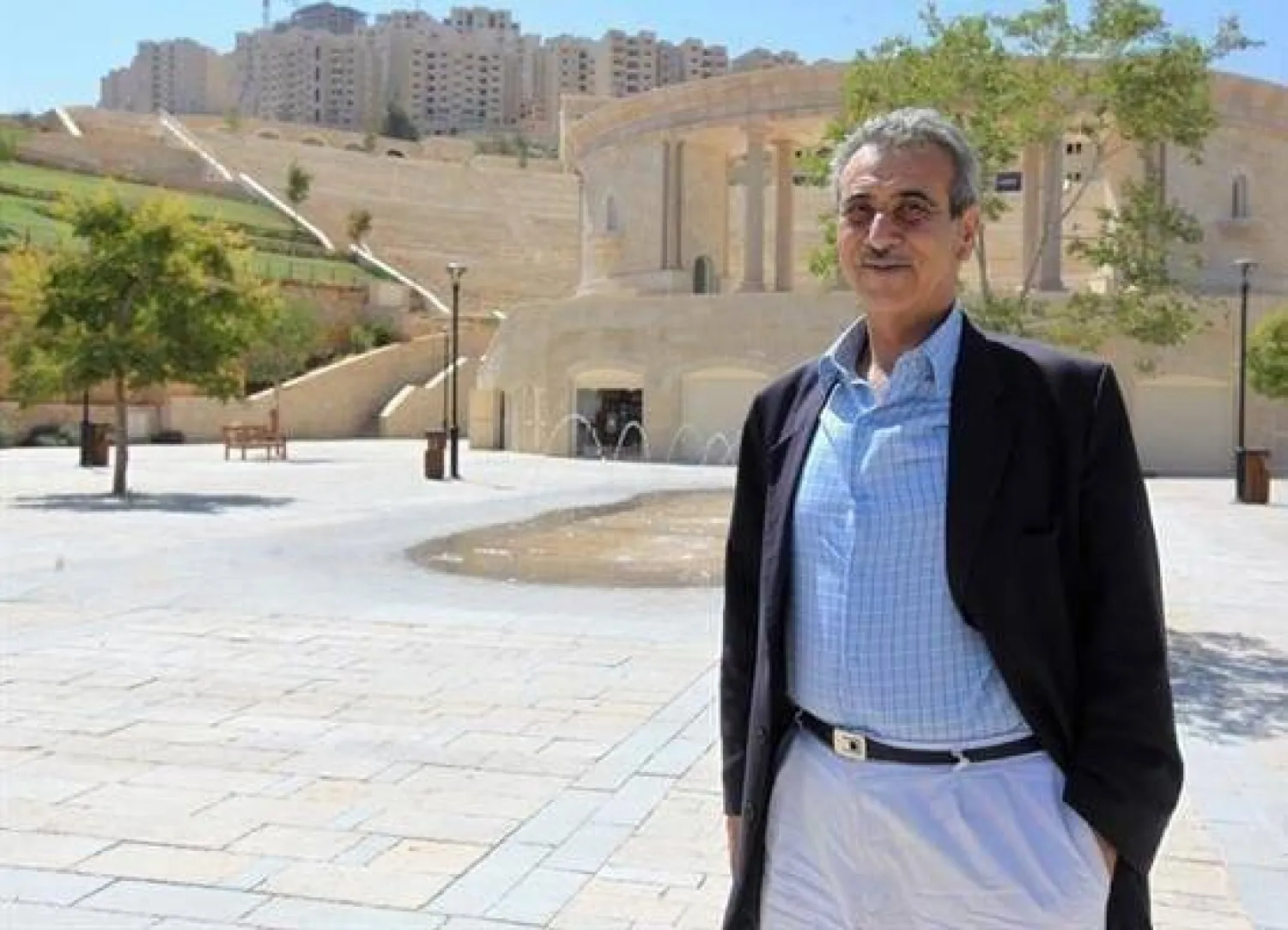
Palestinian Ali Shaath, a leading candidate to head the Gaza Administration Committee, in a photo released by his family.
TT

Sources to Asharq Al-Awsat: Gaza Committee Members to Meet Mladenov at US Embassy in Cairo

Palestinian Ali Shaath, a leading candidate to head the Gaza Administration Committee, in a photo released by his family.

Palestinian sources reported that figures nominated to lead a temporary Gaza Administration Committee are scheduled to meet on Thursday with Bulgarian diplomat Nickolay Mladenov, the nominee to head the executive body of the Board of Peace, at the US embassy in Cairo.

Sources from civil society and Palestinian factions, who spoke to Asharq Al-Awsat on condition of anonymity, said that meetings of some factions in Cairo on Wednesday would discuss several issues related to the second phase, including agreement on the names put forward for the Gaza Administration Committee.

They added that there was preliminary acceptance of these names.

The sources said that despite reservations by the Palestinian Authority over the committee, some of its members, and the fact that its work would report to the Board of Peace to be announced by US President Donald Trump, assessments suggest there will be no opposition to it given the current internal Palestinian situation and the urgent need for Hamas to exit the governance scene in Gaza.

The Palestinian Authority had hoped that a minister from the government led by Mohammad Mustafa would assume responsibility for the committee, but Israel and the United States opposed that option.

Arrangements for travel

Regarding travel for committee members based inside Gaza, the sources said arrangements were underway, though the mechanism had not yet been finalized as of Wednesday afternoon. They said members based outside the enclave, in European countries or in Ramallah, including Ali Shaath, who is seen as the likely head of the committee, were expected to arrive in Cairo on Wednesday.

The sources said those already in Egypt were prepared, and that members inside Gaza could be included virtually if travel proved impossible, though that scenario was not expected.

Meetings with Mladenov

The meeting will focus on the committee’s mandate to administer Gaza.

An announcement is expected once agreement is reached on the members and their responsibilities, either on Wednesday or Thursday, ahead of Trump’s anticipated announcement of the Board of Peace. Mladenov would head the board’s executive body and oversee the technocratic committee.

Several meetings between committee members and Mladenov are planned, all at the US embassy, according to some sources, who added that a dedicated financial fund had been designated to support the committee’s work.

Multiple sources said the committee would assume full governmental responsibilities in Gaza and that Hamas would expedite the handover of authority and provide all necessary support.

Asharq Al-Awsat reported on Tuesday evening some of the names expected to join the new committee, which is set to comprise between 15 and 18 members. Most are from Gaza, comprising mainly businessmen, economists, civil society leaders, and academics.

Names obtained by Asharq Al-Awsat include Ali Shaath, a former deputy transport minister in the Palestinian Authority; Abdel Karim Ashour, head of the Agricultural Relief Committees and a civil society activist; Aed Yaghi, head of the Medical Relief Society; Aed Abu Ramadan, head of the Gaza Chamber of Commerce; Jabr al-Daour, president of Palestine University; Bashir al-Rais, an engineering consultant; Omar Shomali, head of Palestinian Telecommunications in Gaza; Ali Barhoum, an engineer and consultant at Rafah municipality, and lawyer Hanaa Terzi.

A civil society source said there was broad agreement on these names so far, adding it was not yet known whether Israel had approved them. Changes could still be made if disputes emerge over any of the nominees.


Yemen Govt Raids Target Houthis in Taiz, Lahj

Yemeni government forces man a checkpoint on a road leading to the interim capital Aden. (Reuters)
TT

Yemen Govt Raids Target Houthis in Taiz, Lahj

Yemeni government forces man a checkpoint on a road leading to the interim capital Aden. (Reuters)

Military operations against the terrorist Houthi militia in Yemen have continued, with airstrikes targeting the group’s positions, reinforcements, and combat capabilities across the Taiz and Lahj fronts, extending to Sanaa, Mokha, and Hodeidah.

The strikes come as the group faces sustained government resistance on the fronts surrounding Taiz, which is entering its third month under siege and attacks.

On Monday, airstrikes hit Houthi weapons depots, gatherings, and military reinforcements in east and west of Taiz. The raids coincided with ongoing clashes on the fronts in northern Lahj province, where government forces are reorganizing their ranks and repelling infiltration and advance attempts by the militants.

Field military sources said that the strikes targeted Houthi capabilities along the contact lines surrounding Taiz and Lahj, as well as military positions and supplies in Mokha and Hodeidah.

The raids form part of ongoing air and military operations under Operation Dawn of Yemen, conducted by government forces with support from the Coalition to Restore Legitimacy.

227 civilian casualties

Alongside the military clashes, civilian casualties persist due to Houthi shelling and sniper fire in the Taiz countryside. On Sunday, six civilians, including a young girl, were wounded in shelling and sniper attacks targeting villages and residential areas across several districts of Sabr.

Figures released by the governorate's Office of Siege Affairs recorded 227 civilian casualties between November 1 and 20, comprising 80 killed and 147 wounded, in ongoing attacks on residential areas as military operations widen along the front lines.

The city of Taiz, which has been under a Houthi siege for years, faces mounting pressure as main roads remain closed and supply movements falter, while government forces attempt to hold their positions and prevent the militia from making new breakthroughs on the city's outskirts.

Ongoing operations

In a development reflecting the scale of the military operations, the Yemeni Armed Forces announced they had carried out 639 strikes over the preceding hours as part of Operation Dawn of Yemen, backed by aircraft from the Coalition. The operations targeted Houthi positions, gatherings, fortifications, and artillery emplacements.

Armed Forces spokesperson Staff Colonel Majid al-Nuzaili stated that the operations comprised 24 airstrikes by warplanes, 560 field artillery strikes, 27 drone operations, and 28 rocket launcher strikes.

In a daily statement, al-Nuzaili added that the strikes neutralized 86 of the group's leaders and operatives and destroyed or disabled 64 military vehicles and pieces of equipment.

He said that government forces in Marib and al-Jawf provinces are continuing their offensive operations while clearing liberated areas of mines and explosive devices. Government troops and the Popular Resistance in Taiz are engaged in clashes to break the siege, repel Houthi attacks, and thwart infiltration attempts, recapturing several key positions.


Al-Zaidi’s First Visit to Egypt... A Boost to Cooperation Amid Regional Turmoil

Iraqi Prime Minister Ali al-Zaidi meets Egypt's President Abdel Fattah al-Sisi, in Cairo, Egypt, November 23, 2026. (Iraqi Prime Minister's Media Office/Handout via Reuters)
TT

Al-Zaidi’s First Visit to Egypt... A Boost to Cooperation Amid Regional Turmoil

Iraqi Prime Minister Ali al-Zaidi meets Egypt's President Abdel Fattah al-Sisi, in Cairo, Egypt, November 23, 2026. (Iraqi Prime Minister's Media Office/Handout via Reuters)

Iraqi Prime Minister Ali al-Zaidi kicked off on Monday a visit to Egypt - his first since taking office in May - amid escalating regional challenges, in a move experts and analysts described as a boost to cooperation and coordination in light of regional tensions.

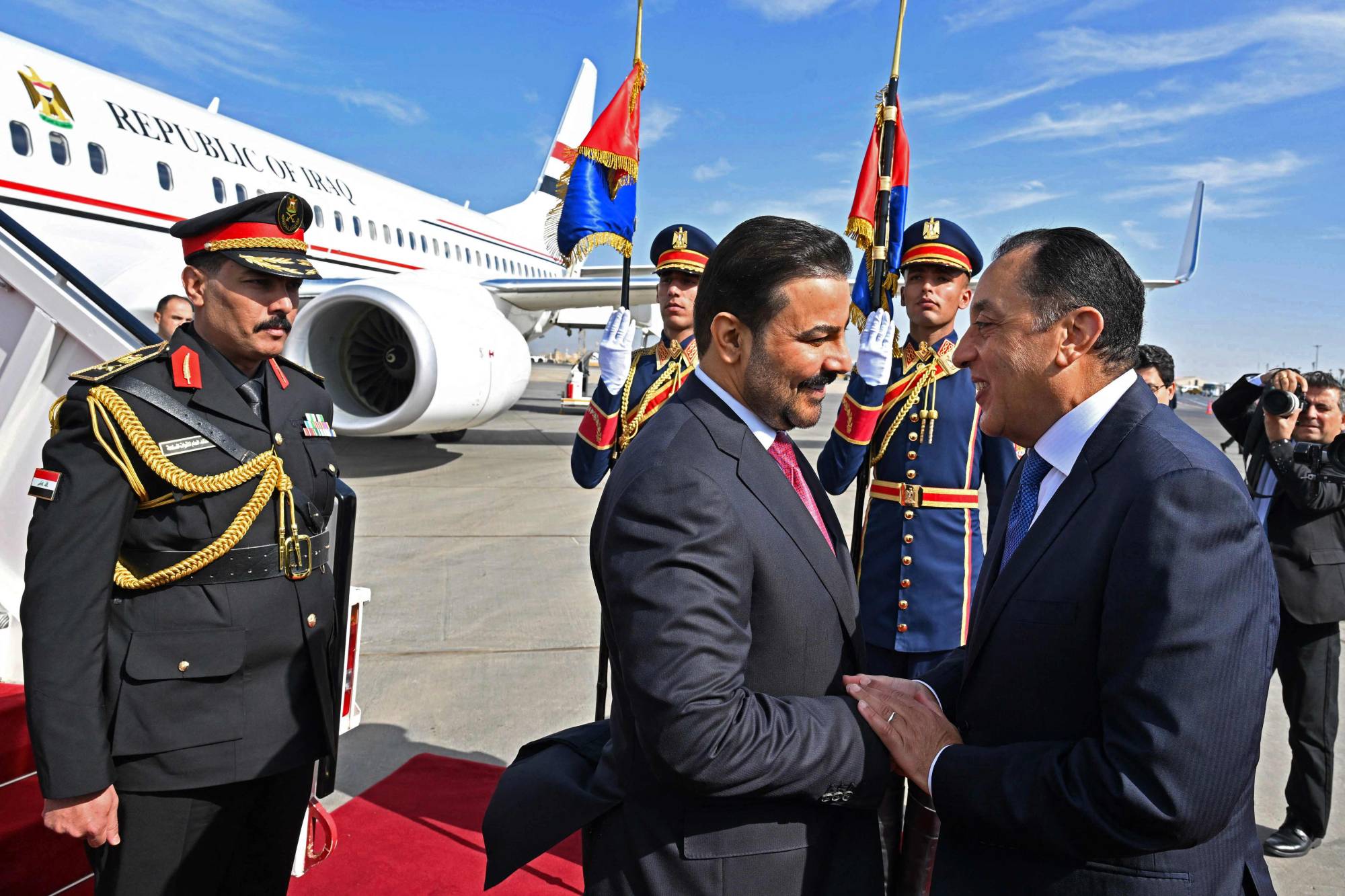
Egyptian Prime Minister Mostafa Madbouly received al-Zaidi at Cairo International Airport before he met with Egyptian President Abdel Fattah al-Sisi.

On Monday evening, al-Zaidi and Madbouly are co-chairing the fourth session of the Joint Higher Committee between the two countries at the government headquarters in the New Administrative Capital.

In a statement, the Egyptian Cabinet said the two sides will witness the signing of several documents across various fields "supporting the enhancement of bilateral cooperation between the two brotherly countries," in addition to attending a business forum to review trade and investment opportunities in both nations.

The visit comes "as both countries seek to open new horizons for joint cooperation, particularly in light of the promising opportunities abundant in Egypt and Iraq across various economic, commercial, and investment fields, with a view to deepening the partnership between the two countries,” it added.

A day earlier, Egyptian Foreign Minister Dr. Badr Abdelatty met his Iraqi counterpart Fuad Hussein on the sidelines of the Aswan Forum, saying he was looking forward to al-Zaidi's visit and the convening of the fourth session of the Joint Higher Committee.

He noted that the visit would give strong momentum to bilateral ties, bolster cooperation across various sectors, and serve the mutual interests of Egypt and Iraq.

The FMs stressed the importance of prioritizing political and diplomatic solutions to resolve crises, and maintaining coordination and consultation on issues of mutual concern to support efforts aimed at achieving regional security and stability.

Region in focus

Al-Zaidi’s first visit to Egypt centers on the regional developments and tensions across the Middle East. His media office said in a statement on Monday that al-Zaidi will discuss ways to confront various challenges in a manner that strengthens regional security and stability.

According to an Egyptian presidential statement, the PM expressed during his meeting with Sisi his appreciation for Egypt’s efforts aimed at easing regional tensions and preserving stability.

He underlined Iraq’s desire to intensify political consultation to prevent renewed regional escalation.

Egypt's Prime Minister Mostafa Madbouly (R) shakes hands with his Iraqi counterpart Ali al-Zaidi upon his arrival at the airport in Cairo on November 23, 2026. (AFP)

On bilateral cooperation, the two sides discussed ways to deepen joint collaboration in energy, investment, trade, and military cooperation.

Sisi reaffirmed Egypt’s steadfast position in support of the security and stability of all Arab countries, saying their security is an extension of Egyptian national security.

He highlighted Egypt’s persistent efforts to resolve ongoing regional crises.

Significance of the visit

Mohammed Hegazy, a member of the Egyptian Council for Foreign Affairs and former assistant foreign minister, said al-Zaidi's visit reflects growing Iraqi recognition of the importance of revitalizing relations with its Arab neighborhood.

Speaking to Asharq Al-Awsat, he added that Iraq, by virtue of its geographical and political standing, as well as its economic weight and resources, "cannot remain detached from the equations of security and stability in the region.”

“Cairo is a key Arab partner for Baghdad with extensive political and diplomatic experience and the ability to engage with various regional and international actors,” he went on to say.

Al-Zaidi’s first visit reflects "a desire to elevate the relationship from routine political coordination to a deeper, more sustainable partnership, and to move toward a policy grounded in national interests, balance, and strengthening the Arab presence in confronting current challenges,” he added.

He noted that Egypt and Iraq have a significant opportunity to expand cooperation, "but its success hinges on moving from agreements and memoranda of understanding to concrete projects with measurable results."

Hegazy believes this momentum should be built upon by identifying priority projects, while expanding opportunities for cooperation in electricity, electrical interconnection, the exchange of expertise in the oil and gas sector, and renewable energy projects.

Egyptian-Iraqi trade exchange reached roughly $1.1 billion in 2024, according to official Egyptian figures.

Hegazy said this remains well below available potential, and therefore the objective should not merely be increasing trade volume, but diversifying it and boosting investment.


Lebanon: Number of Detainees in Al-Qaa Explosives Case Rises to Six

Lebanese soldiers deployed in southern Lebanon. (AP file)
TT

Lebanon: Number of Detainees in Al-Qaa Explosives Case Rises to Six

Lebanese soldiers deployed in southern Lebanon. (AP file)

The number of detainees held in connection with the explosives shipment arriving from Syria, which the Lebanese Army seized in the Mashari al-Qaa area of the Bekaa Valley on Sunday, has risen to six Lebanese nationals.

Security agencies are tracking down two Syrians suspected of having been set to receive the cargo.

Government Commissioner to the Military Court Judge Claude Ghanem ordered the preliminary investigation transferred from the Military Police to the Army's Intelligence Directorate in order to expand the probe and identify the party for which the shipment was intended.

The number of detainees will likely rise as the investigation unfolds.

A judicial source told Asharq Al-Awsat that preliminary information indicates the two Syrians "were supposed to handle transporting the explosives to warehouses in the Bekaa," noting that their arrest is expected to help "uncover the identity of the recipient."

The source confirmed that Judge Ghanem "requested that samples of the seized TNT and C-4 be sent to laboratories for analysis, in an effort to determine their origin and compare them with samples from the Dahr al-Baidar shipment."

He pointed to "similarities between the materials seized in both shipments, with tests awaited to determine whether they are identical."

The Lebanese Army's announcement on Sunday regarding the seizure coincided with a statement by Syrian security forces reporting the confiscation of a cache of weapons in the Damascus countryside that they said was destined for smuggling into Lebanon.

The Lebanese Army had previously intercepted roughly 200 kilograms of explosives near the Syrian border in the Lebanese area of al-Qasr, while the person transporting them fled toward Syria.

A security source told Asharq Al-Awsat that repeated seizures along the eastern and northern borders "call for strengthening field measures and maintaining continuous coordination between Lebanon and Syria to close the loopholes threatening the security of both countries."

The security source stressed "the need to raise the readiness of security agencies to thwart smuggling operations before shipments reach their destinations."
