


North Produces Enough Nuclear Material a Year for 10-20 Weapons, Says S. Korea President

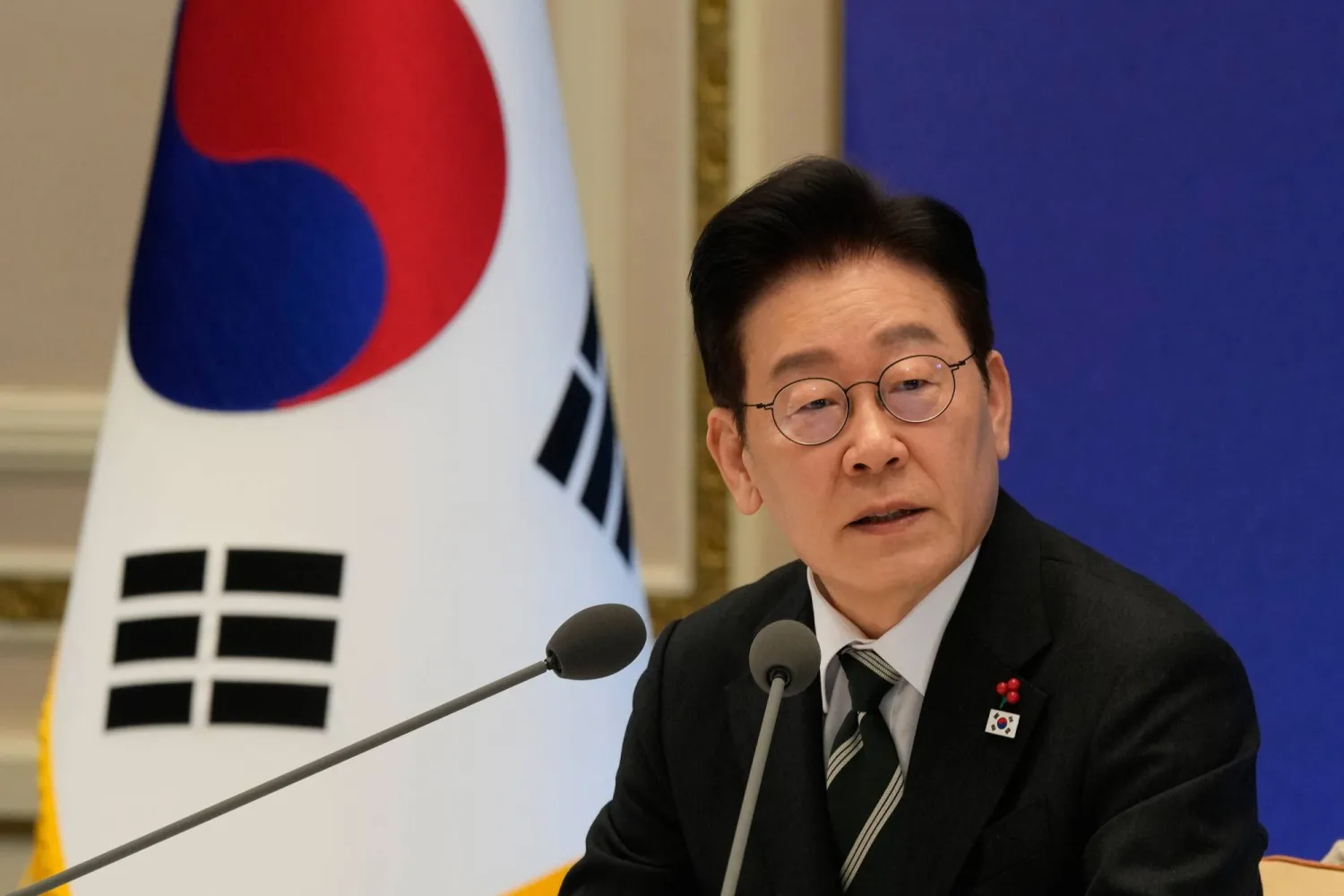
South Korean President Lee Jae Myung speaks during his new year press conference at the presidential Blue House in Seoul, South Korea, 21 January 2026. (EPA)
TT

North Produces Enough Nuclear Material a Year for 10-20 Weapons, Says S. Korea President

South Korean President Lee Jae Myung speaks during his new year press conference at the presidential Blue House in Seoul, South Korea, 21 January 2026. (EPA)

North Korea is producing enough nuclear material a year for up to 20 weapons, the South's President Lee Jae Myung said on Wednesday, warning that Pyongyang's ambitions could pose a global danger.

The North carried out its first atomic test in 2006 in violation of UN resolutions and is now believed to possess dozens of nuclear warheads.

"Even now, nuclear materials sufficient to produce 10 to 20 nuclear weapons a year are still being produced" in North Korea, Lee told reporters at a New Year news conference.

At the same time, the North is continuing to improve its long-range ballistic missile technology aimed at striking the US mainland, Lee added.

"At some point, North Korea will have secured the nuclear arsenal it believes it needs to sustain the regime, along with ICBM capabilities capable of threatening not only the United States but the wider world," he said, referring to intercontinental ballistic missiles.

"And once there is excess, it will go abroad -- beyond its borders. A global danger will then emerge," he said.

Pyongyang has for decades justified its nuclear and missile programs as a deterrent against alleged regime change efforts by Washington and its allies.

A pragmatic attitude was needed in addressing North Korea's nuclear issue, Lee said, adding the "Trump-style approach" could help in communicating with Pyongyang.

"The suspension of nuclear material production and ICBM development, as well as a halt to overseas exports, would also be a gain," he said.

"It would be a gain for everyone," he added, noting that he had laid out the argument to both US President Donald Trump and his Chinese counterpart Xi Jinping.

Since his inauguration in June, Lee has pushed for dialogue with the North without preconditions, a stark departure from the hawkish approach of his predecessor.

- 'Trump-style approach' -

While Pyongyang has snubbed Seoul's dialogue offers, Lee said Trump could pave the way forward with North Korean leader Kim Jong Un -- with whom the US leader has expressed his affinity over the years.

"President Trump is a somewhat unique figure, but I think that very trait can at times be a significant asset in resolving problems on the Korean peninsula," Lee said.

"The Trump style approach seems to help when it comes to talking with Kim ... I am willing to play the role of a pacemaker in that process."

Trump met Kim three times during his first term in efforts to reach a denuclearization deal.

But since his second summit in Hanoi fell through over differences about what Pyongyang would get in return for giving up its nuclear weapons, no progress has been made between the two countries.

Trump had expressed hopes for a meeting with Kim ahead of the APEC summit in South Korea in October, which went unanswered by the North Korean leader.

Recently North Korea accused the South of flying a drone into the border city of Kaesong.

Lee's office has denied it was behind the incursion but alluded it might have been carried out by civilians.

One man has claimed responsibility for the breach, telling local media that he had carried it out to measure radiation levels at a North Korean uranium processing facility.



UK to Supply Enriched Uranium to Ukraine, Imposes Fresh Sanctions on Russia

British Prime Minister Keir Starmer (dpa)
TT

UK to Supply Enriched Uranium to Ukraine, Imposes Fresh Sanctions on Russia

British Prime Minister Keir Starmer (dpa)

The UK will supply enriched uranium to Ukraine for its nuclear power stations and impose new sanctions against Russia, British Prime Minister Keir Starmer said ahead of a G7 summit session Tuesday.

Denouncing Russia's “barbaric strikes” on Ukraine, the UK is “stepping up” by “choking off the revenues that fuel Putin's war and powering Ukraine through the winters ahead,” his office quoted Starmer as saying, referring to Russian President Vladimir Putin.

Some £210 million ($282 million) worth of export finance will allow the UK-based Urenco to supply enriched uranium to Ukraine's nuclear power producer, Energoatom, according to his office.

“We will stand with Ukraine for as long as it takes and this announcement reinforces that, Starmer said.

Ukrainian President Volodymyr Zelensky was due to attend the summit of seven leading world powers in the French resort town of Evian-les-Bains on Tuesday, dedicated to peace and security in Ukraine and Europe.

French President Emmanuel Macron is hoping to persuade his US counterpart Donald Trump to exert more “pressure” on Russia during the G7 summit.

He told French broadcaster TF1, “I want the Americans to say: we are with you, we will continue to help Ukraine, and we will increase pressure on Russia. Proper negotiations mean Ukraine and Russia at the table together with Europeans and Americans.”


8 People Die in B-52 Bomber Crash at US Air Force Base in California

Smoke plumes rise from a B-52 bomber that crashed shortly after takeoff at a US Air Force base in Southern California, Monday, June 15, 2026. (Debbie Reyes Katz via AP Photo)
TT

8 People Die in B-52 Bomber Crash at US Air Force Base in California

Smoke plumes rise from a B-52 bomber that crashed shortly after takeoff at a US Air Force base in Southern California, Monday, June 15, 2026. (Debbie Reyes Katz via AP Photo)

A B-52 bomber crashed shortly after takeoff at a US Air Force base in Southern California’s Mojave Desert and burst into flames Monday, killing all eight people aboard, military officials said.

Aerial footage showed virtually nothing left of the aircraft that went down around 11:20 a.m. during a routine test mission at Edwards Air Force Base, which is north of Los Angeles.

Black smoke rose from a large swath of charred desert near the runway on the base, with emergency vehicles nearby.

Those on the B-52 included government contractors and uniformed military, The Associated Press reported. Aircraft manufacturer Boeing confirmed Monday evening that two of its employees were on board.

After reviewing footage of the crash, it was determined that no one could have survived, Col. James Hayes, the deputy commander for the 412 test wing at Edwards, said at a news conference.

“We lost eight great Americans,” Hayes said, adding that officials were working to notify their families.

It was not immediately clear what caused the crash, and it could take up to six months to complete an investigation, Hayes said, but shared that the B-52 was supporting the “radar modernization program.”

The Boeing B-52 Stratofortress is a long-range bomber that entered service in 1955. Designed to carry both conventional and nuclear weapons, it has been used in conflicts involving the US military from Vietnam to Iran.

In 2025, Boeing sent a B-52 to Edwards with a new, modernized radar system.

A test team planned to conduct ground and flight test activities on the aircraft throughout 2026 to feed a production decision, the air force said in a 2025 news release. The modern Active Electronically Scanned Array (AESA) radar system replaced the aircraft’s antiquated radar for efficacy. It was unclear if that was the same aircraft involved in Monday’s crash.

Edwards Air Force Base is home to a large portion of the US Air Force’s aircraft test and development efforts and is about 100 miles (161 km) north of Los Angeles. The 412th Test Wing, which runs the base, also conducts developmental testing of all Air Force aircraft, weapons systems, software and components before purchase by the service as well as throughout their lifespan.

The vast desert base is where Air Force test pilot Chuck Yeager reached a speed of Mach 1.05 and broke the sound barrier in 1947.

The airfield was closed most of Monday and all inbound aircraft were being diverted, but it reopened to people coming onto the base by late afternoon.

Non-commercial visitor passes for the base were suspended as emergency crews doused the flames.

It’s too soon to say what might have happened.

Air Force Secretary Troy Meink said he is deeply saddened by the lives lost.

“We mourn this loss and honor the service of our Airmen, civilians, and contractors who work every day to advance our mission,” he said in a post on X.


Trump Says Iran Deal Has Been Signed, Text to Come Soon

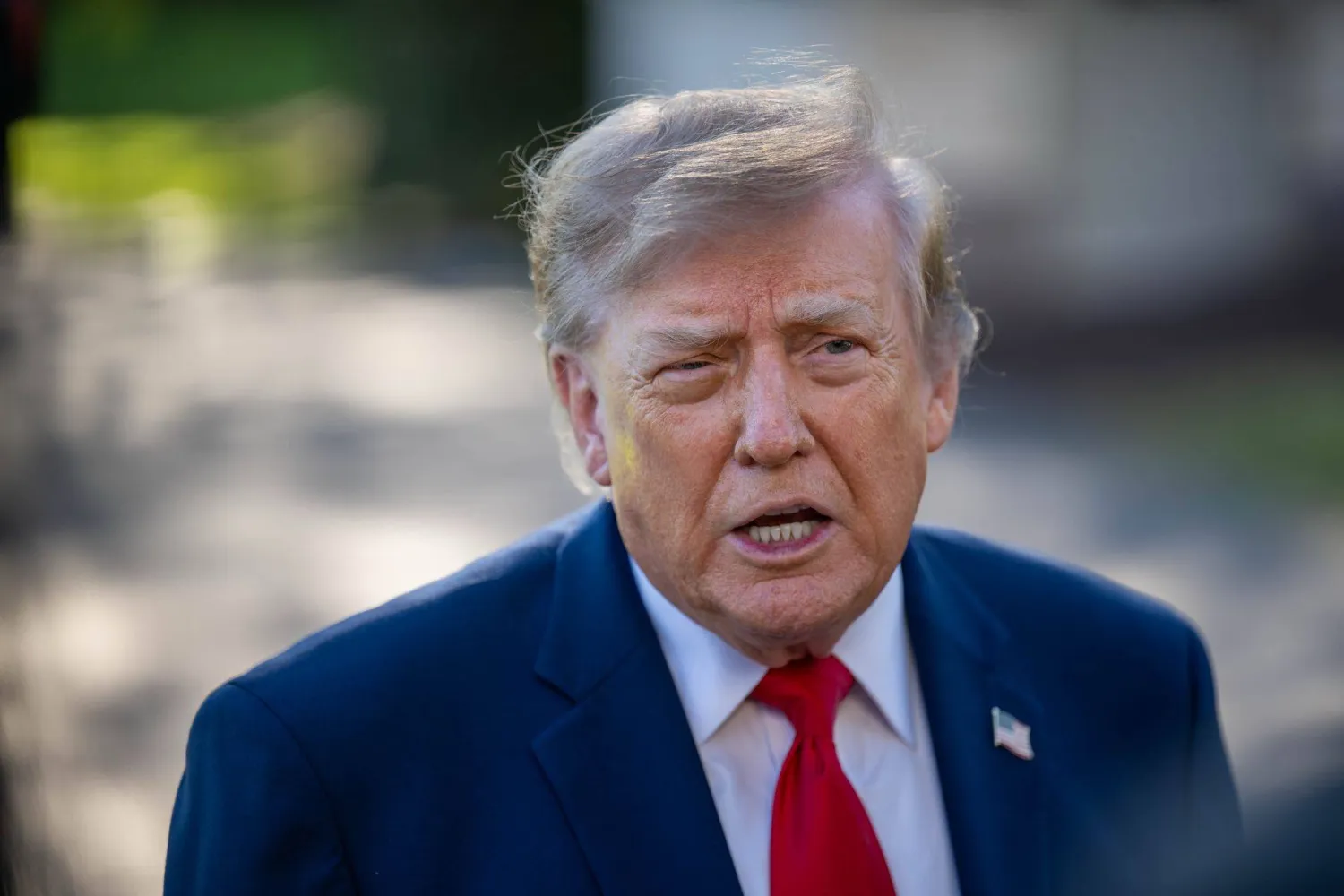
US President Donald Trump (L) shakes hands with France's President Emmanuel Macron during a bilateral meeting on the sidelines of the G7 summit, in Evian, central-eastern France on June 15, 2026. (AFP)
TT

Trump Says Iran Deal Has Been Signed, Text to Come Soon

US President Donald Trump (L) shakes hands with France's President Emmanuel Macron during a bilateral meeting on the sidelines of the G7 summit, in Evian, central-eastern France on June 15, 2026. (AFP)

US President Donald Trump on Monday said an agreement with Iran has been signed and that the text of the deal would be released sometime after a formal signing on Friday, adding that the Strait of Hormuz would also be fully open.

Speaking alongside ‌French President ‌Emmanuel Macron ahead of this ‌week's ⁠G7 meeting, Trump ⁠said he did not know if he would attend the Friday ceremony expected in Geneva, but that US Vice President JD Vance would be there.

"The deal's all signed. ⁠And the strait is ‌already partially opened, ‌as you know," Trump told reporters shortly ‌after arriving in Evian, France. "On Friday, ‌it'll be completely open."

Vance earlier on Monday said the agreement had been signed digitally on Sunday and that no funds ‌were released.

Asked when the text of the memorandum of ⁠understanding ⁠would be made public, Trump said: "Probably pretty soon. I would say after sometime after Friday... I think sometime in the very near future."

Trump said any sanctions relief for Tehran was "really a behavioral thing. If they do what they're supposed to do, that starts taking effect."

There was no immediate response from Tehran to the report that the agreement, which both sides announced overnight, had already been signed. Previous reports from both sides had suggested it would be signed officially at a ceremony in Geneva on Friday.  

In an early reminder of the agreement's fragility, Israel - which launched the war alongside the United States in February and was not consulted on the talks to end it - struck a car with a drone in southern Lebanon, where it has been battling the Iran-aligned Hezbollah movement. Iran has said the deal must bring a full cessation of hostilities there. 

The terms of the memorandum of understanding, reached after more ‌than two months of ‌negotiations, have yet to be published. A US official, speaking on condition of anonymity, said ‌he expected ⁠the terms would ⁠be made public in the next 24-48 hours. 

Oil prices tumbled on the prospect of an end to disruption to global energy supplies, and share prices soared, some hitting new records. 

Trump, who had earlier said the blockaded Strait of Hormuz would be open on Friday, said on Monday that ships had already begun transiting it. However, the US military told shippers it had not yet lifted its blockade of Iranian ports. 

60-DAY NEGOTIATION PERIOD 

According to accounts from both sides, the agreement would reopen the blockaded strait and extend a ceasefire for a 60-day negotiation period, when contentious issues such as the future of Iran's nuclear program are due to be decided. 

Meanwhile, ‌the immediate fate of the pact could hinge on Lebanon, where Israel has been battling the Iran-aligned Hezbollah armed group in parallel with the wider ‌war that it launched alongside the United States against Iran in February. 

Iran has said the preliminary agreement requires a cessation of ‌hostilities on all fronts, including in Lebanon. Israel, which was not consulted on the preliminary deal, has said it reserves the right to act in Lebanon against Hezbollah threats. 

Security sources said fighting in southern Lebanon had tamped down on Monday after the agreement was announced but had not ceased entirely. 

In the first strike of its kind since the announcement, an Israeli drone struck a car in the southern Lebanese town of Kfar Tebnit, killing the ‌driver, Lebanese state media reported. There was no immediate comment from the Israeli military on the strike. 

LEBANON HAS BEEN A STICKING POINT  

While the US and Iran had largely ceased hostilities ⁠in early April, fighting has not ceased ⁠in Lebanon, where Hezbollah opened fire on Israel in support of Tehran on March 2 and Israel responded with an air campaign and ground invasion that has uprooted some 1.2 million people. 

Iran's Foreign Minister Abbas Araqchi said there must be a complete halt to Israeli attacks against Lebanon and wrote on Telegram that the US bears responsibility for implementing the framework deal. 

Hezbollah welcomed the deal and said the inclusion of Lebanon reflected Iran's commitment to securing a halt to the war and preserving Lebanon's rights. 

Israeli Prime Minister Benjamin Netanyahu has yet to respond publicly to the US-Iran agreement. But Defense Minister Israel Katz said that Israel would remain "indefinitely" in areas it is occupying in southern Lebanon to eliminate what it perceives as militant threats.  

Privately, Israeli officials' views of the deal have been negative. One senior Israeli official told Reuters on condition of anonymity that the agreement was "terrible for Israel," and that this assessment was shared throughout the government from Netanyahu on down. 

The reopening of the Strait of Hormuz would help solve a global energy crisis precipitated by the war, which has hurt Trump's political fortunes by forcing up gasoline prices in the United States. 

"Ships of the World, start your engines. Let the oil flow!" he wrote on Sunday. 

On Monday he announced: "Ships are starting to move, many loaded up with Oil, out of the Strait of Hormuz."