


Olympic Visitors to Milan Get a Rare Chance to Glimpse Restoration of a Long-Hidden Leonardo Gem

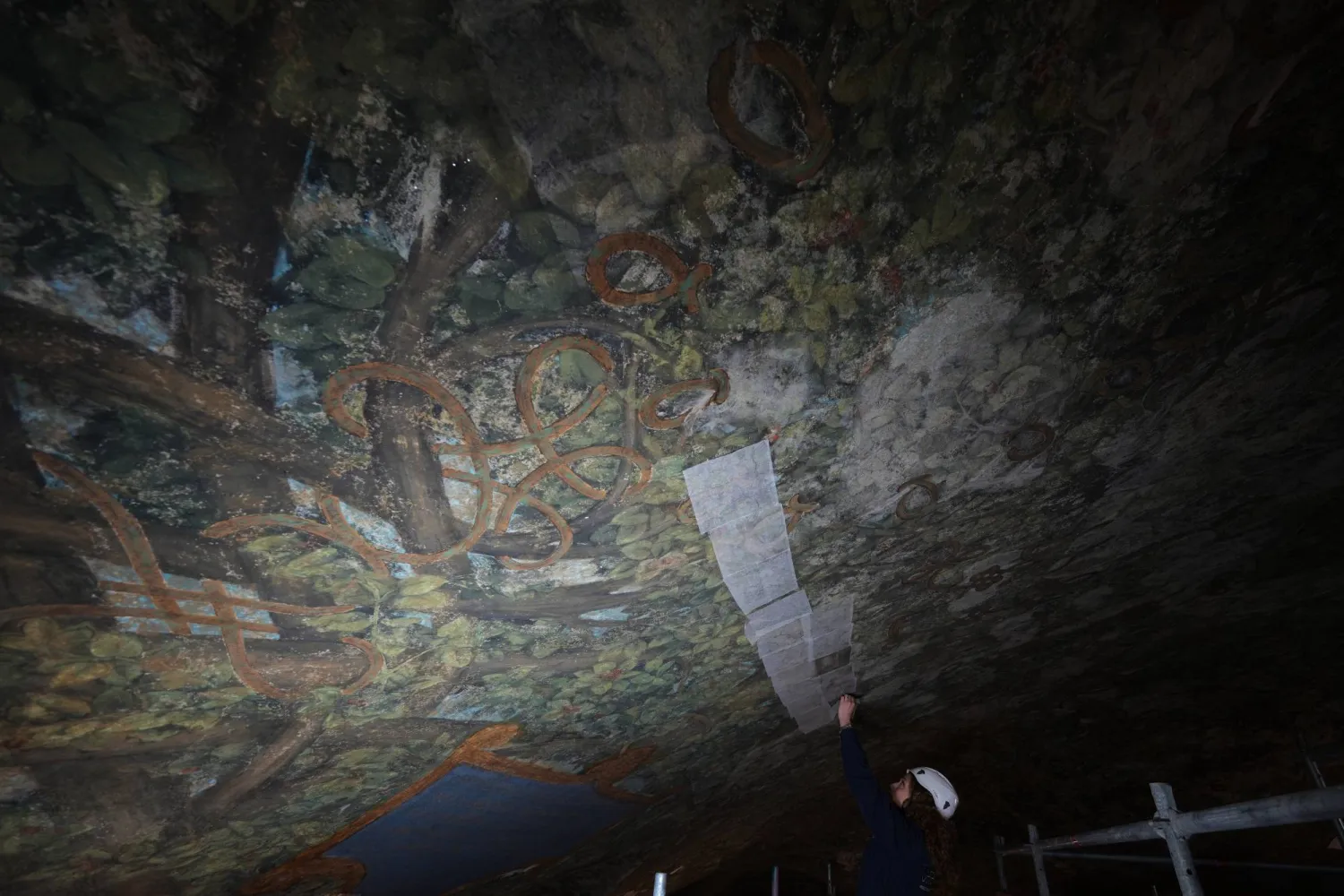
Marina Vece works on restoring the Sala delle Asse, part of the newly created Leonardo da Vinci itineraries inside Milan's Sforza Castle, Italy, Tuesday, Jan. 20, 2026. (AP)
TT

Olympic Visitors to Milan Get a Rare Chance to Glimpse Restoration of a Long-Hidden Leonardo Gem

Marina Vece works on restoring the Sala delle Asse, part of the newly created Leonardo da Vinci itineraries inside Milan's Sforza Castle, Italy, Tuesday, Jan. 20, 2026. (AP)

In honor of the Milan Cortina Olympics, Milan cultural officials are for a brief time only allowing visitors access to a long-hidden wall and ceiling painting by Leonardo da Vinci while restoration work is underway.

The vast painting of a pergola covered with intertwined flowering branches inside Milan’s Sforza Castle is concealed behind a six-meter (nearly 20-foot) towering scaffolding in the Sala delle Asse. Letters establish that Leonardo started the work, but it's one he left unfinished.

“In 1498, he had to flee because the French arrived in Milan, and after that date it was covered over, hidden,” said Luca Tosi, heritage curator at Milan’s landmark Sforza Castle, which is in the same Sempione Park where the Olympic flame will burn during the Feb. 6-22 Winter Games.

In another sign of Leonardo's impact on Milan, the Olympic cauldron itself is inspired by the Renaissance genius' geometric studies, officials announced this week.

Under the French, the castle became a military barracks and the painting, which covers the ceiling and part of the wall, was covered with plaster. The work was only rediscovered early last century, when restorers removed the plaster and filled in color to match Leonardo’s work.

“As a result, Leonardo scholars no longer recognized them as a true Leonardo, but rather as a repainted Leonardo, somewhat a fake, to use a popular term,” Tosi added.

Visitors will be able to climb up the scaffolding and view the restorers at work during a brief window from Feb. 7-March 14, after which it will be closed to the public again for another 18 months to complete the work.

Restorers are using Japanese rice paper with demineralized water to remove salts that have seeped into the walls, gradually cleaning the surface of the painting.

“The hardest part is that Leonardo’s painting is very delicate, there are some liftings, there are more fragile parts and therefore the work must be done centimeter by centimeter, with the utmost attention and care,” Tosi said.

The painting is a study of leaves and plant species that provides yet more evidence of Leonardo’s infamous scientific inquiry, said Tomasso Sacchi, Milan’s top culture official.

“It’s a thrill to know another Leonardo and to experience this extraordinary dedication to various forms of knowledge by this fundamental figure in our history,” Sacchi said.


Saudi Arabia, Syria Underline Depth of their Cultural Ties

Syrian President al-Sharaa receives the Saudi minister of culture and the accompanying delegation at the Conference Palace in Damascus on Thursday. (SPA)
TT

Saudi Arabia, Syria Underline Depth of their Cultural Ties

Syrian President al-Sharaa receives the Saudi minister of culture and the accompanying delegation at the Conference Palace in Damascus on Thursday. (SPA)

Saudi Arabia and Syria underlined the strength of their cultural relationship during high-level meetings held in Damascus on Thursday, on the sidelines of the opening of the Damascus International Book Fair 2026, where the Kingdom is participating as guest of honor.

Syrian President Ahmad al-Sharaa received Saudi Minister of Culture Prince Badr bin Abdullah bin Farhan at the Conference Palace in the capital.

Earlier the same day, Prince Badr met with his Syrian counterpart, Minister of Culture Mohammad Yassin Saleh, during an official visit to attend the fair. T

he Saudi minister congratulated Syria on hosting the exhibition and expressed his wishes for continued prosperity, progress, and stability for the Syrian government and people.

Both meetings highlighted the depth of cultural relations between the two countries, the importance of expanding joint cultural cooperation across various fields, and the alignment of positions on issues of mutual interest in a way that serves both nations.

The Saudi delegation included senior officials and advisers, among them representatives from the Royal Court, the Ministry of Culture, and the King Abdulaziz Public Library, reflecting broad institutional engagement in the visit.

In the evening, Prince Badr attended the opening ceremony of the fair’s special session, held under the patronage and in the presence of al-Sharaa. The event drew wide official and cultural participation, including Arab ministers, political and intellectual figures, and a distinguished group of writers and cultural figures.

In a post on the X platform, Prince Badr thanked “our brothers in Syria for their generous hospitality and their efforts in organizing the Damascus International Book Fair.”

The minister also inaugurated the Kingdom’s pavilion at the fair in the presence of the Syrian minister of culture and the Qatari minister of culture.

Saudi Arabia’s guest-of-honor participation continues until Feb. 16 and reflects its growing prominence and leadership in the Arab and global cultural landscape.

This participation aligns with Saudi Vision 2030, which places culture at the heart of national development, viewing it as a space for dialogue, a bridge for civilizational communication, and a tool for strengthening ties among Arab peoples.

The Saudi Literature, Publishing and Translation Commission is leading the Kingdom’s participation, highlighting the development of the cultural sector and reaffirming the central role of books as carriers of knowledge and awareness.

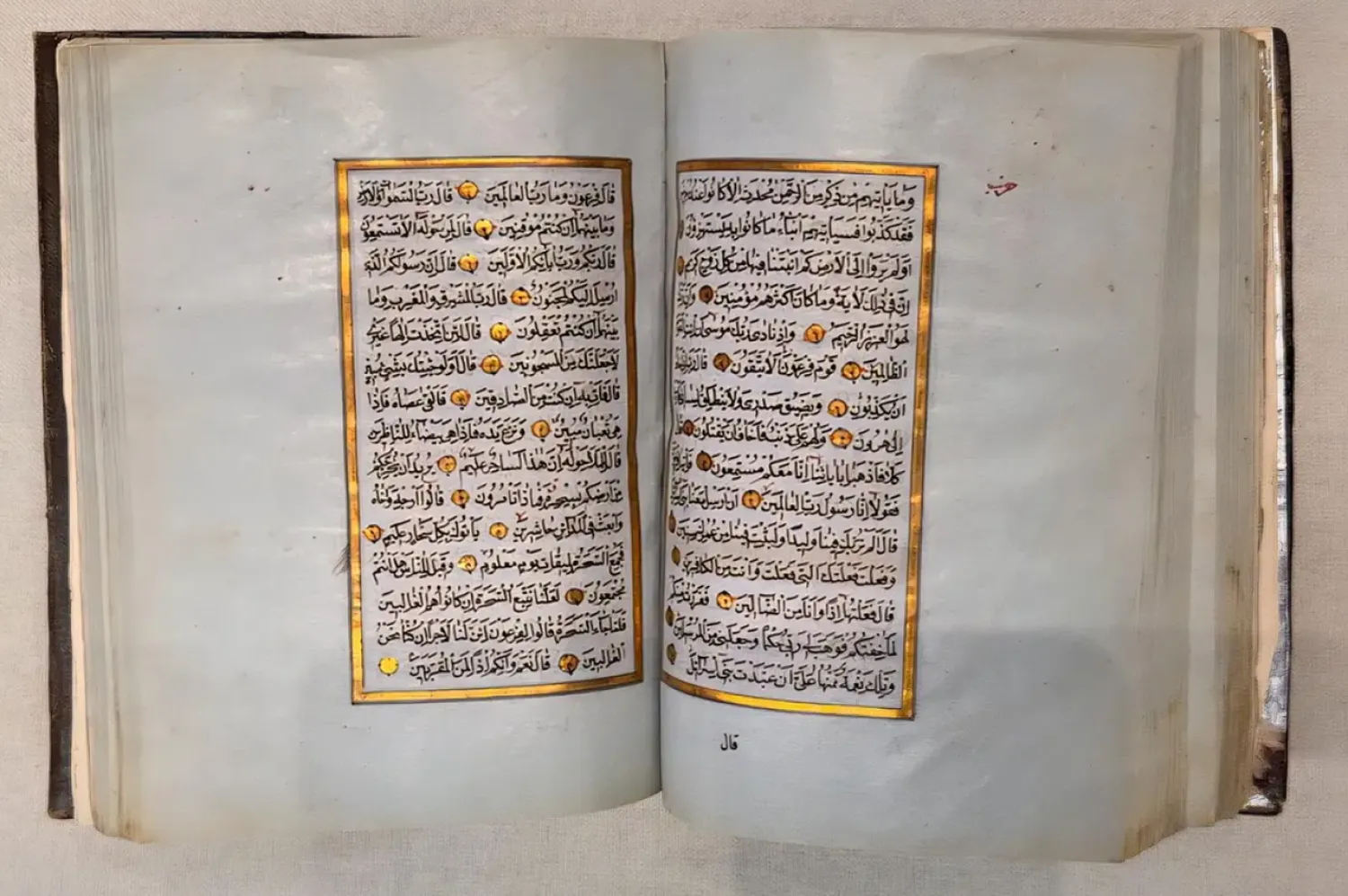
The Saudi pavilion boasts a comprehensive cultural program featuring intellectual seminars, poetry evenings, a manuscript exhibition, traditional Saudi fashion displays, hospitality corners, archaeological replicas, and performing arts that express the depth of the Kingdom’s cultural heritage.

On the sidelines of the visit, Prince Badr, accompanied by Minister Saleh, toured the National Museum of Damascus, which houses rare artifacts spanning prehistoric eras, ancient Syrian civilizations, classical and Islamic periods, as well as traditional and modern art.


UNESCO Honors Al-Bisht Al-Hasawi as Thousands Flock to Al-Ahsa Festival

Visitors can explore interactive displays, participate in live workshops, and witness the meticulous process of tailoring this iconic symbol of prestige - SPA
TT

UNESCO Honors Al-Bisht Al-Hasawi as Thousands Flock to Al-Ahsa Festival

Visitors can explore interactive displays, participate in live workshops, and witness the meticulous process of tailoring this iconic symbol of prestige - SPA

The third edition of Al-Bisht Al-Hasawi Festival is drawing thousands of regional and international visitors to Ibrahim Palace in historic Al-Hofuf.

Organized by the Heritage Commission, this year’s festival celebrates the inscription of the Bisht on UNESCO’s Representative List of the Intangible Cultural Heritage of Humanity.

The event showcases Al-Ahsa’s centuries-old tradition of hand-weaving and gold embroidery, a craft passed down through generations of local families, SPA reported.

Visitors can explore interactive displays, participate in live workshops, and witness the meticulous process of tailoring this iconic symbol of prestige.

With UNESCO's participation and representatives from six countries, the festival has evolved into a global platform for cultural dialogue, cementing the Bisht’s status as a world-class cultural treasure.


Saudi, Syrian Culture Ministers Tour National Museum of Damascus

The ministers observed the museum’s extensive collections spanning prehistoric eras to modern art. SPA
TT

Saudi, Syrian Culture Ministers Tour National Museum of Damascus

The ministers observed the museum’s extensive collections spanning prehistoric eras to modern art. SPA

Saudi Minister of Culture Prince Badr bin Abdullah bin Farhan and his Syrian counterpart, Mohammed Yassin Saleh, have toured the National Museum of Damascus during the Kingdom’s participation as guest of honor at the 2026 Damascus International Book Fair.

The ministers observed on Thursday the museum’s extensive collections spanning prehistoric eras to modern art.

A particular focus was placed on the Arab-Islamic wing, featuring significant artifacts from the Umayyad period.

The Kingdom's participation as guest of honor at the 2026 Damascus International Book Fair, which runs until February 16, stems from the role culture plays within Saudi Vision 2030.