

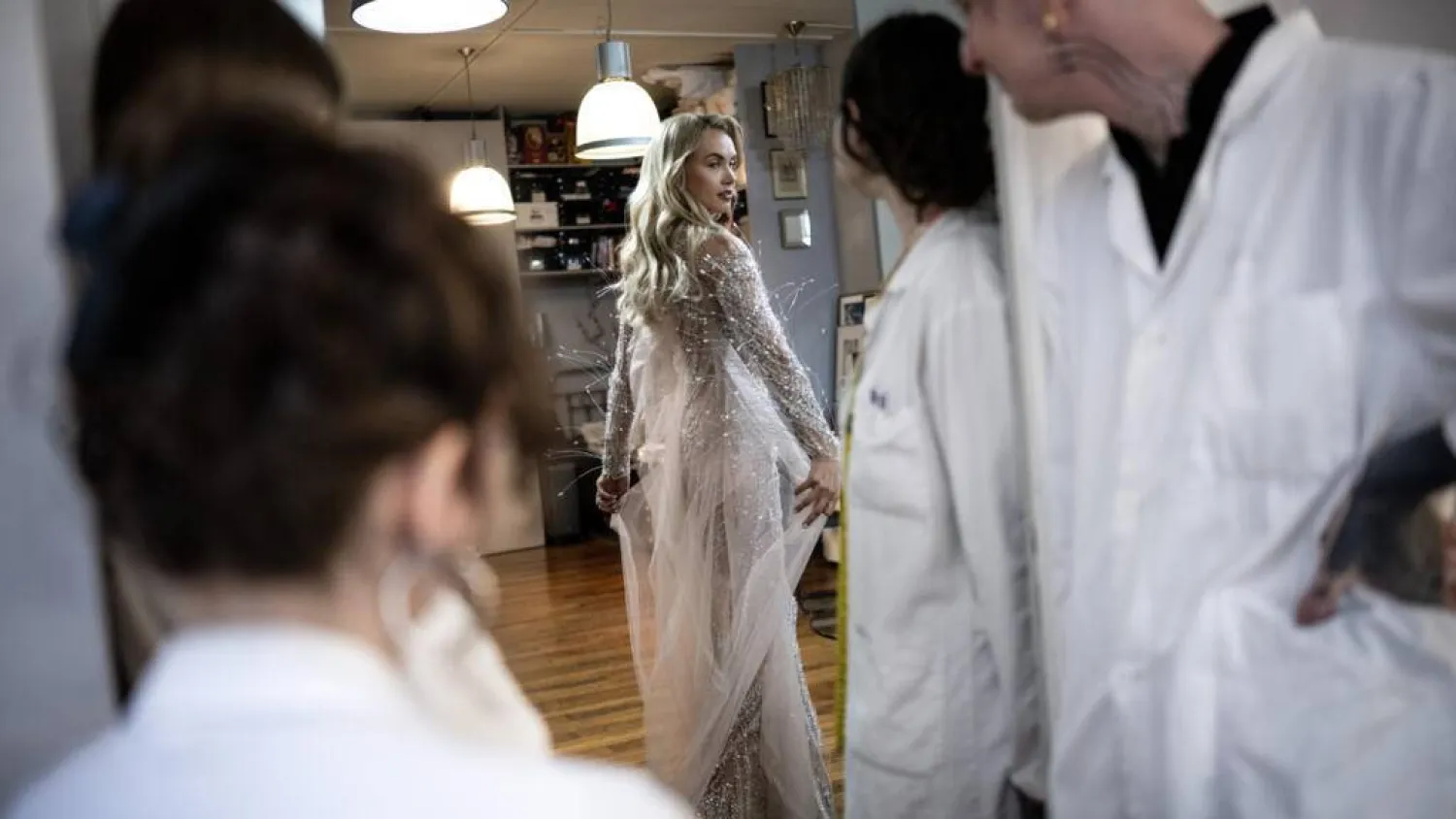

Haute Couture Week Begins in Paris

Czech model Michaela Tomanova is working with the Julien Fournie workshop in Paris for Haute Couture week. JULIEN DE ROSA / AFP
TT

Haute Couture Week Begins in Paris

Czech model Michaela Tomanova is working with the Julien Fournie workshop in Paris for Haute Couture week. JULIEN DE ROSA / AFP

Four days of ultra-exclusive Haute Couture fashion shows get underway in Paris on Monday, but how is the calendar constructed and who gets to take part? AFP has the answers.

- A restricted circle -

Only 13 houses hold the official "Haute Couture" accreditation, which is a legally protected term overseen by France's Federation de la Haute Couture et de la Mode (FHCM).

These include luxury heavyweights Dior, Chanel and Givenchy, as well as Jean Paul Gaultier, Maison Margiela, Alexis Mabille and Schiaparelli.

The designation is granted for one year only and must be renewed each season.

Some major French labels are not included, such as Saint Laurent and Hermes.

The former gave up Haute Couture in 2002 when founder Yves Saint Laurent left the house, while the latter plans to launch around 2027.

These houses are joined by seven "corresponding members", which have an activity considered similar to Haute Couture but are not based in France.

They include Italian brands Armani and Valentino, Lebanese designer Elie Saab and Dutch duo Viktor & Rolf.

The FHCM also invites several guest designers to show each season.

Syria's Rami Al Ali, France's Julie de Libran and Swiss designer Kevin Germanier are among the 28 houses showing through Thursday.

There will also be a debut by Phan Huy, who is the youngest designer ever invited to Paris Haute Couture Week by the FHCM -- aged just 26 -- and is the first Vietnamese couturier in the program.

"What is interesting is both the presence of very large houses and young designers from abroad who bring new energy and a new vision," said Pierre Groppo, fashion and lifestyle editor-in-chief of Vanity Fair France.

- Criteria -

Official Haute Couture houses must meet strict criteria to earn the label.

Designs must be original, made to measure and by hand, and created exclusively by the brand's permanent artistic director, in workshops based in France.

The house must also have two separate workshops: a "tailleur" workshop for structured, architectural garments such as jackets, coats and trousers, and a "flou" workshop for soft, fluid pieces such as dresses or blouses.

The FHCM monitoring committee also requires a workforce of at least 20 employees, as well as the presentation of two shows a year in Paris, in January and July.

In theory, houses are meant to present at least 25 looks combining daywear and eveningwear.

There is some flexibility for smaller houses, however.

"If there are only 21 or 22 looks, we're not going to play the police," Pascal Morand, head of the FHCM, told AFP, adding that the rule of two shows per year had also recently been relaxed.

- History -

Haute Couture predates ready-to-wear fashion, which is industrially produced clothing in large quantities.

Designers cater to an extremely exclusive clientele able to purchase pieces for thousands of dollars intended for red carpets, galas, weddings or other public events.

It was born in Paris in the late 19th century, with figures such as Charles Frederick Worth, Jeanne Paquin and Paul Poiret, and has been legally protected and regulated since 1945 by the French industry ministry.

Morand called it a "laboratory" of craftsmanship and creativity that is a "symbol of French identity."

In December, it was added to France's intangible cultural heritage list, the first step towards earning world heritage status which is granted by the UN's UNESCO body.

10 Years, 3,000 Creatives: The Uphill Battle for Black Talent in Italian Fashion

Afrofashion Association founder Michelle Ngonmo prepares models in the backstage of the Victor-Hart Fall/Winter 2026-2027 Men's fashion show presented in Milan, Italy, Jan. 18, 2026. (AP)
TT

10 Years, 3,000 Creatives: The Uphill Battle for Black Talent in Italian Fashion

Afrofashion Association founder Michelle Ngonmo prepares models in the backstage of the Victor-Hart Fall/Winter 2026-2027 Men's fashion show presented in Milan, Italy, Jan. 18, 2026. (AP)

A day before an emerging Ghanaian designer made his Milan runway debut, Michelle Francine Ngonmo was troubleshooting how to squeeze more people into the venue to meet demand. Hours before the show, she was up before dawn with her team setting up backstage and the showroom.

Ngonmo, a 38-year-old Cameroonian-Italian, has dedicated her professional life to helping raise the profile of Africans and other people of color in Italian fashion and other creative fields "because there was, let’s say, a lack of representation of people like me."

Ngonmo, who founded the Afrofashion Association a decade ago, produces runway shows, mentors talent and recognizes trailblazing achievements through the Black Carpet Awards, launched in 2023. Ngonmo also teaches fashion students and travels regularly to Africa to work with designers there.

In its first decade, the Afrofashion Association has worked with 3,000 people of color, including 92 who are working in creative jobs and “on a sustainable professional path," Ngonmo said.

That number is both a sign of the Afrofashion Association’s success, and a measure of how much more work there is to be done.

"Italy is no longer a white Italy, as imagined, but an Italy where there are many colors," Ngonmo said.

The Black Lives Matters movement launched a discussion in Italy about the absence of people of color in Italian fashion’s influential design studios, and designers Stella Jean and Edward Buchanan teamed up with Ngonmo to demand fashion houses replace expressions of solidarity with action.

The fashion industry won't disclose diversity numbers, but the lack seemed evident as several prominent fashion houses were emerging from scandals over racially insensitive designs or campaigns.

For several seasons, the trio mentored creatives of color under the catchphrase: We Are Made in Italy (WAMI). But slowly the spotlight faded, as diversity and inclusion money dried up and the fashion industry was plunged into an economic crisis.

"At the time there was a reaction, indeed a very strong request to have to deal with creatives, especially Blacks in Italy," Ngonmo said. "And then slowly the curtain closed because the attention was no longer on that."

Ngonmo said she now focuses her attention “on those companies, those institutions that have remained with us during these years, and look at the result we have brought.”

That includes the Italian National Fashion Chamber, which backed WAMI and is giving platforms to up and coming Black talents on the Milan Fashion Week calendar. One of them is Ghanaian designer Victor Reginald Bob Abbey-Hart, who heads the brand Victor-Hart and debuted his collection of mostly denim looks earlier this month.

Abbey-Hart, who recently designed a denim collection for Max & Co., has worked with Ngonmo to raise his profile. He has graduated from showing his looks at a Black Carpet Awards ceremony to a presentation during fashion week in September before the runway show.

The designer said his love affair with fashion started when he saw his first Gucci bag back in Ghana.

"I realized I want to go where it was made. So that was the dream," he said, despite many naysayers at home who saw only obstacles. "Coming to Italy really gave me a big door of opportunity to understand what the world really asks for, as a designer."

The Milan fashion chamber’s president, Carlo Capasa, joined top fashion editors in the front row for the packed Victor-Hart show, wearing one of the designer’s statuesque denim coats.

Capasa said projects with the Afrofashion Association have given visibility and behind-the-scenes support to more than 30 designers of color during recent fashion weeks. Ngonmo has also received support from Condé Nast’s Anna Wintour, who has met with Black Carpet Award nominees on the sidelines of Milan fashion weeks.

"There is a lot to do in diversity and inclusion everywhere in the world, for sure also in Italy," Capasa said, adding that Ngonmo’s role has been key in helping institutions "understand what were the needs" in minority communities, from mentoring to education.

Abbey-Hart said that finding opportunities as a Black man in Italy, where he has lived for the last nine years, remains hard.

"Sometimes, before you even get to the room for the interview, you’ve been disqualified already. It’s really tough, and I want people to understand," he said. "Take away the color, take away what I represent, just look at the job."


Paris Fashion Doyenne Nichanian Bows Out at Hermes after 37 Years

French designer Veronique Nichanian took over ready-to-wear Hermes menswear in 1988. GEOFFROY VAN DER HASSELT / AFP
TT

Paris Fashion Doyenne Nichanian Bows Out at Hermes after 37 Years

French designer Veronique Nichanian took over ready-to-wear Hermes menswear in 1988. GEOFFROY VAN DER HASSELT / AFP

France's Veronique Nichanian will present her final men's collection for Hermes on Saturday after 37 years as chief designer, the end of an era for the family-run firm and one of the industry's top female creatives.

Her departure adds to the upheaval at the top of the European luxury clothing sector over the last 12 months, which has seen a new generation of designers promoted at a host of brands including Chanel, Dior and Gucci, said AFP.

Many of them were barely in school when the doyenne of Paris fashion took over menswear at Hermes in 1988 with instructions from then company boss Jean-Louis Dumas to run it "like your small company".

Paris-born Nichanian helped transform a niche luxury brand known for its scarves and leather goods into a global fashion profit machine with sales of menswear estimated at several billion euros a year.

Her design philosophy mirrors her own discreet personality, with a focus on quality and comfort through quiet evolutions, rather than flashy re-invention.

"It is time to pass the torch," the 71-year-old said as she announced her departure in October, adding that she intended to relax more and fulfil "a long-standing dream" of spending several months in Japan.

Hermes is one of the few fashion houses in a male-dominated industry to have women in charge as creative directors.

Womenswear has been designed since 2014 by fellow French couturier Nadege Vanhee-Cybulski, while Nichanian will be replaced by 30-something London designer Grace Wales Bonner, who previously ran her own label.

Wales Bonner, whose work draws on her father's Afro-Caribbean roots in Jamaica and British tailoring, represents a generational and stylistic shift for the classic French house.

"Grace Wales Bonner is very modern, committed... Hermes has chosen someone who will bring not only quality, but also an image and a point of view," Marie Ottavi, a fashion journalist at France's Liberation newspaper, told AFP.

- 'Macho milieu' -

On the eve of her last show, Nichanian told the Business of Fashion website that no one at Hermes had said "you have to stop" but she had felt the need to step back due to the frenetic pace of the corporate business.

"There's so much change, it loses something magic, the something that makes people happy," she told the website about the fashion industry.

"When I talk to my friends at the different houses, they're not happy. It's not only insecurity, it's pressure."

She started out working under Italian designer Nino Cerruti, who plucked her from her Paris fashion school, L'Ecole de la Chambre Syndicale de la Couture Parisienne (ESCP).

They worked together for eight years before Hermes came knocking.

She told AFP in 2014 she had had to "work harder" and "be determined" as a woman in a man's world.

"It was a pretty macho milieu and the men didn't expect a woman to tell them what to do," she recalled of her early career.

As well as her gradual modernizing touch, she has also won fans for her attention to what she calls "selfish" details, hidden touches of luxury such as a lambskin-lined pocket.

"We women can sometimes make concessions to comfort. But men, never," she told Le Figaro newspaper in 2018. "My whole approach, therefore, is to offer them a comfort that should be felt yet remain invisible, imparting a certain sensuality and a relaxed, chic look."

Her final show during Men's Fashion Week on Saturday will be held at 8:00 pm (1900 GMT) in the historic Paris stock exchange building in the center of the French capital.

Her 76th and final show will not be a "retrospective, but full of nods" to her past work, she told Madame Figaro magazine in early January.


The Trends at Paris Fashion Week Are Statement Coats, Even Bigger Shoulders and Sharp Tailoring

 A model presents a creation by Dior for the Menswear Ready-to-wear Fall-Winter 2026/2027 collection as part of the Men Paris Fashion Week in Paris on January 21, 2026. (AFP)
A model presents a creation by Dior for the Menswear Ready-to-wear Fall-Winter 2026/2027 collection as part of the Men Paris Fashion Week in Paris on January 21, 2026. (AFP)
TT

The Trends at Paris Fashion Week Are Statement Coats, Even Bigger Shoulders and Sharp Tailoring

 A model presents a creation by Dior for the Menswear Ready-to-wear Fall-Winter 2026/2027 collection as part of the Men Paris Fashion Week in Paris on January 21, 2026. (AFP)
A model presents a creation by Dior for the Menswear Ready-to-wear Fall-Winter 2026/2027 collection as part of the Men Paris Fashion Week in Paris on January 21, 2026. (AFP)

Paris men’s Fashion Week has been arguing for a new kind of authority this season — coat-first.

Across the runways, statement outerwear, bigger shoulders and sharp tailoring have been doing the work, turning familiar staples — trench coats, suits, denim and workwear — into clothes with a harder stance.

With the fashion week heading into its final stretch, the common thread is a push to make menswear more protective, performance-minded and built for real life, without losing the showmanship that defines Paris.

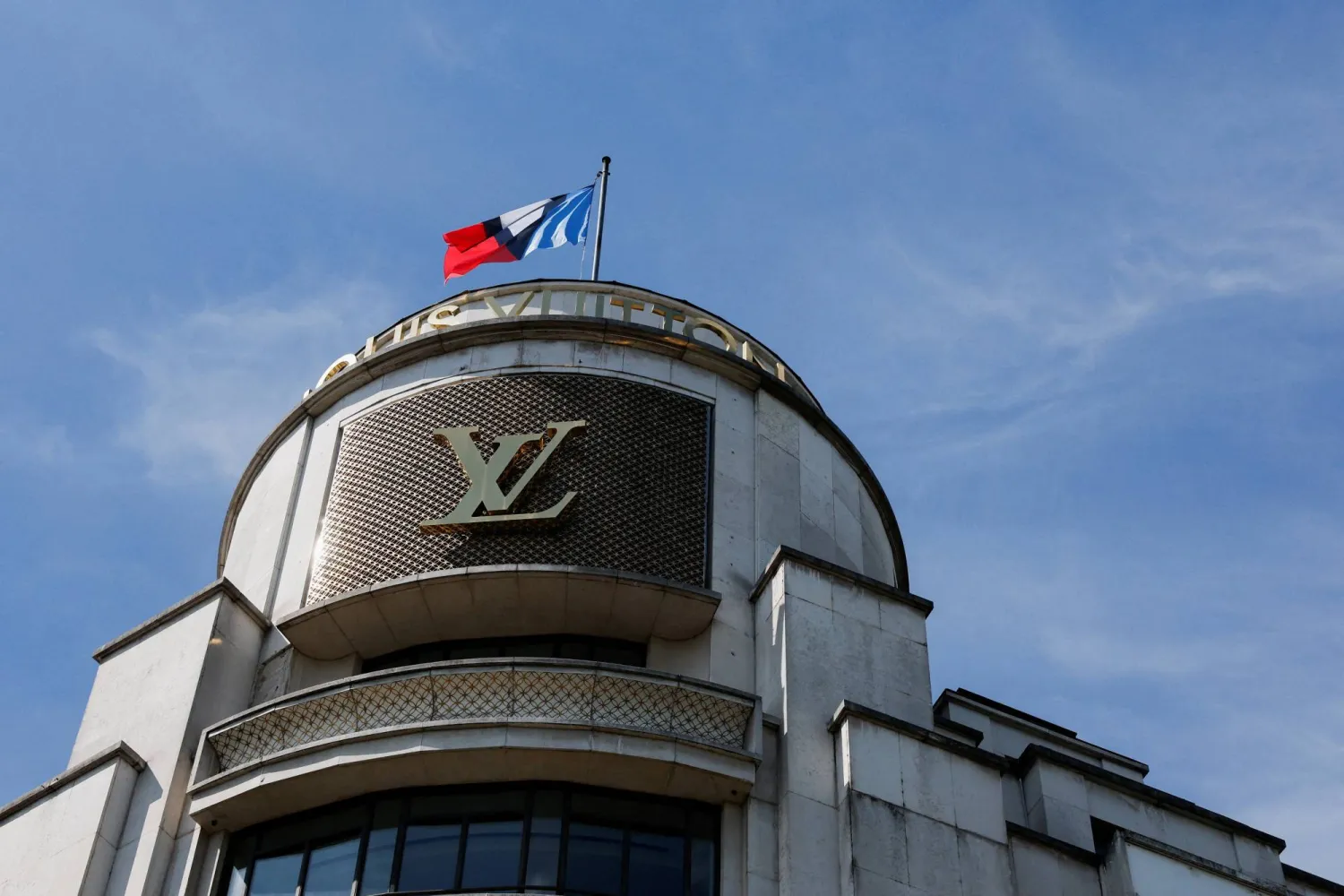
That argument landed most clearly at Dior Men, where Jonathan Anderson bent classic codes into new proportions, and Louis Vuitton, where Pharrell Williams framed luxury as practical convenience — heritage shapes upgraded with weatherproofing, reflectivity, reversibility and engineered comfort.

Other designers from Ami Paris to Rick Owens, Yohji Yamamoto and IM Men at Issey Miyake worked along the same lines: rebuild the shoulder, reshape the body, and lean into the idea of uniform, not as costume, but as modern equipment.

Celebrity presence raises the stakes

Paris menswear is also being driven by celebrity gravity, the kind that turns a runway into a global moment within minutes.

Dior’s room was packed with VIPs including Robert Pattinson, Lewis Hamilton and SZA.

Louis Vuitton delivered a front row mixing music, film and online fame — SZA, Usher, Future and Jackson Wang among them — plus a runway cameo from BamBam of GOT7.

The clothes are the product, but the frenzy is amplified by who is watching, who is posting, and who is seen.

A season built on ‘classic, but smarter’

Instead of chasing novelty for its own sake, many designers are taking familiar silhouettes and making them perform.

At Vuitton, Williams’ show was filled with recognizable pieces — double-breasted suits, blousons, polished outerwear; then the twist arrived in the materials and construction.

Tailoring carried reflective elements for night visibility.

Jackets turned into water-repellent hybrids.

Fabrics were lightened, waterproofed and sometimes embellished with crystal details that mimicked raindrops.

Accessories followed the same logic: caps designed to be crushed and returned to shape; shoes built to flex more like sneakers while still reading as traditional footwear.

The message was clear: luxury is not only a look. It is also capability.

The silhouette: shoulders, height, and controlled volume

Across brands, the silhouette focus moved upward. The shoulder became the season’s main design focus — where structure, protection and attitude all meet.

Anderson’s Dior treated tailoring history as a series of pivots.

Jackets nodded to the 1940s and early 1960s, then were cut abruptly short or shrunken to expose the hipbone.

Ordinary pieces were pushed into new scale, including a round-neck sweater extended to ankle length.

Throughout, he made the familiar feel new by changing proportion, fabric or what it was paired with.

IM Men also leaned into shoulder architecture, remixing outerwear by blending storm flaps into trench coats and amplifying volume.

Yohji Yamamoto used padding along arms and legs to give different bodies a similar shape, then controlled that bulk with buttons and adjustable details.

Even when designers disagreed on mood — sharp, romantic, severe, strange — they converged on shape: the body is being redesigned.

The mood: protection, uniform and modern armor

There has also been a clear emotional undercurrent: protection. Paris is dressing men for a world that feels harder, more uncertain, and more public.

Rick Owens described thinking about police uniforms and the impulse to mock a threat as a way of processing it.

His runway delivered skinny foundations, then added cropped jackets, tactical hybrids, leather and Kevlar-like materials, and ambiguous details that hinted at insignia without turning into costume.

His question — “sheriffs or outlaws?” — captured the season’s tension between authority and rebellion.

Yamamoto also drew from army and working clothes, but described a softer kind of protection: enveloping layers meant to endure long stretches outdoors.

IM Men’s draped, layered looks pushed a related idea, less militant than nomadic: clothing as shelter.

Paris wearability, sharpened

For all the experimentation, the week has not abandoned everyday dressing.

Ami Paris’ anniversary show was built on an idea of real Parisian style — camel coats, stripes, denim, clean tailoring — then refined through better proportion and styling.

The clothes were designed to mix easily, with small shifts that made them feel current: longer coats that sit better on the shoulder and cleaner lines.

The takeaway is that the daily wardrobe still matters, but it is being tightened and upgraded.

Dries Van Noten sharpened that idea with color and craft. Julian Klausner built the show around “coming of age" — men leaving home in hand-me-down coats, then made knitwear the engine, from structured-shoulder cardigans to patterned collar pieces on narrow coats and cloaks.

He also brought kilts and skirt-like belted layers back into the mix.

Saturated, pattern-heavy coats, including Polaroid florals and patchworked panels, showed how Paris can make a wardrobe feel new through layering, proportion and finish.

Styling as the signal

Many of the season’s strongest statements have come from styling as much as garments.

At Dior, Anderson’s “anti-normal” attitude appeared in wild wigs and ruff collars that turned what was formal and old into something sharp and slightly dangerous.

At Vuitton, the styling did the opposite — staying restrained — while letting materials and construction carry the message: classic shapes, but built for movement and weather.

While Dior and Vuitton set the tone, the rest of the schedule reinforced it in different registers — wearability with precision at Ami, confrontation and control at Owens, protection through layering at Yohji, and sculpted outerwear at IM Men.

With the week ending Sunday, the final shows will decide whether this season’s turn toward function and shape becomes a deeper shift or remains a Paris moment where luxury briefly proved it can be practical, too.