



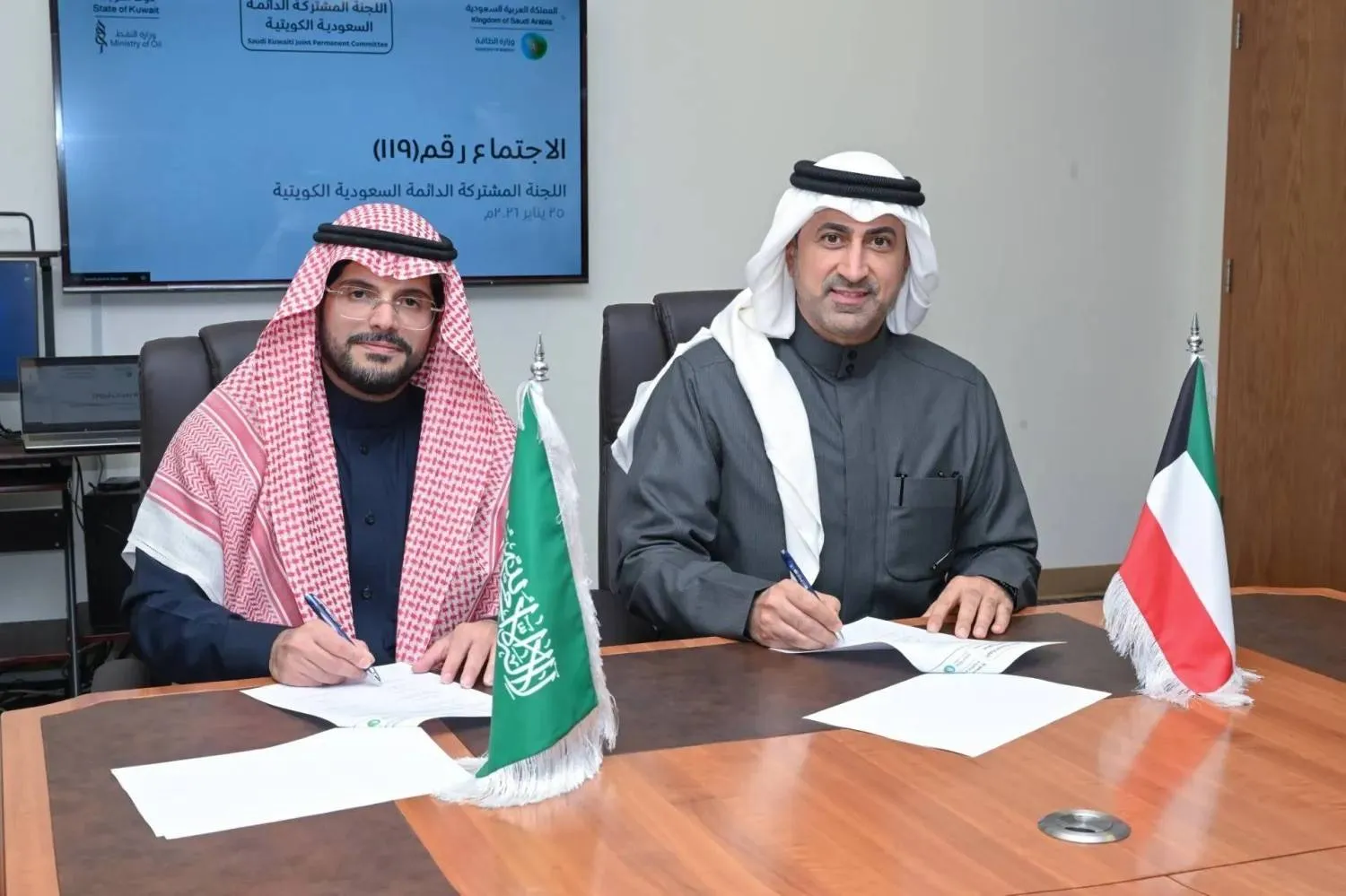

Saudi Arabia and Kuwait have discussed major projects and the establishment of a unified mechanism for tax procedures in the Divided Zone, during a meeting of the Permanent Joint Saudi-Kuwaiti Committee held on Sunday at its headquarters in Al-Khafji, Saudi Arabia.
The meeting, co-chaired by Kuwait’s Undersecretary of the Ministry of Oil, Sheikh Dr. Nimer Fahad Al-Malik Al-Sabah, and Saudi Arabia’s Assistant Minister of Energy, Mohammed Al-Brahim, reviewed progress in creating a unified tax framework aimed at providing a clear regulatory structure for relevant authorities, improving revenue organization, boosting procedural efficiency, and ensuring fairness and transparency in line with shared interests.
The meeting examined reports on petroleum operations in the onshore and offshore areas of the Divided Zone, including strategic plans, current and future projects, potential challenges to implementation, and the use of advanced technologies in oil operations, environmental and safety initiatives, development plans, and national workforce training.
According to the Kuwaiti Ministry of Oil, the meeting forms part of ongoing efforts to implement the memorandum of understanding signed between the two countries on December 24, 2019, strengthening bilateral coordination and serving their strategic interests in the Divided Zone.
The committee reviewed completed procedures for the evacuation of Chevron Saudi Arabia from its sites in the Al-Zour area. The Kuwaiti government officially took over the locations on January 20, reflecting a high level of institutional cooperation between the two sides.
The meeting addressed efforts to allocate dedicated routes at the Al-Nuwaiseeb and Al-Khafji border crossings for joint operations personnel, including the opening of a new lane and the provision of technical infrastructure, which has facilitated staff mobility and eased logistical challenges.
Officials further reviewed development and investment plans for onshore and offshore fields, emphasizing the need to accelerate implementation and provide full support for engineering and technical works.
Sheikh Nimer Al-Sabah stressed the importance of holding regular committee meetings to monitor petroleum operations, address challenges, and advance strategic projects. He praised the close cooperation between Kuwait’s Ministry of Oil and Saudi Arabia’s Ministry of Energy, as well as joint operations involving the Kuwait Gulf Oil Company, Aramco Gulf Operations Company, and Chevron Saudi Arabia.


