


Puma’s Long Slide: The Rise and Fall of a German Sports Icon

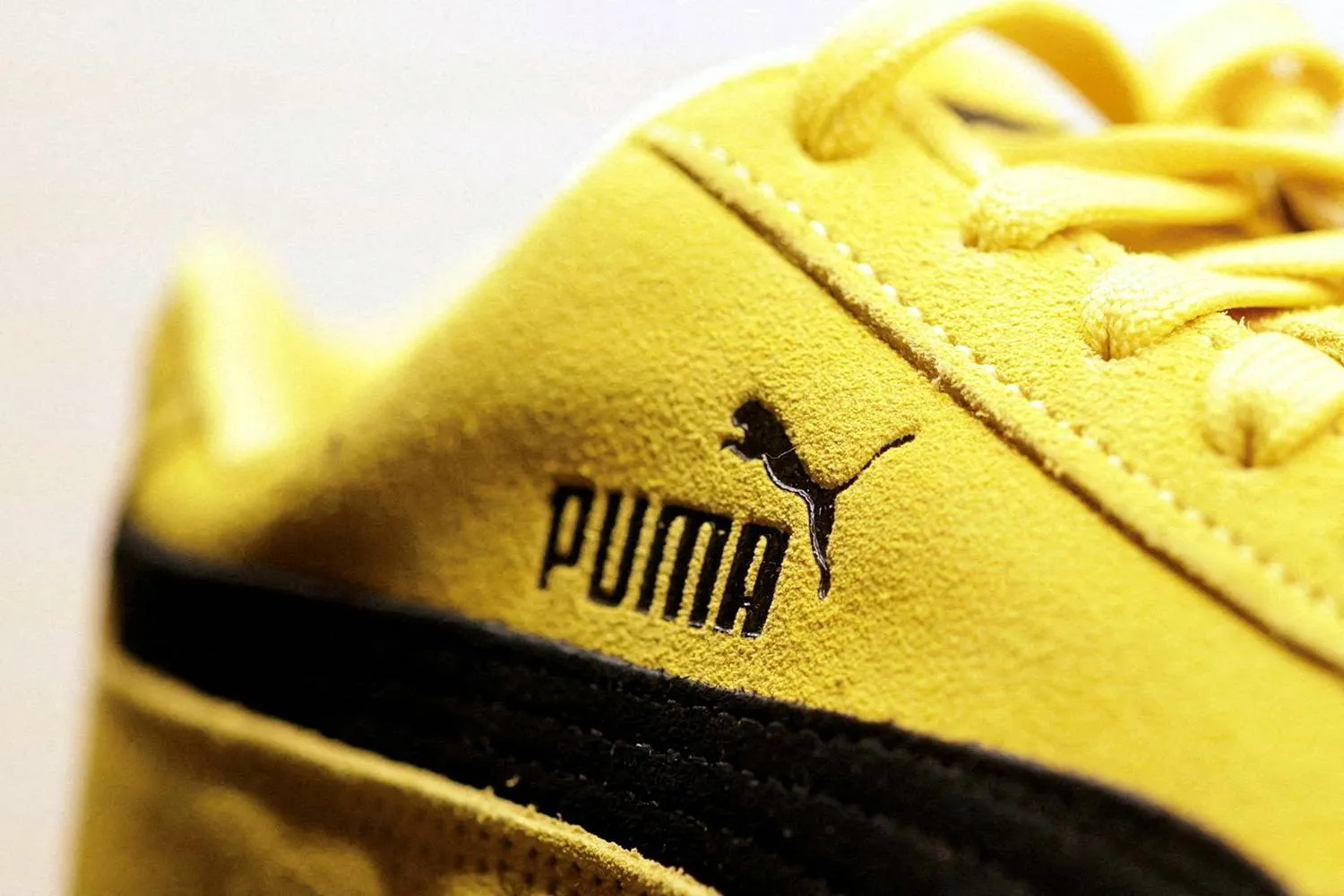
A Puma logo is seen on a Puma Speedcat OG sneaker displayed at the Puma Mostro House in Paris, France, January 24, 2025. (Reuters)
TT

Puma’s Long Slide: The Rise and Fall of a German Sports Icon

A Puma logo is seen on a Puma Speedcat OG sneaker displayed at the Puma Mostro House in Paris, France, January 24, 2025. (Reuters)

Germany's Puma and fierce rival Adidas have their roots in the ​very same house where brothers Rudolf and Adolf Dassler launched their shoe business a century ago, before a major fall-out between the siblings split the company in two.

From the split of the original company Geda, Rudolf founded Ruda - later renamed Puma - while Adolf founded Adidas. The two firms' headquarters remain just a short walk from each other in the Bavarian town of Herzogenaurach.

Now Puma is set to come under the wings of China's top sportswear firm Anta, which would become its biggest shareholder in a $1.8 billion deal aimed at turning around one of Europe's most iconic sports brands that has fallen sharply from grace.

Puma, with its leaping wildcat logo, has struggled to win consumers to ‌its sportswear and ‌Speedcat sneakers, even as Adidas has streaked ahead with its retro Terrace ‌shoes - widening ⁠a ​sales gap ‌between the two firms.

"Puma became ... too dependent on maybe lifestyle products rather than performance sports shoes, which really drove this industry," said Morningstar analyst David Swartz, adding its lower revenues meant it had less to spend on star names boosting the brand.

"So they don't have the visibility."

CHALLENGES FROM EMERGING BRANDS

Puma was the no. 3 in sportswear after Nike and Adidas until recent years, competing to churn out cool sneakers and win top athletes and soccer-team sponsorships. But as newer brands like On Running and Hoka grew, Puma fell off the pace.

"Puma has become too commercial, over-exposed in the wrong channels, with ⁠too many discounts," Puma's CEO Arthur Hoeld, formerly sales chief at arch-rival Adidas, said in October.

The Anta deal for the 29% stake held by ‌the Pinault family behind Gucci-owner Kering, could give the firm an opportunity to ‍regain some ground lost, including in China. The deal pushed ‍Puma's shares up 9% on Tuesday.

"We have a lot of insight how to make Puma more ‍successful in China," Wei Lin, global vice president for sustainability and investor relations at Anta, told Reuters. "It is one of the most valuable brands in this industry."

The Anta deal values Puma at some $6.2 billion. Its enterprise value is around one times its forecast sales for 2027 using Visible Alpha analyst estimates, relatively cheap compared to rivals including Adidas, Nike and Swiss firm On.

SPEEDCAT VERSUS ​SAMBA

Puma, founded in 1948, has a long history of outfitting athletes with track spikes and soccer boots, then made in its Herzogenaurach factory and now mostly sourced from factories in China, Vietnam, ⁠and Indonesia.

While Adidas boomed, Puma climbed too and its stock hit a peak of 115 euros in late 2021. Since then, though, it's slid, losing 80% of its value. Its market cap on Tuesday was 3.2 billion euros ($3.8 billion), an eighth of the size of Adidas.

Trade war uncertainties have hit the retail sector as a whole in recent years, but Puma has particularly suffered.

It has been under pressure as sportswear competition intensified and its recent sneaker launches, including the Speedcat, have been overshadowed by Adidas' Samba and other "terrace" shoes - retro models inspired by soccer fans' footwear in the 1970s and 1980s.

CEO Hoeld, in charge since July last year, announced in October a turnaround plan aiming to cut 900 corporate jobs, to discount less, improve marketing and reduce its product range.

Felix Dennl, retail analyst at German bank Metzler, said Adidas had put pressure on Puma by getting a "head start" on sneakers.

"Adidas was a first mover in capitalizing on the retro sneaker ‌trend, roughly six months before Puma," he said.

"This not only allowed Adidas to get a head start... but also transfer the brand heat generated across lifestyle footwear into performance franchises."

Valentino Mixes 80s and Baroque Splendor on Rome Return

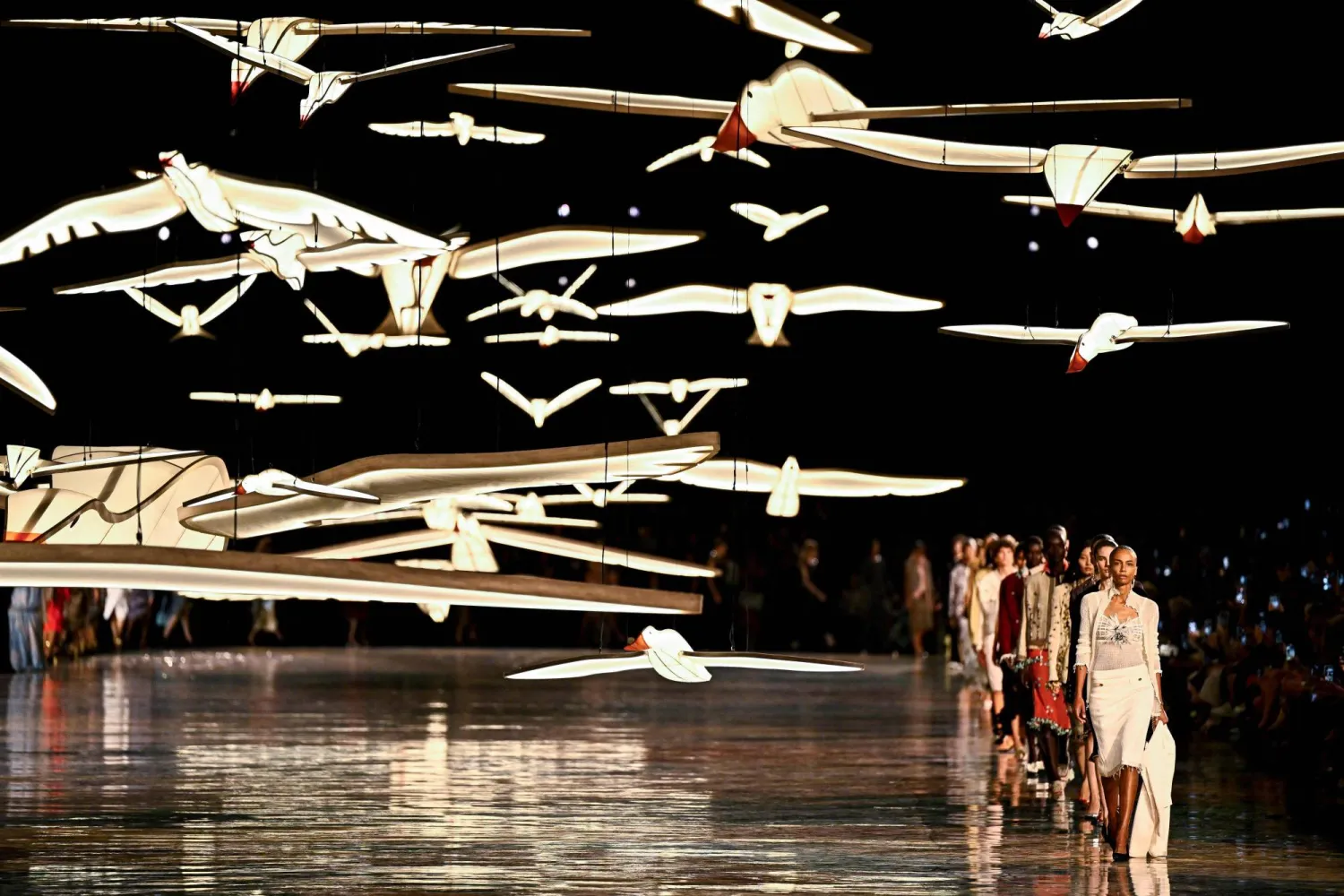
Models present creations from Valentino's Fall/Winter 2026/2027 collection at Palazzo Barberini, in Rome, Italy, March 12, 2026. REUTERS/Yara Nardi
TT

Valentino Mixes 80s and Baroque Splendor on Rome Return

Models present creations from Valentino's Fall/Winter 2026/2027 collection at Palazzo Barberini, in Rome, Italy, March 12, 2026. REUTERS/Yara Nardi

Italian fashion house Valentino returned to its roots Thursday with a 1980s-inspired catwalk show in one of Rome's most spectacular venues, two months after the death of founder Valentino Garavani.

Around 700 people including Hollywood star Gwyneth Paltrow were invited to the show held in the galleries of the Palazzo Barberini, a Baroque palace now home to masterpieces by Caravaggio, Raphael and many others.

Valentino, known for dressing some of the world's most glamorous women, normally shows in Paris, despite having been established in the Italian capital in 1960.

But creative director Alessandro Michele chose to return to the Eternal City for his fall/winter 2026-27 collection, the first for ready-to-wear since the founder's death aged 93 on January 19.

Under Pietro da Cortona's spectacular ceiling fresco, "The Triumph of Divine Providence", male and female models walked out onto fake grass in outfits heavily inspired by the 1980s.

There were strong shoulders, cinched waists and mini-skirts, accessorised with glittering oversized jewellery, including giant pearls and chunky pendants.

Michele, who took over in 2024, said that during the late 1980s and 1990s "Valentino was still working like crazy and making, from his hands, beauty".

It was a time of "positivity" and "empowerment", when women in particular were becoming more in control of their bodies, he told reporters backstage.

Working with pleats and draping the fabrics around their bodies, Valentino "was building the idea of a goddess... putting women in the centre of the world".

The final dress of Michele's collection Thursday, a longsleeved gown with a deep cut at the back, was a showstopper in the house's signature red.
"Red is very difficult to manage," Michele admitted, but said it was crucial to the brand.

- Perfect world -

The models reached the galleries via Francesco Borromini's helical staircase, one of two in the palazzo, the other a square design by Gian Lorenzo Bernini.

Commissioned at the same time, they reflect the palazzo's ability to have "divergent forces cohabit without neutralizing one another", Michele said in the show notes.

Along the same vein, the collection -- entitled "Interferenze" (interferences) -- demonstrated contrasts between "code and deviation, lightness and gravity", he wrote.

Valentino, who dressed A-listers from Jackie Kennedy and Elizabeth Taylor to Princess Diana and Julia Roberts, became synonymous with glamour and beauty.

Speaking to reporters, Michele said the designer made things that were "perfect", but "we no longer live in that perfect world".

"I do it my way, because I am the interference myself," he said.

- Very important clients –

The invite-only, black-tie show was a lavish affair, with many guests invited to a dinner afterwards, and brought to the venues in official cars.

It was broadcast live on Valentino's social media channels and on big screens around Rome, Milan and Naples -- but it was those inside the room who the house wanted to wow.

Of the estimated 700 guests invited, 200 were journalists and VIPs, with the rest VIC -- very important clients, according to a Valentino insider.

Like other fashion houses, Valentino has been buffeted by the myriad of challenges facing the wider luxury industry, from slowing demand to inflation and geopolitical uncertainty.

Michele helped transform Gucci during his seven years there, and Valentino is hoping he will do the same for them.

The label is 70 percent owned by Qatar investment fund Mayhoola, while French luxury group Kering has a 30 percent stake.


South Sudan Models Dominate Global Catwalks but Visas a Problem

Professional models from the Juba-based modelling agency Jubalicious practice their catwalking during a modelling training session at a hotel in Juba on February 19, 2026.  (Photo by Luis TATO / AFP)
Professional models from the Juba-based modelling agency Jubalicious practice their catwalking during a modelling training session at a hotel in Juba on February 19, 2026. (Photo by Luis TATO / AFP)
TT

South Sudan Models Dominate Global Catwalks but Visas a Problem

Professional models from the Juba-based modelling agency Jubalicious practice their catwalking during a modelling training session at a hotel in Juba on February 19, 2026.  (Photo by Luis TATO / AFP)
Professional models from the Juba-based modelling agency Jubalicious practice their catwalking during a modelling training session at a hotel in Juba on February 19, 2026. (Photo by Luis TATO / AFP)

Heels click on cracked paving stones as fantastically long-limbed men and women practice moves they hope will whisk them away from South Sudan, one of the fashion world's favorite scouting locations.

Many hope to follow in the footsteps of their compatriot Awar Odhiang, who went from a refugee camp in Ethiopia to closing Chanel's Paris Fashion Week show last year.

South Sudan has been mired in conflict, poverty and corruption since its independence in 2011, but the success of its models has been a ray of positivity.

No less than nine of the top 50 models currently listed on Models.com are originally from the east African country.

"Paris, Milan, London -- the fashion industry is dominated by South Sudanese boys and girls at the moment," said Doris Sukeji, founder of the Jubalicious modelling agency in the capital Juba.

"Mostly it's the skin color. That is how most of the South Sudanese get signed. They are looking for very dark models," she said.

One of the first to blaze a trail was Alek Wek, scouted in London in the 1990s after her family fled an earlier war.

It was an image of Wek on her mother's Facebook feed that inspired Yar Agou, 19, now signed with Jubalicious.

"Damn! I saw her and I thought that is me one day if God is there. I want to make it like her," she told AFP in Juba.

All skinny-long limbs and charming attitude, Agou has what it takes for the runway, but politics is standing in the way of her dream.

She was supposed to be working at the recent Milan Fashion Week, but her visa was rejected at the last minute. For now, she is working as a cleaner, hoping there will be more opportunities.

- 'Heartbroken' –

Successful models can earn tens of thousands of dollars in a season, a life-changing amount in South Sudan where 92 percent live under the poverty line.

But Sukeji said seven men and women had been rejected for visas in recent months despite having work sponsors, as the climate against immigrants hardens in the West.

"You get heartbroken," she said.

Bichar Hoah, 24, raised by a single mother in Kakuma refugee camp in neighboring Kenya, was recently rejected for a European visa.

"There are some people who discourage us by saying that we tried and failed... (but) I want to represent South Sudan as a model," he said, hoping to change the narrative around his country.

- 'A chance' –

But even those who make it abroad face immense challenges in an industry known for relentless turnover.

Clients constantly want "new faces," Sukeji said.

There are added challenges in a conservative country like South Sudan.

As well as physical requirements -- tall but not above 5 foot 11 (1 meter 80) for women -- Sukeji must also contend with families who view modelling as a cover for prostitution.

"I always ask them to give the boy or the girl a chance," she said.

She brings them in for free training, which can take up to three months, taking a 10-percent cut if they get work.

Her trainer, drilling the models with the precision of a military sergeant when AFP visited, said many were like "newborn babies" when they started.

But as the young models gathered on a Juba rooftop to practice their struts, there was hope for a future beyond South Sudan's poverty and ever-present threat of war.

"One day, really, South Sudan will change," said Agou.

All hope they can emulate the likes of Anyier Anei, who landed international modelling gigs and recently starred in French film "Coutures".

"Failure is less frightening than having dreams you never try to achieve," Anei told Harper's Bazaar recently. "Even with fear, you have to take that risk."


Zalando Says AI Drives Productivity and Expects Higher Profit, Shares Jump

FILED - 22 October 2013, Thuringia, Erfurt: A general view of the logistics center of online retailer Zalando in Erfurt. Photo: Marc Tirl/dpa-Zentralbild/dpa
TT

Zalando Says AI Drives Productivity and Expects Higher Profit, Shares Jump

FILED - 22 October 2013, Thuringia, Erfurt: A general view of the logistics center of online retailer Zalando in Erfurt. Photo: Marc Tirl/dpa-Zentralbild/dpa

European online fashion retailer Zalando said on Thursday its use of artificial intelligence was making its business more efficient and productive, as it forecast full-year adjusted operating profit to grow in 2026 and launched an up to 300-million-euro ($346 million) share buyback.

Zalando shares jumped 7% in early trading as investors welcomed the positive outlook, providing some succour to the stock that had tumbled sharply from peaks in 2021 when the pandemic boosted online shopping.

Zalando ⁠said AI-generated product ⁠images were saving money and time on ad creation and enabling it to publish 70% more content, while an AI virtual try-on was also helping shoppers pick their correct size, reducing size-related returns - a major headache for online shopping platforms.

Analysts said concerns had been growing over the risk to Zalando from AI, with some worried consumers could use large-language models like ⁠ChatGPT to research products and shop online, bypassing the company's platform.

The Berlin-based company, which sells clothes, shoes and accessories from thousands of brands including Nike, Hugo Boss, and Coach, expects adjusted earnings before interest and taxes (EBIT) of 660 million to 740 million euros in 2026, compared with 591 million euros in 2025.

"We are providing our customers and partners with experiences and services that seemed impossible just a few years ago while making our own operations more efficient," Robert Gentz, co-CEO of Zalando, said in a statement.

Zalando, whose business-to-business arm sells services to other retailers and ⁠brands, also announced ⁠its software unit Scayle signed a deal with Levi's to run its worldwide ecommerce, which JP Morgan analysts said investors would welcome given the brand's status and size.

The company expects gross merchandise volume growth of 12% to 17% in 2026, after GMV - a key revenue metric measuring the value of all goods sold - grew 14.7% to 17.56 billion euros in 2025.

Zalando's active customer numbers increased to 62 million in 2025 from 51.8 million in 2024, while the average order value was 62.8 euros, up from 61 euros a year earlier.

The company said it would repurchase up to 20 million shares with a total price of up to 300 million euros.