
Hezbollah announced on Saturday that it will not cooperate with authorities in disarming its weapons north of the Litani River.
Hezbollah MP Hussein al-Hajj Hassan said: “Lebanon did everything asked of it. We have absolutely nothing else to offer or speak about north of the Litani.”
Army Commander Rodolphe Haykal is set to travel to the United States next week on an official visit where he will meet with military officials ahead of a Paris conference on March 5 to support the army. The donor conference aims to provide funds to the military and back its other duties, such as securing the border with Syria.
Hezbollah’s refusal to cooperate north of the Litani is a sign of the daunting task ahead of the army. The Iran-backed party had cooperated with it south of the Litani in line with the first phase to impose state monopoly over arms across Lebanon.
Significantly, Hezbollah’s ties with President Joseph Aoun have become strained in recent weeks amid the latter’s remarks that he is committed to the disarmament plan.
Lebanese sources following up on the government’s plan and contacts with Hezbollah said work north of the Litani demands political and security efforts to be successful.
The sources told Asharq Al-Awsat that the region north is much larger than the one south of it, which demands greater security and political cooperation with Hezbollah.
Hezbollah had reluctantly cooperated with the military south of the Litani.
The US is closely monitoring the situation in Lebanon, as well as the army’s disarmament plan.
Hajj Hassan criticized Lebanese officials, saying they were yielding to “American demands and pressure without having a clear strategic vision. They are just complying with the demands without confronting them with a comprehensive national strategy.”
“How do you intend to deal with the demands of the enemy [Israel] if you don't have any negotiating cards?” he asked.
“Concessions will only lead to endless concessions,” he warned, while urging the government against “ignoring Israel’s ongoing violations and crimes against Lebanon.”
He demanded that Israel withdraw from Lebanese regions it is occupying, end its daily violations and release prisoners. This will pave the way for reconstruction and a national security strategy.
“Only then can we talk about the weapons,” he stressed. “Other than that, we will not grant the enemy what it couldn’t achieve during the most challenging period of the wars that we waged against it with great perseverance.”
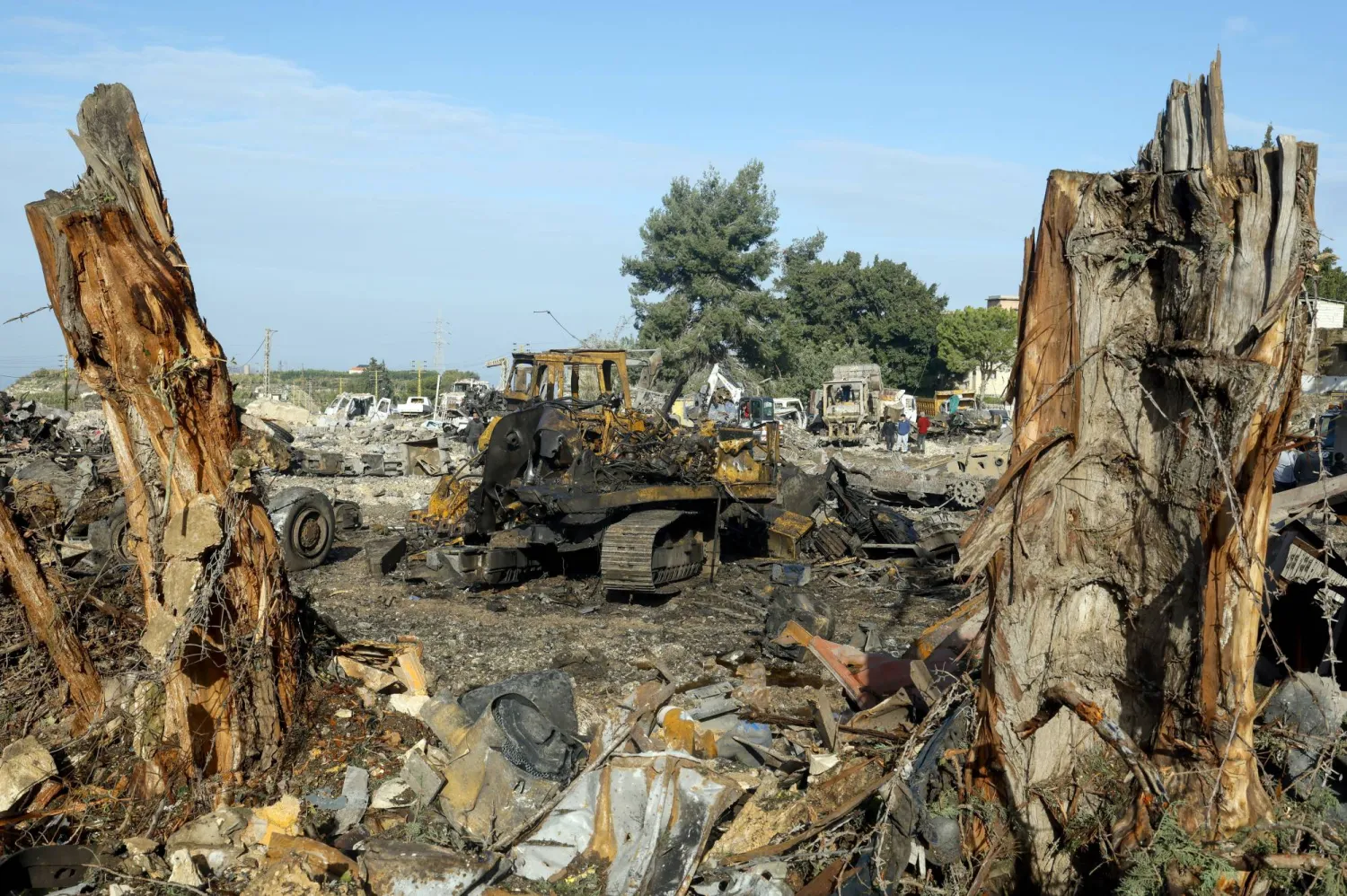
An Israeli strike on south Lebanon killed one person on Saturday, Lebanese authorities said, as the Israeli army said it targeted an operative from the party
Israel has kept up regular strikes in Lebanon despite a November 2024 truce that sought to end more than a year of hostilities including two months of all-out war with Hezbollah.
It usually says it is targeting members of the group or its infrastructure, and has kept troops in five south Lebanon border areas that it deems strategic.
Lebanon's health ministry said one person was killed in a strike on the village of Rub Thalatheen, close to the Israeli border.
The state-run National News Agency reported a man was killed in the strike while "carrying out repair work on the roof of a house".
The Israeli army said in a statement that it killed a Hezbollah operative "who took part in attempts to reestablish Hezbollah terror infrastructure in the Markaba area", adjacent to Rub Thalatheen.
It called the alleged activities "a violation of the ceasefire understandings between Israel and Lebanon".
This month, Lebanon's army said it had completed the first phase of its plan to disarm Hezbollah, covering the area south of the Litani river, around 30 kilometers (20 miles) from the Israeli border.
Israel, which accuses Hezbollah of rearming, has criticized the army's progress as insufficient, while Hezbollah has rejected calls to surrender its weapons.
More than 360 people have been killed by Israeli fire in Lebanon since the ceasefire, according to an AFP tally of health ministry reports.