


Egypt's Non-oil Private Sector Output Keeps Growing, PMI Shows

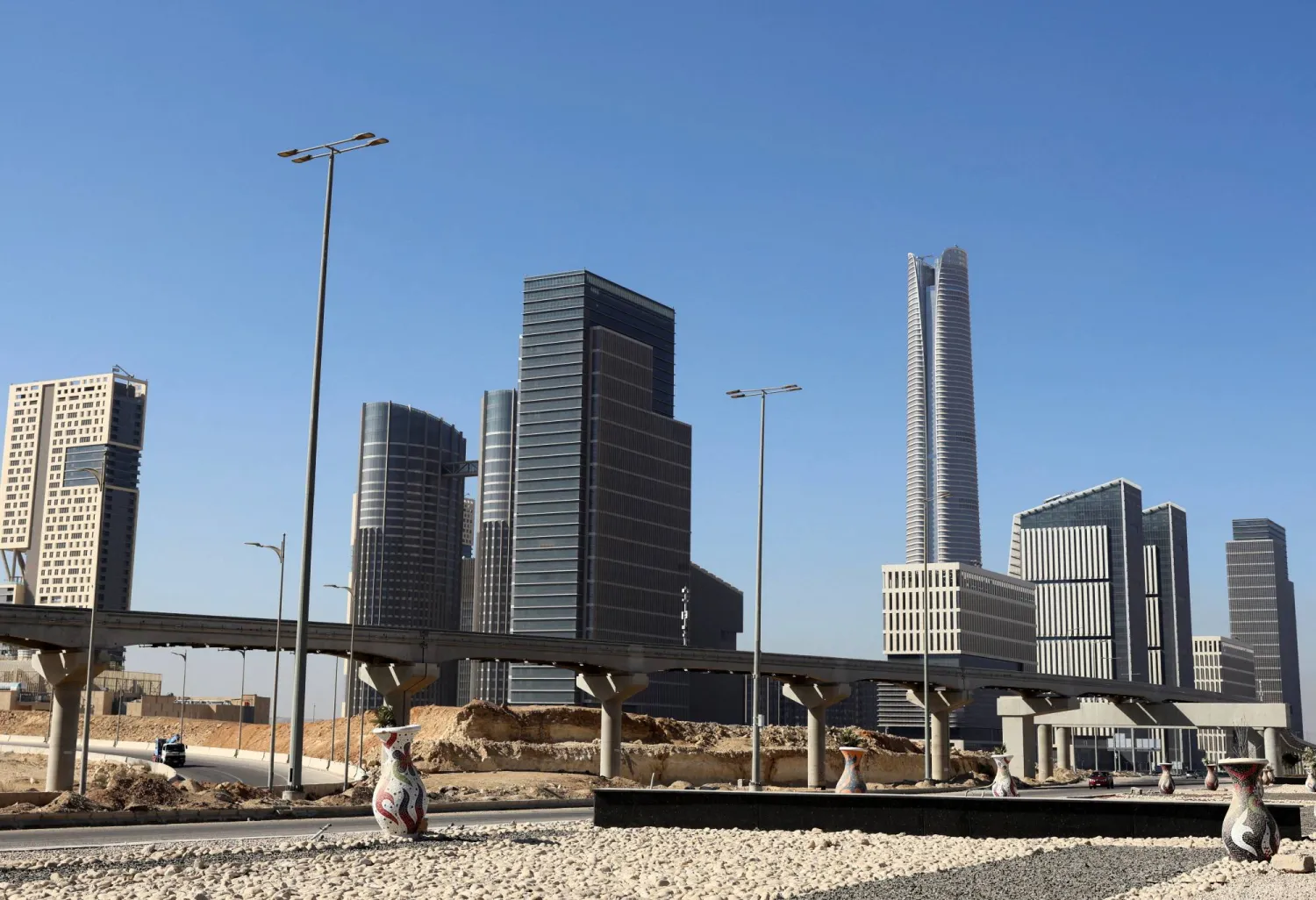
The construction site of the futuristic Iconic Tower skyscraper in a business district, built by China State Construction Engineering Corporation (CSCEC) in the New Administrative Capital (NAC) east of Cairo, Egypt, January 19, 2026. REUTERS/Mohamed Abd El Ghany
TT

Egypt's Non-oil Private Sector Output Keeps Growing, PMI Shows

The construction site of the futuristic Iconic Tower skyscraper in a business district, built by China State Construction Engineering Corporation (CSCEC) in the New Administrative Capital (NAC) east of Cairo, Egypt, January 19, 2026. REUTERS/Mohamed Abd El Ghany

Egypt's non-oil private sector output grew for the third consecutive month in January, marking the longest period of expansion since late 2020, S&P Global reported on Tuesday, but demand conditions eased.

The headline seasonally adjusted S&P Global Egypt Purchasing Managers' Index (PMI) fell slightly to 49.8 in January from 50.2 in December, indicating a ‌marginal weakening ‌in overall operating conditions. ‌A ⁠PMI reading ‌below 50.0 suggests contraction, while above 50.0 indicates growth.

Despite that decline, the PMI remained above its long-term average, reflecting a robust pace of non-oil GDP growth, Reuters reported. Output increased for the third month, ⁠driven by stronger demand from abroad, although domestic ‌sales slipped slightly after ‍two months of ‍expansion.

The reduction in backlogs of work, ‍the fastest in nearly three years, led to a significant decline in employment, the largest since October 2023.

"A note of caution was sounded by a decline in backlogs of work in January, ⁠which indicates that firms may have less room to expand in the coming months," said David Owen, Senior Economist at S&P Global Market Intelligence.

Companies also reduced their selling prices for the first time since mid-2020, as cost pressures eased.
Looking ahead, Egyptian firms remain cautiously optimistic, with expectations for activity ‌levels over the next 12 months only marginally positive.


Saudi Aramco Announces Completion of $4 Billion Bond Issuance

The Aramco tower in Riyadh, which is located within the King Abdullah Financial District (KAFD). AFP
TT

Saudi Aramco Announces Completion of $4 Billion Bond Issuance

The Aramco tower in Riyadh, which is located within the King Abdullah Financial District (KAFD). AFP

Saudi Aramco announced on Tuesday that it has successfully completed a $4 billion issuance of bonds across four tranches under its Global Medium Term Note Program.

The tranches include:
• $500 million senior notes maturing in 2029 with a coupon rate of 4.0%;
• $1.5 billion senior notes maturing in 2031 with a coupon rate of 4.375%;
• $1.25 billion senior notes maturing in 2036 with a coupon rate of 5.0%; and
• $750 million senior notes maturing in 2056 with a coupon rate of 6.0%.

The transaction was priced on January 26, 2026, and the notes were listed on the London Stock Exchange.

“This issuance is part of Aramco’s focused strategy to further optimize its capital structure and enhance shareholder value creation,” said Aramco’s Executive Vice President & Chief Financial Officer Ziad Al-Murshed.

“The attractive pricing achieved on the transaction reflects global investors’ continued confidence in Aramco’s financial strength and resilient balance sheet,” he said.

Al-Murshed added that Aramco remains firmly committed to maintaining disciplined capital management and delivering long-term value to its shareholders.


Türkiye Monthly Inflation Jumps to 4.84% in January, Exceeds Forecast

People walk past the counter of a traditional Turkish bagel "simit" street vendor, Eminönü, Istanbul, Türkiye, Dec. 27, 2025. (AFP)
TT

Türkiye Monthly Inflation Jumps to 4.84% in January, Exceeds Forecast

People walk past the counter of a traditional Turkish bagel "simit" street vendor, Eminönü, Istanbul, Türkiye, Dec. 27, 2025. (AFP)

Turkish consumer price inflation leapt to a higher-than-expected 4.84% month-on-month in January, Turkish Statistical ​Institute data showed on Tuesday, driven in part by a 6.59% jump in food and non-alcoholic drinks prices.

Annual inflation dipped to 30.65% in January, with price rises driven by the annual hike in the minimum wage and ‌various new year price ‌adjustments.

In a Reuters ‌poll, ⁠monthly ​inflation ‌was forecast to be 4.32% with the annual rate seen at 30.00%.

In December, monthly consumer price inflation edged up to 0.89% while the annual rate slipped to 30.89%.

According to the poll's median estimate, annual ⁠inflation is expected to slow to 23% by ‌year-end, remaining above the central bank's ‍forecast of 16%.

In ‍January, the central bank lowered its ‍key interest rate by a less-than-expected 100 basis points to 37%, citing firming inflation, and pricing behavior and expectations that threaten the disinflation ​process.

After a brief policy reversal early last year due to political turmoil, ⁠the central bank's rate-cutting cycle resumed in July with a 300-basis-point move, followed by cuts of 250 points and then 100 in October amid rising food prices, before the last two cuts of 150 in December then 100 points in January.

The data also showed the domestic producer price index rose 2.67% month-on-month in January ‌for an annual increase of 27.17%.


Gold, Silver Stage Comeback after Two-session Rout

FILE PHOTO: A one-kilogram gold bar and a sealed gold coin are displayed at a jewelry store, in Dubai, United Arab Emirates, January 20, 2026. REUTERS/Amr Alfiky/File Photo
TT

Gold, Silver Stage Comeback after Two-session Rout

FILE PHOTO: A one-kilogram gold bar and a sealed gold coin are displayed at a jewelry store, in Dubai, United Arab Emirates, January 20, 2026. REUTERS/Amr Alfiky/File Photo

Gold and silver rose on Tuesday, rebounding from their steepest two-day drop in decades after Kevin Warsh was nominated as the next US Federal Reserve chair and a hike in CME margin requirements put the brakes on the metals' record rally.

Spot gold climbed 4.1% to $4,854.56 an ounce by 0623 GMT. On Monday, it had hit a low of $4,403.24 an ounce, ‌two sessions after peaking ‌at $5,594.82.

US gold futures for April delivery ‌rose ⁠4.8% to $4,838.10 per ‌ounce.

"It's a reasonable call that this is somewhere around fair value potentially, if you consider that we saw a market behaving fairly irrationally for a few weeks there," said Kyle Rodda, a senior market analyst at Capital.com.

"The current prices take gold and silver back to where they were, early in the second half of January."

Gold's parabolic rise saw it smash ⁠multiple peaks and log a nearly 13% gain in January, its biggest monthly gain since November ‌2009, while silver touched an all-time ‍high of $121.64 on Thursday.

Silver gained ‍6.2% to $84.34 an ounce on Tuesday, after posting its biggest one-day loss ‍on record on Friday with a 27% slump. It fell by another 6% in the last session and hit a low of $71.33 an ounce. "The markets endorsed Warsh's nomination by US President Donald Trump as someone relatively credible, and so we saw the dollar move on that basis, and again, that was kind of like the pin that popped ⁠the big precious metals," Rodda said. CME Group also raised margin requirements on precious metal futures, fueling last week's sharp selloff that was triggered after Kevin Warsh's nomination to head the central bank. Despite the historic pullback in gold and silver prices, analysts see the metals' bull run continuing and expect it to notch fresh record highs later this year. Meanwhile, the US Bureau of Labor Statistics said on Monday the closely watched employment report for January would not be released this Friday because of a partial shutdown of the federal government.

In other metals, spot platinum climbed 2.9% to $2,183.38 per ‌ounce after hitting a record high of $2,918.80 on January 26, while palladium was up 2.8% at $1,766.02.
