Saudi Arabia Reiterates Condemnation of Israel’s Violations of Gaza Ceasefirehttps://english.aawsat.com/gulf/5236861-saudi-arabia-reiterates-condemnation-israel%E2%80%99s-violations-gaza-ceasefire
Saudi Arabia Reiterates Condemnation of Israel’s Violations of Gaza Ceasefire
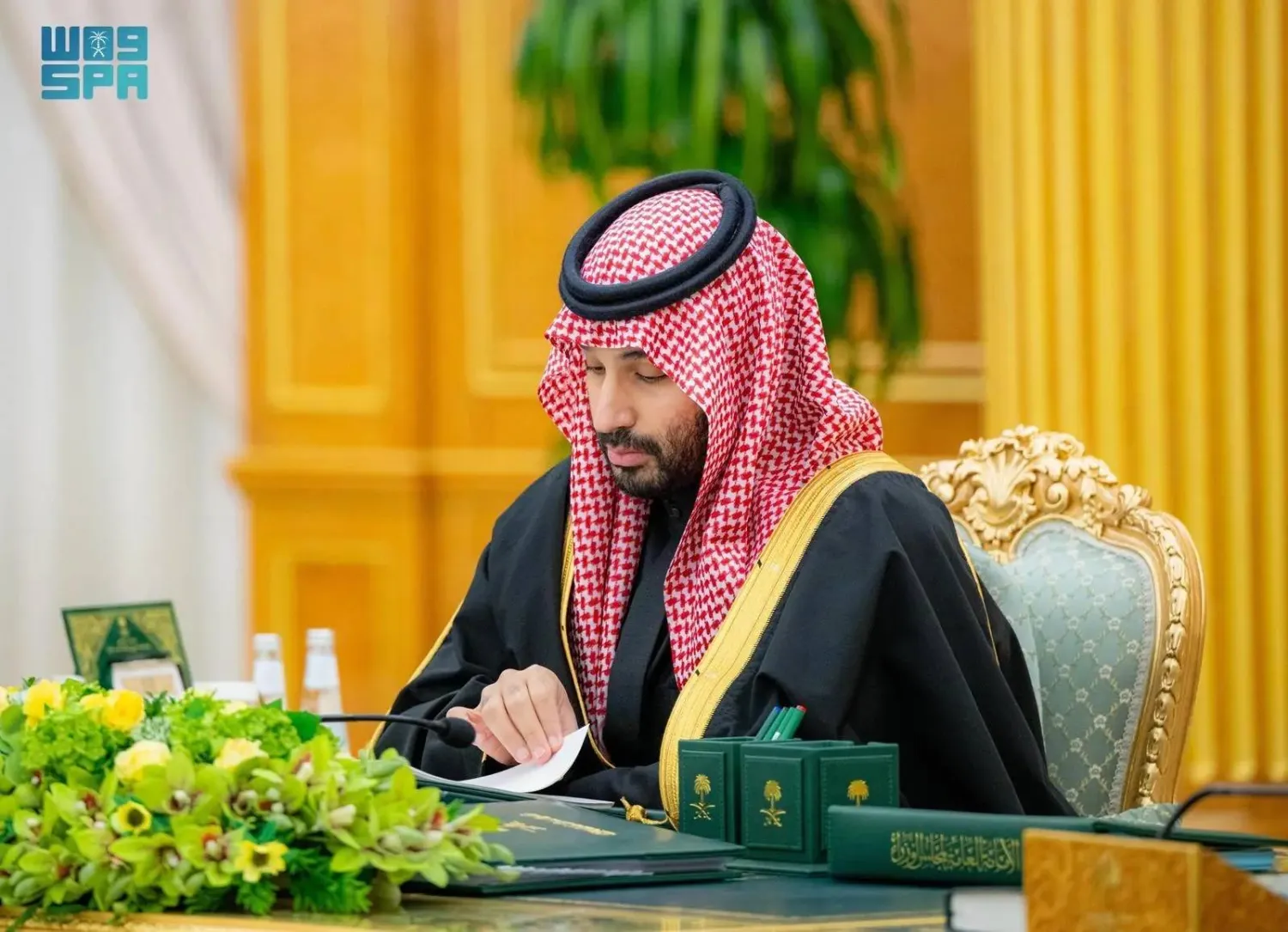
Prince Mohammed bin Salman bin Abdulaziz Al Saud, Crown Prince and Prime Minister, chairs the Cabinet meeting in Riyadh on Tuesday. (SPA)
TT
TT
Saudi Arabia Reiterates Condemnation of Israel’s Violations of Gaza Ceasefire
Prince Mohammed bin Salman bin Abdulaziz Al Saud, Crown Prince and Prime Minister, chairs the Cabinet meeting in Riyadh on Tuesday. (SPA)
The Saudi government reiterated on Tuesday its condemnation of Israel’s violations of the ceasefire in Gaza.
The government renewed the stance it made with the foreign ministers of Arab, and Islamic countries that slammed the violations, which undermine international efforts to solidify the truce, establish stability, and advance the implementation of the second phase of the peace plan, which ultimately aims to achieve a just, comprehensive, and lasting peace that allows the Palestinian people to establish their independent state.
Prince Mohammed bin Salman bin Abdulaziz Al Saud, Crown Prince and Prime Minister, chaired the Cabinet session that was held in Riyadh.
The Cabinet commended the Syrian government and the Syrian Democratic Forces' response in reaching a ceasefire agreement, supported by Saudi Arabia and the United States. This agreement is expected to contribute to Syria’s progress towards peace, security, and stability, fulfilling the aspirations of its people, and strengthening national unity.
The Cabinet discussed the outcomes of the meetings and conferences hosted by the Kingdom, appreciating the active international participation in the second meeting of the Ministerial Council of the Green Middle East Initiative. The meeting included the approval of new members, bringing the total number of participating countries in the initiative to 35.
The meeting also adopted foundational steps paving the way for the operational and developmental phase, along with renewing commitments to achieving the initiative's objectives, including planting over 22 billion trees and rehabilitating 92 million hectares, which will help address regional environmental challenges and bolster global efforts.
The Cabinet commended the outcomes of the International Conference on Data & AI Capacity Building, held in Riyadh, noting the launch of numerous initiatives across various sectors and the signing of 27 agreements. The agreements aim to strengthen international academic partnerships for knowledge transfer, technology localization, and the achievement of the objectives of the national strategy for the sector.
The Cabinet also praised the outcomes of the fifth edition of the Real Estate Future Forum, which witnessed broad international participation and resulted in the signing of 80 agreements and memoranda of understanding. These are expected to boost the real estate sector's developmental role and contribute to achieving national objectives.
The Cabinet further commended the Saudi Media Forum, held under the patronage of Custodian of the Two Holy Mosques King Salman bin Abdulaziz Al Saud. The forum witnessed the launch of strategic agreements and initiatives that reflect the advancement of the media sector in the Kingdom and its role in keeping pace with digital transformation and content development, reinforcing Riyadh’s position as a hub for innovators and a leading global event.
The Cabinet reviewed achievements across a number of government sector ecosystems. It examined the launch of the National Privatization Strategy, a key enabler of economic diversification and an important measure to reinforce the private sector’s central role in comprehensive development. The strategy is anticipated to create new prospects, advance infrastructure development, elevate public service quality, and further enhance the Kingdom’s investment attractiveness.
The Cabinet also hailed the developmental and qualitative projects launched in the industrial cities of Makkah and Jeddah, which aim to support the localization of priority industries, develop local content, and facilitate business operations, contributing to economic development in the region.
Saudi Arabia Stresses Support for Diplomatic Solutions to Conflictshttps://english.aawsat.com/gulf/5311000-saudi-arabia-stresses-support-diplomatic-solutions-conflicts
Saudi Arabia Stresses Support for Diplomatic Solutions to Conflicts
Custodian of the Two Holy Mosques King Salman bin Abdulaziz chairs a cabinet session in Jeddah (SPA)
The Saudi Cabinet stressed on Tuesday its support for comprehensive diplomatic solutions to conflicts and safeguarding the freedom of maritime navigation.
The Cabinet, which was chaired by Custodian of the Two Holy Mosques King Salman bin Abdulaziz Al Saud in Jeddah, stressed the need to keep the straits of Hormuz and Bab al-Mandab, as well as all vital waterways, open, secure, and free from any threats.
The Cabinet praised the state visit of Prince Mohammed bin Salman bin Abdulaziz Al Saud, Saudi Crown Prince and Prime Minister, to Paris, as well as his talks with French President Emmanuel Macron.
The meeting reaffirmed the strength of the longstanding relations between the two countries, their shared desire to deepen strategic cooperation across various fields, and continued coordination and consultation based on a common vision.
This vision aims to promote stability in the region and the world by safeguarding state sovereignty, respecting international law, prioritizing political and diplomatic solutions to conflicts, and addressing security threats.
The Cabinet also welcomed the outcomes of the inaugural meeting of the Saudi-French Strategic Partnership Council, co-chaired by the Crown Prince and the French president, which saw the launch of new initiatives, agreements, and memoranda of understanding in defense, healthcare, artificial intelligence and emerging technologies, as well as entertainment.
It also welcomed the results of the French-Saudi Investment Roundtable Meeting, which included the announcement of 21 agreements and memoranda of understanding, contributing to the development of the economic partnership between the two countries and opening new horizons for cooperation and joint investment amid growing bilateral ties and the wide-ranging opportunities offered by Saudi Vision 2030.
The Cabinet was briefed on discussions held in recent days between the Kingdom and several countries, including the two messages received by the Custodian of the Two Holy Mosques and the Crown Prince from President of the United Arab Emirates Sheikh Mohamed bin Zayed Al Nahyan and British Prime Minister Andy Burnham.
The Cabinet also hailed the outcomes of the third Strategic Dialogue between the Saudi and Japanese foreign ministers, which underscored the importance of further strengthening longstanding bilateral relations, expanding cooperation into broader horizons by capitalizing on economic opportunities in both countries, particularly in investment, energy, resources, supply chains, and technology, and enhancing the exchange of expertise and capabilities to advance shared priorities and objectives.
Saudi Arabia Welcomes US Decision to Remove Syria from Terror Listhttps://english.aawsat.com/gulf/5310949-saudi-arabia-welcomes-us-decision-remove-syria%C2%A0-terror-list
Saudi Arabia Welcomes US Decision to Remove Syria from Terror List
The Saudi Ministry of Foreign Affairs logo
The Saudi Ministry of Foreign Affairs welcomed on Tuesday Washington’s decision to remove Syria from the list of State Sponsors of Terrorism.
The Kingdom extended its sincere congratulations to the Syrian government and people, wishing Syria further security, stability, and prosperity, and continued progress in its reconstruction and development efforts in a manner that fulfills the aspirations of its people.
The Kingdom reiterated its support for the positive steps taken by the Syrian government to reinforce Syria’s security and stability, contribute to building state institutions, and fulfill the aspirations of the Syrian people for a more stable and prosperous future.
Riyadh and Paris Reach Understanding on Regional Issues, Agree to Strengthen Strategic Partnershiphttps://english.aawsat.com/gulf/5310804-riyadh-and-paris-reach-understanding-regional-issues-agree-strengthen-strategic
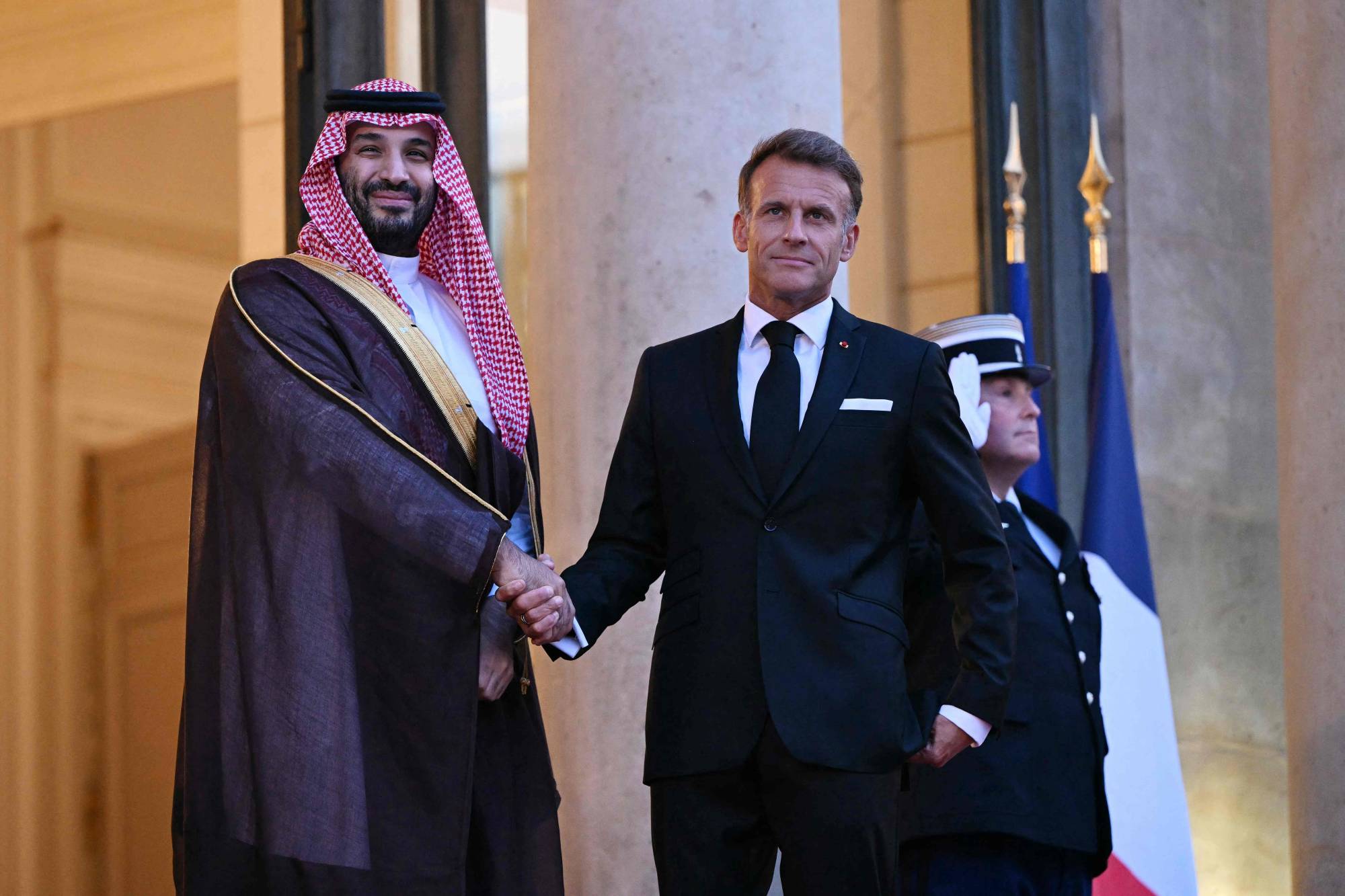
Prince Mohammed bin Salman bin Abdulaziz Al Saud, Saudi Crown Prince and Prime Minister, and French President Emmanuel Macron are seen at the Elysee Palace in Paris on Monday. SPA
Riyadh and Paris Reach Understanding on Regional Issues, Agree to Strengthen Strategic Partnership
Prince Mohammed bin Salman bin Abdulaziz Al Saud, Saudi Crown Prince and Prime Minister, and French President Emmanuel Macron are seen at the Elysee Palace in Paris on Monday. SPA
The reception that French President Emmanuel Macron prepared for Prince Mohammed bin Salman bin Abdulaziz Al Saud, Saudi Crown Prince and Prime Minister, on Monday strongly reflects the warmth of the relationship between the two countries.
That relationship began in 2017 with the French president's first official visit to Saudi Arabia. Since then, meetings between the two sides have been held regularly.
On Monday, Macron welcomed the Crown Prince at the Elysee Palace in Paris, as part of the Saudi leader's state visit to France.
Earlier, the Crown Prince visited Les Invalides where he was received by French Prime Minister Sebastien Lecornu in an official welcoming ceremony.
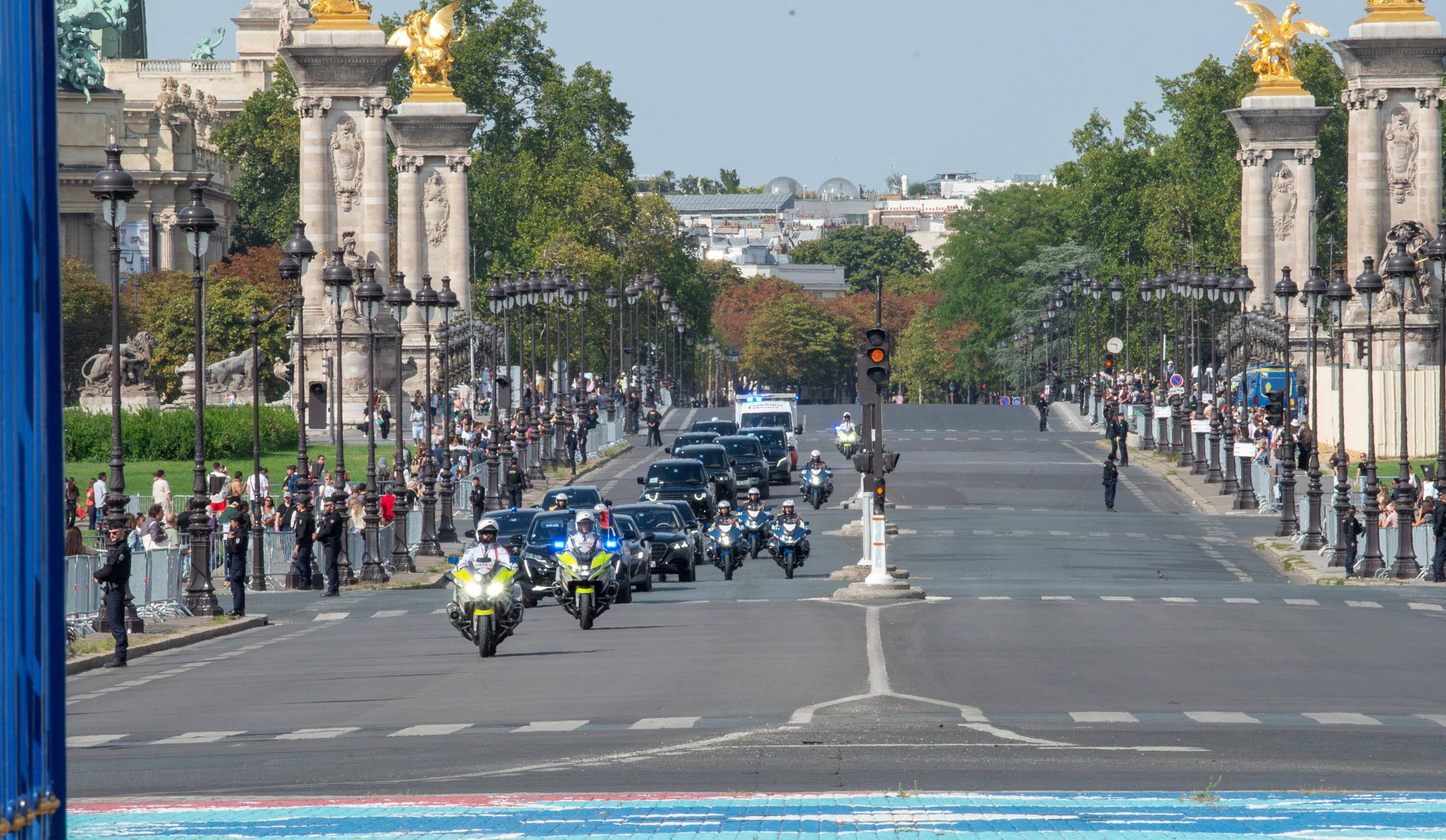
Escorted by cavalry from the French Republican Guard and a motorcycle motorcade, the Crown Prince was greeted with the playing of the Saudi Royal Anthem and the French National Anthem, before inspecting the guard of honor as the unit commander presented the participating military formations.
Saudi Arabia's Crown Prince Mohammed bin Salman's motorcade during his two-day official visit to France, at the Hotel des Invalides in Paris, France, August 24, 2026. Bandar Algaloud/Courtesy of Saudi Royal Court/Handout via REUTERS
Agreement on Regional Issues
The visit comes at a highly volatile moment for the region, whether regarding Iran, about which sources at the French presidency say that “no one has any clear vision of how to find a way out of it,” or the situations in Gaza, the West Bank, Lebanon, Syria, the Red Sea, and Yemen.
All of these crises carry significant risks not only for the region but also for the world as a whole, particularly given the severe disruption to shipping through the Strait of Hormuz and the threats affecting the Bab el-Mandeb Strait and the Red Sea.
A joint statement was issued at the conclusion of the Crown Prince’s visit to Paris. The two leaders affirmed “their mutual aspiration to strengthen the existing strategic partnership between the two countries.”
They also stressed “the historic depth of the relationship between France and Saudi Arabia on the occasion of the centenary of the establishment of political relations between the two countries.”
“They reaffirmed their shared ambition that the strategic partnership between Saudi Arabia and France ... gave a new momentum to the friendship, trust, and mutual respect between the two countries, and respond to their common interests and to the challenges facing the world and the Middle East region.”
The two leaders presided over the first meeting of the French-Saudi Strategic Partnership Council, launching new initiatives.
Regional crises
The Crown Prince and Macron “expressed their shared vision for stability in the Middle East, based on the sovereignty of states, respect for international law, and the pursuit of political and diplomatic solutions to conflicts and security threats.”
On Iran, “they emphasized the necessity of a negotiated solution to avoid further escalation and ensure regional security. They reaffirmed their long-standing commitment to a diplomatic solution ensuring the peaceful nature of Iran’s nuclear program.”
According to the statement, they also urged Iran to resume full cooperation with the International Atomic Energy Agency.
“The two sides condemned the attacks on ships in the Strait of Hormuz and threats to the security of waterways, and they stressed the importance of restoring navigation in the Strait of Hormuz to its normal state as it was before February 28, 2026, in terms of freedom of navigation, regular shipping traffic, and the absence of any direct or indirect tolls, restrictions on passage, in accordance with international law.”
France's President Emmanuel Macron (R) welcomes Saudi Arabia's Crown Prince Mohammed bin Salman as he arrives for a State dinner in his honor at the Elysee Palace in Paris on August 24, 2026. (Photo by LOU BENOIST / AFP)
On Palestinian affairs, the Saudi Crown Prince and Macron welcomed the announcement of an agreement on the disarmament of Hamas in the Gaza Strip and called on its implementation.
They stressed “the importance of preserving the unity of the Palestinian territories and rejected any attempt to undermine the Palestinian people's right to establish their independent state within the 1967 borders. Saudi Arabia and France called for an end to the Israeli settlement policy and settlers’ violence that threaten the two-state solution and reiterated their commitments to the full implementation of the New York Declaration.”
On the war in Lebanon, Prince Mohammed and Macron “agreed to intensify their efforts towards a final resolution of the conflict in Lebanon, which must involve strengthening the Lebanese state and its institutions, as well as preserving Lebanon's sovereignty and territorial integrity.”
They also lauded measures taken by Lebanese President Joseph Aoun, and the government, headed by Prime Minister Nawaf Salam, in rebuilding state institutions and extending the authority of the state.
“They also reaffirmed their commitment to supporting the Lebanese Armed Forces and security forces, with a view to enabling them to fully fulfil their national responsibilities. They stressed the importance of the full implementation of UN Security Council Resolution 1701 and the need for the disarmament of all non-state armed groups to be successfully completed. They also stressed the need for Israel to withdraw from all Lebanese territory,” the joint statement said.
On Sudan, both sides emphasized the importance of halting foreign interference in the country, and stressed their commitment to the unity, stability, and economic recovery of Syria.
They specifically welcomed the establishment of a Saudi-Syrian-French business council.
Consolidating defense cooperation
As expected, Riyadh and Paris adopted a declaration strengthening their defense cooperation, including in the field of armaments and training.
In the energy sector, “both sides emphasized the importance of stability in global energy markets, security of supply, and the protection of maritime routes, while commending the Kingdom's role and efforts in enhancing the resilience of supply chains and the sustainability of energy sources.”
“They also stressed the need to strengthen strategic cooperation in oil and petrochemicals, sustainable electricity generation (including energy efficiency, renewable energy, energy storage, peaceful nuclear energy, clean hydrogen, and emission reduction and removal technologies), and capacity building in these areas.”
As France has become a leading investor in Saudi Arabia, particularly in sectors such as energy, water management, transportation, and logistics, the two countries have agreed to strengthen their economic ties and cross-investments.
They welcomed Qiddiya Investment Company’s ambition to develop a major mixed-use, multi-park destination in Cergy-Pontoise, in the Île-de-France region, bringing together entertainment, leisure, hospitality, culture and sport within an integrated new destination.
“Current ambitions include up to three major entertainment anchors, hotels and complementary leisure experiences, for a total amount of around €6 billion over the development lifecycle,” said the statement.
“As a symbol of the strength of this partnership, Saudi Arabia and France reaffirmed the importance of their exceptional cooperation on AlUla, within the framework of Saudi Vision 2030, in particular in the fields of archaeology, heritage, and culture,” it said.
“In this regard, they decided to extend the Saudi-French partnership on AlUla until 2035 and work on an evolved framework that reflects the maturity of cooperation between the two countries and builds on the opportunities AlUla offers as a major cultural and heritage destination of the 21st century,” the joint statement added.
لم تشترك بعد
انشئ حساباً خاصاً بك لتحصل على أخبار مخصصة لك ولتتمتع بخاصية حفظ المقالات وتتلقى نشراتنا البريدية المتنوعة