


Prime Minister Takaichi’s Party Wins a Supermajority in Japan's Lower House

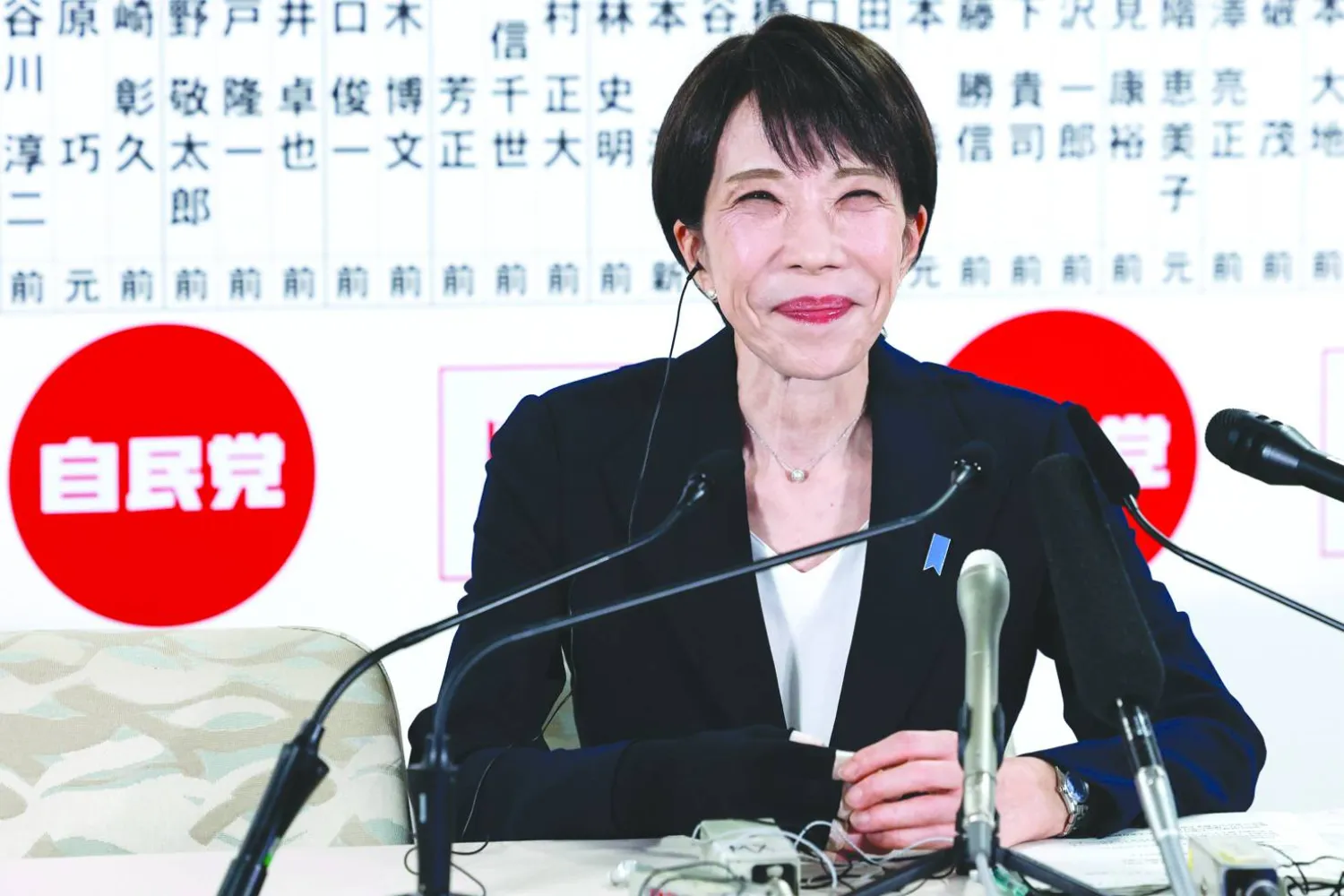
TOPSHOT - Japan's Prime Minister and President of the Liberal Democratic Party (LDP) Sanae Takaichi reacts as she speaks with media on the House of Representatives election day at the LDP headquarters in Tokyo on February 8, 2026. (Photo by Kim Kyung-Hoon / POOL / AFP)
TT

Prime Minister Takaichi’s Party Wins a Supermajority in Japan's Lower House

TOPSHOT - Japan's Prime Minister and President of the Liberal Democratic Party (LDP) Sanae Takaichi reacts as she speaks with media on the House of Representatives election day at the LDP headquarters in Tokyo on February 8, 2026. (Photo by Kim Kyung-Hoon / POOL / AFP)

Japanese Prime Minister Sanae Takaichi 's governing party secured a two-thirds supermajority in parliamentary elections, Japanese media reported, citing preliminary results. The landslide victory was due, in large part, to the extraordinary popularity of Japan's first female prime minister, and allows her to pursue a significant conservative shift in Japan’s security, immigration and other policies.

Takaichi, in a televised interview with public television network NHK following her victory, said she will emphasize policies meant to make Japan strong and prosperous, The Associated Press said.

NHK, citing vote count results, said Takaichi’s Liberal Democratic Party, or LDP, alone secured 316 seats by early Monday, comfortably surpassing a 261-seat absolute majority in the 465-member lower house, the more powerful of Japan's two-chamber parliament. That marks a record since the party's foundation in 1955 and surpasses the previous record of 300 seats won in 1986 by late Prime Minister Yasuhiro Nakasone.

With 36 seats won by its new ally, Japan Innovation Party, Takaichi's ruling coalition has won 352 seats.

A smiling Takaichi placed a big red ribbon above each winner’s name on a signboard at the LDP's headquarters, as accompanying party executives applauded.

Despite the lack of a majority in the upper house, the huge jump from the preelection share in the superior lower house would allow Takaichi to make progress on a right-wing agenda that aims to boost Japan’s economy and military capabilities as tensions grow with China and she tries to nurture ties with the United States.

Takaichi said she would try to gain support from the opposition while firmly pushing forward with her policy goals.

“I will be flexible,” she said.

Takaichi is popular, but the LDP, which has ruled Japan for most of the last seven decades, has struggled with funding and religious scandals in recent years. She called Sunday’s early election after only three months in office, hoping to turn that around while her popularity is high.

Popular leader

The ultraconservative Takaichi, who took office as Japan’s first female leader in October, pledged to “work, work, work,” and her style, which is seen as both playful and tough, has resonated with younger fans who say they weren't previously interested in politics.

The opposition, despite the formation of a new centrist alliance and a rising far-right, was too splintered to be a real challenger. The new opposition alliance of LDP’s former coalition partner, Buddhist-backed dovish Komeito, and the liberal-leaning Constitutional Democratic Party of Japan, is projected to sink to half of their combined preelection share of 167 seats.

Takaichi was betting with this election that her LDP party, together with its new partner, the JIP, would secure a majority.

Trump in a post on his Truth Social platform Sunday congratulated Takaichi "on a LANDSLIDE Victory in today’s very important Vote. She is a highly respected and very popular Leader. Sanae’s bold and wise decision to call for an Election paid off big time.”

Akihito Iwatake, a 53-year-old office worker, said he welcomed the big win by the LDP because he felt the party went too liberal in the past few years. “With Takaichi shifting things more toward the conservative side, I think that brought this positive result,” he said.

Takaichi's policies

The LDP's right-wing partner, JIP leader Hirofumi Yoshimura, has said his party will serve as an “accelerator” for Takaichi's push to conservative policies.

Japan has recently seen far-right populists gain ground, such as the anti-globalist and surging nationalist party Sanseito. Exit polls projected a big gain for Sanseito.

The first major task for Takaichi when the lower house reconvenes in mid-February is to work on a budget bill, delayed by the election, to fund economic measures that address rising costs and sluggish wages.

Takaichi has pledged to revise security and defense policies by December to bolster Japan’s offensive military capabilities, lifting a ban on weapons exports and moving further away from the country’s postwar pacifist principles.

She has been pushing for tougher policies on foreigners, anti-espionage and other measures that resonate with a far-right audience, but ones that experts say could undermine civil rights.

Takaichi also wants to increase defense spending in response to US President Donald Trump’s pressure for Japan to loosen its purse strings.

She now has time to work on these policies, without an election until 2028.

Divisive policies

Though Takaichi said that she's seeking to win support for policies seen as divisive in Japan, she largely avoided discussing ways to fund soaring military spending, how to fix diplomatic tension with China and other issues.

Despite her rightward shift, Takaichi is expected to maintain good relations with South Korea, given shared worries about threats from North Korea and China. But Seoul would worry about a Japanese attempt to revise the country's pacifist constitution or to further build up its military because of Japan's wartime past, said Leif-Eric Easley, professor of international studies at Ewha Womans University in Seoul.

In her campaign speeches, Takaichi enthusiastically talked about the need for government spending to fund “crisis management investment and growth,” such as measures to strengthen economic security, technology and other industries. Takaichi also seeks to push tougher measures on immigration, including stricter requirements for foreign property owners and a cap on foreign residents.

Sunday's election “underscores a problematic trend in Japanese politics in which political survival takes priority over substantive policy outcomes,” said Masato Kamikubo, a Ritsumeikan University politics professor. “Whenever the government attempts necessary but unpopular reforms ... the next election looms.”



Zelenskiy Says US Too often Asks Ukraine, Not Russia, for Concessions

Ukrainian President Volodymyr Zelenskiy speaks during the Munich Security Conference (MSC) in Munich, Germany, February 14, 2026. REUTERS/Liesa Johannssen
TT

Zelenskiy Says US Too often Asks Ukraine, Not Russia, for Concessions

Ukrainian President Volodymyr Zelenskiy speaks during the Munich Security Conference (MSC) in Munich, Germany, February 14, 2026. REUTERS/Liesa Johannssen

Ukrainian President Volodymyr Zelenskiy voiced hope on Saturday that US-brokered peace talks next week in Geneva would be serious and substantive, but said Ukraine was being asked "too often" to make concessions in the negotiations.

Ukrainian, Russian and American delegations are due to meet in the Swiss lakeside city on Tuesday and Wednesday as US President Donald Trump seeks to push through a deal to end Europe's biggest war since 1945.

"We truly hope that the trilateral meetings next week will be serious, substantive, helpful for all us but honestly sometimes it feels like the sides are talking about completely different things," Zelenskiy said in a speech at the annual Munich Security Conference.

Ukraine and Russia, which invaded its neighbour in February 2022, have engaged in two recent rounds of talks brokered by Washington in Abu Dhabi described by the sides as constructive but achieving no major breakthroughs.

Zelenskiy called for greater action from Ukraine's allies to press Russia into making peace - both in the form of tougher sanctions and more weapons supplies.

Recalling his appeal four years ago, when he spoke at the same conference days before tens of thousands of Russian forces poured into Ukraine, Zelenskiy said there was too much talk by Western officials and not enough action.

Trump has the power to force Putin to declare a ceasefire and needed to do so, Zelenskiy said. Ukrainian officials have said a ceasefire is required to hold a referendum on any peace deal, which would be organised alongside national elections.

The Ukrainian leader, a former television entertainer, acknowledged he was feeling "a little bit" of pressure from Trump, who yesterday said Zelenskiy should not miss the "opportunity" to make peace soon and urged him "to get moving".

"The Americans often return to the topic of concessions and too often those concessions are discussed only in the context of Ukraine, not Russia," Zelenskiy said.

Instead, Zelenskiy said, he wanted instead to hear what compromises Moscow would be ready for, as Ukraine had already made many of its own.

DEADLOCK OVER TERRITORY

Land remains the major sticking point in negotiations, with Russia demanding that Ukraine cede the remaining 20% of the eastern area of Donetsk that Moscow has failed to capture - something Kyiv steadfastly refuses to do.

Zelenskiy said he was instead ready to discuss a US proposal for a free trade zone in that region, while freezing the rest of the 1,200-km (745-mile) front line.

Russia occupies about 20% of Ukraine's national territory, including Crimea and parts of the eastern Donbas region seized before the full-scale invasion in 2022.

Analysts say Moscow has gained about 1.5% of Ukrainian territory since early 2024. Its recent air strikes on Ukraine's cities and electricity infrastructure have left hundreds of thousands of Ukrainians without heating and power during the course of a bitterly cold winter.

Ukrainian officials have repeatedly expressed concern in recent weeks that US. congressional mid-term elections in November could focus the Trump administration on domestic political issues after the summer.

Zelenskiy said he hoped the US would stay involved in the negotiations, and that there would be an opportunity for Europe, which he said was currently sidelined, to play a bigger role.

'EUROPE NOT PRESENT'

"Europe is practically not present at the table. It's a big mistake to my mind," he said.

Russia said its delegation to Geneva would be led by Putin adviser Vladimir Medinsky, a change from negotiations in Abu Dhabi at which Russia's team was led by military intelligence chief Igor Kostyukov.

Ukrainian sources have criticised Medinsky's handling of previous talks, accusing him of delivering history lessons to the Ukrainian team instead of engaging in substantive negotiations.

Zelenskiy, who has long argued that the best way to achieve peace is to force Russia to the table with military and economic pressure, said he had discussed with French President Emmanuel Macron and European Commission chief Ursula von der Leyen punitive steps against tankers that export Russian oil.

Oil exports are a key revenue source for the Russian state, and in recent months some empty tankers have been targeted by Ukrainian drones.

On Saturday France's foreign minister said some G7 countries have expressed readiness to enact a maritime services ban on Russian oil and that Paris was "reasonably optimistic" it would be included in the European Union's next sanctions package.


Nobel Winner Transferred to Prison in Northern Iran

A photo provided by the Narges Mohammadi Foundation on October 2, 2023 shows Iranian human rights activist Narges Mohammadi. © AFP
TT

Nobel Winner Transferred to Prison in Northern Iran

A photo provided by the Narges Mohammadi Foundation on October 2, 2023 shows Iranian human rights activist Narges Mohammadi. © AFP

Iranian authorities have, without prior warning, transferred Nobel Peace Prize winner Narges Mohammadi to a prison in the north of the country as concern grows over her health, her husband said on Saturday.

Mohammadi, who won the peace prize in 2023 in recognition for more than two decades of campaigning, was arrested on December 12 in the eastern city of Mashhad after speaking out against the clerical authorities at a funeral ceremony, AFP reported.

She spent time on hunger strike earlier this month and had been hospitalized before being returned to prison.

The Norwegian Nobel Committee said this week it was "deeply appalled" by reports detailing "physical abuse and ongoing life-threatening mistreatment" of Mohammadi both during her arrest and in detention.

Since her arrest, Mohammadi had been held in Mashhad at the detention facility of the intelligence ministry and had only been allowed one phonecall with a brother inside Iran and another to her Iranian lawyer.

But she has now been transferred to prison in the city of Zanjan in the north of the country, said her husband Taghi Rahmani, who is based in Paris.

"This action was carried out without informing her family or her lawyer," he said on X, adding it was "intended to exile and displace Narges".

On December 7, she was handed a further six years in prison on charges of harming national security and was also given a one-and-a-half-year prison sentence for propaganda against Iran's Islamic system.

On February 2 she began a hunger strike to protest the conditions of her imprisonment and the inability to make phone calls to lawyers and family but then ended the action after a week.

Her foundation has described her physical condition as "deeply alarming", saying she was transferred to hospital in Mashhad but then returned to prison "before completing her treatment".

Mohammadi was arrested before protests erupted nationwide later in December. The movement peaked in January, with authorities launching a crackdown that activists say has left thousands dead.

Over the past quarter-century, Mohammadi, 53, who was born in Zanjan, has been repeatedly tried and jailed for her campaigning against Iran's use of capital punishment and the mandatory dress code for women.


About 200,000 Join Iran Demonstration in Munich

Protesters wave flags - with a lion and a sun against horizontal green, white and red stripes, the emblem of the monarchy overthrown in 1979- during a demonstration in Munich (Reuters).
TT

About 200,000 Join Iran Demonstration in Munich

Protesters wave flags - with a lion and a sun against horizontal green, white and red stripes, the emblem of the monarchy overthrown in 1979- during a demonstration in Munich (Reuters).

About 200,000 people joined a demonstration against the Iranian government in Munich on Saturday, police said, as world leaders gathered nearby for a security conference, AFP reported. 

The protesters rallied on Munich's Theresienwiese fairgrounds, denouncing the leadership of Iran's Islamic Republic following the deadly repression of nationwide protests in January.

Some waved flags with a lion and a sun against horizontal green, white and red stripes, the emblem of the monarchy overthrown in 1979.

Human rights groups have reported that thousands of protesters have been killed in Iran.

Rallies calling for international action against Tehran are also planned in Toronto and Los Angeles on Saturday.

The exiled son of the former shah of Iran, Reza Pahlavi, spoke at the Munich Security Conference on Saturday and called on US President Donald Trump to "help" the Iranian people.

Pahlavi, who has lived in exile since his father was overthrown in the 1979 revolution, urged an outside "humanitarian intervention to prevent more innocent lives being killed" in Iran.

The Theresienwiese, which hosts the huge annual Oktoberfest folk gathering, is located less than three kilometres (1.8 miles) from the security conference venue.

Last week, an estimated 10,000 people gathered in Berlin in response to a call from the MEK, an exiled opposition group considered "terrorist" by Tehran.