


China Vows ‘Resolute Response’ to Any Reckless Acts After Japan Election

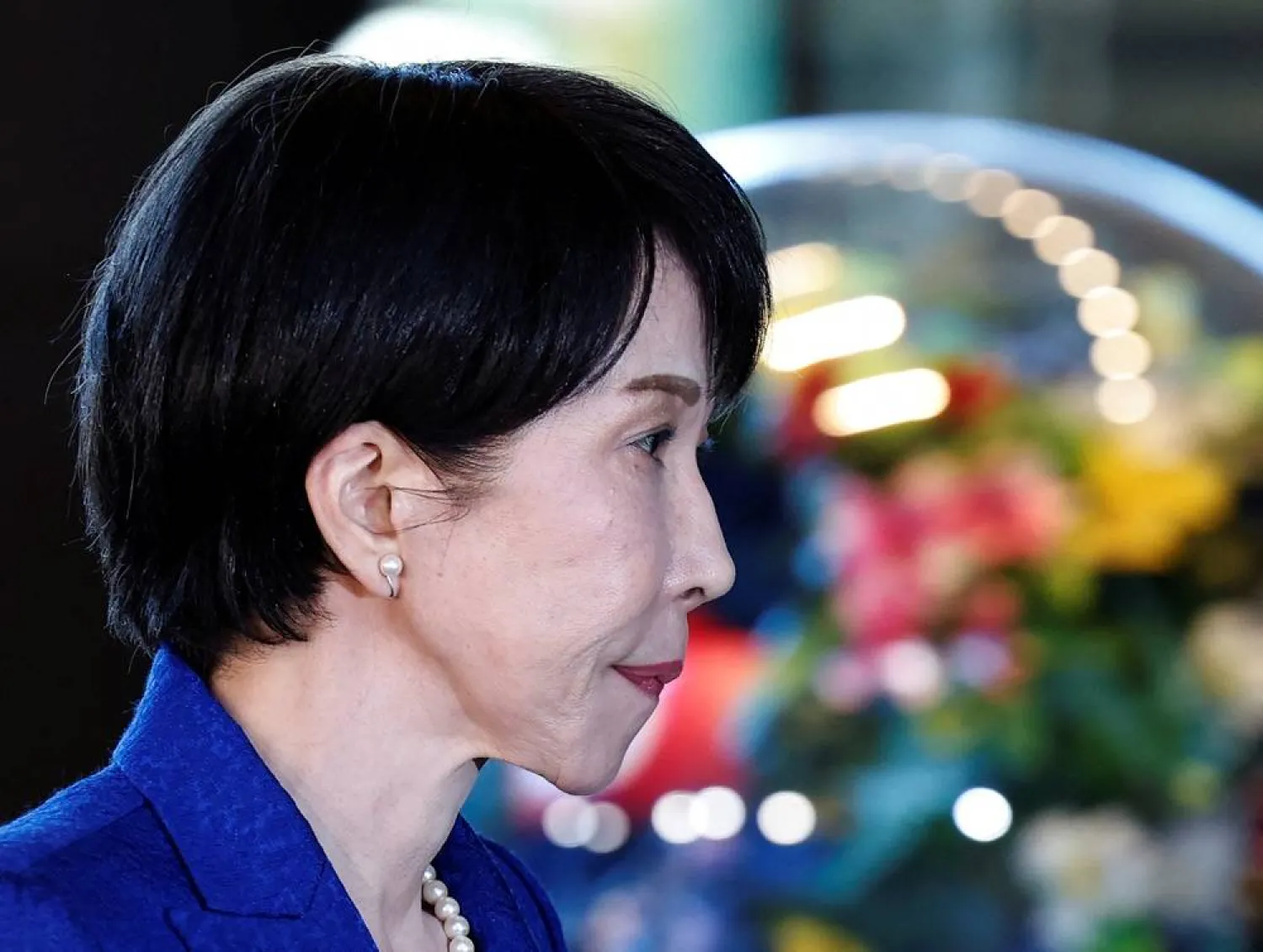
 Japan's Prime Minister Sanae Takaichi, leader of the ruling Liberal Democratic Party (LDP), arrives at the Prime Minister's office after her party's historic election win in Sunday's poll in Tokyo, Japan, February 9, 2026. (Reuters)
Japan's Prime Minister Sanae Takaichi, leader of the ruling Liberal Democratic Party (LDP), arrives at the Prime Minister's office after her party's historic election win in Sunday's poll in Tokyo, Japan, February 9, 2026. (Reuters)
TT

China Vows ‘Resolute Response’ to Any Reckless Acts After Japan Election

 Japan's Prime Minister Sanae Takaichi, leader of the ruling Liberal Democratic Party (LDP), arrives at the Prime Minister's office after her party's historic election win in Sunday's poll in Tokyo, Japan, February 9, 2026. (Reuters)
Japan's Prime Minister Sanae Takaichi, leader of the ruling Liberal Democratic Party (LDP), arrives at the Prime Minister's office after her party's historic election win in Sunday's poll in Tokyo, Japan, February 9, 2026. (Reuters)

Beijing warned Tokyo on Monday that reckless actions would be met with a "resolute response", a day after Japan's Prime Minister Sanae Takaichi, who is viewed as critical of China, won a landslide election.

China and Japan have been locked in a spat over comments by Takaichi in November that Tokyo could intervene militarily in any attack on self-ruled Taiwan.

China claims the democratic island as part of its territory and has not ruled out force to annex it.

A spokesman for China's foreign ministry on Monday urged Japan to retract the comments and warned of consequences for any rash actions.

"If the far-right forces in Japan misjudge the situation and act recklessly, they will inevitably face resistance from the Japanese people and a resolute response from the international community," spokesman Lin Jian told a regular news conference.

"We once again urge the Japanese side to retract the erroneous remarks made by Takaichi regarding Taiwan and demonstrate basic sincerity in safeguarding the political foundation of China-Japan relations, through concrete actions," he said.

In the wake of Takaichi's comments in November, China has discouraged its nationals from travelling to Japan, citing deteriorating public security and criminal acts against Chinese nationals in the country.

In the latest escalation of the row in December, Chinese military aircraft locked radar onto Japanese jets, prompting Tokyo to summon Beijing's ambassador.

Beijing also reportedly choked off exports to Japan of rare-earth products crucial for making everything from electric cars to missiles.

And last month, two popular pandas departed Tokyo for China, leaving Japan without any of the beloved bears for the first time in 50 years.



Interpol Backroom Warriors Fight Cyber Criminals 'Weaponizing' AI

AFP was granted a look inside the global organization's multi-pronged cybercrime facility, where specialists pore through massive amounts of data. Roslan RAHMAN / AFP
TT

Interpol Backroom Warriors Fight Cyber Criminals 'Weaponizing' AI

AFP was granted a look inside the global organization's multi-pronged cybercrime facility, where specialists pore through massive amounts of data. Roslan RAHMAN / AFP

From perfectly spelled phishing emails to fake videos of government officials, artificial intelligence is changing the game for Interpol's cat-and-mouse fight against cybercrime at its high-tech war rooms in Singapore.
Their foe: crime syndicates, structured like multinational firms, which are exploiting the fast-evolving technology to target individuals, states and corporations for billions of dollars.
"I consider the weaponization of AI by cybercriminals... as the biggest threat we're seeing," Neal Jetton, Interpol's Singapore-based director of cybercrime, told AFP.
"They are using it in whatever way they can," added Jetton, who is seconded to Interpol from the US Secret Service, the federal agency in charge of presidential protection.
AFP was granted a look inside the global organization's multi-pronged cybercrime facility, where specialists pore through massive amounts of data in a bid to prevent the next big ransomware attack or impersonation scam.
Jetton said the "sheer volume" of cyber attacks worries him the most.
"It's going to only expand, and so you just need to get the word out to people," so they understand "how often they're going to be targeted", he said.
AI technology is allowing criminals around the world to create sophisticated voice and video copies of well-known figures to endorse scam investments, and helping make dodgy online messages appear more genuine.
Jetton warned that even low-skilled criminals can purchase ready-made hacking and scamming tools on the dark web -- and anyone with a smartphone can be a target.
- 'Black market' -
The facility is part of the Interpol Global Complex for Innovation, not far from the Singapore Botanic Gardens.
It is the organization's second headquarters after Lyon in France, and houses the Cyber Fusion Center, a nerve center for sharing intelligence of online threats among 196 members.
Another office in the complex studies emerging online threats, while a digital forensics lab extracts and analyses data from electronic devices like laptops, phones and even cars.
A command-and-coordination center, like a mini space mission control with staff facing big screens, monitors global developments in real time during Asian hours.
Intelligence analysts scrutinize millions of data points -- from web addresses and malware variants to hacker code names -- that could provide leads in active investigations.
Christian Heggen, coordinator of the Cyber Intelligence Unit, said they are up against a "large ecosystem of cyber criminals" who use "a number of different attack vectors".
"They get quite creative. It's a whole black market of spying and selling stolen data, buying and selling malware. We have to understand that ecosystem," he said.
To strengthen its capabilities, Interpol partners with private firms in finance, cybersecurity and cryptocurrency analysis.
"It's always a cat-and-mouse game, always continually developing. That's why a department like this is quite important, because we can provide the latest intelligence and information," Heggen said.
- 'AI has no soul' -
Last year, Interpol's cybercrime directorate coordinated "Operation Secure" in Asia, which saw 26 countries work together to dismantle more than 20,000 malicious IP addresses and domains linked to syndicates to steal data.
Another anti-cybercrime operation across Africa, called "Operation Serengeti 2.0" coordinated from Singapore, saw authorities arrest 1,209 cybercriminals who targeted nearly 88,000 victims. More than $97 million was recovered and 11,432 malicious infrastructures were dismantled.
Jetton said Interpol supported the crackdown on the online scam centers in Southeast Asia through intelligence-sharing and resource development.
The Innovation Center's head, Toshinobu Yasuhira, a Japanese officer seconded from the National Police Agency, said advances in deepfake technology have become a growing concern, but one of his deeper worries lies ahead: AI acting beyond human control.
"Should we arrest people who program the AI, or who utilize AI, or should we arrest the AI itself?" he said in an interview.
"It's kind of very difficult because AI doesn't have any soul, heart."
Paulo Noronha, a digital forensics expert from Brazil's Federal Police, demonstrated some of the lab's high-tech tools designed to keep investigators a step ahead.
Experts at the lab are working on the further use of virtual reality, augmented reality and quantum technology against cybercriminals.
"It's up to us to stay ahead of criminals," he said. "That's why we have systems like these."
For Jetton and his colleagues, the fight rarely enters the public eye, but is vital to global security.
"We try to be as confidential as we can," one intelligence analyst said.
"We're providing key support for operations and investigations around the world."


Zelenskiy Says US Too often Asks Ukraine, Not Russia, for Concessions

Ukrainian President Volodymyr Zelenskiy speaks during the Munich Security Conference (MSC) in Munich, Germany, February 14, 2026. REUTERS/Liesa Johannssen
TT

Zelenskiy Says US Too often Asks Ukraine, Not Russia, for Concessions

Ukrainian President Volodymyr Zelenskiy speaks during the Munich Security Conference (MSC) in Munich, Germany, February 14, 2026. REUTERS/Liesa Johannssen

Ukrainian President Volodymyr Zelenskiy voiced hope on Saturday that US-brokered peace talks next week in Geneva would be serious and substantive, but said Ukraine was being asked "too often" to make concessions in the negotiations.

Ukrainian, Russian and American delegations are due to meet in the Swiss lakeside city on Tuesday and Wednesday as US President Donald Trump seeks to push through a deal to end Europe's biggest war since 1945.

"We truly hope that the trilateral meetings next week will be serious, substantive, helpful for all us but honestly sometimes it feels like the sides are talking about completely different things," Zelenskiy said in a speech at the annual Munich Security Conference.

Ukraine and Russia, which invaded its neighbour in February 2022, have engaged in two recent rounds of talks brokered by Washington in Abu Dhabi described by the sides as constructive but achieving no major breakthroughs.

Zelenskiy called for greater action from Ukraine's allies to press Russia into making peace - both in the form of tougher sanctions and more weapons supplies.

Recalling his appeal four years ago, when he spoke at the same conference days before tens of thousands of Russian forces poured into Ukraine, Zelenskiy said there was too much talk by Western officials and not enough action.

Trump has the power to force Putin to declare a ceasefire and needed to do so, Zelenskiy said. Ukrainian officials have said a ceasefire is required to hold a referendum on any peace deal, which would be organised alongside national elections.

The Ukrainian leader, a former television entertainer, acknowledged he was feeling "a little bit" of pressure from Trump, who yesterday said Zelenskiy should not miss the "opportunity" to make peace soon and urged him "to get moving".

"The Americans often return to the topic of concessions and too often those concessions are discussed only in the context of Ukraine, not Russia," Zelenskiy said.

Instead, Zelenskiy said, he wanted instead to hear what compromises Moscow would be ready for, as Ukraine had already made many of its own.

DEADLOCK OVER TERRITORY

Land remains the major sticking point in negotiations, with Russia demanding that Ukraine cede the remaining 20% of the eastern area of Donetsk that Moscow has failed to capture - something Kyiv steadfastly refuses to do.

Zelenskiy said he was instead ready to discuss a US proposal for a free trade zone in that region, while freezing the rest of the 1,200-km (745-mile) front line.

Russia occupies about 20% of Ukraine's national territory, including Crimea and parts of the eastern Donbas region seized before the full-scale invasion in 2022.

Analysts say Moscow has gained about 1.5% of Ukrainian territory since early 2024. Its recent air strikes on Ukraine's cities and electricity infrastructure have left hundreds of thousands of Ukrainians without heating and power during the course of a bitterly cold winter.

Ukrainian officials have repeatedly expressed concern in recent weeks that US. congressional mid-term elections in November could focus the Trump administration on domestic political issues after the summer.

Zelenskiy said he hoped the US would stay involved in the negotiations, and that there would be an opportunity for Europe, which he said was currently sidelined, to play a bigger role.

'EUROPE NOT PRESENT'

"Europe is practically not present at the table. It's a big mistake to my mind," he said.

Russia said its delegation to Geneva would be led by Putin adviser Vladimir Medinsky, a change from negotiations in Abu Dhabi at which Russia's team was led by military intelligence chief Igor Kostyukov.

Ukrainian sources have criticised Medinsky's handling of previous talks, accusing him of delivering history lessons to the Ukrainian team instead of engaging in substantive negotiations.

Zelenskiy, who has long argued that the best way to achieve peace is to force Russia to the table with military and economic pressure, said he had discussed with French President Emmanuel Macron and European Commission chief Ursula von der Leyen punitive steps against tankers that export Russian oil.

Oil exports are a key revenue source for the Russian state, and in recent months some empty tankers have been targeted by Ukrainian drones.

On Saturday France's foreign minister said some G7 countries have expressed readiness to enact a maritime services ban on Russian oil and that Paris was "reasonably optimistic" it would be included in the European Union's next sanctions package.


Nobel Winner Transferred to Prison in Northern Iran

A photo provided by the Narges Mohammadi Foundation on October 2, 2023 shows Iranian human rights activist Narges Mohammadi. © AFP
TT

Nobel Winner Transferred to Prison in Northern Iran

A photo provided by the Narges Mohammadi Foundation on October 2, 2023 shows Iranian human rights activist Narges Mohammadi. © AFP

Iranian authorities have, without prior warning, transferred Nobel Peace Prize winner Narges Mohammadi to a prison in the north of the country as concern grows over her health, her husband said on Saturday.

Mohammadi, who won the peace prize in 2023 in recognition for more than two decades of campaigning, was arrested on December 12 in the eastern city of Mashhad after speaking out against the clerical authorities at a funeral ceremony, AFP reported.

She spent time on hunger strike earlier this month and had been hospitalized before being returned to prison.

The Norwegian Nobel Committee said this week it was "deeply appalled" by reports detailing "physical abuse and ongoing life-threatening mistreatment" of Mohammadi both during her arrest and in detention.

Since her arrest, Mohammadi had been held in Mashhad at the detention facility of the intelligence ministry and had only been allowed one phonecall with a brother inside Iran and another to her Iranian lawyer.

But she has now been transferred to prison in the city of Zanjan in the north of the country, said her husband Taghi Rahmani, who is based in Paris.

"This action was carried out without informing her family or her lawyer," he said on X, adding it was "intended to exile and displace Narges".

On December 7, she was handed a further six years in prison on charges of harming national security and was also given a one-and-a-half-year prison sentence for propaganda against Iran's Islamic system.

On February 2 she began a hunger strike to protest the conditions of her imprisonment and the inability to make phone calls to lawyers and family but then ended the action after a week.

Her foundation has described her physical condition as "deeply alarming", saying she was transferred to hospital in Mashhad but then returned to prison "before completing her treatment".

Mohammadi was arrested before protests erupted nationwide later in December. The movement peaked in January, with authorities launching a crackdown that activists say has left thousands dead.

Over the past quarter-century, Mohammadi, 53, who was born in Zanjan, has been repeatedly tried and jailed for her campaigning against Iran's use of capital punishment and the mandatory dress code for women.