



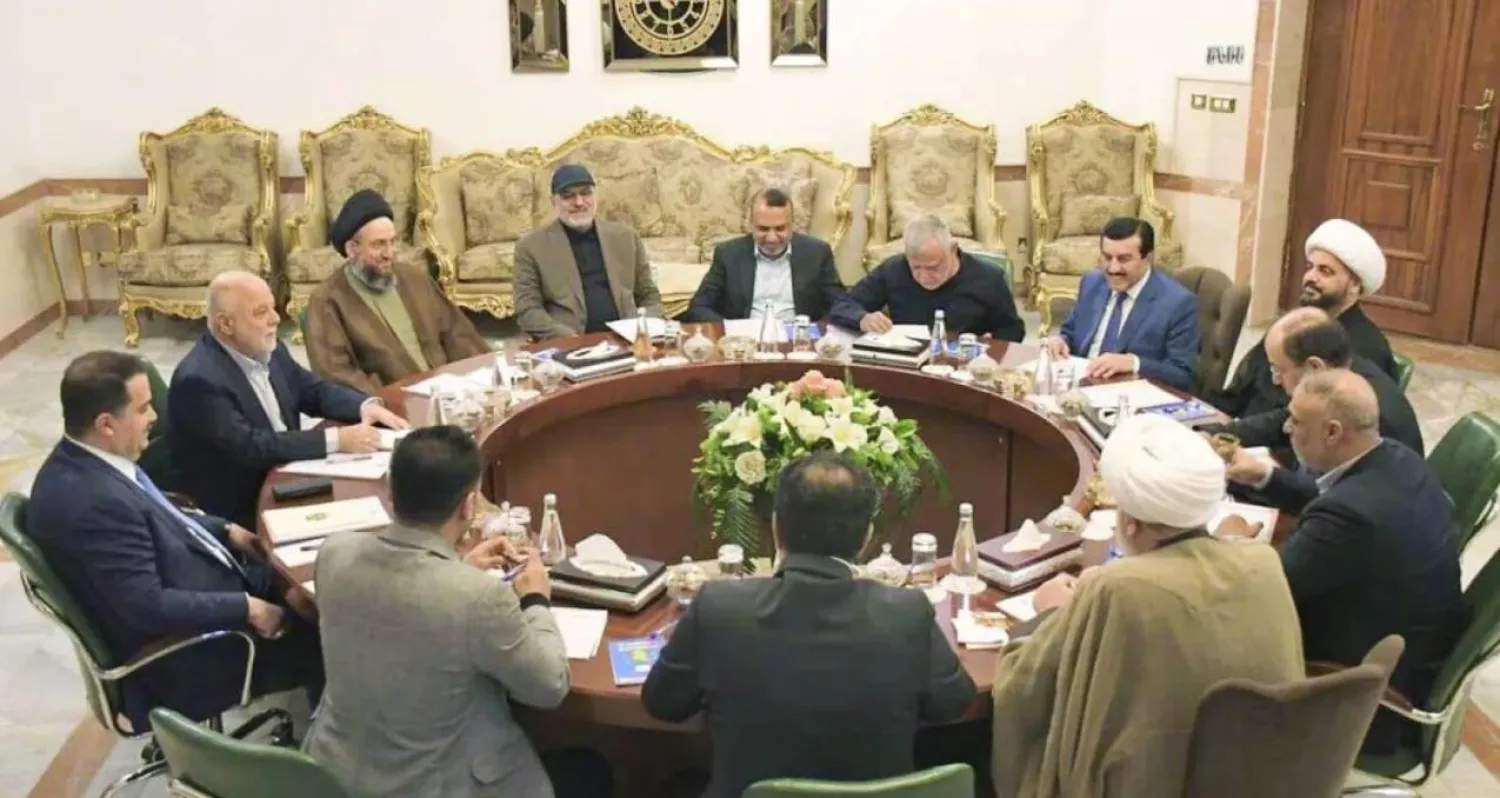

US pressure over Iranian influence in Iraq is increasing amid consultations to form a new government and messages from Washington affirming its willingness to use “the full range of tools” to counter what it describes as “Iran’s destabilizing activities.”
US Chargé d’Affaires Joshua Harris confirmed during a meeting on Thursday with Abdul Hussein Al-Mousawi, head of the National Approach Alliance, that any Iraqi government “should remain fully independent and focused on advancing the national interests of all Iraqis.”
A US embassy statement said the meeting addressed the importance of a strong partnership between the United States and Iraq that delivers “tangible benefits” for both sides within the framework of safeguarding Iraqi sovereignty, bolstering regional stability, and strengthening economic ties.
Harris stressed his country’s readiness “to use the full range of tools to counter Iran’s destabilizing activities in Iraq,” a statement seen as a dual message directed at forces linked to Tehran and at blocs engaged in government formation negotiations.
The media office of the National Approach Alliance, which is part of the Coordination Framework, stated that the meeting discussed the latest developments in Iraq and the region, and ways to strengthen bilateral relations “in line with the principle of mutual sovereign respect and shared interests.”
It also addressed consultations among political parties to abide by constitutional mechanisms and the results of elections.
Both sides stressed the importance of ensuring the success of negotiations between the US and Iran in a way that contributes to de-escalation and the adoption of dialogue.
Last month, US President Donald Trump warned Iraq over a reinstatement of Nouri al-Maliki as prime minister, saying that the country “descended into poverty and total chaos” under his previous leadership.
“That should not be allowed to happen again” Trump wrote on social media.
Al-Maliki, who has long-standing ties to Iran, dismissed Trump’s threat as “blatant American interference in Iraq’s internal affairs,” and vowed to “continue to work until we reach the end.”
The Coordination Framework, which holds a parliamentary majority, has named al-Maliki to serve again as Iraq’s prime minister, citing his “political and administrative experience and role in managing the state.”


