


UNRWA’s Lazzarini Warns Ignoring Gaza Risks New Generation of Anger

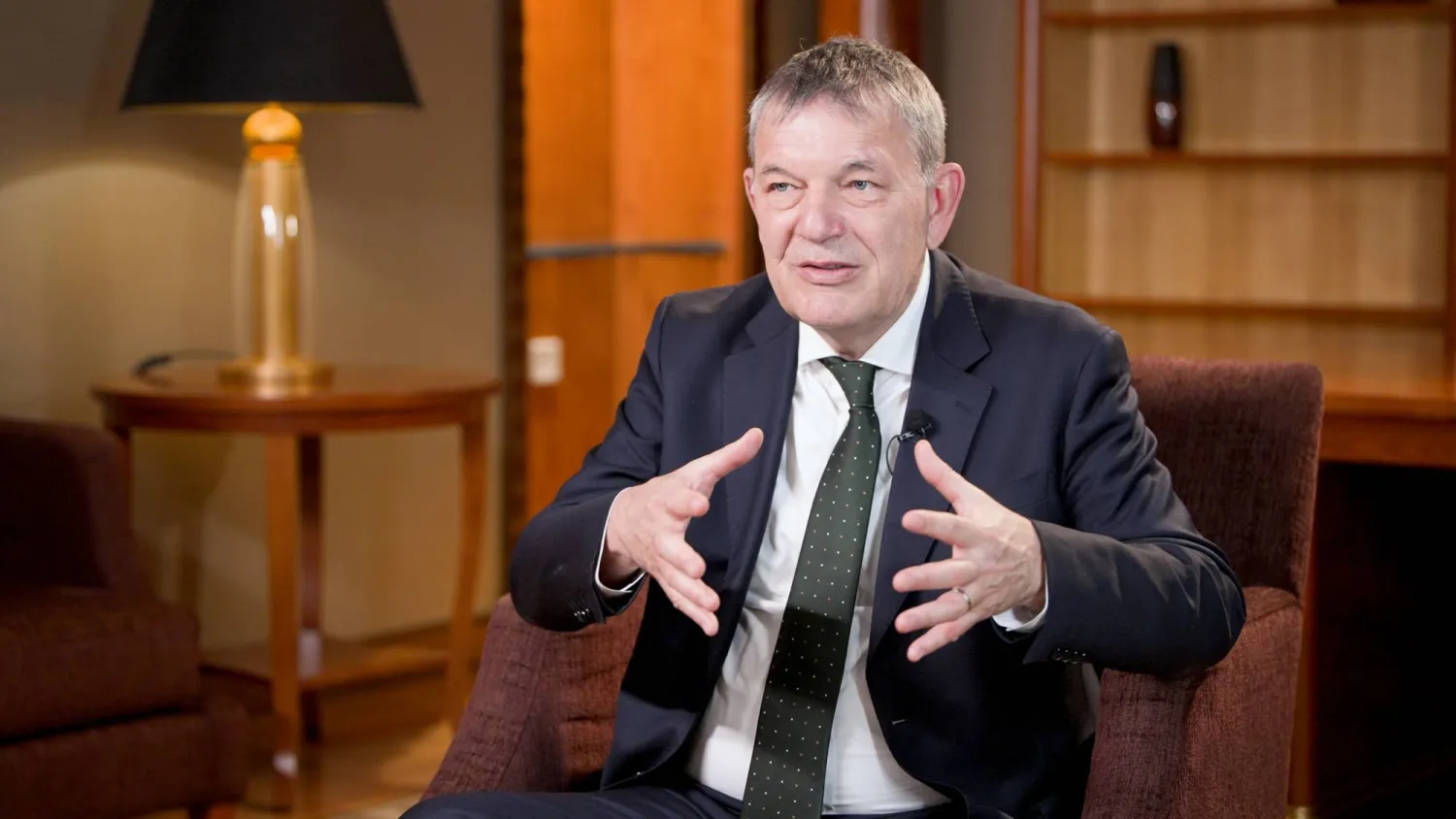
Philippe Lazzarini, the Commissioner-General of the United Nations Relief and Works Agency for Palestine Refugees in the Near East. Photo: Turky Alagili
TT

UNRWA’s Lazzarini Warns Ignoring Gaza Risks New Generation of Anger

Philippe Lazzarini, the Commissioner-General of the United Nations Relief and Works Agency for Palestine Refugees in the Near East. Photo: Turky Alagili

Philippe Lazzarini, the Commissioner-General of the United Nations Relief and Works Agency for Palestine Refugees in the Near East, says UNRWA’s future cannot remain “hostage indefinitely” to the absence of a political solution, as he prepares to leave his post next month.

In a wide-ranging interview with Asharq Al-Awsat, Lazzarini called for a gradual shift in how services are delivered, allowing Palestinian institutions to eventually build the capacity to take over.

At the same time, he warned that abandoning nearly 2 million people in Gaza, half of them children, to trauma and hopelessness risks sowing the seeds of new generations of anger.

Strong backing from Saudi Arabia

Lazzarini said UNRWA’s cooperation with Saudi Arabia is “strong,” both financially and politically.

Riyadh, he said, is deeply engaged in the political process and works with the EU under the umbrella of the “Global Alliance for the Implementation of the Two-State Solution,” where UNRWA has been invited to be part of the broader discussions.

For Lazzarini, sustainable access to essential services must rest on a clear political framework. Saudi Arabia and other partners in the alliance have helped provide that framework and voiced firm political support for the agency during what he described as a challenging period.

He said the Kingdom’s level of political engagement and the initiatives advanced within the alliance left a strong impression. Inviting a humanitarian-development agency such as UNRWA into discussions about the future of Palestinian institutions, he said, reflects the seriousness of that partnership.

A funding squeeze and a “silent war”

UNRWA is also battling a chronic funding crisis. After a year of austerity, Lazzarini said he was forced weeks ago to cut services by around 20%, including health care and education, affecting beneficiaries directly.

Beyond Gaza, he warned of what he called a “silent war” in the occupied West Bank, overshadowed by events in the enclave.

Over the past two years, developments there have come “close to de facto annexation of the occupied West Bank,” he said. Settlement expansion has accelerated. Settler violence has risen “with little accountability.” Large-scale security operations, especially in Jenin and Tulkarm, have emptied camps and displaced large numbers of residents.
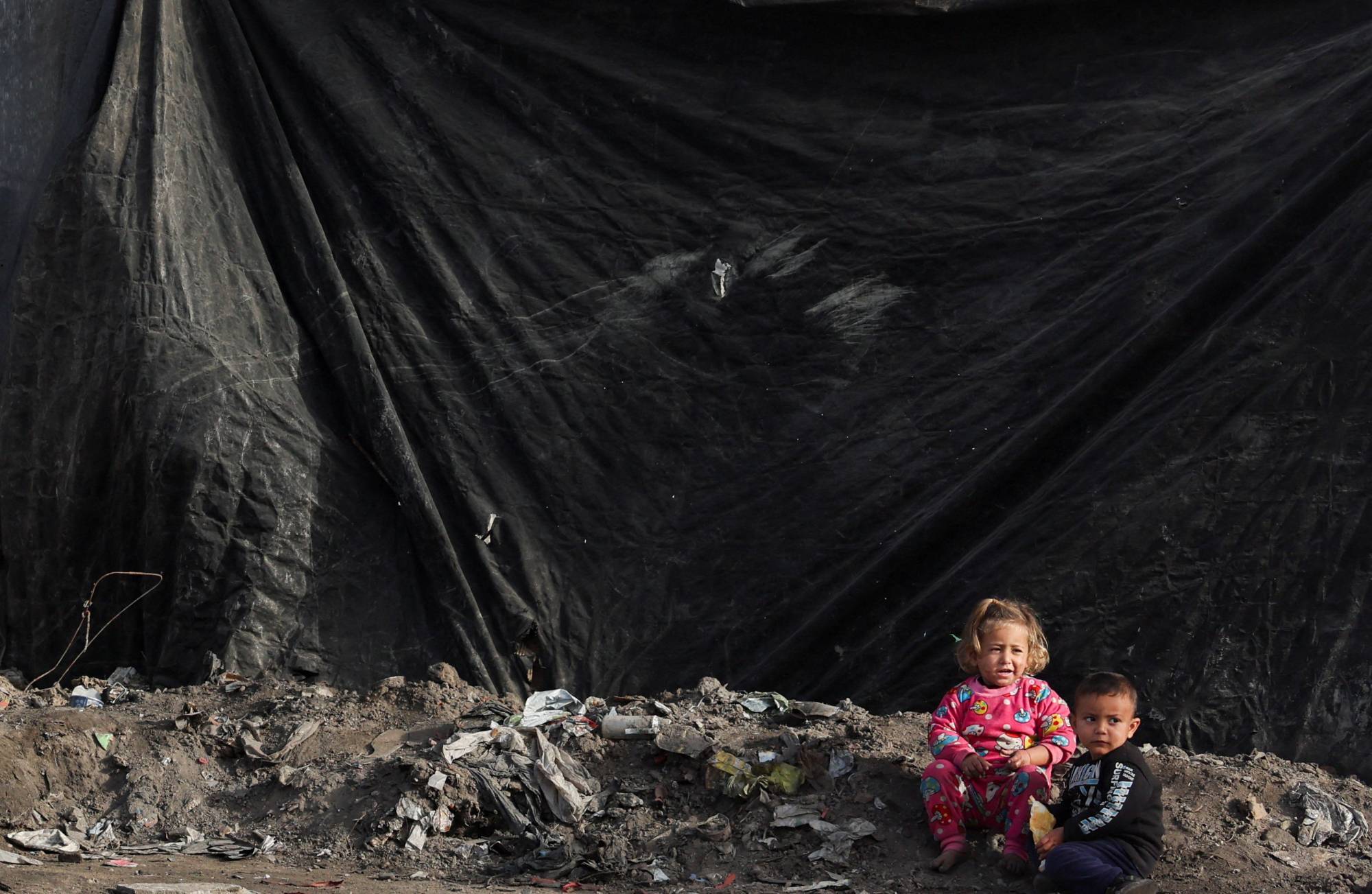
Palestinian refugee children are seen at a camp in Gaza city. Reuters

Gaza pushed beyond the brink

What has happened in Gaza, Lazzarini said, “defies description.” The suffering, he added, is “unbearable.”

Once described as an open-air prison, Gaza has, after more than two years of unrelenting war, become a landscape of daily atrocities carried out almost around the clock, before the eyes of the world.

Between 80% and 90% of the territory has been destroyed, he said, leaving behind a “post-catastrophic” environment. The population is in constant flight. More than 70,000 people have been killed, according to estimates, not counting those still buried beneath the rubble.

He described systematic starvation driven by political decisions and efforts to make life in the enclave untenable, pushing residents toward departure.

More than 380 UNRWA staff members have been killed, he said. Others were detained and tortured. Agency facilities were struck. The violations of international law, he added, have gone largely unpunished, deepening what he called a climate of impunity.

Political targeting and pressure

Lazzarini said he himself faced “political and diplomatic targeting” during his tenure, tied not to his person but to his office and what UNRWA represents.

After his first visit to Gaza, he was declared persona non grata and barred from returning, with instructions issued not to engage with him.

The targeting was not directed personally as much as at the function and the symbolism of UNRWA, he said. Some Israeli officials, he noted, have openly stated that their objective is to end the agency’s role, seeing it as perpetuating the refugee issue.

UNRWA’s 75-year existence, he argued, does not explain the problem. Instead, it reflects the international community’s failure to reach a just and lasting political solution.

The two-state solution

Lazzarini reaffirmed that the two-state path remains “a fundamental option,” but warned that developments in Gaza and the West Bank are pushing any serious political horizon further out of reach.

The events after Oct. 7, he said, should have been “a wake-up call.” This conflict, he stressed, cannot be left unresolved.

Nearly 2 million people in Gaza, half of them children, are living in profound trauma with no clear future. Ignoring that reality, he warned, means planting anger in a new generation, with consequences for the region’s stability.

He also voiced concern that solidarity and compassion are no longer driving international responses as they once did. In both Gaza and Sudan, he said, he sensed “a great deal of indifference” toward vast humanitarian crises.

Yet he insisted the core lesson is to hold fast to humanitarian values, however bleak the circumstances. The alternative, he warned, is a world stripped of standards and restraint, ruled by the law of the jungle rather than international law.
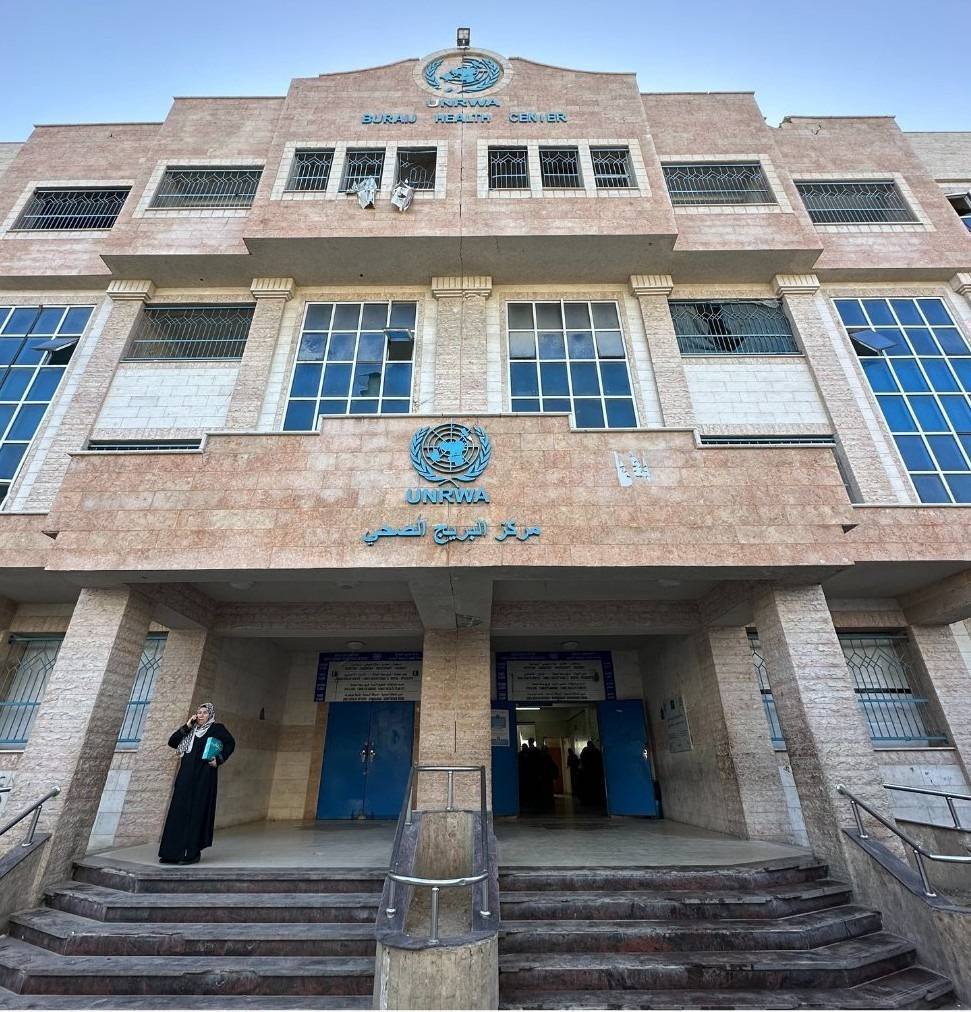
For Lazzarini, sustainable access to essential services must rest on a clear political framework.

Rethinking UNRWA’s future

Looking ahead, Lazzarini said UNRWA cannot continue indefinitely in its current form.

He called for a phased transition in service delivery, enabling Palestinian institutions to build capacity to assume those responsibilities over time.

The agency must remain the custodian of the refugee cause until a just solution is achieved, he said. But the mechanics of delivering services should not remain frozen, waiting endlessly for a political breakthrough.



Yemen, Saudi Arabia Deepen Infrastructure and Recovery Partnership

Yemeni Minister of Public Works and Roads Hussein Al-Aqrabi and Mohammed Al-Jaber, Saudi Arabia’s Ambassador to Yemen (Saba)
TT

Yemen, Saudi Arabia Deepen Infrastructure and Recovery Partnership

Yemeni Minister of Public Works and Roads Hussein Al-Aqrabi and Mohammed Al-Jaber, Saudi Arabia’s Ambassador to Yemen (Saba)

The internationally recognized government and the Saudi Development and Reconstruction Program for Yemen (SDRPY) have signed a new memorandum of cooperation to overhaul road infrastructure and revive economic and trade sectors

The agreement, signed by Minister of Public Works and Roads Hussein Al-Aqrabi and Mohammed Al-Jaber, Saudi Arabia’s Ambassador to Yemen and the general supervisor of the program, signals a move from emergency response to sustainable development, based on institutional capacity building and improved basic services.

In a statement, the Saudi program said the deal will secure sustainable road maintenance and operations while raising technical standards.

Planned measures include installing modern vehicle weighing stations to curb overloading, a leading cause of road damage, alongside technical and advisory support to rehabilitate and operate transport networks. The initiative will also bolster the Roads Maintenance Fund in coordination with relevant Saudi authorities.

Projects on the table include expanding and rehabilitating several key arteries, most notably the strategic Al-Abr Road and the Haijat Al-Abd Road, as well as other routes across multiple provinces.

The total stretch exceeds 200 kilometers, a scale expected to cut transport costs and ease the flow of trade between governorates.

The signing coincided with talks between Tariq Saleh, a member of Yemen’s Presidential Leadership Council, and Al-Aqrabi on the ministry’s next-phase priorities.

The government’s vision places infrastructure at the heart of economic and social recovery.

Saleh underlined the ministry’s central role in establishing stability in liberated areas, describing the rehabilitation of international and inter-governorate roads as critical to easing public hardship and improving the movement of goods and supplies.

Al-Aqrabi outlined the ministry’s 2026 blueprint, focused on restoring strategic road networks and vital outlets, completing stalled projects, and improving the urban landscape to reinforce the state’s presence and strengthen public trust in government institutions.

Saleh also called for boosting the efficiency of the Roads Maintenance Fund and enforcing transparent standards in resource management and project execution, saying the current phase demands high-level performance to deliver tangible results, particularly amid Yemen’s economic and humanitarian strains.

Observers view the emphasis on transport infrastructure as a strategic calculation. Roads sit at the center of supply chains and directly affect the cost of goods and services, making their rehabilitation a practical gateway to stimulating the local economy and encouraging investment.

The development drive extends beyond transport. The same period saw expanded engagements between Yemeni officials and the Saudi program to deepen cooperation in health, education, energy, water, and agriculture.

In this context, Salem Al-Khanbashi, a member of the Presidential Leadership Council and governor of Hadhramaut, met Al-Jaber, with both sides reaffirming the depth of Yemeni-Saudi ties and commending sustained Saudi support on the military, humanitarian, and development fronts.

According to official Yemeni media, Al-Jaber said Riyadh remains committed to providing comprehensive political, economic, and developmental support to Yemen, with a focus on dialogue-based solutions that deliver security, stability, and sustainable development.

During a visit to the program’s headquarters in Riyadh, Al-Khanbashi reviewed projects implemented under a broad development framework spanning education, health, energy, transport, agriculture, and fisheries, as well as initiatives to improve basic services in Hadhramaut and other liberated provinces.

Program officials presented a detailed briefing on ongoing projects designed around citizens’ core needs, prioritizing infrastructure reinforcement and improved public service delivery to underpin social stability.

In the health sector, Yemen’s Minister of Public Health and Population, Qassem Buhaibeh, met a technical team from the Saudi program to discuss executive steps for establishing a Health Fund, described as a strategic mechanism to secure sustainable financing for medical services and upgrade care quality.

According to official sources, discussions covered the technical and procedural framework for launching the fund, including governance and transparency mechanisms to ensure resources are allocated in line with sector priorities and actual needs.

Buhaibeh said the Health Fund marks a decisive step toward stabilizing health facility finances, especially under mounting pressure on the healthcare system, praising Saudi backing that has supported infrastructure upgrades, medical equipment improvements, and human capacity development.


Saudi FM Says Palestinians Have Right to Self-Determination

Saudi Arabia's Foreign Minister Prince Faisal bin Farhan Al Saud attends the 62nd Munich Security Conference (MSC) at the hotel 'Bayerischer Hof', in Munich, Germany, 13 February 2026. EPA/RONALD WITTEK
TT

Saudi FM Says Palestinians Have Right to Self-Determination

Saudi Arabia's Foreign Minister Prince Faisal bin Farhan Al Saud attends the 62nd Munich Security Conference (MSC) at the hotel 'Bayerischer Hof', in Munich, Germany, 13 February 2026. EPA/RONALD WITTEK

Saudi Foreign Minister Prince Faisal bin Farhan has stressed the unity of the Gaza Strip and the West Bank during a panel discussion at the Munich Security Conference, saying such unity would not be achieved without “stability in Gaza.”

Prince Faisal said on Friday Israeli violations of the Gaza ceasefire agreement were “ongoing,” noting that the greater concern is not only the continuation of fighting, but that death has not stopped even during periods when gunfire has subsided.

He added that the delivery of humanitarian aid remains a major challenge.

The minister pointed to a gap between political commitments and realities on the ground, saying that understandings are not always translated into action.

Nevertheless, he said engagement was continuing to address outstanding issues, whether related to ceasefire violations or to opening channels for humanitarian access.

His remarks came during a session titled Breaking Point: The International Order Between Reform and Destruction.

Alongside Prince Faisal, the panel also included Colombia’s Minister of Defense Pedro Arnulfo Sanchez Suarez, US Permanent Representative to the UN Michael Waltz, and the EU’s foreign affairs chief and vice president of the European Commission, Kaja Kallas.

Right to self-determination

Prince Faisal said that when the UN resolution establishing the “Board of Peace” was adopted, it was clear that it included explicit language affirming the right of the Palestinians to self-determination.

He said the Kingdom, alongside the countries that signed the resolution and those that agreed to join the council, viewed the step as a milestone on the path toward Palestinian self-determination.

He stressed that the immediate priority must be to stop the loss of life in Gaza, stabilize the situation, begin reconstruction, and build confidence that the enclave no longer poses a threat to its neighbors, paving the way to address Palestinian rights.

Any genuine approach to Palestinian rights must be comprehensive, including Palestinians in the West Bank, he said, describing the preservation of “the unity of Gaza and the West Bank” as essential.

That unity cannot be maintained without stability in Gaza, he added, noting that it is difficult to connect or build on a political track amid chaos.

Prince Faisal said efforts were ongoing, with upcoming meetings to follow up on progress, stressing that achieving stability is a continuous, daily endeavor.

Clear political messaging now requires focusing on tangibly improving the lives of Palestinians in Gaza, he said, opening the door to a path that would allow Palestinians and Israelis to live side by side in peace and harmony.

Shifts in the global order

Beyond the Palestinian issue, the session addressed shifts in the international system and the effectiveness of multilateral institutions amid rising tensions, mounting security challenges, and global economic crises.

Prince Faisal said the current system was originally shaped in the context of European crises, beginning with World War I and later World War II, which led to the creation of the United Nations and laid the foundations of the present global order.

That history explains the European or transatlantic focus embedded in the system’s structure, he said.

Despite the suffering caused by multiple wars, Prince Faisal said there were grounds for cautious optimism, pointing to the prominence of debate over the failure of the international system to deliver on its intended aims.

He said the US was leading some efforts to address shortcomings in the international system, but the more significant shift lay in discussions within Europe itself.

For a long time, he said, there had been greater attachment to symbolism than to facts on the ground, an approach that, at earlier stages, hindered substantive debate about the drivers of conflicts in various regions and how to mitigate them to allow those conflicts to end.

The change in tone makes him more optimistic than last year, Prince Faisal said, as discussions are now taking place with greater candor and transparency, including with European parties that were among the strongest supporters of the old order and least willing to acknowledge that it was no longer functioning.


GCC Secretary-General: Unconditional Aid Entry is Top Priority for Gaza Humanitarian Relief

Gulf Cooperation Council (GCC) Secretary-General Jasem Albudaiwi. SPA
TT

GCC Secretary-General: Unconditional Aid Entry is Top Priority for Gaza Humanitarian Relief

Gulf Cooperation Council (GCC) Secretary-General Jasem Albudaiwi. SPA

Gulf Cooperation Council (GCC) Secretary-General Jasem Albudaiwi has met with UN Under-Secretary-General and UNOPS Executive Director Jorge Moreira da Silva to discuss the deteriorating humanitarian crisis in the Gaza Strip.

The meeting took place on Friday on the sidelines of the 62nd Munich Security Conference

Albudaiwi reaffirmed the GCC states' commitment to supporting all international efforts to improve regional conditions, emphasizing that unconditional aid entry is a primary necessity.

The two officials highlighted the urgency of restoring basic services and addressing the immediate needs of the Palestinian people, while advocating for political action to secure a sustainable solution.

Discussions covered expanding GCC-UN cooperation in project management and infrastructure development to further mutual regional interests.