


Sudan Oil Minister Says War Losses in Billions

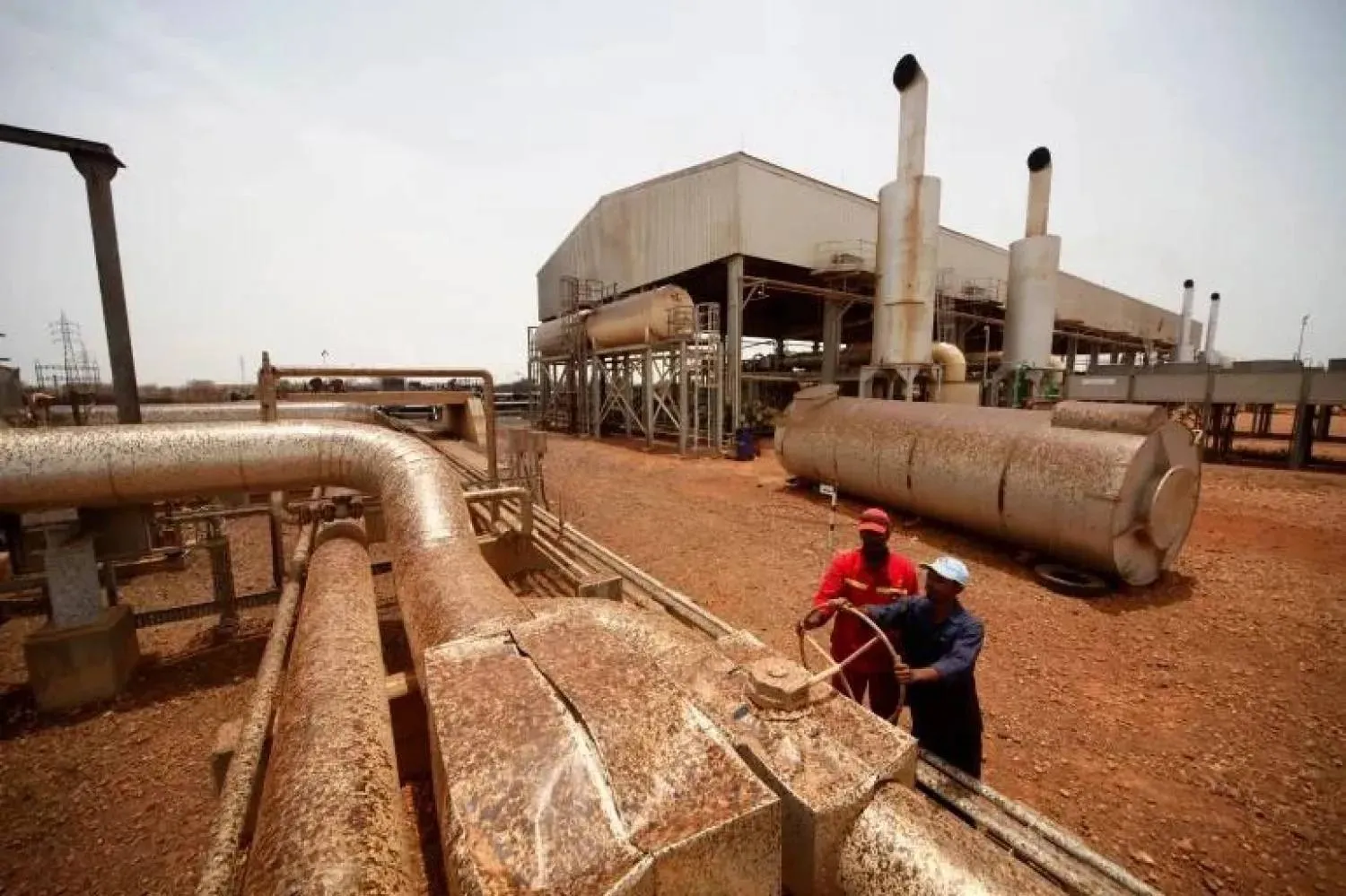
File photo of the Heglig oil field in southern Kordofan, Sudan (Reuters)
TT

Sudan Oil Minister Says War Losses in Billions

File photo of the Heglig oil field in southern Kordofan, Sudan (Reuters)

Sudan’s Oil and Energy Minister Al-Mutasim Ibrahim said the estimated cost of heavy losses and damage inflicted on the oil and energy sector by the war amounts to billions of dollars, blaming the Rapid Support Forces for directly targeting infrastructure across the country.

In exclusive remarks to Asharq Al-Awsat, Ibrahim said the government had fully restarted the Heglig oil field and that “all employees on site are carrying out their duties normally.”

He said the protection and operation of the field are a joint responsibility between Sudan and the Republic of South Sudan, as provided for in previously signed agreements between the two countries.

Ibrahim strongly denied recent reports of a three-way agreement between the governments of Sudan and South Sudan and the Rapid Support Forces regarding the Heglig field, located in the far south of the Kordofan region bordering South Sudan.

Authorities in South Sudan announced a settlement between the Sudanese army and the Rapid Support Forces after the latter took control of the area, stipulating the withdrawal of both sides and assigning the South Sudan army the task of securing oil facilities in Heglig.

Heglig is Sudan’s largest oil field, producing between 40,000 and 80,000 barrels per day of crude. Output fell by about 20,000 to 25,000 barrels per day after the outbreak of war due to the shutdown of many wells and damage to infrastructure.

The field also serves as the central processing facility for South Sudan’s crude, which produces nearly 130,000 barrels per day and is exported through Sudanese ports on the Red Sea coast.

China talks

Meanwhile, the minister said negotiations with the Chinese government were ongoing over its return to operations in Block 6 in the Balila area of West Kordofan. China had announced the termination of its agreement with the Sudanese government due to deteriorating security conditions and the collapse of supply chains caused by the fighting.

“Work at the Balila field is currently suspended, but the Chinese partner has not withdrawn from the country,” Ibrahim said.

“We recently held joint meetings with the Chinese side in Cairo and informed them of our desire to continue the partnership in the field, and we also presented opportunities to invest in other fields.”

He expressed optimism about the continuation of the partnership between Khartoum and Beijing in the sector, pointing to various oil investments expected to flow in after the war ends, particularly in areas under army control, which he said are witnessing significant security stability.

Last December, the Chinese government informed Sudan that it was ending the oil partnership after years of cooperation.

Khartoum refinery

According to the minister, preliminary estimates of heavy losses to the oil and energy sector since the war erupted in mid-April 2023 amount to billions of dollars, with damage assessments still underway.

He said the Rapid Support Forces had deliberately sabotaged infrastructure in both sectors, adding that the government had made progress in rehabilitating them after the army pushed the forces out of many areas across the country.

Ibrahim put losses at the Khartoum oil refinery at around $6 billion, saying it would need to be rebuilt from scratch.

“We have begun preparing the necessary designs and securing requirements to restart it,” he said, noting that several countries had expressed serious interest in investing in refineries in Khartoum, El-Obeid, and Port Sudan.

Before the war, the Al-Jaili refinery north of the capital, Khartoum, met more than 40 percent of the country’s demand for gasoline, diesel, and cooking gas. Still, it halted operations due to severe damage to its processing and refining facilities.

Ibrahim said petroleum products were flowing normally and that their availability had helped stabilize fuel supplies nationwide. He added that most fuel stations in areas without electricity had been equipped with solar power.


Syria Says Two Soldiers Killed in Attack in Northeast

A member of Syria's security forces stands under a sign in the predominantly Druze city of Sweida on July 15, 2025. (AFP)
TT

Syria Says Two Soldiers Killed in Attack in Northeast

A member of Syria's security forces stands under a sign in the predominantly Druze city of Sweida on July 15, 2025. (AFP)

Syria said two soldiers were killed in an attack by unidentified assailants in the country's northeast on Monday, while a military source told AFP investigations were underway to identify the perpetrators.

In recent months, Syria's new government has expanded its control to parts of the country's north and northeast that were previously held by Kurdish-led forces, including areas near the site of Monday's attack.

The government has also formally joined the international coalition against the ISIS group, which has long launched attacks in those areas.

The two soldiers were killed "and others wounded in a treacherous attack by unknown assailants" on a bus in Hasakeh province, state news agency SANA quoted the defense ministry as saying.

A military source told AFP on condition of anonymity that a military bus "came under gunfire" along the highway between Ras al-Ain in Hasakeh province and Ain Issa in Raqqa province, adding that two soldiers were killed and two others wounded.

Investigations were underway to determine who was behind the attack, the source added.

Once in control of large swathes of Syria and Iraq, ISIS was territorially defeated in Syria in 2019 in a battle spearheaded by Kurdish-led forces with support from a US-led international coalition.

The extremists however maintain a presence in Syria, mainly in the country's vast desert, and repeatedly attacked Kurdish-led forces while they controlled swathes of the northeast.

In February, after government forces seized control of many of those areas, ISIS urged its members to fight Syria's new authorities.

Days later, state media said four Syrian security personnel were killed in an ISIS attack in the northern city of Raqqa, which had been recently taken by Damascus's forces.


UN: Sudan Drone Strikes Killed at Least 880 Civilians between January and April

Sudanese Army elements celebrate after seizing control of an area in northern Khartoum Bahri on January 25, 2025 (Reuters)
TT

UN: Sudan Drone Strikes Killed at Least 880 Civilians between January and April

Sudanese Army elements celebrate after seizing control of an area in northern Khartoum Bahri on January 25, 2025 (Reuters)

At least 880 civilians were killed in drone strikes in Sudan between January and April this year, the UN said Monday, warning such strikes were pushing the conflict towards a "new, even deadlier phase".

Drone attacks by both Sudan's army and paramilitary group Rapid Support Forces (RSF), which have been at war since April 2023, have intensified across the country in recent months, reported AFP.

The United Nations rights office said that its Sudan team had determined that "drone strikes accounted for at least 880 civilian deaths -- more than 80 percent of all conflict-related civilian deaths -- between January and April this year".

"Armed drones have now become by far and away the leading cause of civilian deaths," UN rights chief Volker Turk said in the statement.

A growing use of drones allows fighting to continue "unabated" in the rainy season, which in the past has seen a lull, he said.

"An intensification of hostilities in the coming weeks... risks hostilities expanding even further to central and eastern states, with lethal consequences for civilians across enormous areas," he said.

More than three years of civil war in Sudan have already killed tens of thousands, displaced over 11 million and thrust several areas into famine.

But now, Turk warned that "unless action is taken without delay, this conflict is on the cusp of entering yet another new, even deadlier phase".

Most of the civilian deaths attributed to drone strikes in the first three months of the year were recorded in the Kordofan region and Darfur.

Those strikes have continued, with most recently on May 8 drones striking Al Quoz in South Kordofan and near El-Obeid in North Kordofan, reportedly killing 26 civilians and injuring others, the rights office said.

It said belligerents had used drones to repeatedly strike civilian objects and infrastructure, "diminishing access to sufficient food, clean water and health care".

Markets have been repeatedly targeted, with at least 28 such attacks resulting in civilian casualties in the first four months of the year.

Health facilities have been hit at least 12 times, it added.

Now, the rights office said, drone strikes by the RSF and the Sudanese army were increasingly spreading beyond Kordofan and Darfur, to Blue Nile, White Nile and Khartoum.

Turk warned that heightened violence would disrupt provision of critical humanitarian assistance. 

"Much of the country, including Kordofan, is now facing an increased risk of famine and acute food insecurity," he said, adding that the situation was being exacerbated by fertilizer shortages linked to the Middle East war. 


Israel Says Soldier Killed Near Border with Lebanon

This photograph taken from the southern Lebanese area of Tyre shows smoke rising from the site of Israeli bombardment that targeted the village of Tair Harfa on May 11, 2026. (AFP)
TT

Israel Says Soldier Killed Near Border with Lebanon

This photograph taken from the southern Lebanese area of Tyre shows smoke rising from the site of Israeli bombardment that targeted the village of Tair Harfa on May 11, 2026. (AFP)

Israel's military said Monday that one of its soldiers had died in fighting near the border with Lebanon, bringing its losses to 18 personnel since the war with Hezbollah began in early March.

Sergeant Major Alexander Glovanyov, 47, "fell during combat near the Israel-Lebanon border", the military said.

He was killed on Sunday.

Since the war began, one Israeli civilian contractor has also been killed in addition to the 18 soldiers.

Israel and Iran-backed armed group Hezbollah have been trading fire in south Lebanon despite a ceasefire in place since April 17 between Israel and Lebanon that aimed to halt the fighting.

Hezbollah drew Lebanon into the Middle East conflict on March 2 when it launched rockets at Israel to avenge the killing of Iran's supreme leader in US-Israeli strikes.

Israel responded with airstrikes and a ground invasion. Its troops are operating behind an Israeli-declared "yellow line" that runs around 10 kilometers (six miles) north of Lebanon's border.
