

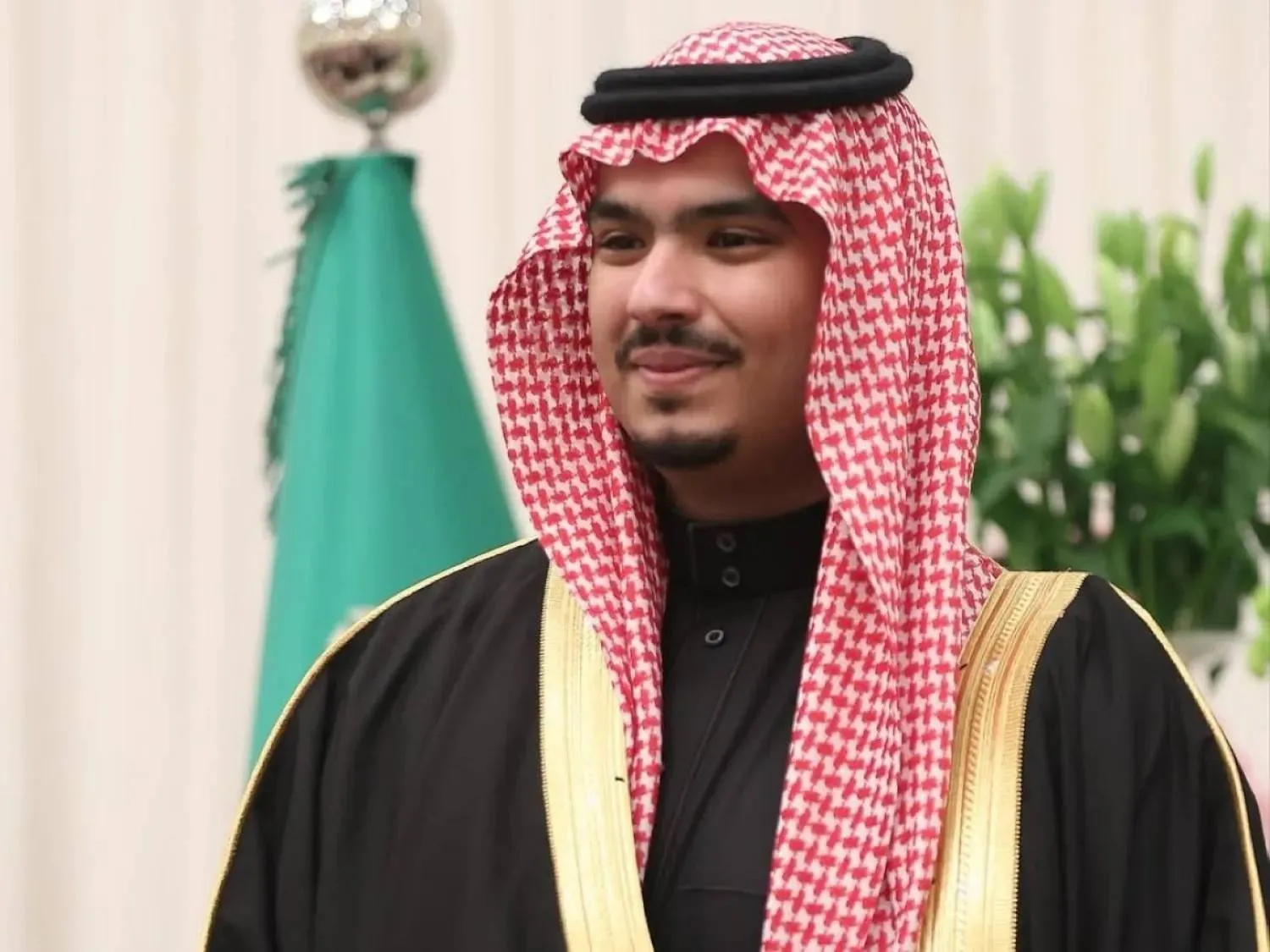

Rakan bin Salman Appointed Governor of Diriyah at Critical Juncture in its Transformation 

Prince Rakan bin Salman bin Abdulaziz. (Social media)
TT

Rakan bin Salman Appointed Governor of Diriyah at Critical Juncture in its Transformation 

Prince Rakan bin Salman bin Abdulaziz. (Social media)

Prince Rakan bin Salman bin Abdulaziz has taken the helm of what is widely regarded as the Kingdom’s crown jewel, following the issuance of a royal order appointing him Governor of Diriyah.

The appointment came as part of a series of royal decrees issued on Thursday by Custodian of the Two Holy Mosques King Salman bin Abdulaziz, highlighting the strategic importance of Diriyah at a critical juncture in its transformation.

Diriyah holds a unique place in Saudi history as the birthplace of the Saudi state and a powerful symbol of national unity. Today, an ambitious development program is reshaping the area into a globally prominent cultural destination, echoing its historic role as a commercial hub and a flourishing center of learning and culture.

Prince Rakan bin Salman’s appointment coincides with a defining moment for the governorate, which is transitioning from a historic capital of the early Saudi state into a world-class cultural and tourism destination designed for the 21st century.

Born in 1997, Prince Rakan is the youngest son of King Salman. He holds a bachelor’s degree in law from King Saud University in Riyadh, bringing a legal background to a role that blends heritage preservation with modern governance.

His leadership comes amid unprecedented momentum in Diriyah’s development. No longer viewed merely as a historic site, Diriyah has become a vast, integrated development zone with ambitions to attract up to 100 million visitors annually by 2030.

At the forefront of the new governor’s agenda is a portfolio of landmark projects, most notably the multibillion-dollar Diriyah Gate development. The project encompasses the historic At-Turaif district, a UNESCO World Heritage Site, alongside broader plans to reinforce Diriyah’s position as a global hub for arts, culture, and immersive international experiences.



Saudi Diplomatic Discussions on the Sidelines of Munich Conference

Prince Faisal met with Nickolay Mladenov on the sidelines of the Munich Security Conference. SPA
TT

Saudi Diplomatic Discussions on the Sidelines of Munich Conference

Prince Faisal met with Nickolay Mladenov on the sidelines of the Munich Security Conference. SPA

Saudi Minister of Foreign Affairs Prince Faisal bin Farhan bin Abdullah held on Saturday several meetings on the sidelines of the Munich Security Conference.

He met with High Representative of the Board of Peace for Gaza Nickolay Mladenov to discuss with him the latest developments in the Palestinian enclave.

Prince Faisal also held talks with US Special Envoy to Monitor and Combat Antisemitism Yehuda Kaploun.

During the meeting, they reviewed efforts to promote dialogue and tolerance, combat extremism, and underscore the importance of fostering understanding and peaceful coexistence.

Also Saturday, the Saudi Minister of Foreign Affairs received a phone call from Pakistani Deputy Prime Minister and Minister of Foreign Affairs Ishaq Dar.

During the call, the two sides discussed bilateral relations, current developments, and issues of mutual interest.

Prince Faisal also received a phone call from his Indonesian counterpart, Sugiono. They reviewed bilateral ties and exchanged views on regional and international issues of mutual interest.


Yemen, Saudi Arabia Deepen Infrastructure and Recovery Partnership

Yemeni Minister of Public Works and Roads Hussein Al-Aqrabi and Mohammed Al-Jaber, Saudi Arabia’s Ambassador to Yemen (Saba)
TT

Yemen, Saudi Arabia Deepen Infrastructure and Recovery Partnership

Yemeni Minister of Public Works and Roads Hussein Al-Aqrabi and Mohammed Al-Jaber, Saudi Arabia’s Ambassador to Yemen (Saba)

The internationally recognized government and the Saudi Development and Reconstruction Program for Yemen (SDRPY) have signed a new memorandum of cooperation to overhaul road infrastructure and revive economic and trade sectors

The agreement, signed by Minister of Public Works and Roads Hussein Al-Aqrabi and Mohammed Al-Jaber, Saudi Arabia’s Ambassador to Yemen and the general supervisor of the program, signals a move from emergency response to sustainable development, based on institutional capacity building and improved basic services.

In a statement, the Saudi program said the deal will secure sustainable road maintenance and operations while raising technical standards.

Planned measures include installing modern vehicle weighing stations to curb overloading, a leading cause of road damage, alongside technical and advisory support to rehabilitate and operate transport networks. The initiative will also bolster the Roads Maintenance Fund in coordination with relevant Saudi authorities.

Projects on the table include expanding and rehabilitating several key arteries, most notably the strategic Al-Abr Road and the Haijat Al-Abd Road, as well as other routes across multiple provinces.

The total stretch exceeds 200 kilometers, a scale expected to cut transport costs and ease the flow of trade between governorates.

The signing coincided with talks between Tariq Saleh, a member of Yemen’s Presidential Leadership Council, and Al-Aqrabi on the ministry’s next-phase priorities.

The government’s vision places infrastructure at the heart of economic and social recovery.

Saleh underlined the ministry’s central role in establishing stability in liberated areas, describing the rehabilitation of international and inter-governorate roads as critical to easing public hardship and improving the movement of goods and supplies.

Al-Aqrabi outlined the ministry’s 2026 blueprint, focused on restoring strategic road networks and vital outlets, completing stalled projects, and improving the urban landscape to reinforce the state’s presence and strengthen public trust in government institutions.

Saleh also called for boosting the efficiency of the Roads Maintenance Fund and enforcing transparent standards in resource management and project execution, saying the current phase demands high-level performance to deliver tangible results, particularly amid Yemen’s economic and humanitarian strains.

Observers view the emphasis on transport infrastructure as a strategic calculation. Roads sit at the center of supply chains and directly affect the cost of goods and services, making their rehabilitation a practical gateway to stimulating the local economy and encouraging investment.

The development drive extends beyond transport. The same period saw expanded engagements between Yemeni officials and the Saudi program to deepen cooperation in health, education, energy, water, and agriculture.

In this context, Salem Al-Khanbashi, a member of the Presidential Leadership Council and governor of Hadhramaut, met Al-Jaber, with both sides reaffirming the depth of Yemeni-Saudi ties and commending sustained Saudi support on the military, humanitarian, and development fronts.

According to official Yemeni media, Al-Jaber said Riyadh remains committed to providing comprehensive political, economic, and developmental support to Yemen, with a focus on dialogue-based solutions that deliver security, stability, and sustainable development.

During a visit to the program’s headquarters in Riyadh, Al-Khanbashi reviewed projects implemented under a broad development framework spanning education, health, energy, transport, agriculture, and fisheries, as well as initiatives to improve basic services in Hadhramaut and other liberated provinces.

Program officials presented a detailed briefing on ongoing projects designed around citizens’ core needs, prioritizing infrastructure reinforcement and improved public service delivery to underpin social stability.

In the health sector, Yemen’s Minister of Public Health and Population, Qassem Buhaibeh, met a technical team from the Saudi program to discuss executive steps for establishing a Health Fund, described as a strategic mechanism to secure sustainable financing for medical services and upgrade care quality.

According to official sources, discussions covered the technical and procedural framework for launching the fund, including governance and transparency mechanisms to ensure resources are allocated in line with sector priorities and actual needs.

Buhaibeh said the Health Fund marks a decisive step toward stabilizing health facility finances, especially under mounting pressure on the healthcare system, praising Saudi backing that has supported infrastructure upgrades, medical equipment improvements, and human capacity development.


Saudi FM Says Palestinians Have Right to Self-Determination

Saudi Arabia's Foreign Minister Prince Faisal bin Farhan Al Saud attends the 62nd Munich Security Conference (MSC) at the hotel 'Bayerischer Hof', in Munich, Germany, 13 February 2026. EPA/RONALD WITTEK
TT

Saudi FM Says Palestinians Have Right to Self-Determination

Saudi Arabia's Foreign Minister Prince Faisal bin Farhan Al Saud attends the 62nd Munich Security Conference (MSC) at the hotel 'Bayerischer Hof', in Munich, Germany, 13 February 2026. EPA/RONALD WITTEK

Saudi Foreign Minister Prince Faisal bin Farhan has stressed the unity of the Gaza Strip and the West Bank during a panel discussion at the Munich Security Conference, saying such unity would not be achieved without “stability in Gaza.”

Prince Faisal said on Friday Israeli violations of the Gaza ceasefire agreement were “ongoing,” noting that the greater concern is not only the continuation of fighting, but that death has not stopped even during periods when gunfire has subsided.

He added that the delivery of humanitarian aid remains a major challenge.

The minister pointed to a gap between political commitments and realities on the ground, saying that understandings are not always translated into action.

Nevertheless, he said engagement was continuing to address outstanding issues, whether related to ceasefire violations or to opening channels for humanitarian access.

His remarks came during a session titled Breaking Point: The International Order Between Reform and Destruction.

Alongside Prince Faisal, the panel also included Colombia’s Minister of Defense Pedro Arnulfo Sanchez Suarez, US Permanent Representative to the UN Michael Waltz, and the EU’s foreign affairs chief and vice president of the European Commission, Kaja Kallas.

Right to self-determination

Prince Faisal said that when the UN resolution establishing the “Board of Peace” was adopted, it was clear that it included explicit language affirming the right of the Palestinians to self-determination.

He said the Kingdom, alongside the countries that signed the resolution and those that agreed to join the council, viewed the step as a milestone on the path toward Palestinian self-determination.

He stressed that the immediate priority must be to stop the loss of life in Gaza, stabilize the situation, begin reconstruction, and build confidence that the enclave no longer poses a threat to its neighbors, paving the way to address Palestinian rights.

Any genuine approach to Palestinian rights must be comprehensive, including Palestinians in the West Bank, he said, describing the preservation of “the unity of Gaza and the West Bank” as essential.

That unity cannot be maintained without stability in Gaza, he added, noting that it is difficult to connect or build on a political track amid chaos.

Prince Faisal said efforts were ongoing, with upcoming meetings to follow up on progress, stressing that achieving stability is a continuous, daily endeavor.

Clear political messaging now requires focusing on tangibly improving the lives of Palestinians in Gaza, he said, opening the door to a path that would allow Palestinians and Israelis to live side by side in peace and harmony.

Shifts in the global order

Beyond the Palestinian issue, the session addressed shifts in the international system and the effectiveness of multilateral institutions amid rising tensions, mounting security challenges, and global economic crises.

Prince Faisal said the current system was originally shaped in the context of European crises, beginning with World War I and later World War II, which led to the creation of the United Nations and laid the foundations of the present global order.

That history explains the European or transatlantic focus embedded in the system’s structure, he said.

Despite the suffering caused by multiple wars, Prince Faisal said there were grounds for cautious optimism, pointing to the prominence of debate over the failure of the international system to deliver on its intended aims.

He said the US was leading some efforts to address shortcomings in the international system, but the more significant shift lay in discussions within Europe itself.

For a long time, he said, there had been greater attachment to symbolism than to facts on the ground, an approach that, at earlier stages, hindered substantive debate about the drivers of conflicts in various regions and how to mitigate them to allow those conflicts to end.

The change in tone makes him more optimistic than last year, Prince Faisal said, as discussions are now taking place with greater candor and transparency, including with European parties that were among the strongest supporters of the old order and least willing to acknowledge that it was no longer functioning.