US Military Tells Trump It's ‘Ready’ to Strike Iran as Soon as Saturdayhttps://english.aawsat.com/world/5242433-us-military-tells-trump-its-%E2%80%98ready%E2%80%99-strike-iran-soon-saturday
US Military Tells Trump It's ‘Ready’ to Strike Iran as Soon as Saturday
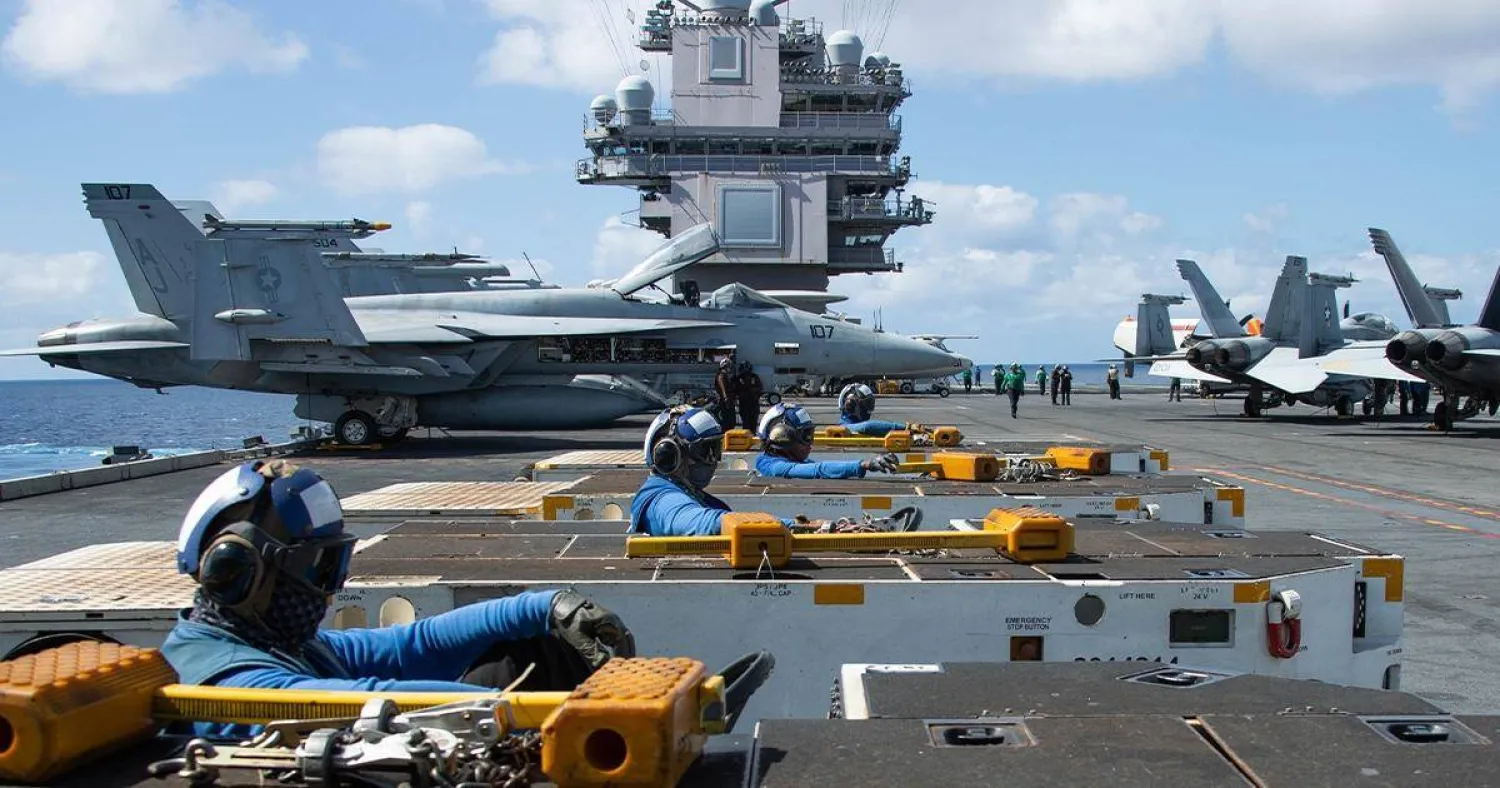
A shot showing personnel preparations aboard the US aircraft carrier "Gerald Ford" (US Navy)
Top national security officials have told US President Donald Trump the military is ready for potential strikes on Iran as soon as Saturday, but the timeline for any action is likely to extend beyond this weekend, sources familiar with the discussions told CBS News.
Trump has not yet made a final decision about whether to strike, said the officials, who spoke under condition of anonymity to discuss sensitive national matters.
The conversations have been described as fluid and ongoing, as the White House weighs the risks of escalation and the political and military consequences of restraint, added CBS.
Over the next three days, the Pentagon is moving some personnel temporarily out of the Middle East region — primarily to Europe or back to the United States — ahead of potential action or counterattacks by Iran if the US were to move ahead with its operation, according to multiple officials.
It's standard practice for the Pentagon to shift assets and personnel ahead of a potential US military activity and doesn't necessarily signal an attack on Iran is imminent, one of the sources told CBS.
Contacted by CBS News on Wednesday afternoon, a Pentagon spokesperson said they had no information to provide.
Iran was discussed in the White House Situation Room on Wednesday, a US official and a senior military official told CBS News. All military forces deployed to the region are expected to be in place by mid-March.
Axios had also said that a war between the United States and Iran is looming — and there are several factors suggesting President Trump might push the button soon.
On Wednesday, Iran's top diplomat Abbas Araghchi said that Tehran was "drafting" a framework for future talks with the United States, as the US energy secretary said Washington would stop Iran's nuclear ambitions "one way or another".
2 Dead in Mass Drone Barrage on Moscow Aiming to 'Disrupt' Russia's Electionshttps://english.aawsat.com/world/5320336-2-dead-mass-drone-barrage-moscow-aiming-disrupt-russias-elections
Emergency services personnel stand around the body of a victim killed in what authorities described as a Ukrainian drone strike on a residential building, amid the Russia-Ukraine conflict in Sofyino settlement in the Ramensky district of the Moscow region, Russia, September, 20, 2026. REUTERS/Stringer
2 Dead in Mass Drone Barrage on Moscow Aiming to 'Disrupt' Russia's Elections
Emergency services personnel stand around the body of a victim killed in what authorities described as a Ukrainian drone strike on a residential building, amid the Russia-Ukraine conflict in Sofyino settlement in the Ramensky district of the Moscow region, Russia, September, 20, 2026. REUTERS/Stringer
Hundreds of drones targeting Moscow and its surrounding region killed at least two people and damaged a major refinery on the final day of the country's parliamentary elections, the authorities said Sunday.
The capital's Mayor Sergei Sobyanin said that more than 1,600 drones had been intercepted and shot down, 450 of which were aimed at Moscow.
He accused Ukraine of attempting to interfere with a tightly controlled three-day election that is set to tighten President Vladimir Putin's 26-year grip on power.
"The unprecedented attack was clearly planned with the aim of disrupting the elections. The enemy did not succeed," he said on Telegram, according to AFP.
Moscow regional Governor Andrey Vorobyov said on the social media platform that at least two people were killed -- a 44-year-old woman and an elderly man -- in two separate locations.
A fire triggered by a drone crashing into a 21-storey building also led to 400 people being evacuated, Vorobyov said. He did not specify the drones' origin.
The attacks come at a time when Kyiv stepped up its long-range drone strike campaign against Russia in recent months, particularly against energy infrastructure to target a vital source of the Kremlin's revenue to fund its war effort, now in its fifth year.
"A facility on the territory of the Moscow Oil Refinery has been damaged, Sobyanin added, noting that no casualties had been reported so far and that emergency services were on the scene.
This major refinery has already been hit by Ukrainian strikes in recent months.
The latest strike comes after US President Donald Trump said Monday that Ukraine and Russia had agreed not to target each other's energy facilities.
It also comes after Russians began voting on Friday in the country's first parliamentary election since Moscow sent troops to Ukraine in February 2022, setting off a conflict that has killed hundreds of thousands.
CENTCOM: Over 1 Billion Crude Oil Barrels Crossed Strait of Hormuz https://english.aawsat.com/world/5320333-centcom-over-1-billion-crude-oil-barrels-crossed-strait-hormuz
CENTCOM: Over 1 Billion Crude Oil Barrels Crossed Strait of Hormuz
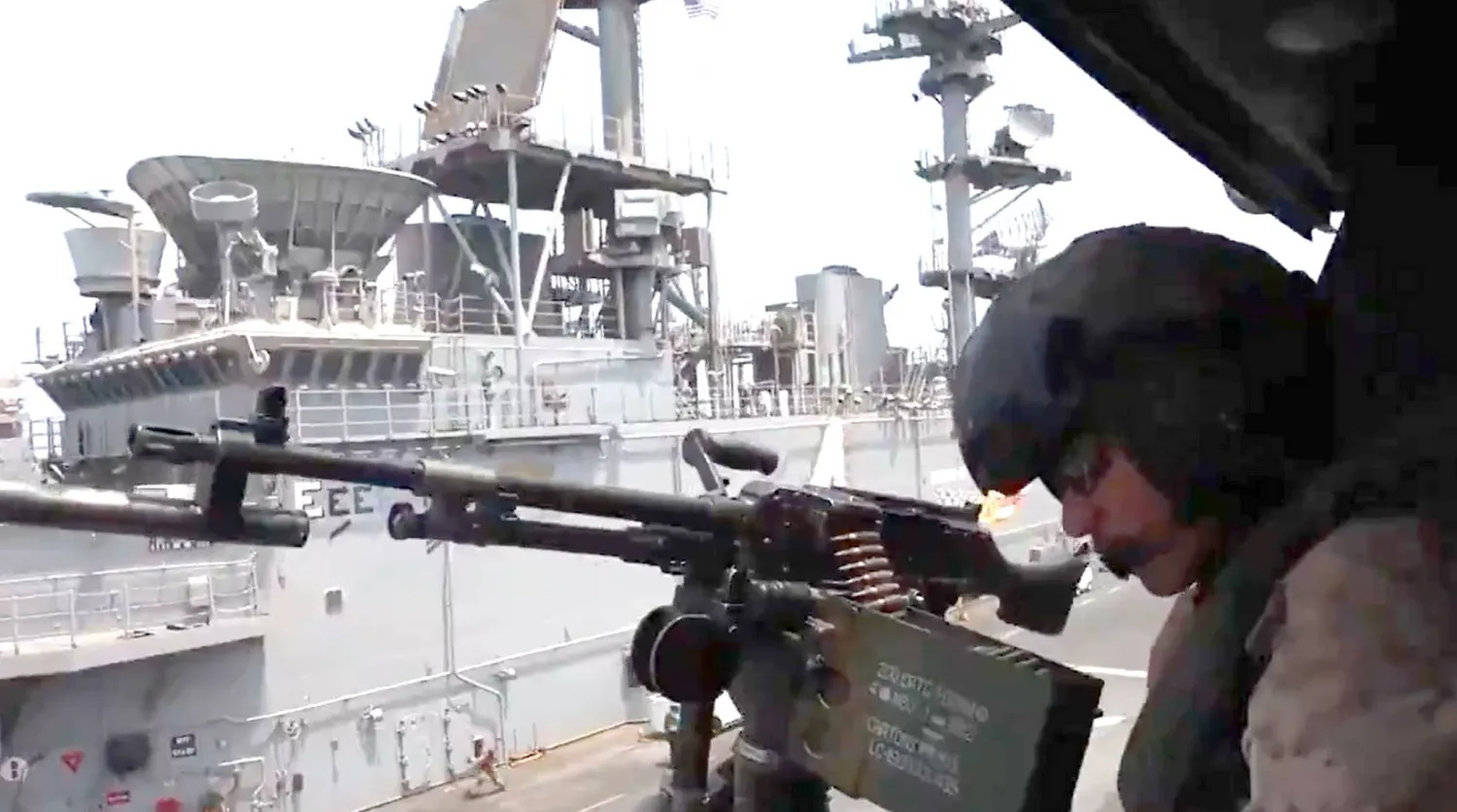
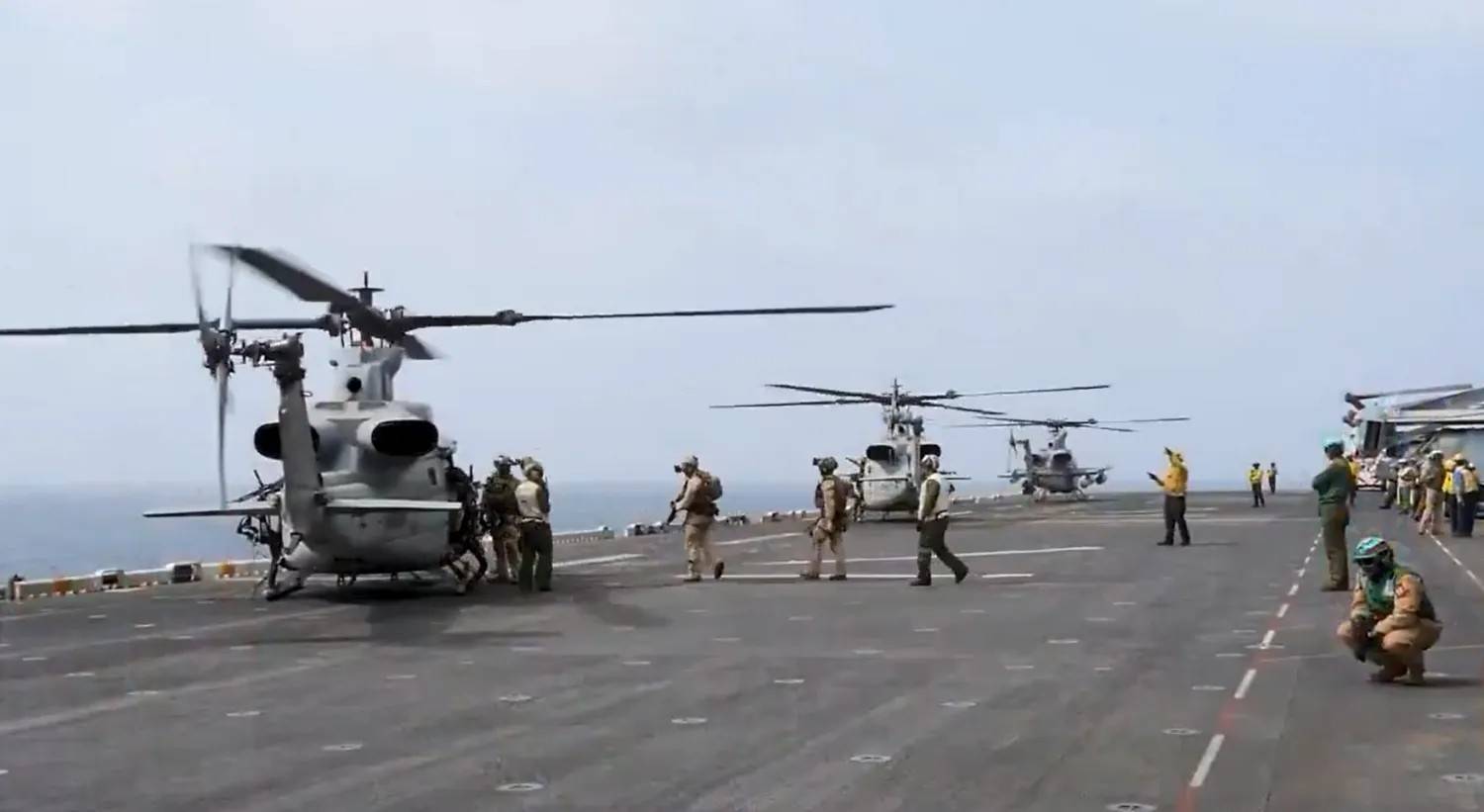
A video grab from a clip published by the US Central Command on X, showing its forces operating in the Strait of Hormuz
The United States is working to secure navigation in the Strait of Hormuz, as talks between Washington and Tehran remain stalled and the war is in its seventh month.
US Central Command (CENTCOM) commander Adm. Brad Cooper said on Saturday that the US military is continuously working to keep the Strait of Hormuz open and secure, adding that US forces supported the transport of over 1 billion crude oil barrels through the Strait of Hormuz “in the last couple of months” despite an ongoing exchange of strikes with Iran.
“We’ve reached this significant milestone while assisting over 2000 commercial ship transits through the Strait by providing coordinated protection. Clearly momentum is building,” Cooper said in a video posted on social media.
“Thousands of ships have passed through the Strait. Over 1 billion barrels of crude have been shipped from Gulf partners through the Strait of Hormuz, and Iran has exported zero barrels thanks to our ironclad blockade,” he continued.
The US commander said CENTCOM is working with regional partners, along with insurance and shipping companies, to increase commercial traffic through the waterway.
“We're also working with every partner in the region, enhancing their air defense, forming a new coalition attack drone unit, and keeping the Strait of Hormuz and surrounding waters open and clear,” Cooper said.
His comments came as the United States and Iran remain locked in a military conflict following the collapse of both the April and June 2026 ceasefire agreements.
The US re-imposed its blockade of Iran's shipping and ports on July 13 in an attempt to cut off oil sales — Tehran's primary source of hard currency — compounding earlier losses from wartime strikes on its energy infrastructure.
CENTCOM said it assisted over 2000 commercial ship transits through the Strait
Iranian-Pakistani Talks
Amid growing concerns over the safety of oil supply routes, Pakistan has recently intensified its contacts with Tehran on regional developments.
Pakistani Foreign Minister Ishaq Dar and his Iranian counterpart Abbas Araghchi discussed regional developments over the phone on Saturday.
Dar emphasized the importance of “uninterrupted energy supplies and the safe and expeditious passage of ships,” particularly given their impact on developing countries and global supply chains, according to a Pakistani Foreign Ministry statement.
He stressed that dialogue and diplomacy remain the “only viable means” of ensuring peace and stability in the region.
The two sides agreed to maintain close cooperation and meet in New York on the sidelines of the 81st UN General Assembly next week.
On Friday, The Financial Times said Pakistan’s army chief has urged Iran to try to rein in Houthi escalation in the region.
Field Marshal Asim Munir travelled to Tehran last month to meet Iran’s President Masoud Pezeshkian and other political leaders and has held multiple phone calls with Araghchi — most recently on Thursday, according to Iranian news agency IRNA.
South Korea Does Not Object
Meanwhile, South Korea’s presidential office said Saturday that President Lee Jae Myung’s earlier remarks ruling out troop deployments that could involve the country in a war, did not amount to a “refusal of US President Donald Trump’s request for Seoul to send forces” to the strategic Strait of Hormuz, according to the Yonhap news agency.
Myung said on Friday he would not deploy military assets to the Middle East in a way that could draw the country into conflict, but Seoul was reviewing whether to play a greater role in safeguarding navigation in the region.
According to The New York Times, Myung pushed back against pressure from the Trump administration when he declared that his country would not deploy troops or military assets to support the US-led war against Iran.
“Lee did not turn down Trump’s request for South Korea’s cooperation on Middle East-related issues during yesterday’s press conference,” the Yonhap news agency reported on Saturday, citing a presidential official who spoke to reporters on condition of anonymity.
The official said the government was reviewing “practical ways to contribute” in close coordination with the international community.
Seoul will continue to examine concrete options under its stated principle of not intervening in wars or combat, the official added.
Trump’s Major Decision
In Washington, US President Donald Trump has again raised the possibility of a major new military escalation against Iran while keeping the door open to negotiations.
Trump told Axios on Thursday that he was approaching a major decision over whether to restart large-scale attacks against Iran, asking whether he wanted to “go in and annihilate” the Iranian regime.
Trump on Wednesday said he hoped an end to the war against Iran was near. But US officials warned that the conflict had entered an “unsustainable stalemate that is neither full-scale war nor stable peace.”
Iran Says It Has Conveyed Conditions to Re-Engage in Talks, End War with UShttps://english.aawsat.com/world/5320272-iran-says-it-has-conveyed-conditions-re-engage-talks-end-war-us
Women draped in Iranian flags march during the state-organized military-style parade in Tehran, Iran, Friday, Sept. 18, 2026. (AP)
TT
TT
Iran Says It Has Conveyed Conditions to Re-Engage in Talks, End War with US
Women draped in Iranian flags march during the state-organized military-style parade in Tehran, Iran, Friday, Sept. 18, 2026. (AP)
Iran has conveyed its conditions to mediators for re-engaging in negotiations aimed at ending the war with the US, Al Jazeera cited Iran's Security Chief Mohsen Rezaei as saying in an interview on Saturday.
The conditions include ending the war on all fronts, unfreezing Iranian funds and ending the naval blockade, Rezaei said, adding that consultations were continuing with Qatari and Pakistani mediators and that Tehran was awaiting a response from US President Donald Trump.
لم تشترك بعد
انشئ حساباً خاصاً بك لتحصل على أخبار مخصصة لك ولتتمتع بخاصية حفظ المقالات وتتلقى نشراتنا البريدية المتنوعة