


Report: Trump Considers Targeted Strike Against Iran, Followed by Larger Attack 

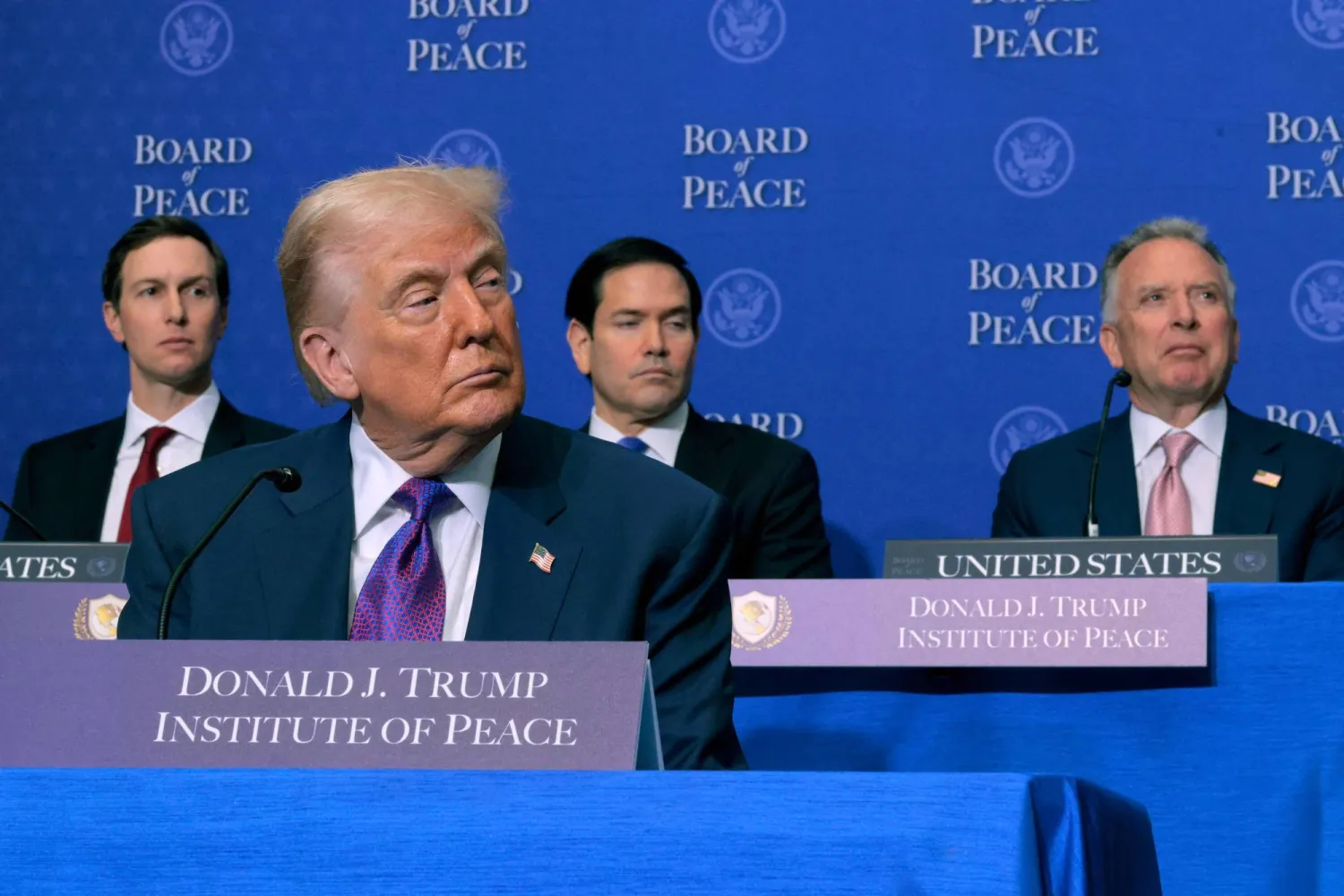
Jared Kushner, US President Donald Trump, US Secretary of State Marco Rubio, and Special Envoy to the Middle East Steve Witkoff attend the inaugural meeting of the Board of Peace at the Donald J. Trump Institute of Peace on February 19, 2026 in Washington, DC. (Getty Images/AFP)
TT

Report: Trump Considers Targeted Strike Against Iran, Followed by Larger Attack 

Jared Kushner, US President Donald Trump, US Secretary of State Marco Rubio, and Special Envoy to the Middle East Steve Witkoff attend the inaugural meeting of the Board of Peace at the Donald J. Trump Institute of Peace on February 19, 2026 in Washington, DC. (Getty Images/AFP)

US President Donald Trump has told advisers that if diplomacy or any initial targeted US attack does not lead Iran to give in to his demands that it give up its nuclear program, he will consider a much bigger attack in coming months intended to drive that country’s leaders from power, people briefed on internal administration deliberations told the New York Times.

Negotiators from the United States and Iran are scheduled to meet in Geneva on Thursday for what appears to be last-ditch negotiations to avoid a military conflict. But Trump has been weighing options for US action if the negotiations fail.

Though no final decisions have been made, advisers said, Trump has been leaning toward conducting an initial strike in coming days intended to demonstrate to Iran’s leaders that they must be willing to agree to give up the ability to make a nuclear weapon.

Targets under consideration range from the headquarters of Iran’s Revolutionary Guard Corps to the country’s nuclear sites to the ballistic missile program.

Should those steps fail to convince Tehran to meet his demands, Trump told advisers, he would leave open the possibility of a military assault later this year intended to help topple Ali Khamenei, the supreme leader.
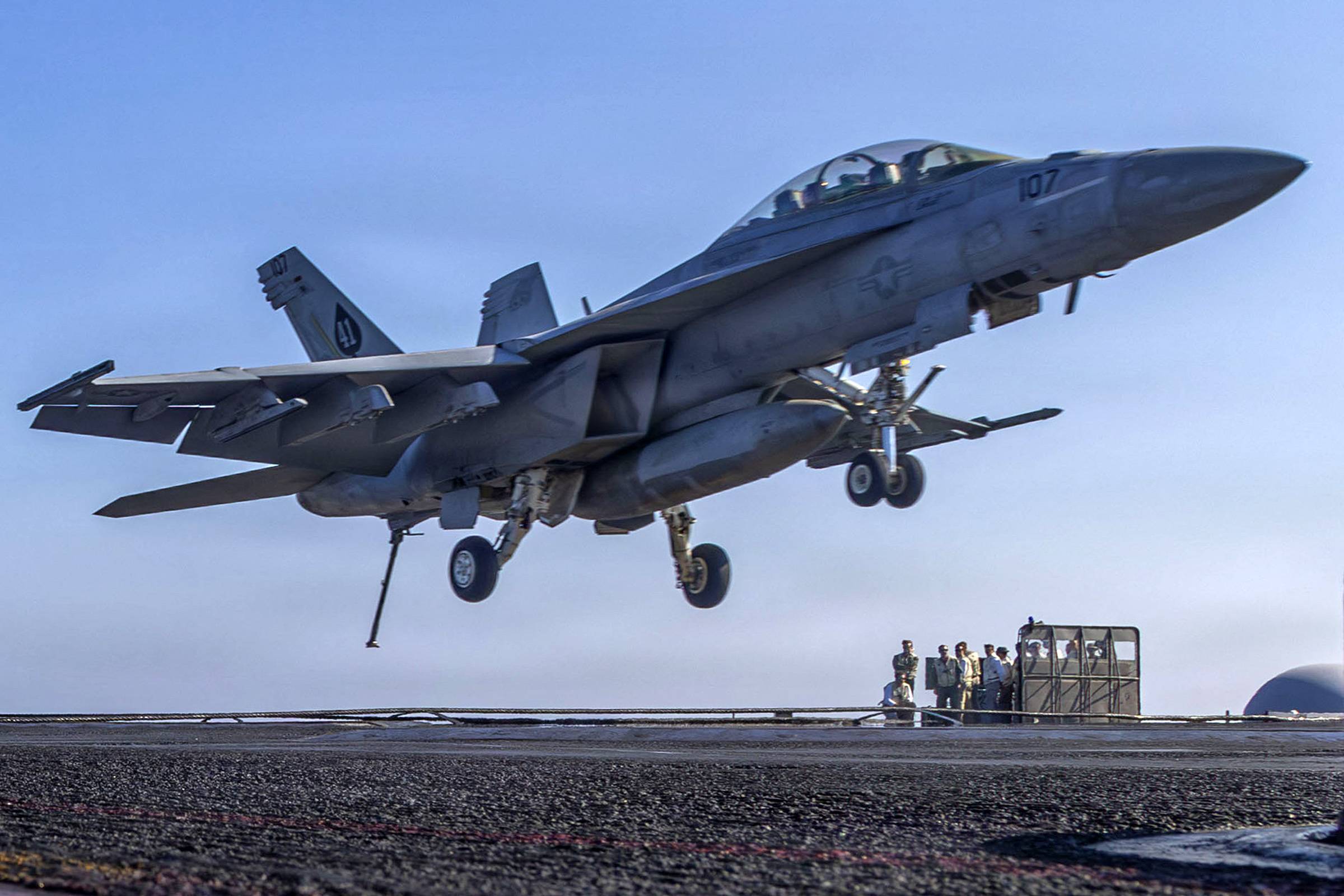
In this handout photograph released by the US Navy, an F/A-18F Super Hornet, attached to Strike Fighter Squadron (VFA) 41, prepares to make an arrested landing on the flight deck of Nimitz-class aircraft carrier USS Abraham Lincoln (CVN 72) in the Arabian Sea on February 15, 2026. (AFP photo / US Navy)

Doubts

There are doubts even inside the administration about whether that goal can be accomplished with airstrikes alone. And behind the scenes, a new proposal is being considered by both sides that could create an off-ramp to military conflict: a very limited nuclear enrichment program that Iran could carry out solely for purposes of medical research and treatments.

It is unclear whether either side would agree. But the last-minute proposal comes as two aircraft carrier groups and dozens of fighter jets, bombers and refueling aircraft are now massing within striking distance of Iran.

Trump discussed plans for strikes on Iran in the White House Situation Room on Wednesday. The meeting included Vice President JD Vance; Secretary of State Marco Rubio; Gen. Dan Caine, the chairman of the Joint Chiefs of Staff; the CIA director, John Ratcliffe; and Susie Wiles, the White House chief of staff.

During the meeting, Trump pressed Caine and Ratcliffe to weigh in on the broader strategy in Iran, but neither official generally advocates a certain policy position. Caine discussed what the military could do from an operational standpoint, and Ratcliffe preferred to discuss the current situation on the ground and possible outcomes of proposed operations.

During the discussions of the operation last month to seize President Nicolas Maduro of Venezuela, Caine told Trump there was a high likelihood of success. But Caine has not been able to deliver the same reassurances to Trump during the Iran discussions, in large measure because it is a far more difficult target.

Vance, who has long called for more restraint in overseas military action, did not oppose a strike, but he intensely questioned Caine and Ratcliffe in the meeting. He pressed them to share their opinions of the options and wanted more of a discussion of the risks and complexity of carrying out a strike against Iran.
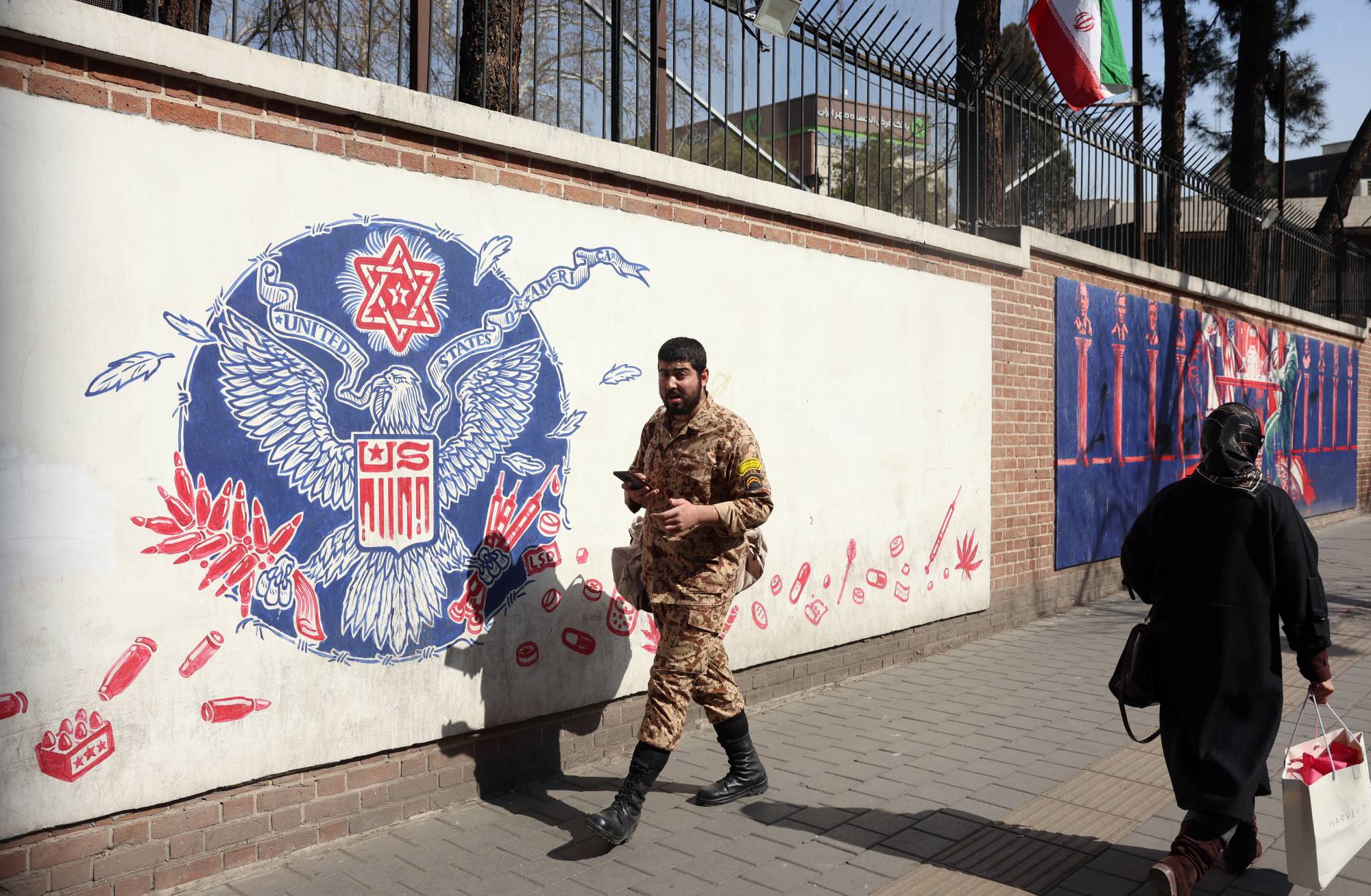
An Iranian soldier walks next to an anti-US mural in Tehran, Iran, 23 February 2026. (EPA)

Options against Iran

Earlier, the United States had been considering options that included putting teams of special operations forces on the ground that could carry out raids to destroy Iranian nuclear or missile facilities. That included manufacturing and enrichment operations buried far below the surface, outside the range of American conventional munitions.

But any such raid would be highly dangerous, requiring special operations forces to be on the ground far longer than they were for the raid to capture Maduro. Multiple US officials said that for now, the plans for a commando raid had been shelved.

Army, Navy and Air Force officials have also raised concerns about the impact that a protracted war with Iran, or just remaining poised for such a conflict, could have on the readiness of Navy ships, scarce Patriot antimissile defenses, and overstretched transport and surveillance planes.

The White House declined to comment on Trump’s decision making.

“The media may continue to speculate on the President’s thinking all they want, but only President Trump knows what he may or may not do,” Anna Kelly, a White House spokeswoman, said in a statement.
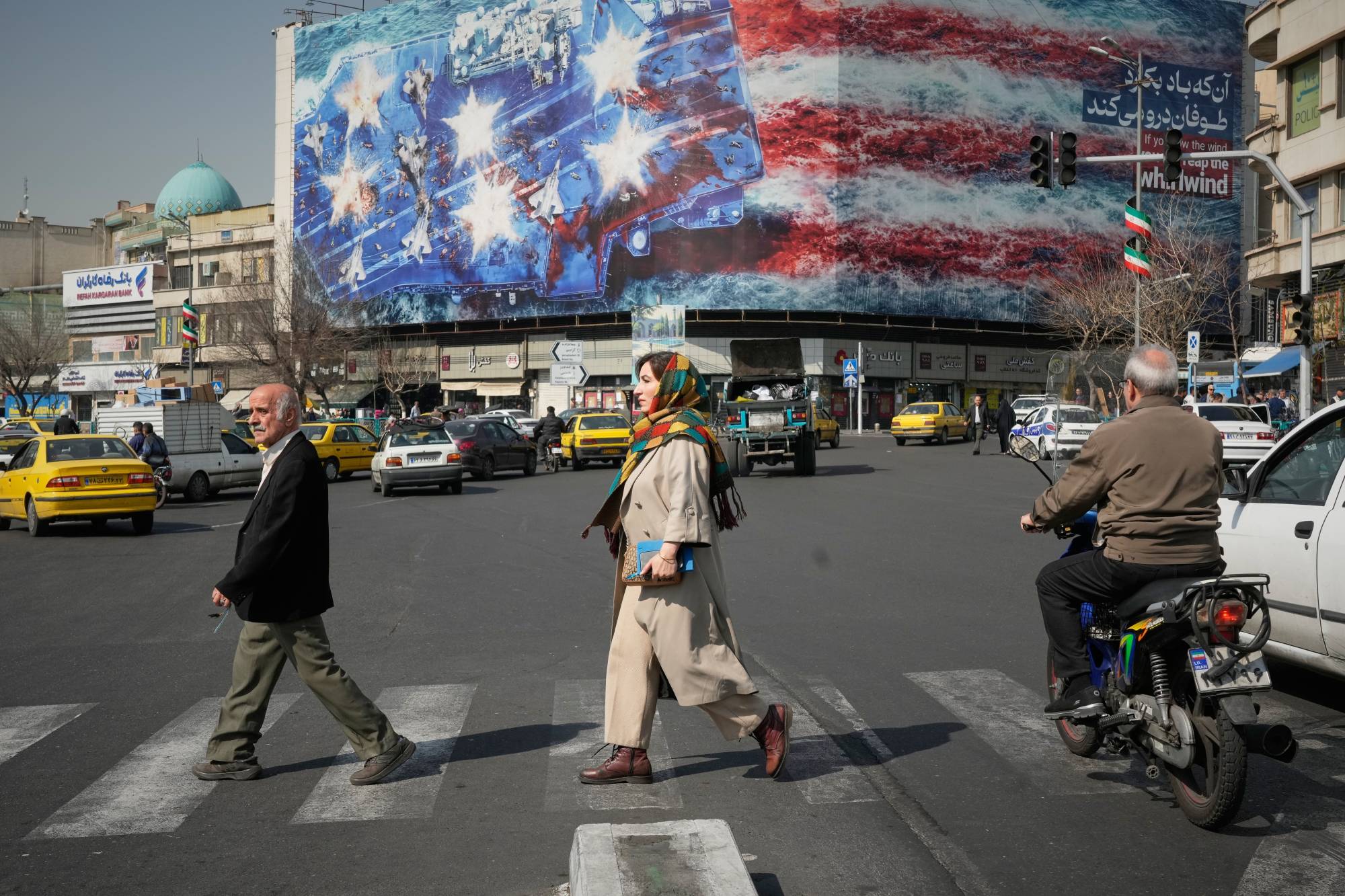
Pedestrians walk past a billboard depicting a US aircraft carrier with damaged fighter jets on its deck and a sign in Farsi and English reading, "If you sow the wind, you'll reap the whirlwind," at Enqelab-e-Eslami Square in Tehran, Iran, Sunday, Feb. 22, 2026. (AP)

‘Zero enrichment’

Even before the Iranians submit what appears likely to be their last proposal — officials said they expected it to be transmitted to the Trump administration on Monday or Tuesday — the two sides appeared to be hardening their positions. Steve Witkoff, the president’s special envoy, said on Fox News that Trump’s “clear direction” to him and Jared Kushner, his co-negotiator and the president’s son-in-law, was that the only acceptable outcome for an agreement was that Iran would move to “zero enrichment” of nuclear material.

But Iran’s foreign minister, Abbas Araghchi, insisted anew in an interview on CBS’s “Face the Nation” on Sunday that the country was not ready to give up what he said was its “right” to make nuclear fuel under the Nuclear Nonproliferation Treaty.

With that statement, the decision about whether the United States was about to attack targets in Iran — with the apparent goal of further weakening the government of Khamenei — seemed to come down to whether both sides could agree to a face-saving compromise about nuclear production that Washington and Tehran could each describe as a total victory.

One such proposal is being debated by both the Trump administration and the Iranian leadership. According to several officials, it emanated from Rafael Grossi, the director general of the International Atomic Energy Agency, a United Nations organization that inspects Iran’s nuclear facilities.

Under the proposal, Iran would be permitted to produce very small amounts of nuclear fuel for medical purposes. Iran has been producing medical isotopes for years at the Tehran Research Reactor, a nearly 60-year-old facility outside the country’s capital that was, in one of the strange twists of modern nuclear history, first supplied to the pro-American shah of Iran by the United States under the “Atoms for Peace” program.

If adapted, Iran could claim that it was still enriching uranium. Trump could make the case that Iran is shuttering all the facilities that would enable it to build a weapon — most of which were left open, operating at low levels, under the 2015 agreement between Iran and the Obama administration. Trump exited that agreement in 2018, leading the Iranians to eventually bar inspectors and produce near-bomb-grade uranium and setting the stage for the current crisis.

But it is far from clear whether the Iranians are willing to shrink what is now a vast, industrial-production nuclear program, on which they have spent billions of dollars, to a tiny effort of such limited scope.

And it is also unclear whether Trump would allow nuclear production limited to cancer treatment studies and other medical purposes, given his public “zero enrichment” declarations.
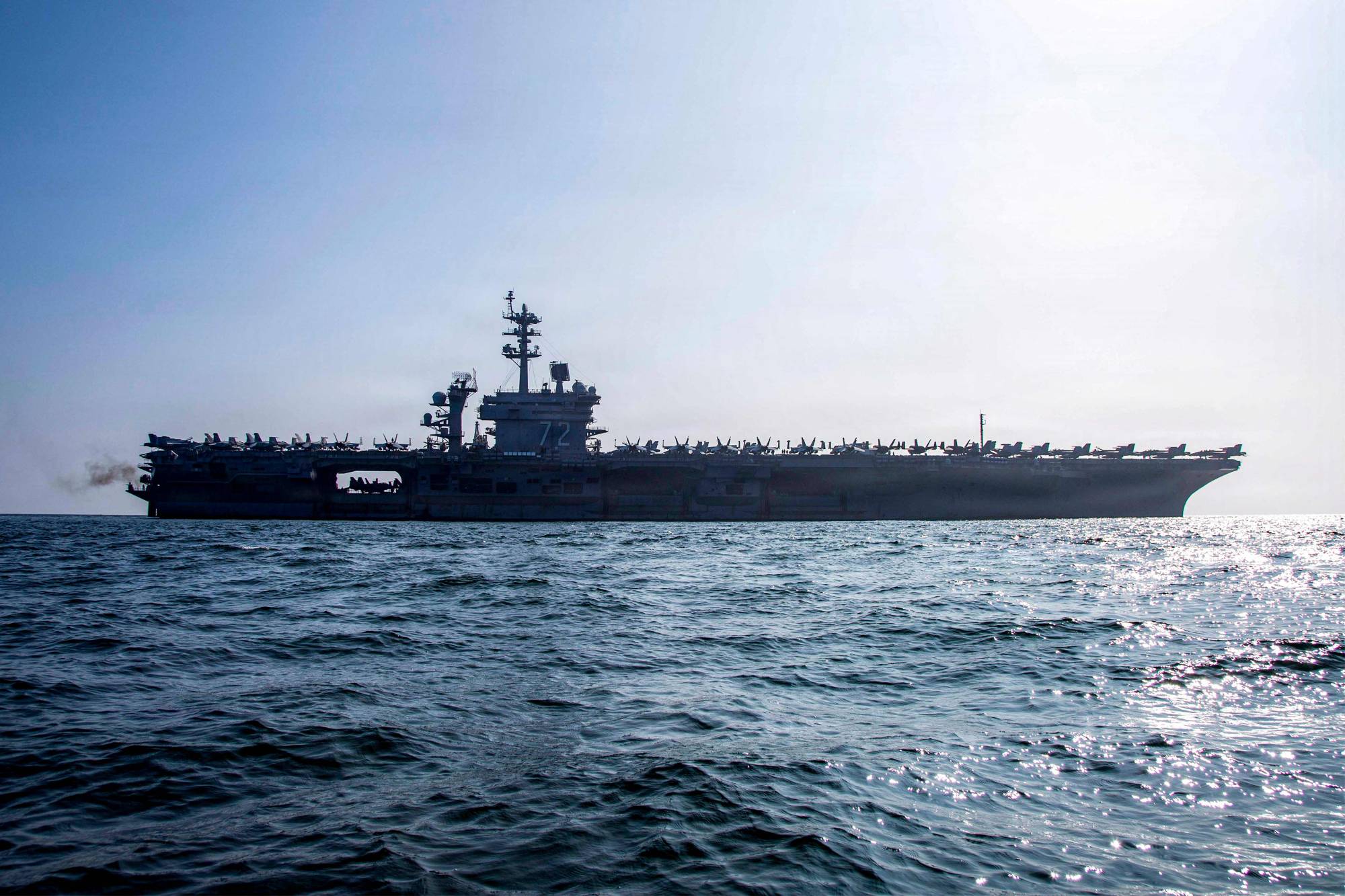
In this handout photograph released by the US Navy, an F/A-18F Super Hornet, attached to Strike Fighter Squadron (VFA) 41, prepares to make an arrested landing on the flight deck of Nimitz-class aircraft carrier USS Abraham Lincoln (CVN 72) in the Arabian Sea on February 15, 2026. (AFP photo / US Navy)

‘Military buildup cannot help’

Araghchi made no direct mention of the proposal when he spoke from Tehran. But he said, “I believe that still there is a good chance to have a diplomatic solution,” adding, “So there is no need for any military buildup, and military buildup cannot help it and cannot pressurize us.”

In fact, pressure is the key to these negotiations. What Trump calls the “vast armada” that the United States has built up in the seas around Iran is the largest military force it has concentrated in the region since it prepared for the invasion of Iraq, nearly 23 years ago.

Two aircraft carrier groups, scores of fighter jets, bombers and refueling planes, and antimissile batteries have poured into the region, a demonstration of gunboat diplomacy even larger than the one that preceded the forced extraction of Maduro from Venezuela in early January.

The second carrier, the Gerald R. Ford, was steaming south of Italy in the Mediterranean Sea on Sunday, and will soon be off the coast of Israel, military officials said.

Further complicating any final decision on military strikes, Arab leaders have been calling counterparts in Washington to complain about comments from Mike Huckabee, the US ambassador to Israel. In an interview with Tucker Carlson, the conservative commentator, that aired on Friday, Huckabee said Israel had a right to much of the Middle East, outraging Arab countries.

Administration officials have been unclear what their objectives are as they confront Iran, a country of more than 90 million people. While Trump often talks about preventing Iran from ever being able to produce a weapon, Rubio and other aides have described a range of other rationales for military action: protecting the protesters whom Iranian forces killed by the thousands last month, wiping out the arsenal of missiles that Iran can use to strike Israel, and ending Tehran’s support for Hamas and Hezbollah.

But American military action could also result in a nationalistic response, even among Iranians eager to see the end of Khamenei’s brutal hold on power.

European officials attending the Munich Security Conference last weekend said they doubted that the military pressure would force the Iranian leadership to give up a program that has become a symbol of resistance to the United States.



Aid Groups Warn Iran War Is Hindering Food and Medicine from Reaching Millions

 Aid distributed by the World Food Program, the UNHCR, UNICEF and UNFPA arrives in Qlayaa, amid escalating hostilities between Israel and Hezbollah, as the US-Israel conflict with Iran continues, in southern Lebanon, March 27, 2026. (Reuters)
Aid distributed by the World Food Program, the UNHCR, UNICEF and UNFPA arrives in Qlayaa, amid escalating hostilities between Israel and Hezbollah, as the US-Israel conflict with Iran continues, in southern Lebanon, March 27, 2026. (Reuters)
TT

Aid Groups Warn Iran War Is Hindering Food and Medicine from Reaching Millions

 Aid distributed by the World Food Program, the UNHCR, UNICEF and UNFPA arrives in Qlayaa, amid escalating hostilities between Israel and Hezbollah, as the US-Israel conflict with Iran continues, in southern Lebanon, March 27, 2026. (Reuters)
Aid distributed by the World Food Program, the UNHCR, UNICEF and UNFPA arrives in Qlayaa, amid escalating hostilities between Israel and Hezbollah, as the US-Israel conflict with Iran continues, in southern Lebanon, March 27, 2026. (Reuters)

Aid groups are warning that the war in the Middle East has upended their ability to get food and medicine to millions of people around the world in need, and that the suffering will deepen if the violence continues.

Not only has the conflict cut off vital shipping routes, creating a global energy crisis, it’s also disrupting supply chains for aid groups, forcing them to use costlier, more time-consuming routes.

Key pathways such as the Strait of Hormuz have been effectively shuttered and routes from strategic hubs such as Dubai, Doha and Abu Dhabi have also been impacted. Transport costs have spiked with higher fuel and insurance rates, meaning less supplies can be delivered with the same amount of money.

The World Food Program says it has tens of thousands of metric tons of food heavily delayed in transit. The International Rescue Committee has $130,000 worth of pharmaceuticals intended for war-torn Sudan stranded in Dubai and nearly 670 boxes of therapeutic food meant for severely malnourished children in Somalia stuck in India. The UN Population Fund says it's delayed sending equipment to 16 countries.

Steep US cuts to foreign aid already had hobbled many aid groups, who say the war is exacerbating the problem.

The United Nations says this is the most significant supply chain disruption since COVID, with up to a 20% cost increase on shipments and delays as goods are rerouted. And the war is creating new emergencies, such as in Iran, and also in Lebanon where at least one million people have been displaced.

“The war on Iran and disruption to the Strait of Hormuz risk pushing humanitarian operations beyond their limits," said Madiha Raza, associate director for public affairs and communications for Africa for the International Rescue Committee.

Even when the fighting stops, the shock to global supply chains could continue to delay lifesaving aid for months, she said.

Longer and more costly routes

The war has forced organizations to find new ways to transport goods, with some bypassing the Strait of Hormuz and the Suez Canal and rerouting vessels around Africa, adding weeks to the delivery.

Others are using a hybrid of methods, including land, sea and air, increasing costs.

Jean-Cedric Meeus, chief of global transport and logistics for UNICEF, said his agency is using a mix of land and air routes to send vaccines to Nigeria and Iran in order to get them there in time for the vaccination campaigns, but the costs have soared.

Before the war, UNICEF sent vaccines to Iran by plane directly from vendors around the world. Now it’s flying the vaccines to Türkiye and driving them into Iran, which has increased costs by 20% and has added 10 days to the delivery time, he said.

Save the Children International, which would normally send supplies by ocean freight from Dubai to Port Sudan, will now have to truck the goods from Dubai through Saudi Arabia and then by barge across the Red Sea, it said. The route adds 10 days and increases costs by about 25%, at a time when over 19 million Sudanese face acute food insecurity. The delay puts more than 90 primary health care facilities across Sudan at risk of running out of essential medicines, it said.

The spike in prices also means organizations have to choose what to prioritize.

“In the end, you sacrifice either the number of children that you serve ... or you sacrifice the number of items that you can afford to buy,” said Janti Soeripto, president of Save the Children for the United States. The group said it has stockpiles in countries where it works but some of those could run out within weeks.

Rising costs are also impacting people's ability to seek help within their countries.

Doctors Without Borders said rising fuel prices across Somalia — where some 6.5 million people are experiencing acute food insecurity — have driven up transport and food costs, making it harder for people to get care. In Nigeria, the IRC says fuel prices have surged by 50% and clinics are struggling to power equipment, such as generators and mobile health teams have scaled back operations.

Hunger crisis could deepen

One of the biggest concerns is the impact the war will have on global hunger.

WFP warns that if the conflict continues through June, 45 million more people will be acutely hungry, adding to nearly 320 million people facing hunger around the world.

Some 30% of the world's fertilizer comes through the Strait of Hormuz and with planting season ahead in areas like East Africa and South Asia, small farmers in poor countries will be hard hit. Sudan imports more than half its fertilizer from the Gulf and Kenya approximately 40% from there, aid groups say.

The UN secretary-general has established a task force to facilitate fertilizer trade — modeled on the Black Sea Grain Initiative. But aid groups say that won't be enough. If there's no ceasefire, governments need to provide more funding for organizations to respond to the rising costs, they say.

Humanitarian experts say there's been a slower international response to fund aid during this war compared to previous conflicts like Ukraine, which could reflect growing pressure to invest in security over aid at a time when the world is in turmoil.

“They’re making hard choices between defense security and humanitarian aid,” said Sam Vigersky, an international affairs fellow at the Council on Foreign Relations who has written about the war’s impact on aid.

He said when the US goes to war, it normally has provisions for aid, but hasn't been “activating” those provisions. “It’s not a capacity issue, it’s a policy decision,” he said.

Tommy Pigott, principal deputy spokesperson for the US State Department, said that the US has been the “most generous country in the world" when it comes to humanitarian aid.

The department said it's releasing an additional $50 million in emergency assistance to Lebanon, including to the World Food Program and working closely with the United Nations and others to address the humanitarian needs.


Iran Hangs Two Convicted of Links with Israel in Pre-War Protests

A man looks at the residential buildings that were damaged by recent strikes at Vahdat town in Karaj, southwest of Tehran on April 3, 2026. (AFP)
TT

Iran Hangs Two Convicted of Links with Israel in Pre-War Protests

A man looks at the residential buildings that were damaged by recent strikes at Vahdat town in Karaj, southwest of Tehran on April 3, 2026. (AFP)

Iranian authorities on Sunday executed two men convicted of acting on behalf of Israel and the United States during a wave of anti-government protests earlier this year, the judiciary said.

"Mohammad-Amin Biglari and Shahin Vahedparast... were hanged after the case was reviewed and the final verdict was confirmed by the Supreme Court," said the judiciary's Mizan Online website.

The two men were involved in anti-government protests that peaked in January, it said.


A Long Middle East War Could Take Away from Support for Ukraine, Zelenskyy Says

Ukraine's President Volodymyr Zelenskyy speaks during an interview with The Associated Press, in Istanbul, Türkiye, Saturday, April 4, 2026. (AP)
TT

A Long Middle East War Could Take Away from Support for Ukraine, Zelenskyy Says

Ukraine's President Volodymyr Zelenskyy speaks during an interview with The Associated Press, in Istanbul, Türkiye, Saturday, April 4, 2026. (AP)

Ukrainian President Volodymyr Zelenskyy expressed concern that a prolonged US-Israeli war on Iran could further erode America’s support for Ukraine as Washington’s global priorities shift and Kyiv braces for reduced deliveries of critically needed Patriot air defense missiles.

Ukraine desperately needs more US-made Patriot air defense systems to help it counter Russia’s daily barrages, Zelenskyy said, speaking to The Associated Press in an exclusive interview late Saturday in Istanbul.

Russia’s relentless pounding of urban areas behind the front line following its full-scale invasion of Ukraine more than four years ago has killed thousands of civilians. It has also targeted Ukraine's energy supply to disrupt industrial production of Ukraine’s newly developed drones and missiles, while also denying civilians heat and running water in winter.

“We have to recognize that we are not the priority for today,” Zelenskyy said. “That’s why I am afraid a long (Iran) war will give us less support.”

The latest US-brokered talks between envoys from Moscow and Kyiv ended in February with no sign of a breakthrough. Zelenskyy, who has accused Russia of “trying to drag out negotiations” while it presses on with its invasion, said Ukraine remains in contact with US negotiators about a potential deal to end the war and has continued to press for stronger security guarantees.

But, he said, even those discussions reflect a broader loss of focus from Ukraine.

His most immediate concern, Zelenskyy said, are the Patriots — essential for intercepting Russian ballistic missiles — as Ukraine still lacks an effective alternative.

These US systems were never delivered in sufficient quantities to begin with, Zelenskyy said, and if the Iran war doesn't end soon, "the package — which is not very big for us — I think will be smaller and smaller day by day.”

“That’s why, of course, we are afraid," he said.

Interlinked wars

Zelenskyy had been counting on European partners to help make the Patriot purchases despite tight supply and limited US production capacity.

But the Iran war, now in its sixth week, has sent shock waves through the global economy and pulled in much of the wider Middle East region, further straining these already limited resources, diverting stockpiles and leaving Ukrainian cities more exposed to ballistic strikes.

For Kyiv, a key objective is to weaken Moscow’s economy and make the war prohibitively costly. Surging oil prices driven by Iran's closure of the Strait of Hormuz are undermining that strategy by boosting the Kremlin’s oil revenues and strengthening Moscow’s capacity to sustain its war effort.

In his interview with the AP, Zelenskyy said Russia draws economic benefits from the Middle East war, citing the limited easing of American sanctions on Russian oil.

“Russia gets additional money because of this, so yes, they have benefits," he said.

To keep Ukraine on the international agenda, Zelenskyy has offered to share Ukraine's hard-earned battlefield expertise with the United States and allies to develop effective countermeasures against Iranian attacks.

Ukraine has met Russia’s evolving use of Iranian-made Shahed drones with growing sophistication, technological ingenuity and low cost.

Moscow significantly modified the original Shahed-136, rebranded as the Geran-2, enhancing its ability to evade air defenses and be mass produced. Ukraine responded with quick innovation of its own, including low-cost interceptor drones designed to track and destroy incoming drones.

Zelenskyy said Ukraine is ready to share with Gulf Arab countries targeted by Iran its experience and technology, including interceptor drones and sea drones, which Ukraine produces — more than are used up — with funding from Americans and its European partners.

In return, these countries could help Ukraine "with anti-ballistic missiles,” Zelenskyy said.

Zelenskyy has also positioned Ukraine as a potential partner in safeguarding global trade routes, offering assistance in reopening the Strait of Hormuz by sharing Ukraine’s experiences securing maritime corridors in the Black Sea.

Zelenskyy was in Istanbul for talks with President Recep Tayyip Erdogan, a day after the Turkish leader spoke with Russian President Vladimir Putin.

Zelenskyy said they discussed peace talks and a possible meeting of leaders in Istanbul. He also said there could be new defense deals signed between the two countries soon.

Russia steps up its spring offensive

Each year as the weather improves, Russia moves its grinding war of attrition up a notch. However, it has been unable to capture Ukrainian cities and has made only incremental gains across rural areas. Russia occupies about 20% of Ukraine, including the Crimean Peninsula, which Russia seized in 2014.

On the roughly 1,250-kilometer (750-mile) front line stretching across eastern and southern parts of Ukraine, short-handed Ukrainian defenders are getting ready for a new offensive by Russia’s larger army.

The commander-in-chief of Ukraine’s armed forces, Gen. Oleksandr Syrskyi, said Russian troops have in recent days made simultaneous attempts to break through defense lines in several strategic areas.

One thing Zelenskyy says he has insisted on and will continue to do so — a territorial compromise and giving up land will not be on Ukraine's agenda.