Four Syrian Security Personnel Killed in ISIS Attack

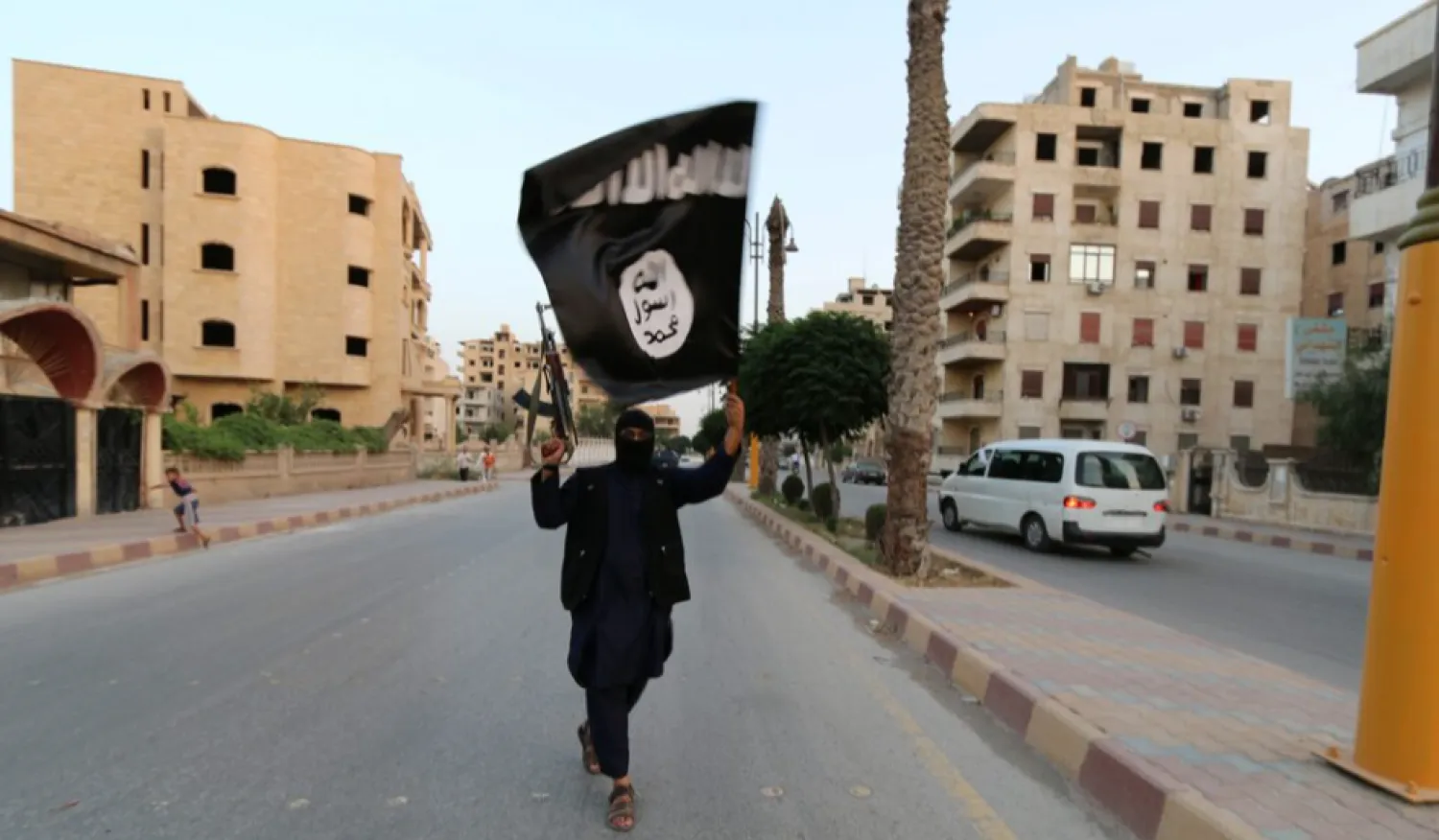
FILE PHOTO: A member loyal to the Islamic State waves an ISIS flag in Raqqa, Syria June 29, 2014. REUTERS/Stringer/Files
TT

Four Syrian Security Personnel Killed in ISIS Attack

FILE PHOTO: A member loyal to the Islamic State waves an ISIS flag in Raqqa, Syria June 29, 2014. REUTERS/Stringer/Files

Four Syrian security personnel were killed in ISIS terrorist group attack in the northern city of Raqa, which was recently taken by Damascus from Kurdish forces, state media reported on Monday.

Syria's interior ministry said in a statement that the "terrorist attack" targeted a checkpoint in the area, adding that one of the assailants was killed, AFP reported.

In its spokesperson's first audio message in two years, ISIS had called on its militants Saturday to fight Syrian authorities.


Egypt’s Consul to Asharq Al-Awsat: Repatriation of Azza’s Body to Cairo Nears Completion

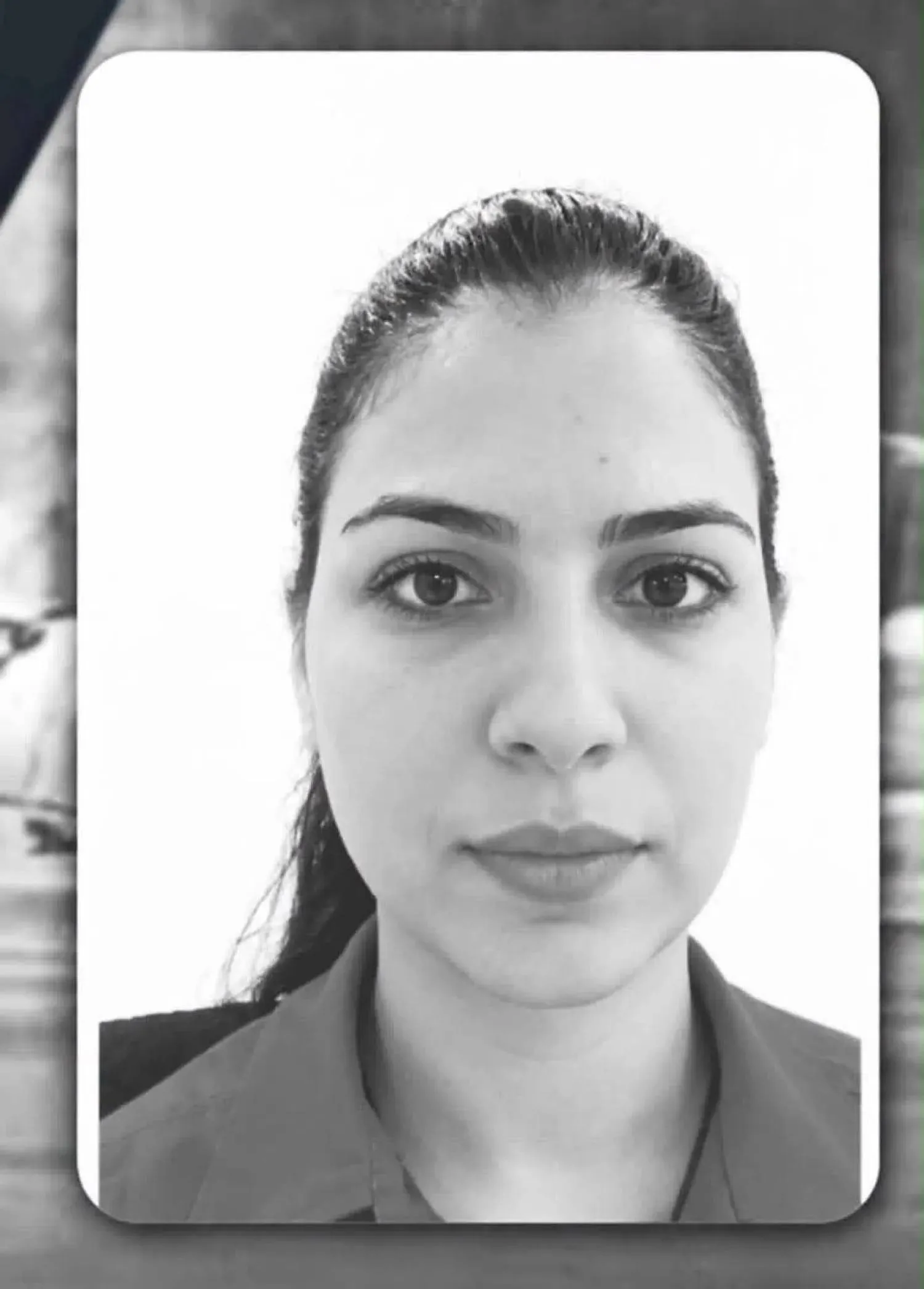
Egyptian flight attendant Azza Ramzy
TT

Egypt’s Consul to Asharq Al-Awsat: Repatriation of Azza’s Body to Cairo Nears Completion

Egyptian flight attendant Azza Ramzy

The formal procedures for repatriating the body of Egyptian flight attendant Azza Ramzy to Cairo is expected to arrive on Monday, pending the completion of the necessary permits and shipping arrangements, a senior official at the Egyptian Embassy in Saudi Arabia revealed on Sunday.

Meanwhile, the health condition of seven Egyptian nationals injured in the attack on Riyadh's King Khalid International Airport, have stabilized. Two have been discharged from the hospital after receiving treatment, while the remaining five continue to receive medical care.

“The relevant authorities are working to complete the procedures for repatriating the body of Azza Ramzy after obtaining the transfer permit and finalizing the police report and death-related documents,” the consul general of the Egyptian embassy in Riyadh, Yasser Hashem, told Asharq Al-Awsat in a phone interview.

He said the procedures were progressing well and were expected to be completed on Sunday.

“The airline company for which Azza worked as a flight attendant would handle arrangements to transport her body to Cairo,” Hashem said.

He noted that a flight would be scheduled after preparing the coffin and coordinating with the shipping company and the relevant authorities.

According to Hashem, Azza’s body would be repatriated from Riyadh, depending on operational conditions at King Khalid International Airport and flight availability.

He affirmed that seven Egyptians were injured in the attack. Two of them received medical care and were discharged from the hospital, while the remaining five continue their treatment.

According to information obtained by Asharq Al-Awsat, Azza Ramzy spent three years working in Saudi Arabia. During that time, she left a positive impression on those who knew her, earning respect for her good character, dedication to her work and ambition.

One of Azza’s friends told Asharq Al-Awsat that she was the youngest of her siblings and was known for her exemplary character, good manners and respect for others.


2 Killed Near Israeli-Occupied Zone in South Lebanon

A Lebanese flag placed on a damaged olive tree in the southern Lebanese village of Zawtar al-Gharbiyeh, near the neighboring village of Zawtar al-Sharqiyeh, where Israeli forces are stationed, in southern Lebanon, 10 October 2026. (EPA)
TT

2 Killed Near Israeli-Occupied Zone in South Lebanon

A Lebanese flag placed on a damaged olive tree in the southern Lebanese village of Zawtar al-Gharbiyeh, near the neighboring village of Zawtar al-Sharqiyeh, where Israeli forces are stationed, in southern Lebanon, 10 October 2026. (EPA)

Two men were killed in south Lebanon on Sunday, one by Israeli fire and the other by an explosive remnant of war, as they took part in the annual olive harvest, according to state media and local officials.

South Lebanon has been the scene of two wars since 2023 between Israel and Iran-backed Hezbollah, and Israeli troops still occupy a band of territory 10 kilometers (six miles) wide running along the border.

The official National News Agency (NNA) said one of the men was killed in Yater, in Bint Jbeil district, when Israeli "shelling targeted the outskirts of the town while he was inspecting his land and olive harvest".

The Lebanese army blamed Israeli tank fire and called the ongoing attacks "a flagrant breach of existing agreements".

Afterwards, the Yater municipality urged residents "to avoid the outskirts of the town and refrain from crossing the earthen barrier separating some unsafe neighborhoods" for fear of Israeli attacks.

In the village of Froun, in the same district, the NNA reported that "a foreign object" left over from previous Israeli operations exploded and killed an engineer as he and others tended their trees.

The engineer had come down from Beirut, where he lives, for the harvest, Froun mayor Hassan Bazzi told AFP.

The incident prompted local residents to call off the harvest and wait for "the Lebanese army to complete the decontamination of the village", Bazzi said.

Since a framework agreement between Lebanon and Israel was struck in June, the violence in the south has diminished but not stopped.

Israel continues to carry out sporadic strikes and demolitions in and around the territory it occupies, while Hezbollah refuses to submit to government plans to disarm it.

About eight kilometers (five miles) away, in Jibshit, volunteers from the north came to help locals with the harvest in a show of solidarity.

"From north to south, one people and one land," said organizer Ahmad Chahhal.

As workers swatted at branches to make the olives fall, an AFP photographer saw drones and heard fighter jets overhead, and explosions could be heard in the distance.

Hezbollah drew Lebanon into the Middle East war in early March by launching attacks against Israel in support of its backer Iran. Israel responded with an intense bombing campaign and a ground invasion.

The framework deal between Lebanon and Israel involves Hezbollah's disarmament, a gradual Israeli withdrawal and the deployment of the Lebanese army to the region.



Saddam Haftar Assures Shaibani of General Command’s Readiness to Support Syrian People

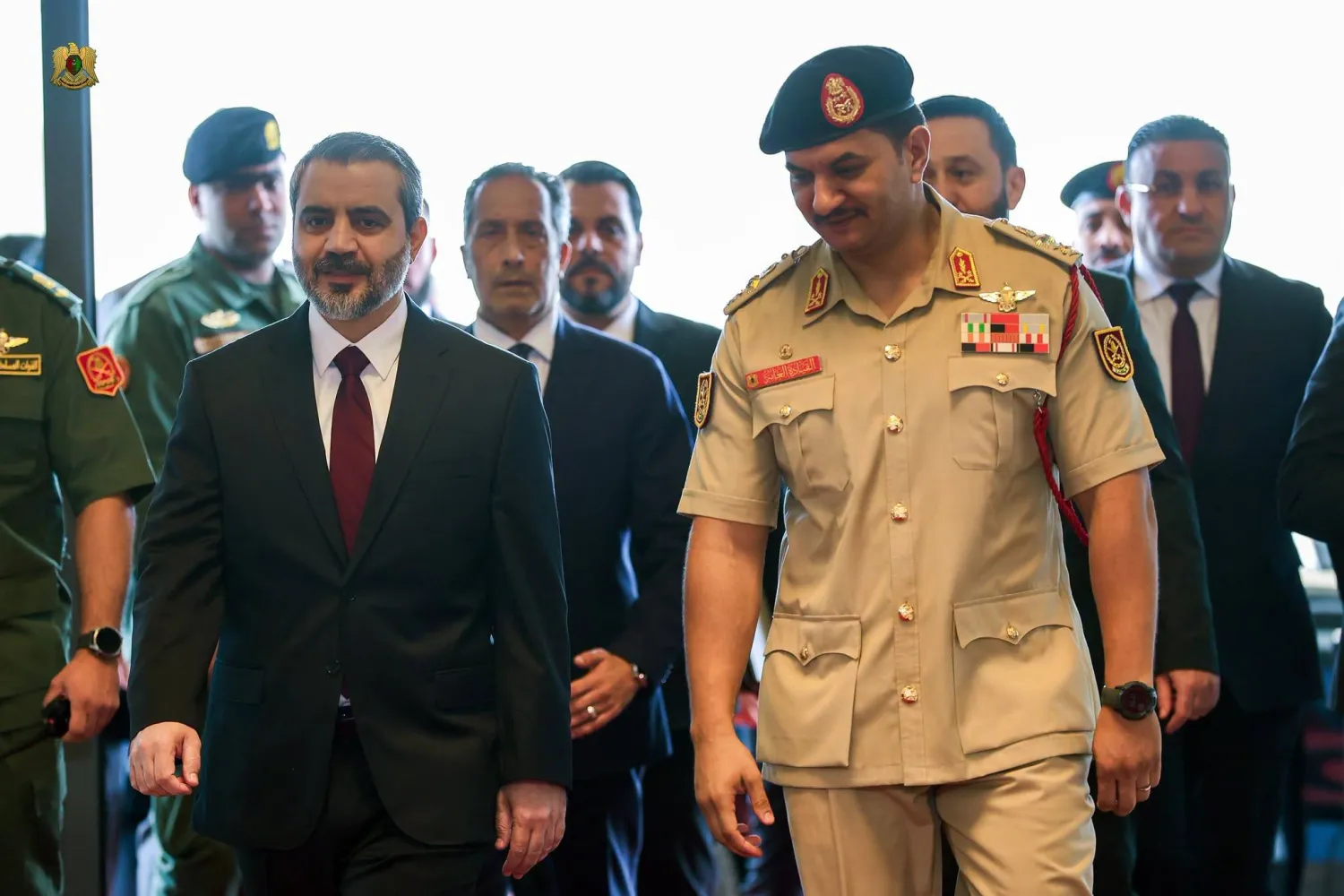
General Saddam Haftar, deputy commander-in-chief of the Libyan National Army, and Syrian Foreign Minister Asaad al-Shaibani in Benghazi. (LNA General Command)
TT

Saddam Haftar Assures Shaibani of General Command’s Readiness to Support Syrian People

General Saddam Haftar, deputy commander-in-chief of the Libyan National Army, and Syrian Foreign Minister Asaad al-Shaibani in Benghazi. (LNA General Command)

General Saddam Haftar, deputy commander-in-chief of the Libyan National Army, discussed with Syrian Foreign Minister Asaad al-Shaibani several issues of common interest during the minister’s first visit to Benghazi.

They also underlined the depth of the fraternal and historical relations uniting the Libyan and Syrian people.

Libya and Syria restored diplomatic ties after nearly 14 years after Shaibani visited Tripoli in August. Talks discussions aimed to strengthen bilateral relations and expand joint cooperation between the two countries, culminating in the reopening of the Syrian embassy in Libya.

The LNA General Command said on Sunday that Saddam praised the role of the Syrian leadership "in achieving security and stability in Syria, overcoming the challenges faced during the transition phase, and working to restore normalcy and open up to the international community."

He underscored the General Command's support for the Syrian leadership, and “its readiness to provide everything within its power to support the brotherly Syrian people to help Syria regain its position in the Arab and international arenas.”

For his part, Shaibani expressed the Syrian leadership's keenness to support everything that would achieve permanent stability in Libya.