


Hamas Denies Israeli Claims of Rocket System Moves

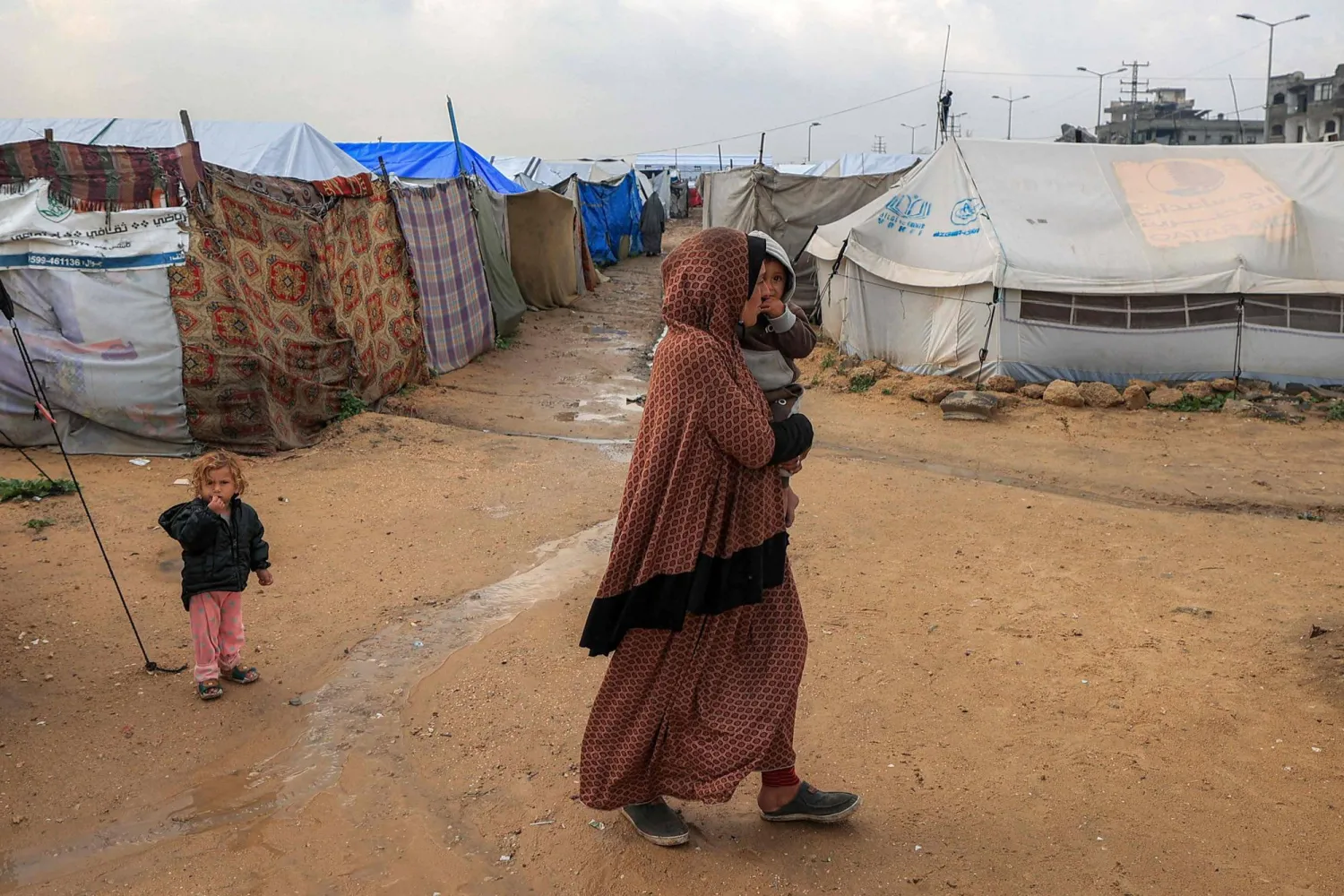
A woman carrying a child walks through mud between tents housing people displaced by war at the Bureij camp for Palestinian refugees in the central Gaza Strip on February 24, 2026. (Photo by Eyad Baba / AFP)
TT

Hamas Denies Israeli Claims of Rocket System Moves

A woman carrying a child walks through mud between tents housing people displaced by war at the Bureij camp for Palestinian refugees in the central Gaza Strip on February 24, 2026. (Photo by Eyad Baba / AFP)

The Hamas movement denied an Israeli media report alleging it had taken steps to reactivate its rocket system, calling the claims a “pretext” Israel was promoting to justify a return to war and the occupation of the Gaza Strip.

The Israeli Public Broadcasting Corporation said on Monday that vital materials had been smuggled into Gaza to operate Hamas’s rocket system, including hydroxyl-terminated polybutadiene (HTPB), a key component of solid rocket fuel that significantly boosts missile range and stability.

Hamas sources told Asharq Al-Awsat the allegations were “completely untrue,” noting that Israeli naval forces control all access points along Gaza’s coastline. They dismissed the report as “media fabrications.”

The sources said Palestinian armed wings have the right to possess weapons for self-defense, but described Israeli claims of smuggling explosive materials for solid rocket fuel as “baseless accusations” aimed at securing a green light for new strikes in the enclave.

They warned that Israeli security bodies were circulating such claims to the media as a “pretext for launching severe attacks inside the Strip.”

Asked whether the armed wing had resumed rocket production or rebuilt its military infrastructure, the sources declined to confirm or deny, saying only that “the resistance has the right to retain all its weapons to confront any new aggression.”

‘State of defense’

Days earlier, Israel’s Channel 14 cited an Israeli security source as saying Hamas could rebuild tunnels faster than the Israeli military could detect and destroy them, and that it retained vast financial resources and an advanced logistical network to safeguard key strategic assets.

The source said significant infrastructure in northern Gaza had not been reached by Israeli forces, despite the destruction of more than 40 tunnels over the past two months.

Last week, Israeli Prime Minister Benjamin Netanyahu said around 350 km of tunnels in Gaza remained intact — a figure Channel 14 described as “astronomical,” saying achieving that objective would take considerable time, particularly without fully occupying the Strip.

Hamas sources said most tunnels were destroyed during the war, though some were damaged and partially intact. They said the bodies of Israeli hostages were recovered from some tunnels after the war ended, but declined to say whether any had since been rehabilitated.

On the ground, Hamas is reinforcing its civilian control and retains authority over government operations in Gaza, including the security apparatus. Militarily, it has not publicly signaled any renewed activity by its armed wing.

Movement sources said the leadership is focused on administrative and organizational restructuring, while preparing contingency plans to confront any renewed Israeli assault amid repeated threats to resume fighting. They said the armed wing would remain in a defensive posture alongside other Palestinian factions if Israel returns to war, a scenario they said the various brigades do not seek.
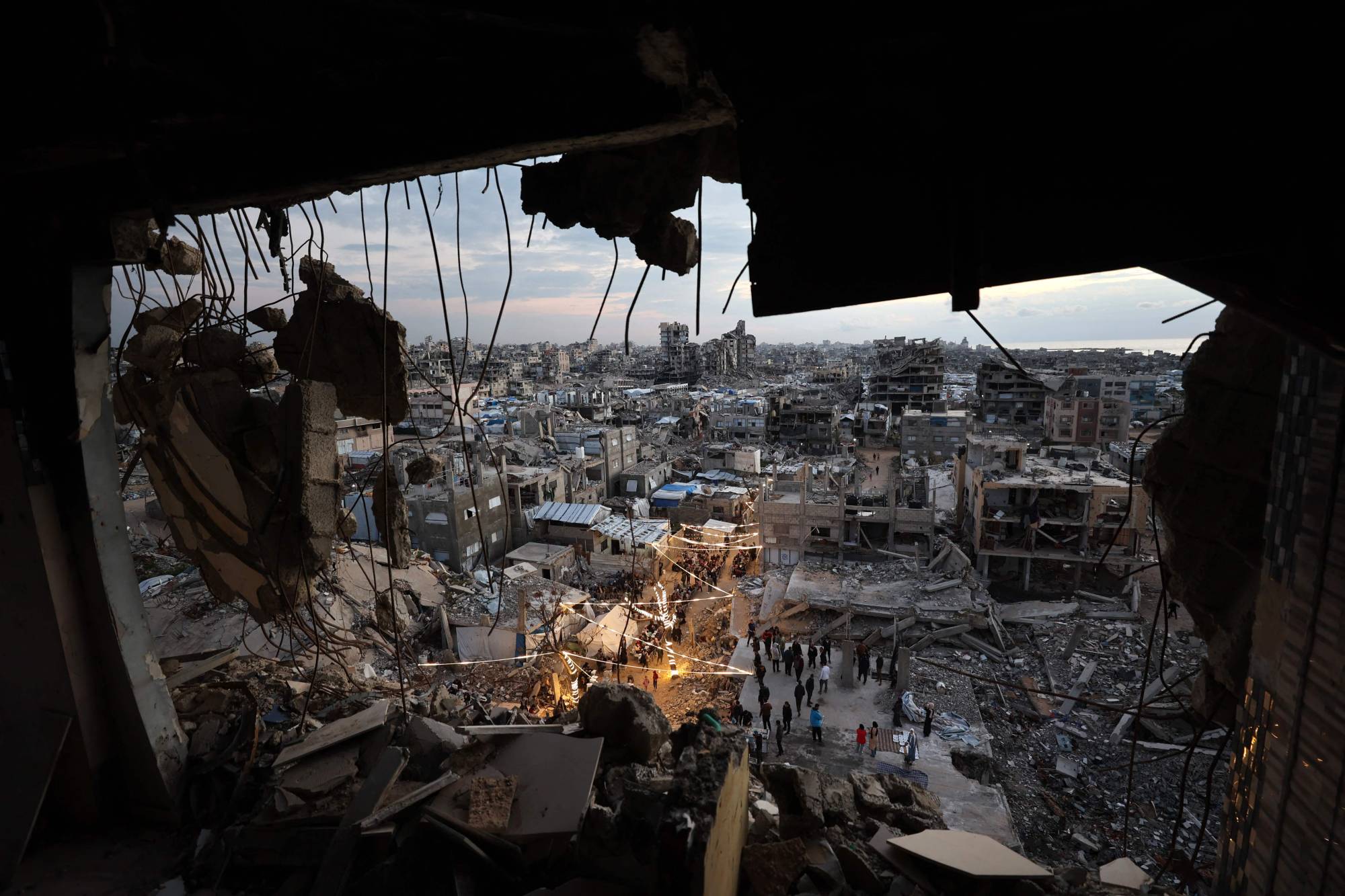
 

Displaced Palestinians gather for an Iftar meal amid the rubble of destroyed buildings at the Jabalia refugee camp in the northern Gaza Strip, during the Muslim holy fasting month of Ramadan, on February 23, 2026. (Photo by Omar AL-QATTAA / AFP)

Occupation threat raised

Israel insists Hamas must surrender all its weapons, light and heavy, even in stages, according to leaks about a related US document.

Israeli Finance Minister Bezalel Smotrich, a member of the security cabinet, said the next phase would include “an official ultimatum” demanding Hamas hand over its weapons, headquarters and tunnels.

Failure to comply would grant Israel the right to take direct military action to achieve its objectives, he said, signaling the possibility of occupying parts of Gaza.

In remarks to the Israeli Public Broadcasting Corporation on Monday, Smotrich reaffirmed that Israel has not abandoned its goal of eliminating Hamas, but is giving US President Donald Trump the opportunity to implement this in his own way.

Hazem Qassem, a Hamas spokesperson, said Smotrich’s threat to resume fighting showed “disregard” for arrangements to end the war, accusing Israel of failing to meet its commitments in the first and second phases of the ceasefire agreement since it took effect in October last year.



Syria Confirms Mass Escape of Militant Relatives from Al-Hol Camp

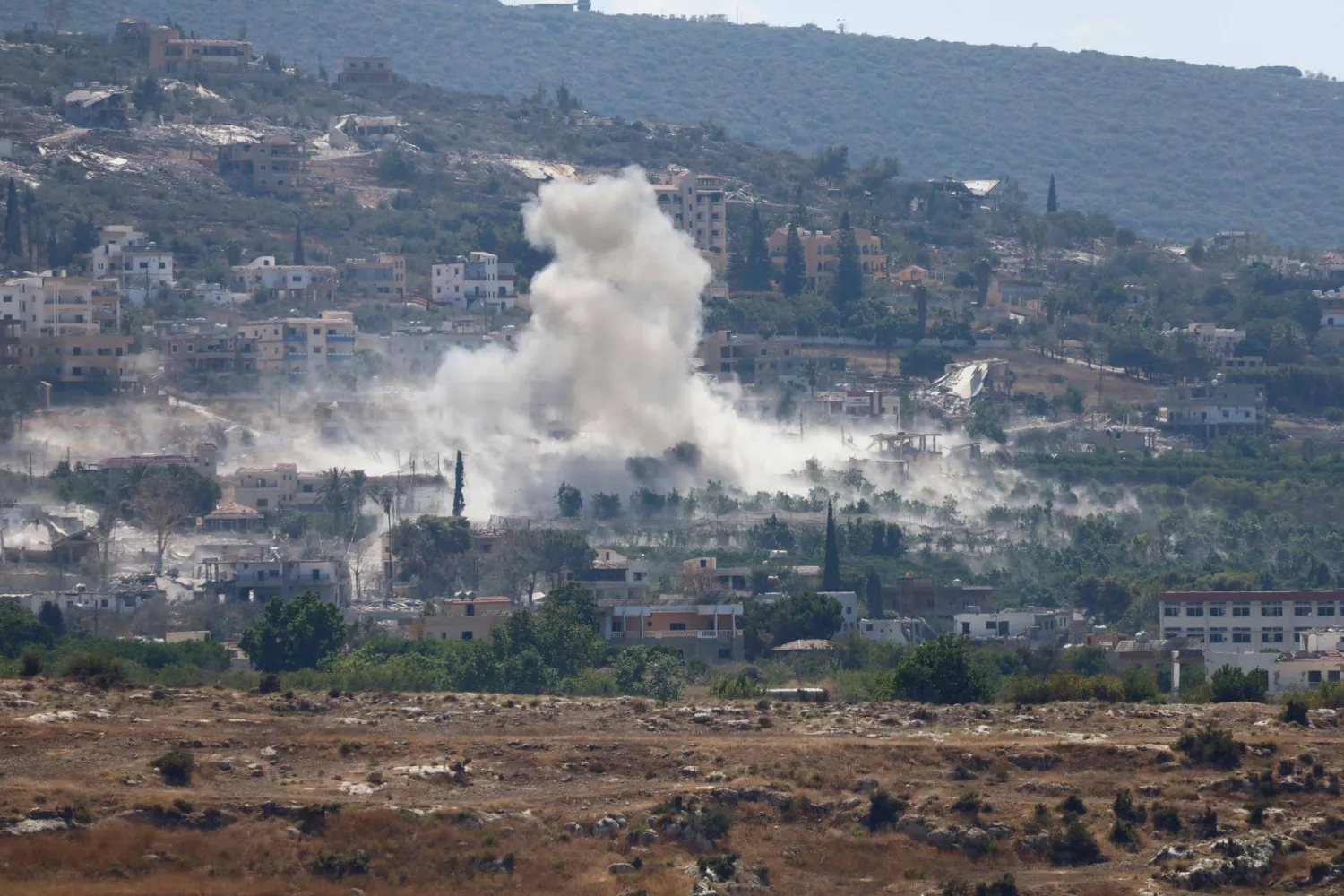
A general view of Al-Hol camp located in a desert region of Hasakeh province in Syria. Reuters file photo
TT

Syria Confirms Mass Escape of Militant Relatives from Al-Hol Camp

A general view of Al-Hol camp located in a desert region of Hasakeh province in Syria. Reuters file photo

Syria confirmed on Wednesday the mass escape of relatives of suspected ISIS group militants from the Al-Hol camp last month following the withdrawal of Kurdish forces who had overseen the facility.

"When our forces arrived, they found cases of collective escapes due to the camp having been opened up in a haphazard manner," interior ministry spokesman Noureddine al-Baba told a press conference, AFP reported

Al-Hol, the largest camp for relatives of suspected ISIS militants in northeastern Syria, had been under the control of the Kurdish-led Syrian Democratic Forces (SDF).

But last month, Syrian troops drove Kurdish forces from swathes of the north, sparking questions over the fate of the ISIS prisoners and their families.

Under pressure, the SDF withdrew from the camp on January 20, with Syrian security forces taking control a few hours later.

"The SDF withdrew suddenly, without coordination and without informing" the Syrian authorities or the international anti-militant coalition beforehand, al-Baba said.

There was a "chaotic situation" after the Kurdish forces pulled out, he added, and "more than 138 breaches" have been discovered in the camp's 17-kilometre (11-mile) perimeter wall that allowed mass escapes.

After the Kurdish forces withdrew, thousands of women and children fled the camp to parts unknown.

Al-Hol housed 23,500 people, mostly Syrian and Iraqis, the ministry spokesman said.

Around 6,500 foreigners of 44 different nationalities lived in a high-security section of the camp.

Last week, Syrian authorities moved the families still at Al-Hol to another site in the country's north.

Before the Kurdish forces withdrew, the United States military had transferred more than 5,700 detained ISIS suspects from Syrian prisons to Iraq.

The US had previously announced it would transfer around 7,000 detainees.

ISIS swept across Syria and Iraq in 2014, committing massacres and forcing women and girls into sexual slavery.

Backed by US-led forces, Iraq proclaimed the defeat of ISIS in the country in 2017, and the SDF ultimately beat back the group in Syria two years later.

The SDF went on to jail thousands of suspected militants and detain tens of thousands of their relatives in camps.


Australia Tells Families of Diplomats to Leave Israel, Lebanon

A billboard on the road to Beirut International Airport promoting tourism in Lebanon (AP).
TT

Australia Tells Families of Diplomats to Leave Israel, Lebanon

A billboard on the road to Beirut International Airport promoting tourism in Lebanon (AP).

The Australian government has told dependants of Australian diplomats in Israel and Lebanon to leave the two Middle East countries, citing a deteriorating security situation in the region, the foreign ministry said on Wednesday.

The government has also offered voluntary departures to Australian diplomats' dependants in the United Arab Emirates, Jordan and Qatar, it said on an official ministry X account, Reuters reported.

US President Donald Trump laid out his case for a possible attack on Iran in his State of the Union speech to Congress on Tuesday, saying he would not allow the world's biggest sponsor of terrorism to have a nuclear weapon.

Iran and the United States resumed negotiations earlier this month as Washington builds up military capability in the Middle East. Iran has threatened to strike US bases in the region if it is attacked, but Tehran's top diplomat said on Tuesday that a deal with the US was "within reach" if diplomacy is prioritised.

The Australian government continues to advise citizens in Israel and Lebanon to consider leaving while commercial options are still available, the foreign ministry said.

The announcements were made in a series of posts on the foreign ministry's Smartraveller X account.


Security Council Sanctions 4 RSF Commanders over Atrocities in Sudan’s El-Fasher

Security Council Sanctions 4 RSF Commanders over Atrocities in Sudan’s El-Fasher
TT

Security Council Sanctions 4 RSF Commanders over Atrocities in Sudan’s El-Fasher

Security Council Sanctions 4 RSF Commanders over Atrocities in Sudan’s El-Fasher

The UN Security Council has announced sanctions on four commanders from the Rapid Support Forces for atrocities committed in the October takeover of the Darfur city of El-Fasher.

The four are high-ranking members of the RSF, which a UN probe last week determined had committed acts of genocide in their 18-month siege and eventual capture of El-Fasher.

They are RSF deputy commanders Abdelrahim Hamdan Daglo and Gedo Hamdan Ahmed, Brigadier General Al-Fateh Abdullah Idris and field commander Tijani Ibrahim.

Since April 2023, Sudan has been gripped by what the UN has called a "war of atrocities" between the RSF and Sudan's regular army, killing tens of thousands and creating the world's largest hunger and displacement crises.

For a year and a half, the RSF besieged North Darfur state capital El-Fasher -- the region's last major city to evade their control -- before storming the city on October 26.

The campaign, which the UN fact-finding mission described as "three days of horror", was marked by summary executions, systematic sexual violence and mass detention -- primarily targeting the city's ethnic Zaghawa population.

Abdelrahim, brother of RSF chief Mohamed Hamdan Daglo, appears in footage "giving direct orders to his fighters to not take captives but to kill everyone", according to the sanctions announcement.

He is already sanctioned by the United States, the United Kingdom and the European Union.

Idris, commonly referred to as Abu Lulu, became known as "the Butcher of El-Fasher" for graphic videos he himself posted of the takeover.

"Abu Lulu has filmed himself smiling and killing people while they begged for mercy, as well as videos where he makes ethnically targeted executions," AFP quoted the Security Council as saying.

He, Ahmed and Ibrahim were slapped with US sanctions last week over their roles in the "ethnic killings, torture, starvation and sexual violence" committed in El-Fasher.