


Saudi Arabia Unifies Competitiveness, Business Under Agile Governance

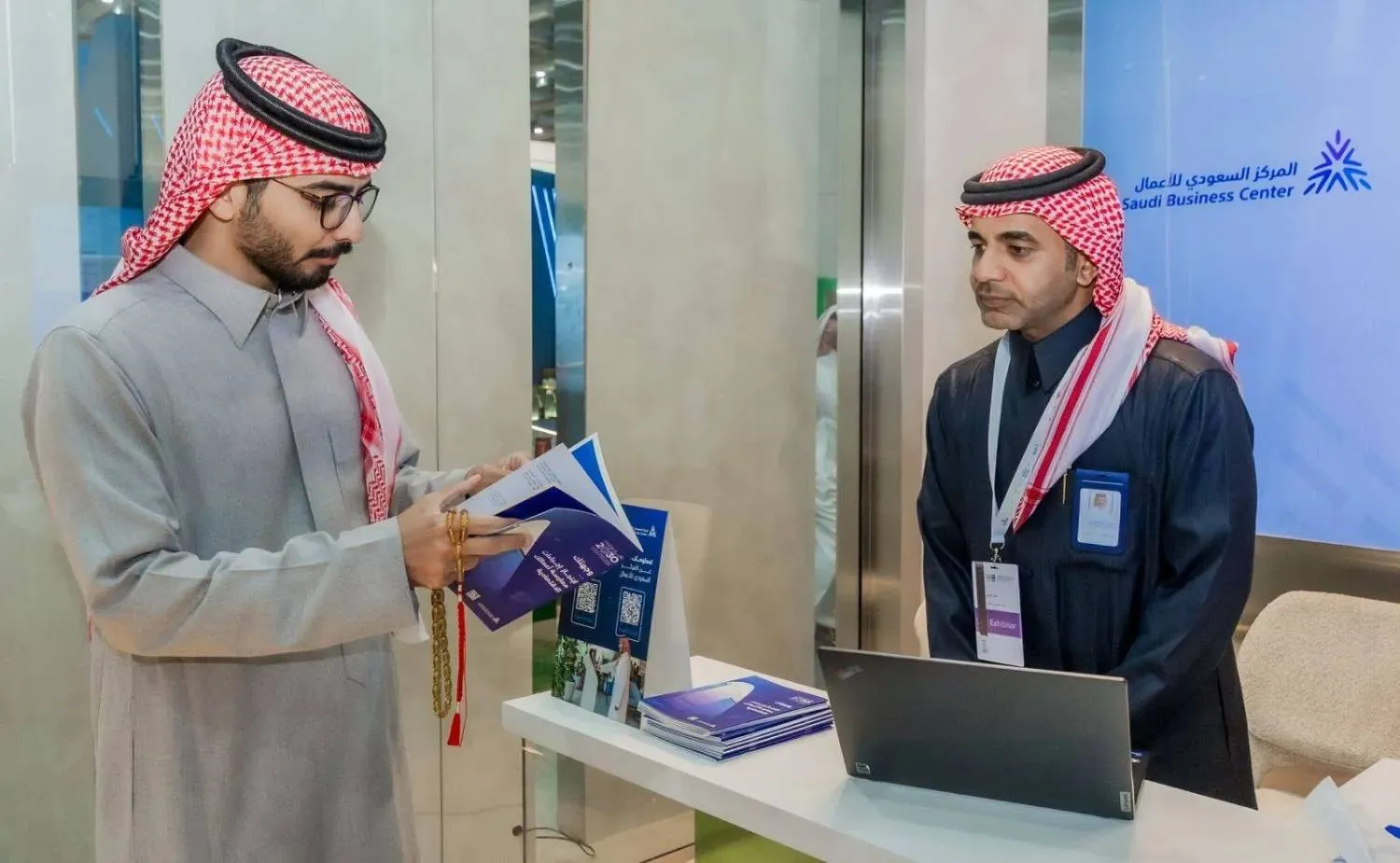
A beneficiary looks at a brochure for the Saudi Business Center (Asharq Al-Awsat)
TT

Saudi Arabia Unifies Competitiveness, Business Under Agile Governance

A beneficiary looks at a brochure for the Saudi Business Center (Asharq Al-Awsat)

Saudi Arabia is moving ahead with restructuring its institutional framework to keep pace with the speed of economic transformation after the Cabinet decided to merge the National Competitiveness Center and the Saudi Business Center under the umbrella of the Saudi Center for Competitiveness and Business.

The move reshapes the business environment, accelerates reforms and strengthens governance to support a more attractive economy.

Commerce Minister Dr. Majid Al-Qasabi said following the Cabinet decision that the merger represents a pivotal regulatory step reflecting a strategic direction toward enhancing institutional integration, improving the efficiency of monitoring business environment challenges and speeding up reforms to facilitate doing business.

The step supports private sector empowerment and contributes to boosting the Kingdom’s competitiveness.

According to several specialists, the decision is not merely a cosmetic change, but a unification of direction and intensification of efforts toward a single goal: a more efficient, faster and globally competitive investment environment.

They said the merger reshapes the business landscape and accelerates reforms in the Kingdom.

Unifying the track

The move comes as the Kingdom continues restructuring its institutions to match the pace of transformation, most recently by merging the two centers to serve entrepreneurs and foreign investors alike in terms of efficiency, speed and competitiveness.

Specialists told Asharq Al-Awsat that the step is distinctly strategic and reflects the Kingdom’s adoption of “agile governance.”

They said merging the National Competitiveness Center with the Saudi Business Center is not just a change of name, but a unification of direction and consolidation of efforts to serve one objective: a global investment environment.

Institutional integration

Shura Council member Fadl bin Saad Al-Buainain told Asharq Al-Awsat that there is a close link between competitiveness and business, noting that competitiveness outcomes ultimately serve economic activities through support, incentives, facilitation and addressing challenges.

Al-Buainain said the decision to merge the National Competitiveness Center and the Saudi Business Center under the name Saudi Center for Competitiveness and Business aims to enhance institutional integration by reorganizing and combining two independent entities.

He added that the step will improve the quality and alignment of outputs, help achieve competitiveness targets and support the business sector simultaneously.

It will also enhance work efficiency, enable direct identification of challenges without the need to refer them to another entity, and accelerate completion, which in itself is a strategic objective that strengthens institutional efficiency, boosts the Kingdom’s competitiveness and supports the business sector.

Corrective decisions

Al-Buainain described the merger as a healthy regulatory process that contributes to reducing costs, focusing efforts and ensuring high-quality outputs aligned with strategic targets.

He stressed that the move followed a considerable period of independent operation and performance measurement before the merger decision was taken based on administrative and executive considerations.

He added that continuous review is a key feature of government work, enabling corrective strategic decisions that achieve overall benefit.

The step could mark the beginning of merging other interrelated government entities across sectors and services, contributing to more dynamic operations, faster completion, higher-quality outputs and better handling of challenges.

Shared factors

Osama bin Ghanem Al-Obaidi, adviser and professor of international commercial law, told Asharq Al-Awsat that the decision comes at an ideal time to achieve the goals of Vision 2030 by unifying efforts, simplifying procedures and creating a more efficient and globally competitive business environment.

Al-Obaidi said several shared factors made the merger a logical step, most notably improving the business environment, supporting the private sector, working with government entities to develop regulations, linking with competitiveness indicators, supporting economic transformation and implementing reforms, as well as relying on studies and economic analysis.

He added that the core common factor was that both entities were working along nearly the same axis of raising the competitiveness of the Saudi economy and facilitating doing business, albeit from complementary angles, which explains their consolidation into a single entity.


Saudi Arabia Records Highest Quarterly Non-Oil Exports Since 2017

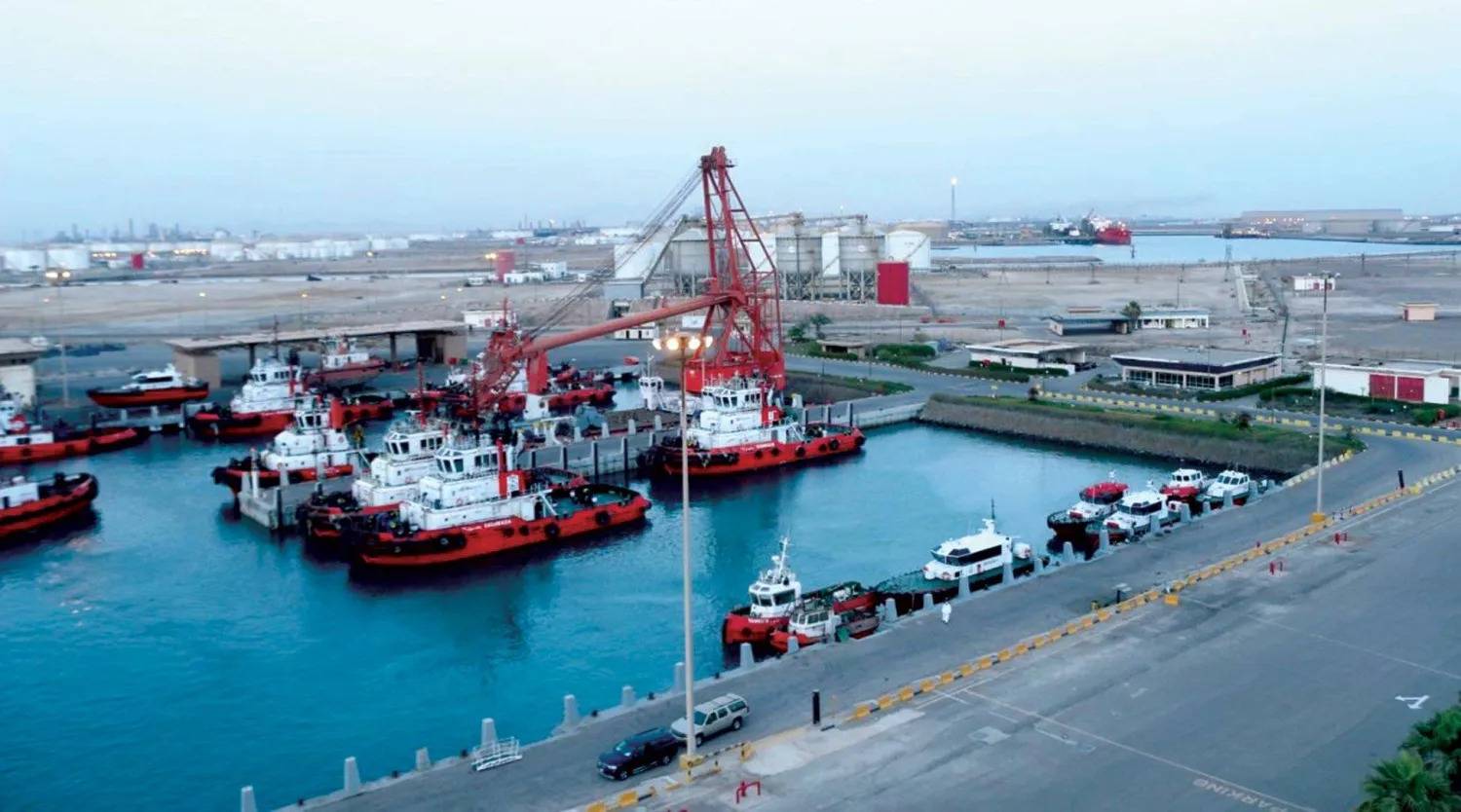
 Jeddah Islamic Port (SPA) 
 Jeddah Islamic Port (SPA) 
TT

Saudi Arabia Records Highest Quarterly Non-Oil Exports Since 2017

 Jeddah Islamic Port (SPA) 
 Jeddah Islamic Port (SPA) 

Saudi Arabia recorded its highest quarterly level of non-oil exports since 2017 in the fourth quarter of 2025, highlighting a significant structural shift in the Kingdom’s trade dynamics.

Data from the General Authority for Statistics (GASTAT) showed that the merchandise trade surplus rose 26.3 percent year on year in the fourth quarter, driven by strong growth in non-oil exports, which are playing an increasingly pivotal role in strengthening Saudi Arabia’s external balance.

Non-oil exports, including re-exports, climbed a record 18.6 percent to SAR 97 billion ($25.8 billion), marking their highest quarterly level in eight years. These exports covered 39.4 percent of total imports during the period. As a result, the trade surplus widened to SAR 52.5 billion (about $14 billion), its highest level in three years.

Re-exports were the standout performer, surging 67.4 percent to SAR 40 billion ($10.6 billion). The sharp increase was largely fueled by growth in machinery, electrical equipment and appliances, which expanded 79.2 percent and accounted for roughly half of total re-exports.

Overall merchandise exports reached SAR 300 billion ($80 billion) in the fourth quarter, up 7.9 percent compared with the same period in 2024. Oil exports rose 3.5 percent year on year to SAR 203 billion ($54.1 billion). Imports also increased, rising 4.7 percent to SAR 248 billion ($66.1 billion)

Trade data underscored the depth of Saudi Arabia’s commercial ties with major global economies. China remained the Kingdom’s largest trading partner, accounting for 13.1 percent of total exports and 27.2 percent of imports.

The United Arab Emirates ranked second among export destinations, receiving 11.2 percent of Saudi exports.

Other leading export markets included Japan (9.9 percent), followed by India, South Korea, the United States, Bahrain, Egypt, Singapore and Poland. Collectively, these ten countries accounted for 70.9 percent of total Saudi exports.

On the import side, the United States ranked second after China, representing 8.7 percent of total imports. It was followed by the UAE (5.7 percent), Germany, India, Japan, Italy, France, Switzerland and Egypt. Together, these ten countries accounted for 67 percent of the Kingdom’s total imports.

Vision 2030 Driving Diversification

The record performance reflects the goals of Saudi Vision 2030, which aims to position the Kingdom as a global logistics hub linking three continents. The exceptional expansion in re-exports and greater reliance on advanced air cargo infrastructure point to tangible progress in building a platform capable of attracting and redistributing high-tech goods and electrical equipment worldwide.

The figures also demonstrate growing economic resilience. Oil exports accounted for 67.5 percent of total exports in the fourth quarter of 2025, down from 70.4 percent a year earlier. This gradual diversification of the export base has helped reinforce trade stability, supporting the highest surplus recorded in three years.


Gold Ticks Up on Safe‑haven Bids; Markets Eye US-Iran Talks

Gold items are displayed at a jewelry shop in Hanoi, Vietnam, 26 February 2026.  EPA/LUONG THAI LINH
Gold items are displayed at a jewelry shop in Hanoi, Vietnam, 26 February 2026. EPA/LUONG THAI LINH
TT

Gold Ticks Up on Safe‑haven Bids; Markets Eye US-Iran Talks

Gold items are displayed at a jewelry shop in Hanoi, Vietnam, 26 February 2026.  EPA/LUONG THAI LINH
Gold items are displayed at a jewelry shop in Hanoi, Vietnam, 26 February 2026. EPA/LUONG THAI LINH

Gold prices edged up on Thursday as uncertainty over US tariff policy boosted the metal's safe-haven appeal, while investors awaited further details on US-Iran talks later in the day.

Spot gold was up 0.4% at $5,190.01 per ounce, as of 0816 GMT. Bullion had hit a more-than-three-week high on Tuesday.

US gold ‌futures for April ‌delivery were down 0.4% at $5,206.80, said Reuters.

The US dollar ‌eased, ⁠making dollar-denominated commodities more ⁠affordable for holders of other currencies.

"Iran-US persisting tensions and the uncertainty surrounding the global economy with (President Donald) Trump's tariffs are a bullish catalyst," said Carlo Alberto De Casa, external analyst at banking group Swissquote.

US envoy Steve Witkoff and Trump's son-in-law Jared Kushner are due to meet an Iranian delegation for ⁠a third round of nuclear talks later in the ‌day in Geneva.

Trump briefly ‌laid out his case for a possible attack on Iran in his ‌State of the Union speech on Tuesday, saying ‌he would not allow a country he described as the world's biggest sponsor of terrorism to have a nuclear weapon.

Non-yielding gold is seen as a safe store of value during times of geopolitical and ‌economic uncertainty.

The US tariff rate for some countries will rise to 15% or higher from ⁠the newly ⁠imposed 10%, US Trade Representative Jamieson Greer said on Wednesday, without naming any specific trading partners or giving further details.

Gold prices scaled a record high of $5,594.82 on January 29 and were up 20% so far this year.

"The global gold rush does not seem to be over... Overall the sentiment remains positive with strong buys coming from Asia and from Central Banks," De Casa said.

On the data front, investors await the weekly US jobless claims data, due later in the day.

Spot silver fell 1.4% to $88.18 per ounce. Spot platinum added 0.9% to $2,308.11 per ounce, while palladium rose 0.3% to $1,800.14.


IMF Unlocks Around $2.3 Billion for Egypt

Thousands of Muslim students break their fast during the Muslim holy fasting month of Ramadan, at a free meal distributing point in Al-Azhar mosque in Cairo, Egypt, Wednesday, Feb. 25, 2026. (AP Photo/Ahmed Yosri )
TT

IMF Unlocks Around $2.3 Billion for Egypt

Thousands of Muslim students break their fast during the Muslim holy fasting month of Ramadan, at a free meal distributing point in Al-Azhar mosque in Cairo, Egypt, Wednesday, Feb. 25, 2026. (AP Photo/Ahmed Yosri )

The International Monetary Fund (IMF) has unlocked around $2.3 billion for Egypt after its latest program reviews, it said on Wednesday.

Egypt secured an expanded $8 billion package over nearly four years from the IMF in March 2024, contingent on a series of economic reforms.

In March last year, the global lender approved a new loan worth $1.3 billion for Egypt.

After completing the fifth and sixth reviews of the Extended Fund Facility, the IMF said on Wednesday around $2 billion will be unlocked for Egypt.

It will be able to draw an extra $273 million under the Resilience and Sustainability Facility (RSF) after the first review was completed, the IMF said in a statement.

"Egypt's macroeconomic situation has improved amid sustained stabilization efforts," it said. "A broad-based economic recovery has lifted real GDP growth to 4.4 percent in FY2024/25 while inflation declined markedly to 11.9 percent in January 2026, supported by tight monetary and fiscal policies."

"The current account deficit narrowed further to 4.2 percent of GDP, reflecting strong remittances and tourism receipts, while market confidence continued to improve, as evidenced by successful external issuances, foreign direct investment inflows, and record nonresident inflows into domestic debt markets."

"Tight monetary and fiscal policies together with exchange rate flexibility have helped restore macroeconomic stability, reduce inflation, and strengthen the external position."

But the IMF warned that structural reforms under the program have been "uneven.”

"Efforts to reduce the state's footprint, particularly progress on the divestment agenda, have been slower than envisaged, while high public debt and elevated gross financing needs continue to constrain fiscal space and weigh on medium-term growth prospects," the IMF added.
