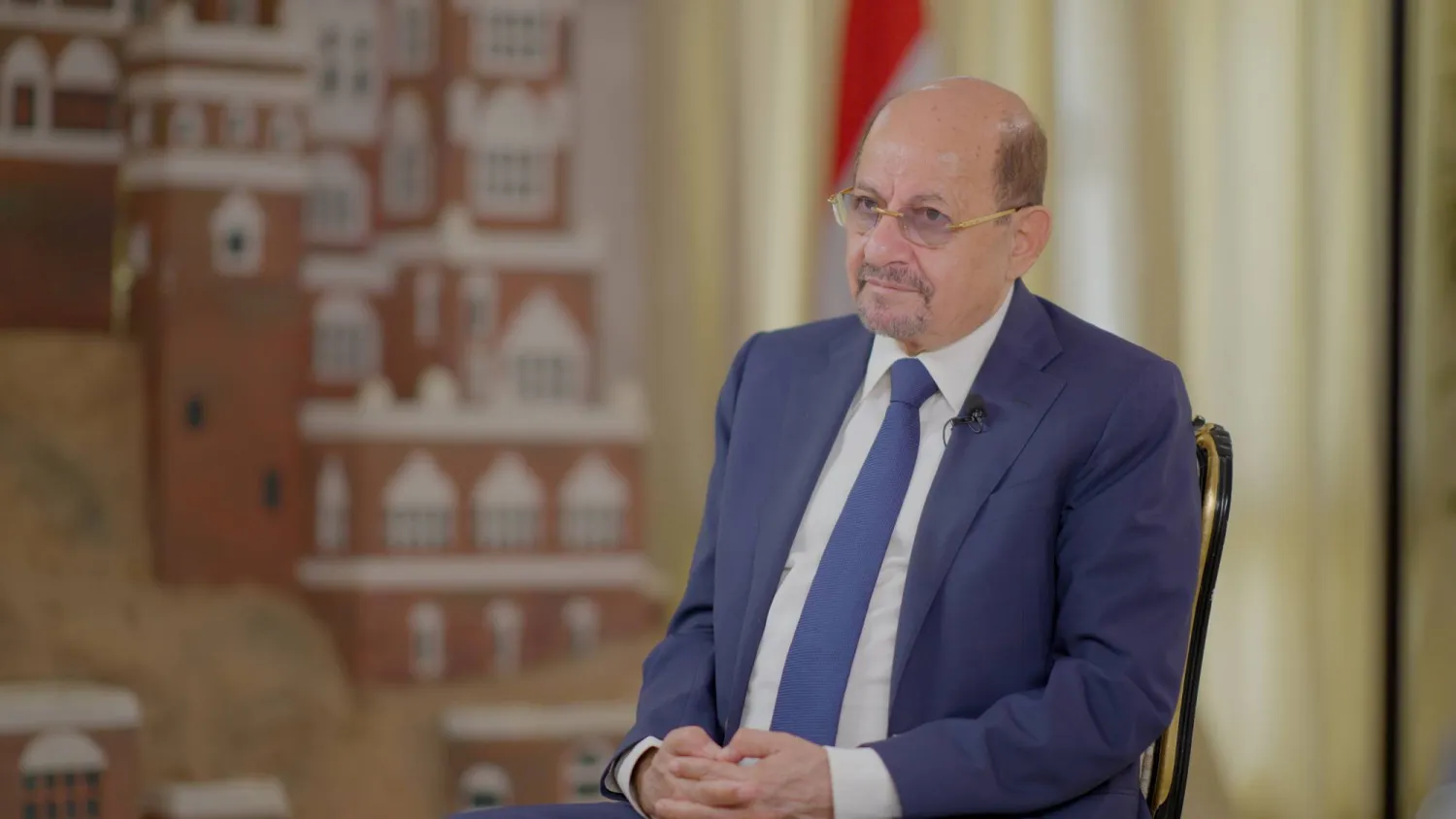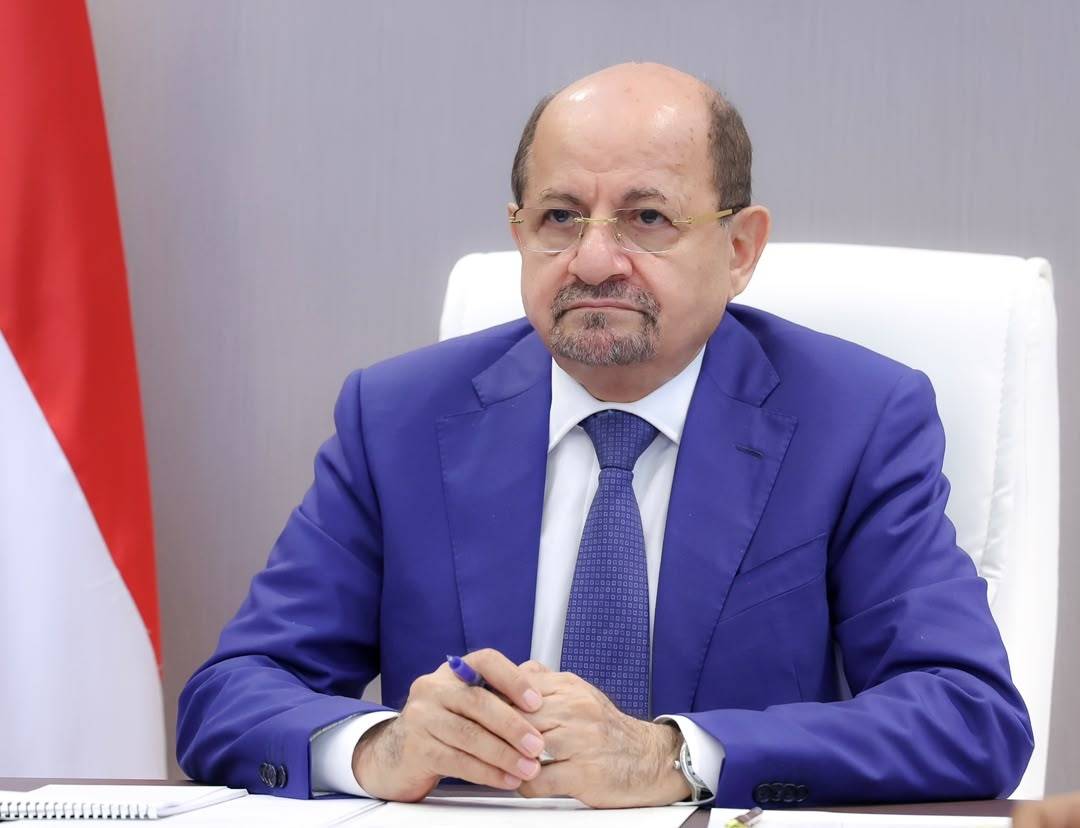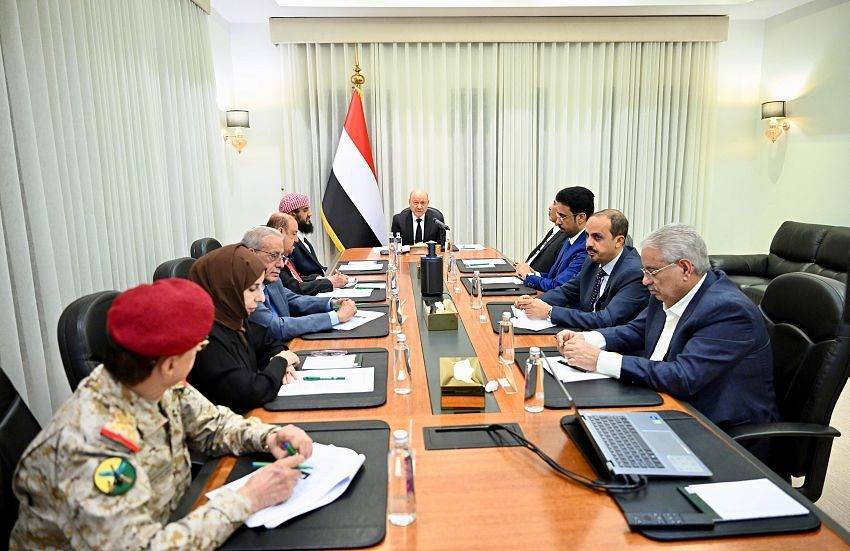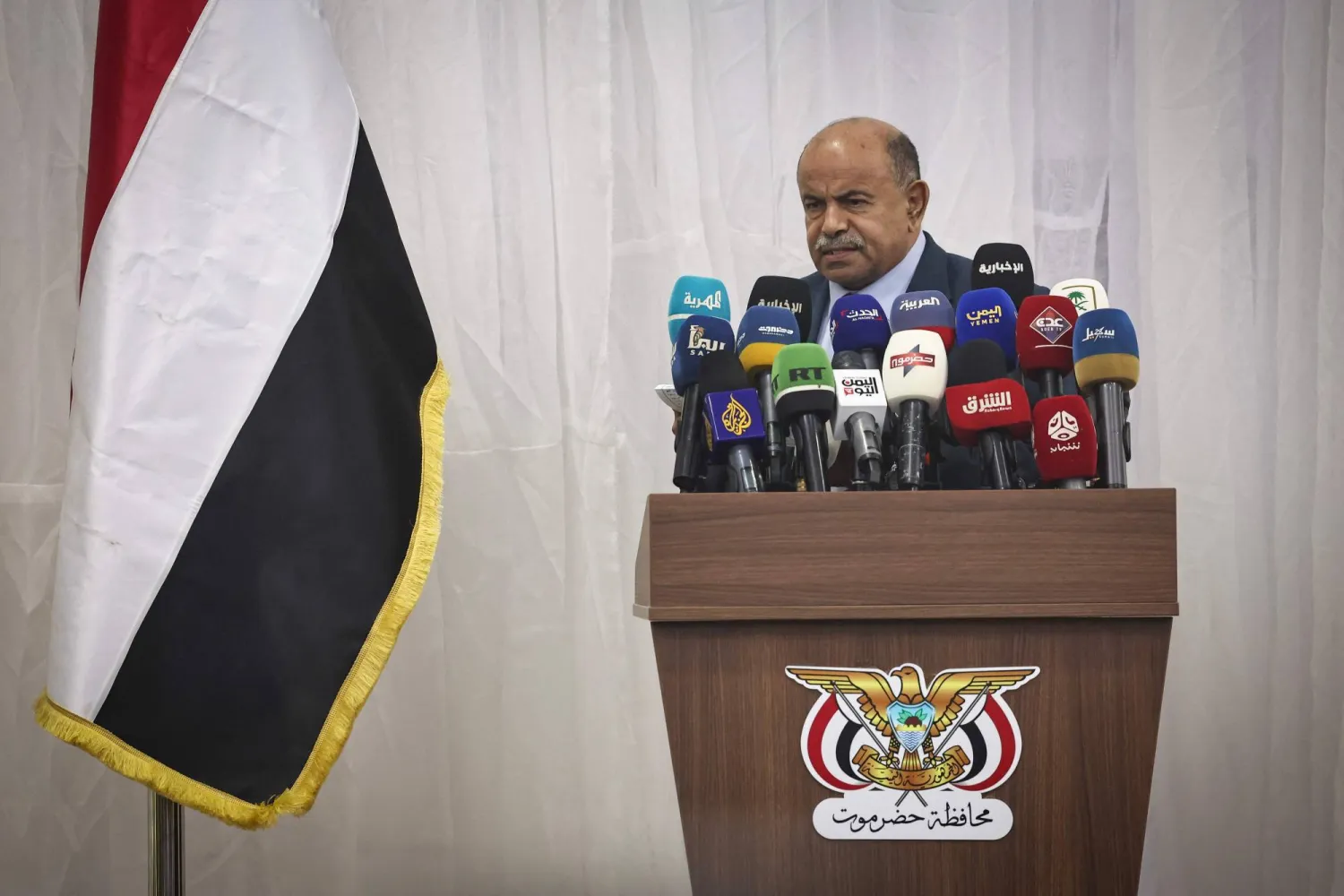

Presidential Leadership Council (PLC) member and Governor of Yemen's eastern Hadramout province Salem al-Khanbashi says he believes that “Hadramout triumphed for itself,” and that what took place there in December 2025 and early January 2026 marked a decisive moment in which Hadhramis reclaimed their right to protect their identity and blocked any political project seeking to dissolve the “Hadhrami self” under the slogans of outsiders.
In an interview with Asharq Al-Awsat Podcast, recorded in Riyadh on February 9, 2026, al-Khanbashi advised the new Yemeni government led by Dr. Shayea al-Zindani to steer clear of partisanship, raise performance levels, and combat corruption. During the discussion, he presented his account of events, framing the operation as a “takeover of military camps,” not the “ignition of a war.” He broadened the discussion to what he views as the priority of the current phase: consolidating stability, activating development, and opening the door to long-awaited Hadhrami investments returning home.
“Liberate us" from ourselves?
In describing the outcome of the confrontation, the deputy rejects reducing the picture to who won and who lost. He says the real victory was achieved when the people of Hadramout rejected the notion that someone could arrive and say, “We came to liberate you,” asking: “Liberate you from whom? From ourselves?” He stresses that the governorate, with its history stretching back “thousands of years,” cannot have another identity imposed upon it. He records his appreciation for those who stood in defense of this distinctiveness, while at the same time extending explicit thanks to the Kingdom of Saudi Arabia, its leadership and role, which he said was a key player in containing last month’s events.
On the moment he was tasked with the governorship at an extremely sensitive time, al-Khanbashi recounts that he was residing in Hadramout and did not leave except when necessary, before receiving a call from President Rashad al-Alimi and from parties including Saudi officials and colleagues on the Leadership Council, asking him to assume responsibility for the governorate “because we need you.”He says he tried to decline, but accepted under the pressure of “necessity,” emphasizing that he is a son of Hadramout who spent most of his life there, and that he accepted the post fully aware of the weight and complexity of the phase.
The picture becomes heavier as al-Khanbashi moves to his successive roles: governor, then commander of the National Shield Forces in Hadramout , then a member of the Leadership Council with the rank of vice president. He deliberately labels the January operation a “battle to take over the camps,” so that it would not be understood as targeting civilian society or as a search for settling scores.
Al-Khanbashi says his overriding concern was to spare Hadramout street fighting, protect civilian infrastructure, and minimize human losses. He describes the operation as “swift and decisive,” with a limited number of casualties.
Securing withdrawals... and a political outlet
Asked whether the military operation in Hadramout ended with reprisals against opponents, al-Khanbashi is keen to deny this. He says the withdrawal of departing forces was secured and that they were not subjected to any military or popular harassment. “We instructed that no one who was in the Southern Transitional Council, whether military or civilian, be harmed,” he says. At the same time, he explains that he took decisions to dismiss certain security and military leaders accused of involvement in looting weapons and ammunition or of poor performance, and that they will be referred for accountability in accordance with what they committed against the governorate.
Amid this, al-Khanbashi reiterates a message he wants widely understood: “Hadramout has room for all.” He calls for civic conduct that avoids incitement, and warns against marches he believes target civil peace and provoke the local scene.
He again urges adherence to civil behavior without incitement, citing gatherings that took place in early February 2026 in Seiyun. He suggests they were not spontaneous, saying: “We have evidence that these people were paid, and we want them not to force us to take measures involving a degree of coercive force against those who want to practice such acts. We are still under a state of emergency, and all measures can be taken.”
In the broader political context, al-Khanbashi speaks of moves to convene a broad Hadhrami meeting in Saudi Arabia bringing together political and social components, including Hadhramis from the Southern Transitional Council, with the aim of preparing a unified vision in the name of Hadramout to be presented to the Southern Dialogue Conference. He notes that a preparatory committee was formed in Mukalla to draft a position reflecting “all societal and political forces” in the governorate, alongside a parallel desire to represent the voice of Hadhrami expatriates within a single vision.
Electricity and investment
Electricity tops the services file, according to the governor. He places it at the head of priorities, explaining that the needs of the coast and the valley differ, but the headline is the same: energy that does not meet demand, especially in summer, with humidity and heat on the coast and harsh desert conditions in the valley.
He speaks of support projects to generate 300 megawatts for the coast, and other projects for the valley, alongside proposals for gas-powered plants and private-sector solar energy options with capacities that could reach 150 megawatts. He believes that a medium-term solution is not a substitute for a long-term strategic project for a large gas plant capable of covering Hadramout's future needs.
From energy he turns to investment as the other face of stability. Al-Khanbashi lists opportunities he sees as promising: tourism, real estate, the export of high-purity gypsum, potential minerals, coal in specific areas, black sands and heavy elements, fisheries, and the idea of aquaculture. He recalls his participation in a Hadhrami investment conference, calling on businessmen to balance their external investments with investing in Hadramout, while pledging to provide facilitation and an attractive environment.
On government affairs, al-Khanbashi describes the discussions that preceded the formation of the new government as having focused on criteria of competence, experience, and geographic balance, while rejecting the principle of quota-sharing. He then offers three pieces of advice he places at the core of the government’s test: moving away from ego and partisan drift, combating entrenched corruption in several ministries, and raising the level of revenue collection and transferring it to the central bank, especially in revenue-generating ministries. He highlights the need to regulate the financial relationship between the center and the governorates in accordance with the Local Authority Law, arguing that strict application would ease many chronic problems.
He recalls Hadramout's experience with oil revenues before exports were halted, noting that the governorate received 20 percent of the value of exported oil and used it for development projects such as electricity, roads, health, and education, before this resource stopped after the Houthis targeted export facilities.
"No barriers" with Saudi Arabia
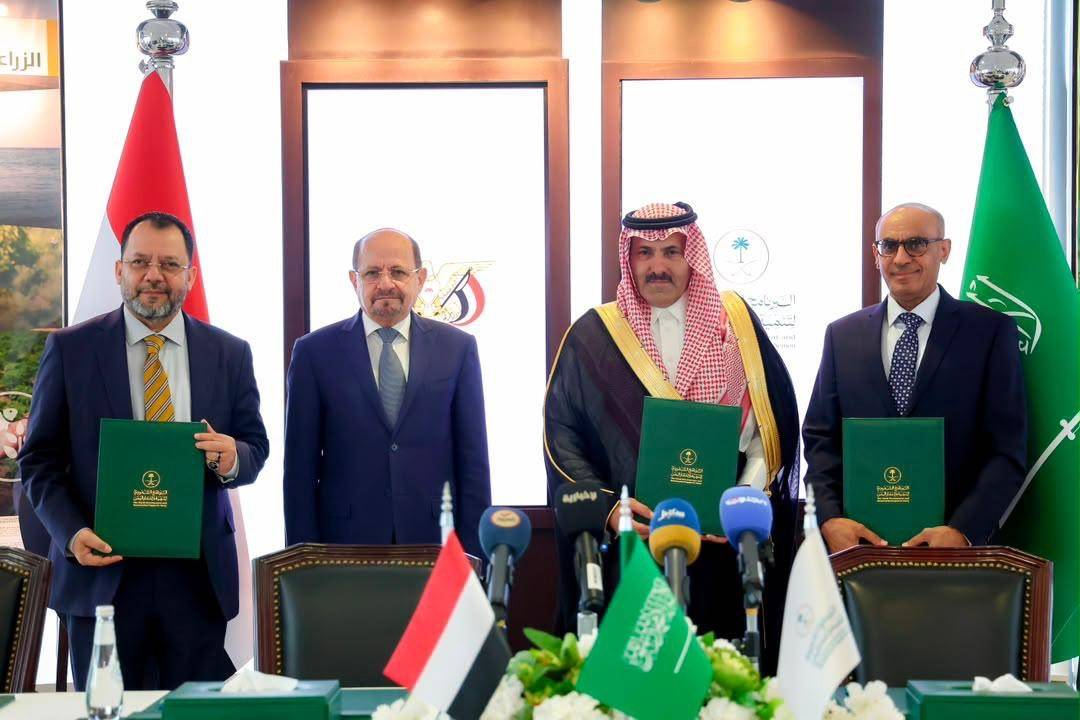
In assessing Saudi development support, al-Khanbashi links relief and reconstruction as a single window for enabling Yemen to overcome its crisis, pointing to packages of projects in electricity, roads, health services, and others within Hadramout.
He places this within a relationship he describes as intertwined, difficult to separate socially, economically, and politically, invoking the extended borders, shared tribes, and cultural ties, to conclude that it is not possible to erect a “barrier” between Hadramout and the Kingdom.
Asked about the moment that remained most vivid in his memory during the 48 hours of the operation, al-Khanbashi says he feared the forces might not withdraw easily and what that could entail in terms of destruction and casualties, before the operation ended in record time with limited losses. He says this is what he will continue to take pride in: that Hadramout succeeded in avoiding internal fighting. In his message to the people of Hadramout, he calls for unity, abandoning the causes of division, and prioritizing security and development, pledging that the expansion of stability will lead to a “bright development era” reflected in the lives of the governorate’s residents.