


Netflix Walks Away from Warner Bros Deal, Clearing the Path for Paramount 

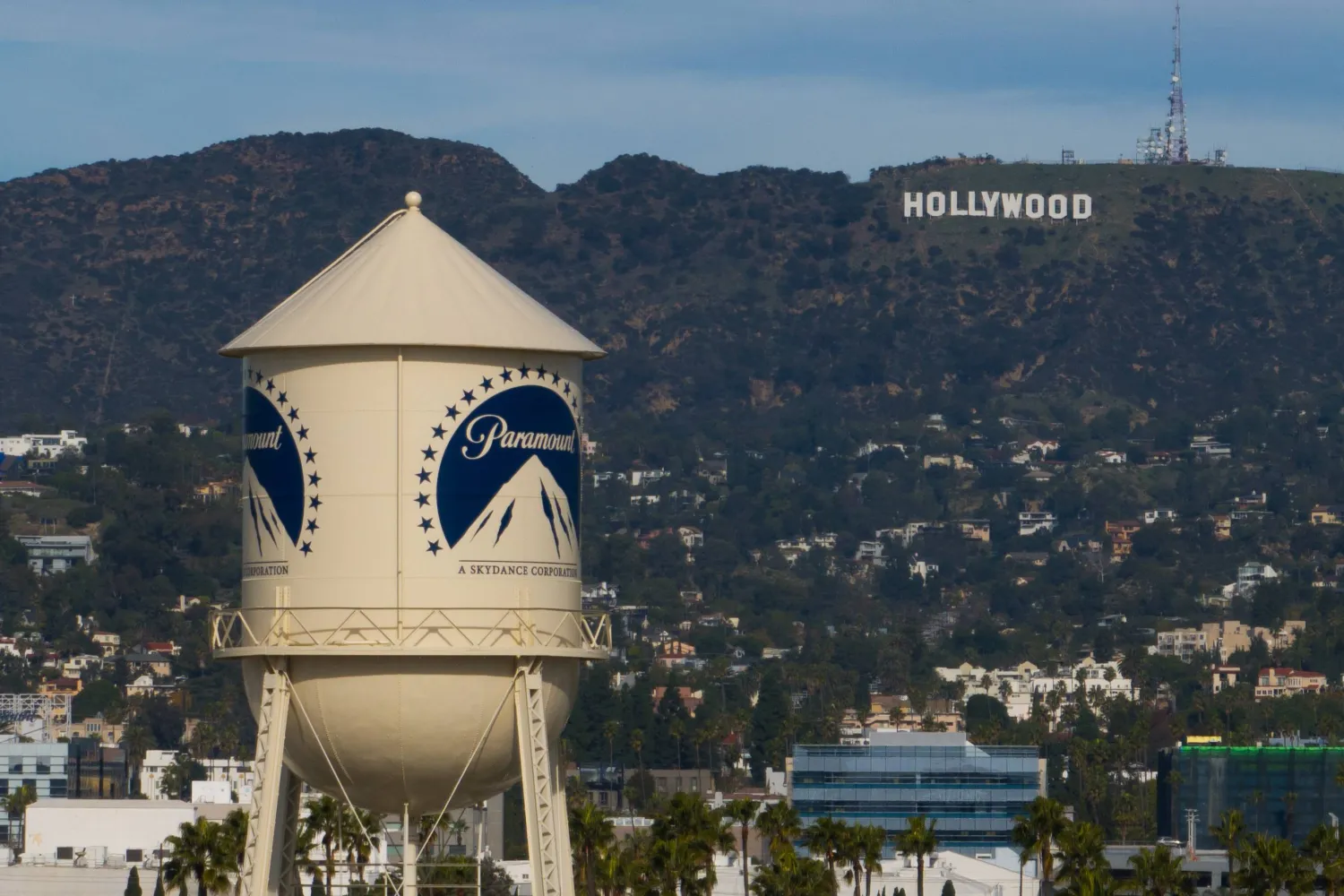
The Paramount Pictures water tower is seen in Los Angeles, Dec. 18, 2025, with the Hollywood sign in the distance. (AP)
TT

Netflix Walks Away from Warner Bros Deal, Clearing the Path for Paramount 

The Paramount Pictures water tower is seen in Los Angeles, Dec. 18, 2025, with the Hollywood sign in the distance. (AP)

Netflix is walking away from its offer to buy Warner Bros. Discovery’s studio and streaming business, in a stunning move that effectively puts Paramount in a position to take over its storied Hollywood rival.

On Thursday, Warner’s board announced that Skydance-owned Paramount’s latest offer to buy the entire company for $31 per share was superior to the agreement it had previously struck with Netflix.

Warner gave Netflix four business days to come up with a counteroffer — but Netflix instead responded less than two hours later, declining to raise its proposal. It said the new price it would have to pay made the deal "no longer financially attractive."

"We believe we would have been strong stewards of Warner Bros.′ iconic brands," Netflix's co-CEOs Ted Sarandos and Greg Peters said in a joint statement. "But this transaction was always a ‘nice to have’ at the right price, not a ‘must have’ at any price."

A Paramount buyout of Warner Bros. Discovery would reshape Hollywood and the wider media landscape. And unlike Netflix — which was only eyeing Warner’s studio and streaming business — Paramount wants the entire company. That means HBO Max, cult-favorite titles like "Harry Potter" and even CNN could soon find themselves under the same roof as Paramount's CBS, "Top Gun" and the Paramount+ streaming service.

The prospect of such a combination, which will still need the green light from both Warner shareholders and regulators, poses both antitrust concerns and questions of political influence.

Netflix's decision to walk away on Thursday marks the latest development in a monthslong, messy corporate battle over Warner's future. Sarandos and Peters thanked Warner's leadership despite the final outcome.

Warner had repeatedly backed the deal it struck with Netflix since December right up until Thursday evening, when its board continued to recommend Netflix even while calling Paramount's bid valued at about $111 billion including debt "superior." Netflix had previously put a $27.75 per share offer on the table for Warner’s studio and streaming business, totaling nearly $83 billion including debt.

In a statement Thursday night, CEO David Zaslav said Netflix executives had been "extraordinary partners" and that he wished them "well in the future."

After months of a heated back and forth amid Paramount's hostile campaign to take over Warner without the board's blessing, Warner also changed its tune about the remaining prospective buyer.

Warner's board hasn't officially adopted Paramount's merger agreement yet, but once it does, Zaslav said it "will create tremendous value." He added that the company was "excited about the potential of a combined Paramount Skydance and Warner Bros. Discovery."

Paramount did not immediately respond to requests for further comment. But CEO David Ellison earlier applauded Warner's board affirming "the superior value of our offer."

A Paramount-Warner combo would combine two of Hollywood’s five legacy studios that remain today, in addition to their theatrical channels. Beyond "Harry Potter," Warner movies like "Superman,Barbie," and "One Battle After Another" — as well as hit TV series like "The White Lotus" and "Succession" — would join Paramount’s content library.

Paramount’s lineup of titles include "Top Gun,Titanic" and "The Godfather." And beyond CBS, it owns networks like MTV and Nickelodeon, as well as the Paramount+ streaming service.



‘Wallace & Gromit’ Creators Turn 50 With Spook-Tacular Shaun Yarn

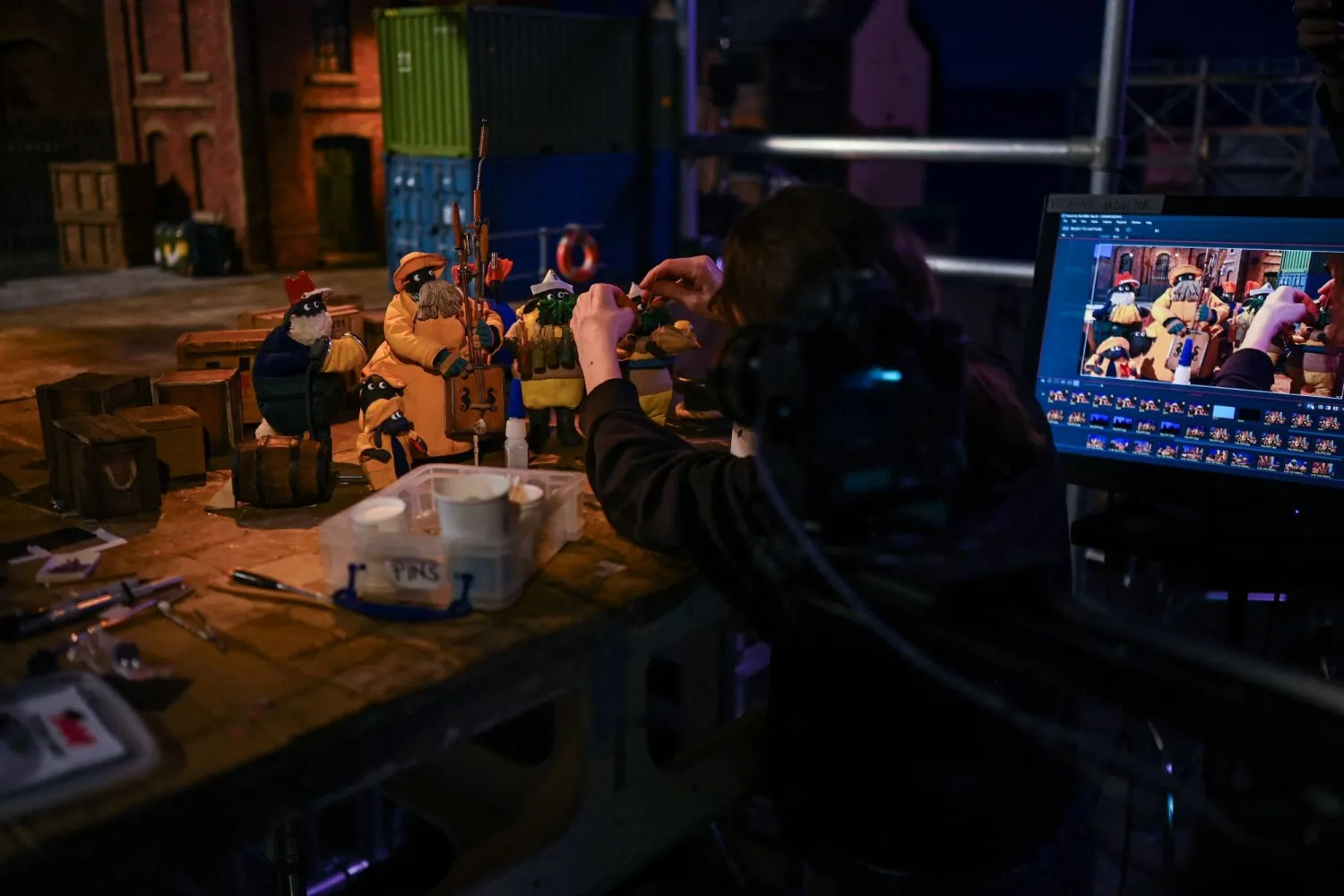
This photo taken on March 4, 2026 shows an employee working on models for "Shaun the Sheep: The Beast of Mossy Bottom" at Aardman Animations studios in Bristol, western England. (AFP)
TT

‘Wallace & Gromit’ Creators Turn 50 With Spook-Tacular Shaun Yarn

This photo taken on March 4, 2026 shows an employee working on models for "Shaun the Sheep: The Beast of Mossy Bottom" at Aardman Animations studios in Bristol, western England. (AFP)

Crochet hook in hand, the animator slightly raises the eyelid of a clay model sheep in a filmmaking technique as old as cinema, perfected over five decades by Aardman Animations.

In the basement of the Bristol-based company -- whose beloved characters such as Wallace and Gromit have won them four Oscars -- designers have been working for the past three-and-a-half years on the latest adventure in their "Shaun the Sheep" series.

"Shaun the Sheep: The Beast of Mossy Bottom" is the third full-length film starring the mischievous, savvy sheep, due to be released on September 18 in UK cinemas.

This time Shaun and his flock have to work together to save Halloween from a fur-raising creature terrorizing their farm's pumpkin patch.

The film marks the 50th anniversary of Aardman, founded in Bristol in 1976 by Peter Lord and David Sproxton who went to school together and used to make models on a kitchen table.

In the dim light of Aardman's basement, about 40 small rooms with a blue background have been set up, with curtains concealing puppet-sized scenes from the film.

One curtain opens to reveal Mossy Bottom farm and its autumnal colors, another a mad science lab, while behind yet another is a black and red fishing boat.

In the world of sophisticated digitalized animations and computer graphics, Aardman stands out for its painstaking handcrafted "stop-motion" technique, which dates back to the late 19th century.

"Our aim as animators is to make people think these puppets are alive," said animation director Claire Rolls.

"Nowadays, there's not a lot of places in the world doing stop-motion animation."

- 'Spare arms and ears' -

In a docklands scene, Rolls, who joined the company in 1998, was working with team member Ed Jackson setting up camera shots.

The sheep, wearing yellow rain jackets, are trying to attract the attention of a crew of sailors, Rolls explained.

The animator gets down to work, eyes fixed on a screen that alternates between the shot he's preparing and the previous frame.

To create the illusion of movement, he raises one sheep's head, lowers another's legs, and clicks the camera once the shot is ready.

After two days of this patient, exacting work, he will have filmed about two seconds of footage, each second made up of 24 frames.

The complete film is made up of more than 100,000 of these painstakingly created stop-motion frames.

The creatures that populate the studio's productions are created upstairs, in the puppet department.

After first appearing in 1995 in "Wallace & Gromit: A Close Shave", Shaun has become one of the studio's icons.

He is now the hero of a television series, shown in 170 countries, and two previous films, and has attracted a huge social media following.

Amid a jumble of drawings and materials, Kate Anderson, the head of the puppet department, pulls out a box filled with interchangeable parts -- a mouth closed, a jaw dropped, or rounded in an "O" of surprise.

Such parts help animators to illustrate different "sounds and expressions" for Bitzer, the long-suffering sheepdog.

The puppet makers "stick with clay for really expressive areas of the puppet, like the face," said Anderson, even if sometimes silicon is used to make the characters' bodies.

That material is more resistant when applied to a metal frame, she said, with the figures nailed in place to avoid any continuity errors.

"Because animators are touching puppets all day long, they do break quite easily," she said.

"We always know that we need to have a big stock of spare sheep arms and ears."

- 'Quirky, fun' -

"The animation is like a live performance," said co-director Steve Cox.

It is different to computer-generated images and two dimensional or 2D ones as "you can't really go back and change things once you've done it".

Filming is done in silence and sound added later, but that doesn't stop its "very British" humor, kind of "quirky and fun", from shining through.

"We do use digital effects in our films, but they're an embellishment to... the hand-crafted work," said producer Richard Beek.

Artificial intelligence has not been used for this latest Shaun movie, he said.

Aardman's playful, imaginative clay figures are instantly recognizable, from the pumpkins to Shaun's mad-scientist glasses.

The release of Disney's "Toy Story" in 1995 caused concern, as with AI, that "we're going to make films now on computers" and there would no longer be any place for stop-motion.

"But what's happened is we've continued to make films," Beek said.

"The whole world changes around us, but there's lots of things that stay the same at Aardman, and maybe that's partly what people like... there's a familiarity to it."


For Sandra Bullock and Nicole Kidman, ‘Practical Magic 2’ Heals Old Wounds

 US-Australian actress Nicole Kidman attends the US premiere of "Practical Magic 2" at Directors Village theater in Los Angeles, on August 31, 2026. (AFP)
US-Australian actress Nicole Kidman attends the US premiere of "Practical Magic 2" at Directors Village theater in Los Angeles, on August 31, 2026. (AFP)
TT

For Sandra Bullock and Nicole Kidman, ‘Practical Magic 2’ Heals Old Wounds

 US-Australian actress Nicole Kidman attends the US premiere of "Practical Magic 2" at Directors Village theater in Los Angeles, on August 31, 2026. (AFP)
US-Australian actress Nicole Kidman attends the US premiere of "Practical Magic 2" at Directors Village theater in Los Angeles, on August 31, 2026. (AFP)

Sandra Bullock and Nicole Kidman view “Practical Magic” very differently today than they did when they made it 28 years ago.

In 1998, the film received mixed reviews and had a modest box office performance. It has since become a cult favorite, embraced by a new generation who found the romantic comedy through social media clips.

The two Oscar winners are returning to their roles of witchy sisters Sally and Gillian Owens in “Practical Magic 2,” in theaters on Sept. 10, giving them a chance to reckon with the original’s rocky reception and its unlikely second life.

Both films trace their roots to Alice Hoffman’s novels: “Practical Magic,” published in 1995, inspired the original film, while her 2021 novel “The Book of Magic” expands the Owens family’s story and provides inspiration for the sequel.

Bullock recalls a promotional push for the original film that became memorable for the wrong reasons.

“I had so much trauma from the press junket from the first one because it was brutal,” Bullock recalls. “We were not well-received because we were ‘too much,’ ‘too witchy,’ ‘too many women,’ ‘too many tones.’ I’m like, ‘Have you lived a day in a life as a woman?’”

“We didn’t stumble, but it stumbled, but it didn’t really stumble. Maybe it needed to marinate a little bit. We were marinating,” said Bullock. “But here we are, and how lucky are we that we’re still here to be able to go reap the benefits and the rewards of our work?”

The movie eventually found the audience it had missed in theaters, and Bullock said she realized there had been a reappraisal about six years ago.

“I was still harboring so much shame,” she said. “I was like, ‘the things that were said, I’m sorry, we thought we were doing something nice.’ And turns out we did. It was just 28 and change years too early.”

For Kidman, the film’s resurgence became personal.

“People started just coming into my life who would go, 'You want to know what my favorite film of yours is? ‘Practical Magic.’ And suddenly I was like, ‘What? Wow, OK,’” she said.

When it came time to make the sequel, Bullock sat down with her children and their friends to watch the original.

“I wanted fresh eyes,” she said. “Because we were embarking on the new chapter, the new baby witches coming in. I wanted to understand it from a point of view I didn’t have. I wanted to see what they had to say.”

As producers, Bullock and Kidman also faced the practical realities of mounting a legacy sequel on a budget. Among the challenges was recreating one of the original film’s most recognizable elements: the Owens house.

The production rebuilt the house on a London back lot as a full structure, rather than the temporary exterior shell used for the original film.

“It was an incredibly tough fiscal time. We were hedging the dollar,” Bullock said. “We’re not a big superhero film, so you don’t get the luxury of a big price tag.”

Kidman added: “And we also knew the responsibility of bringing it in on a certain price because then you go, 'OK, we can breathe a bit,'” she said. “I think when a budget blows out, you’re like, ‘Oh my gosh, the stress.’ And we don’t need any more stress in our lives. It’s stressful enough.”

The sequel continues the story of the younger generation of Owens women, with Joey King and Maisie Williams playing Kylie and Antonia Owens, the daughters of Sally.

“I really appreciate that it’s like a passing of the baton. I think it’s beautiful,” King said. “It just felt like we were stepping into their world and doing this with them, and it’s a real gift and honor to be considered the people who are taking the batons.”

Producer Denise Di Novi, who also produced the original and cast King in her first leading role in 2010's “Ramona and Beezus,” said the new characters could carry the story forward.

“We would love to make a third one, and I think there’s so much more to do with Kylie and Antonia,” she said. “At the end of the movie, spoiler alert, but you kind of feel like the Sally and Gillian characters are kind of the elder aunts, you know, and Kylie and Antonia are the ones launching off into the world as witches.”

Williams is also hoping to expand on the younger Owens women’s story: “We’re so there for it. There’s so much more of ‘Book of Magic’ that we didn’t get to explore,” she said.


At Venice, Ellen Burstyn Reflects on Playing Marilyn Monroe and a Lifetime in Movies

US actor Ellen Burstyn receives the Golden Lion for Lifetime Achievement from Venice Biennale President Pietrangelo Buttafuoco (R) during the Venice International Film Festival, in Venice, Italy, 07 September 2026. (EPA)
TT

At Venice, Ellen Burstyn Reflects on Playing Marilyn Monroe and a Lifetime in Movies

US actor Ellen Burstyn receives the Golden Lion for Lifetime Achievement from Venice Biennale President Pietrangelo Buttafuoco (R) during the Venice International Film Festival, in Venice, Italy, 07 September 2026. (EPA)

Of all the roles Ellen Burstyn might have been offered in her 90s, that of Marilyn Monroe, who died at 36, seemed fairly unlikely. But then one day Maggie Gyllenhaal came to her apartment to talk about a wild idea: What if she played Monroe at 100?

“It sounded like a good idea to me,” Burstyn told The Associated Press.

Their 17-minute short film, “Flesh Impact,” is having its world premiere Monday at the Venice Film Festival, where Burstyn, 93, is receiving a Golden Lion for Lifetime Achievement.

Though Burstyn never met Monroe, there was overlap. They shared a massage therapist, who would tell stories about his late friend. He even told Burstyn that she was actually quite like Monroe, and lent her one of Monroe's old books called “The Thinking Body,” which had some treasures like old receipts, inside.

“I knew that she was not what she presented as her persona and that actually that’s a persona that she created,” Burstyn said. “She created the whole concept of Marilyn Monroe and played it.”

Once, she saw her in a nightclub and Monroe nodded at her.

“She was so startlingly beautiful and she caught my eye and ... I felt that she recognized me,” Burstyn said. “I was very early in my career. And the fact that she recognized me, I just felt so honored and pleased.”

The Monroe short came about in somewhat unconventional fashion, through the luxury car company Genesis, whose chief marketing officer Amy Marentic approached Gyllenhaal about doing something around what would have been Monroe’s 100th birthday in June.

Gyllenhaal asked for a weekend to think about it, and landed on Marilyn, at 100, “doing basically the most vulnerable, one of the most vulnerable things I think an actor can do, which is audition, alone on a stage.”

Burstyn was the first actor she thought of.

“I just had this feeling maybe this is an opportunity for her to think about things in a new way,” Gyllenhaal said.

The two found that they shared a similar language and approach to the work.

“We are interested in the depth of what’s being revealed. And we both want to go there,” Burstyn said. “If we’re going to be doing anything, we’re gonna be doing it from there.”

Though nothing has really changed very much in how Burstyn chooses roles over the years — she just wants to be moved or challenged — having a set populated largely by women was a far cry from how things were when she was starting out.

“When I first started working, which was 150 years ago, there were no women on the set. There were no women crew. There was no woman behind the camera. ... If a woman was on set, that meant that she was an actress,” Burstyn said in a news conference Monday. “Then, slowly, thanks to blessed Gloria Steinem who just died, the consciousness started to change.”

Burstyn is also in a feature film, Kornél Mundruczó’s, “Place to Be” alongside Taika Waititi that’s playing at the festival. And, she said, she’s feeling “slightly overwhelmed” by the whole thing.

“I have been asking myself, why do I deserve this? What have I done? It’s a long career,” she said. “And I finally came to it today that I wouldn’t have had this career without my training.”

Perhaps that is a bit modest for someone who has won an Oscar, for “Alice Doesn’t Live Here Anymore,” a Tony and two Emmys for her acting. In her over 50 years in the business, she’s appeared in around 150 films, and is currently serving as a co-president of The Actors Studio. Burstyn even teaches acting classes occasionally, continuing the legacy of her mentor and acting coach Lee Strasberg.

“Her artistry, which could illuminate pain and everyday resilience with dignity, irony and courage, remains an absolute model of authenticity in performance and civic engagement within the craft of acting,” festival director Alberto Barbera said in a statement.

Sitting alongside Gyllenhaal the day before the big award, she described her outfit, a gown, and wondered if it was too much. Her director assured her it wasn’t: This was her day.

“I’m just really very happy to be here and very grateful to receive this award and grateful to this lady who put me in this interesting and deep and funny and wonderful movie,” Burstyn said.