Iranian Leaders Want to Talk, Says Trump

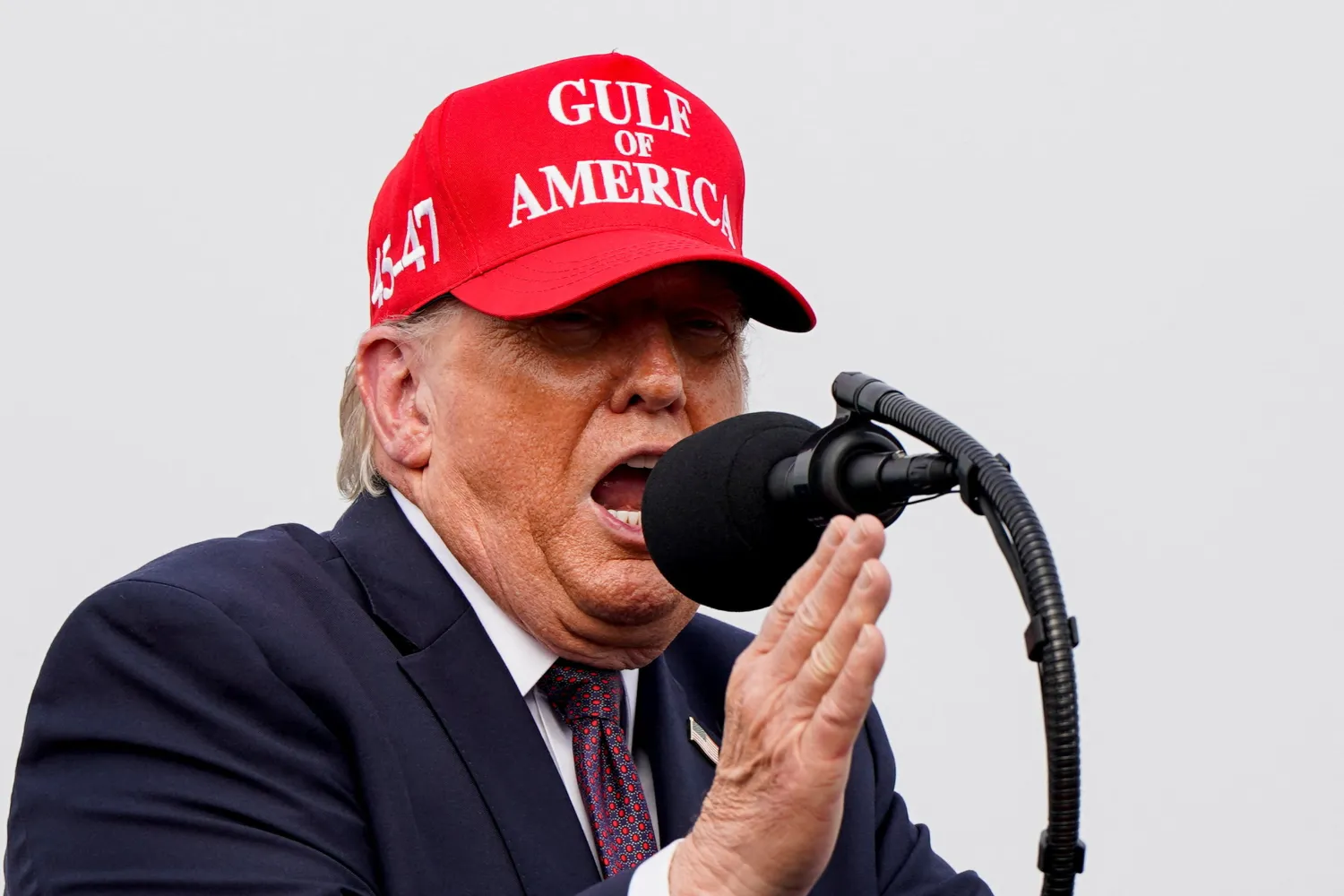
US President Donald Trump delivers remarks during an event at the Port of Corpus Christi in Corpus Christi, Texas, US, February 27, 2026. (Reuters)
TT

Iranian Leaders Want to Talk, Says Trump

US President Donald Trump delivers remarks during an event at the Port of Corpus Christi in Corpus Christi, Texas, US, February 27, 2026. (Reuters)

US President Donald Trump said on Sunday that Iran's new leadership wants to talk to him and that he has agreed, according to an interview with the Atlantic magazine.

"They want to talk, and I have agreed to talk, so I will be talking to ‌them. They ‌should have done it ‌sooner. ⁠They should have given what ⁠was very practical and easy to do sooner. They waited too long," Trump said in the interview from his Florida residence.

Trump did not specify who he would be speaking with or say whether ⁠it would occur on Sunday ‌or Monday.

Iranian ‌President Masoud Pezeshkian said a leadership council composed of ‌himself, the judiciary head and a ‌member of the powerful Guardians Council had temporarily assumed the duties of supreme leader following the death of Ali Khamenei.

Trump said some ‌of the people who were involved in recent talks with the ⁠US are ⁠no longer alive.

"Most of those people are gone. Some of the people we were dealing with are gone, because that was a big - that was a big hit," he was quoted as saying in the interview with Atlantic staff writer Michael Scherer.

"They should have done it sooner, Michael. They could have made a deal. They should've done it sooner. They played too cute."


Iran Insists ‘No Limit’ Its Right to Self-Defense, Says FM

Iran's Foreign Minister Abbas Araghchi addresses a special session of the Conference on Disarmament at the United Nations, aside of US-Iran talks in Geneva, Switzerland, February 17, 2026. (Reuters)
TT

Iran Insists ‘No Limit’ Its Right to Self-Defense, Says FM

Iran's Foreign Minister Abbas Araghchi addresses a special session of the Conference on Disarmament at the United Nations, aside of US-Iran talks in Geneva, Switzerland, February 17, 2026. (Reuters)

A top Iranian official on Sunday rejected President Donald Trump's warning not to retaliate against massive US-Israel bombardments, saying there would be "no limit" to the country's self-defense.

"Nobody can tell us that you don't have any right to defend yourselves. We are defending ourselves whatever it takes, and we see no limit for ourselves to defend our people, to protect our people," Foreign Minister Abbas Araghchi told ABC News.

"What the United States is doing is an act of aggression. What we are doing is the act of self-defense. There are huge differences between these two," he said.


Three US Military Members Killed in Iran Operation

Aircraft attached to Carrier Air Wing (CVW) 9 sit on the flight deck of the US Navy Nimitz-class aircraft carrier USS Abraham Lincoln in support of the Operation Epic Fury attack on Iran, February 28, 2026. (US Navy/Handout via Reuters)
TT

Three US Military Members Killed in Iran Operation

Aircraft attached to Carrier Air Wing (CVW) 9 sit on the flight deck of the US Navy Nimitz-class aircraft carrier USS Abraham Lincoln in support of the Operation Epic Fury attack on Iran, February 28, 2026. (US Navy/Handout via Reuters)

The US military Sunday said three service members have been killed and five seriously wounded in the operation against Iran -- the first casualties of any kind announced on the US side.

The United States launched massive bombardments against Iran and killed its supreme leader Saturday, with attacks ongoing Sunday.

"Three US service members have been killed in action and five are seriously wounded as part of Operation Epic Fury. Several others sustained minor shrapnel injuries and concussions -- and are in the process of being returned to duty," US Central Command (CENTCOM) said in a statement.

"Major combat operations continue and our response effort is ongoing. The situation is fluid, so out of respect for the families, we will withhold additional information, including the identities of our fallen warriors, until 24 hours after next of kin have been notified."

US air and naval forces, together with Israeli forces, are heavily bombarding Iran and President Donald Trump has said the goal is to destroy the country's military capacity.

In response, Iran has fired missiles at targets in Israel and at US military facilities around the region.

Earlier Sunday, Iran's Revolutionary Guards said they had successfully hit the aircraft carrier USS Abraham Lincoln in the Gulf with four ballistic missiles.

However, CENTCOM said the aircraft carrier "was not hit."

"The missiles launched didn't even come close. The Lincoln continues to launch aircraft in support of CENTCOM's relentless campaign to defend the American people by eliminating threats from the Iranian regime," a statement said.


Iranians Grieve, Celebrate, Worry After Khamenei’s Killing

Iranians folding the national flag, march in mourning the day after the assassination of Iran's supreme leader Ali Khamenei, who was killed in joint US and Israeli strikes, in Tehran on March 1, 2026. (AFP)
TT

Iranians Grieve, Celebrate, Worry After Khamenei’s Killing

Iranians folding the national flag, march in mourning the day after the assassination of Iran's supreme leader Ali Khamenei, who was killed in joint US and Israeli strikes, in Tehran on March 1, 2026. (AFP)

Iranians were experiencing a mix of shock, grief and joy after the death of supreme leader Ali Khamenei as Israeli and US strikes extended into a second day Sunday.

The attacks unleashed on Saturday killed Khamenei and top military leaders and prompted Iranian authorities to retaliate with strikes on Israel and across the Gulf.

At the first reports of Khamenei's death, many Iranians erupted into cheers from apartment buildings in the capital Tehran while others blared car horns and blasted music in the streets.

In a reflection of the continued sense of wariness from Iranians about speaking freely of their rulers, none of the people AFP interviewed were willing to give their full name.

"We are on the road and celebrating the news," said a woman in her 40s who had left the capital and headed west as strikes continued to pound Tehran.

Others were stunned into silence.

"I am in shock. I cannot believe what happened," said a Tehran resident in his 30s.

Khamenei, who had final say on all state matters, had been Iran's supreme leader for nearly four decades.

Around 5:00 am on Sunday, Iranian state TV announced Khamenei's death, saying he had "fulfilled his lifelong dream" of martyrdom.

Within hours, Iranian mourners dressed in black took to the streets in Tehran's central Enghelab Square.

Some were angry while others wept.

The grieving crowds chanted "Death to America" and "Death to Israel" and demanded revenge as they carried portraits of their dead leader, religious banners and the Iranian flag.

Similar gatherings took place in the southern city of Shiraz, Yazd and Isfahan in central Iran, Tabriz in the northwest and elsewhere, according to images broadcast on state TV.

- Weeks of mourning -

Iran announced a 40-day mourning period and seven days of public holidays.

As dawn broke, large areas of the usually busy capital were deserted and shops remained shuttered.

There were security checkpoints and police patrolled the streets in numbers that appeared larger than during last year's 12-day war.

An AFP journalist at the northern Islam Qala border crossing saw the Iranian flag completely lowered, and a black flag raised.

The journalist said the crossing was open and people and trucks were passing through normally.

An Iranian cargo driver said he could not see things turning out well and had been "really worried" since he heard of Khamenei's death.

"The situation right now in our country is not good at all," the driver, who requested anonymity for security reasons, told AFP.

"I don't know what will happen in the future, but it's not a good future for us Iranians," he said.

"The Americans have destroyed everywhere they've gone in the world," he said, accusing them of wanting to take over Iran's energy and mineral resources.

- 'Names will change' -

US President Donald Trump threatened on Sunday to unleash "force that has never been seen before" and urged Iran's people to rise up and seize power.

Iran's leadership has remained defiant.

President Masoud Pezeshkian described Khamenei's assassination as a "declaration of war" against Muslims, and particularly against Shiites.

Top security chief Ali Larijani announced transition plans and warned Iran would hit Israel and the United States with a force "they have never experienced before".

Umut, a director of a mining company, spoke to AFP after travelling overnight and passing through the Razi-Kapikoy border crossing into northeastern Türkiye.

The 45-year-old Iranian had been in Tehran as news of Khamenei's death began filtering through.

Although video footage showed some residents of Tehran celebrating on their balconies and at their windows, Umut said "there were no protests on the streets" -- only a rush on fuel stations.

Iranian security forces recently crushed mass protests.

Umut said he was only planning to go home when the situation had died down, "if the streets are safe and there are no explosions at night".

He did not expect Khamenei's death to usher in a transformation.

"Just the names will change, but I think the regime will stay on," Umut said.

"I don't expect any regime change in the short run."