US President Donald Trump arrives at the White House, in Washington, DC, USA, 01 March 2026. EPA/WILL OLIVER
US President Donald Trump has vowed to avenge the deaths of three American soldiers killed during operations against Iran, while warning that more casualties were likely.
The US president also called on Iranians to rise up, saying "America is with you," and warned the country's Revolutionary Guards to surrender or face "certain death."
Trump said he envisaged a four-week military operation against Iran, where US and Israeli strikes have killed the country's supreme leader and crippled its defense capabilities.
"It's always been a four-week process. We figured it will be four weeks or so," he told British newspaper the Daily Mail during a round of interviews.
"As strong as it is, it's a big country, it'll take four weeks -- or less," Trump said.
A senior White House official says that “new potential leadership” in Iran has suggested they are open for talks with the United States. The official, speaking on condition of anonymity to discuss internal administration deliberations, said Trump says he is “eventually” willing to talk, but for now the military operation “continues unabated.”
Outgoing UK PM Says Successor Cannot Spend Less Time on Foreign Affairshttps://english.aawsat.com/world/5291968-outgoing-uk-pm-says-successor-cannot-spend-less-time-foreign-affairs
Outgoing UK PM Says Successor Cannot Spend Less Time on Foreign Affairs
British Prime Minister Keir Starmer is seen at 10 Downing Street in London, Britain, 02 July 2026. EPA/ANDY RAIN / POOL
Outgoing Prime Minister Keir Starmer said whoever succeeds him would have to devote as much time to international crises and diplomacy as he did, rejecting suggestions Britain's next leader could focus more heavily on domestic issues.
Starmer, who announced last month that he would step down after two years in office, said in a BBC interview on Friday that foreign and domestic policy could not be separated as Britain faced an increasingly volatile world.
"There's often this discussion - what's the right balance between dealing with international affairs and dealing with domestic affairs? They're one and the same thing," Reuters quoted him as saying.
Asked whether a prime minister could spend less time on diplomacy than he had, Starmer replied: "No, I don't think it is possible."
Starmer has faced criticism from some opponents over the amount of time he has spent on foreign policy. Lawmaker Andy Burnham, widely expected to replace Starmer, has promised to focus on domestic priorities including living standards, housing, infrastructure and devolving more power to Britain's regions.
In a video titled "With Keir" and posted on X on Saturday, Starmer defended the international focus of his premiership, saying Britain had restored its global standing. He cited support for Ukraine and participation in international coalitions among his key achievements.
"The fact that now other countries look to us for that leadership is something I'm really proud of having delivered in the two years we've had in government," he said.
Starmer also pointed to stabilizing the economy, reducing child poverty and improving the National Health Service among his key accomplishments.
St Petersburg Region Port, Oil Terminal Hit in Major Ukrainian Drone Attackhttps://english.aawsat.com/world/5291964-st-petersburg-region-port-oil-terminal-hit-major-ukrainian-drone-attack
The First Deputy Chief of the General Staff of Russian Armed Forces Lt. Gen. Sergei Rudskoy holds a news briefing in Moscow, Saturday, July 4, 2026. (AP Photo/Pavel Bednyakov)
St Petersburg Region Port, Oil Terminal Hit in Major Ukrainian Drone Attack
The First Deputy Chief of the General Staff of Russian Armed Forces Lt. Gen. Sergei Rudskoy holds a news briefing in Moscow, Saturday, July 4, 2026. (AP Photo/Pavel Bednyakov)
Russia's second city of St Petersburg and the surrounding Leningrad region came under a large Ukrainian drone attack overnight on Saturday, with a local port and oil infrastructure struck, Russian and Ukrainian authorities said.
St Petersburg Governor Alexander Beglov said the city of 6 million had been subjected to a "large-scale" drone attack, with the city's oil terminal struck. He said there were no casualties and that the aftermath of the attack had been dealt with.
Leningrad region Governor Alexander Drozdenko said drones had struck the port of Vysotsk, about 170 km (105 miles) northwest of St Petersburg on the Baltic Sea. The port handles oil, grain, coal and liquefied natural gas.
Drozdenko said 72 drones had been shot down over the Leningrad region.
In a post on Telegram, Ukrainian President Volodymyr Zelenskiy said: "Ukraine's defense forces struck port oil infrastructure that generates revenue for Russia's war, and also hit Kronstadt, an important military target more than 850 km (528 miles) from Ukraine's state border."
According to Reuters, there was no information from Russia on a strike on Kronstadt, a major naval base close to St Petersburg that Ukraine hit in a previous attack on the city in June.
Ukraine has intensified strikes on Russian energy infrastructure this year, causing fuel shortages in parts of Russia.
Elsewhere, the governor of Russia's Bryansk region, as well as the Russian-installed governor of Crimea, said that drone strikes had killed one person in each region, with several more wounded.
South of St Petersburg, the governor of Pskov region said more than 30 drones had been shot down overnight. He reported minor damage and injuries, including to a factory in the town of Velikiye Luki.
Ukraine's general staff on Saturday rejected Russian claims that Moscow's forces had captured the key eastern city of Kostiantynivka.
"We deny this. These are more fake claims," a general staff official said.
The General Staff said Kostiantynivka remained under the control of Ukrainian forces.
"Military units and subunits of the 19th Army Corps of the Eastern Grouping continue to conduct defensive operations on designated lines within the town and on its approaches," it said.
US Warned Iran About Israel’s Aims to Assassinate Leadershttps://english.aawsat.com/world/5291935-us-warned-iran-about-israel%E2%80%99s-aims-assassinate-leaders
Iran's Speaker of Parliament, Mohammed Bagher Ghalibaf (L), and the Minister of Foreign Affairs of Iran, Abbas Araghchi (C), attend a meeting at the Bürgenstock resort in Obbürgen, near Lucerne, Switzerland, Sunday, 21 June 2026. EPA/URS FLUEELER
US Warned Iran About Israel’s Aims to Assassinate Leaders
Iran's Speaker of Parliament, Mohammed Bagher Ghalibaf (L), and the Minister of Foreign Affairs of Iran, Abbas Araghchi (C), attend a meeting at the Bürgenstock resort in Obbürgen, near Lucerne, Switzerland, Sunday, 21 June 2026. EPA/URS FLUEELER
Senior US officials feared that Israel intended to assassinate Iran’s top negotiators as the Trump administration pursued a high-stakes deal to end the war there and reopen the Strait of Hormuz, current and former officials familiar with the matter told The Washington Post.
The officials said the US worried that Israel might assassinate Mohammad Bagher Ghalibaf, the Iranian parliamentary speaker who is leading negotiations with the US, or Foreign Minister Abbas Araghchi, who has also been a public face of the talks.
They said the concern was so serious that this spring the United States took the unusual step of asking intermediaries to warn Tehran that Israel might attempt to assassinate the two leaders. “If these two men are killed, the pragmatists would be gone,” a US official told the newspaper.
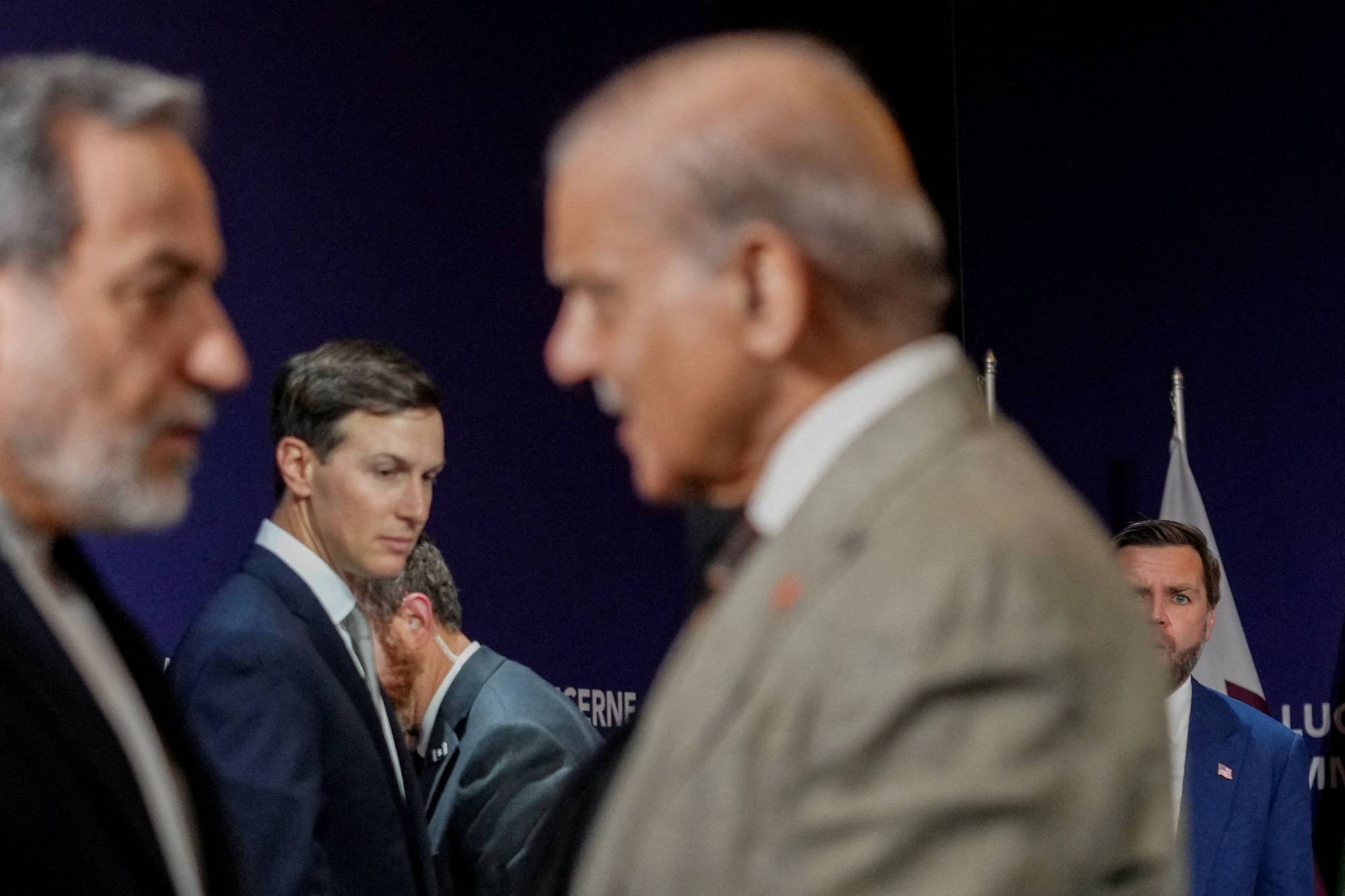
US Vice President JD Vance looks on next to US President Donald Trump's son-in-law Jared Kushner, as Iran's Foreign Minister Abbas Araqchi shakes hands with Pakistan's Prime Minister Shehbaz Sharif, prior to a quadrilateral meeting between the United States, Iran, Pakistan and Qatar at the Burgenstock luxury hotel complex overlooking Lake Lucerne, Switzerland, on June 21, 2026, as part of high-level talks aimed at advancing a deal to end the Middle East conflict. (Photo by Nathan Howard / POOL / AFP)
“This illustrates the divergence in war aims between the United States and Israel, as well as the Israeli prime minister's fundamental willingness to torpedo any negotiation the United States might conclude,” Aaron David Miller, a former State Department official who advised both Republican and Democratic administrations, told the newspaper.
The newspaper noted that Israel's embassy in Washington declined to comment.
US officials had also urged Israeli counterparts as early as March not to target Iran's political leadership while diplomatic efforts were underway, according to a diplomat cited by the newspaper.
A White House official told The Washington Post, “The president wants the peace process to play out.”
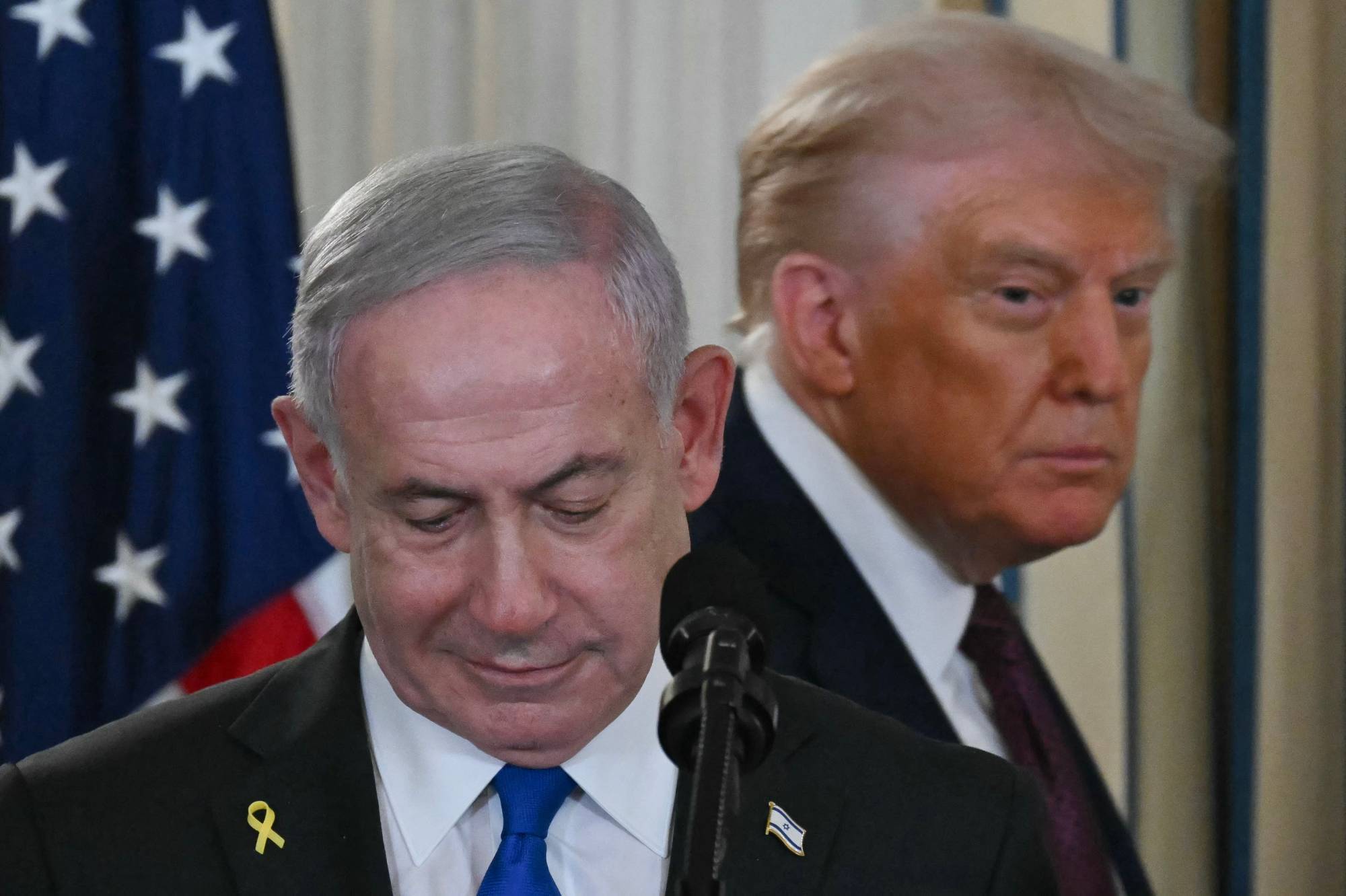
Trump and Netanyahu during a press conference at the White House on September 29, 2025 (AFP)
According to the newspaper, while both countries initially backed regime change in Iran after the conflict began on Feb. 28, US officials later concluded that Iran’s political and military establishment would likely remain in power and shifted focus toward securing a negotiated settlement.
It said tensions deepened after Israel allegedly assassinated senior Iranian national security official Ali Larijani in March.
“The turning point wasn’t the assassination of the supreme leader, it was the assassination of Larijani,” a Western official was quoted as saying. “The US was looking for an Iranian official to deal with an all of a sudden he was gone.”
According to the Washington Post, Araghchi and Ghalibaf later became Washington’s principal interlocutors in securing an initial ceasefire in April and negotiating a broader framework agreement in June to end the conflict.
لم تشترك بعد
انشئ حساباً خاصاً بك لتحصل على أخبار مخصصة لك ولتتمتع بخاصية حفظ المقالات وتتلقى نشراتنا البريدية المتنوعة