


Russia Condemns US-Israel Strikes on Iran as ‘Unprovoked Act of Armed Aggression’

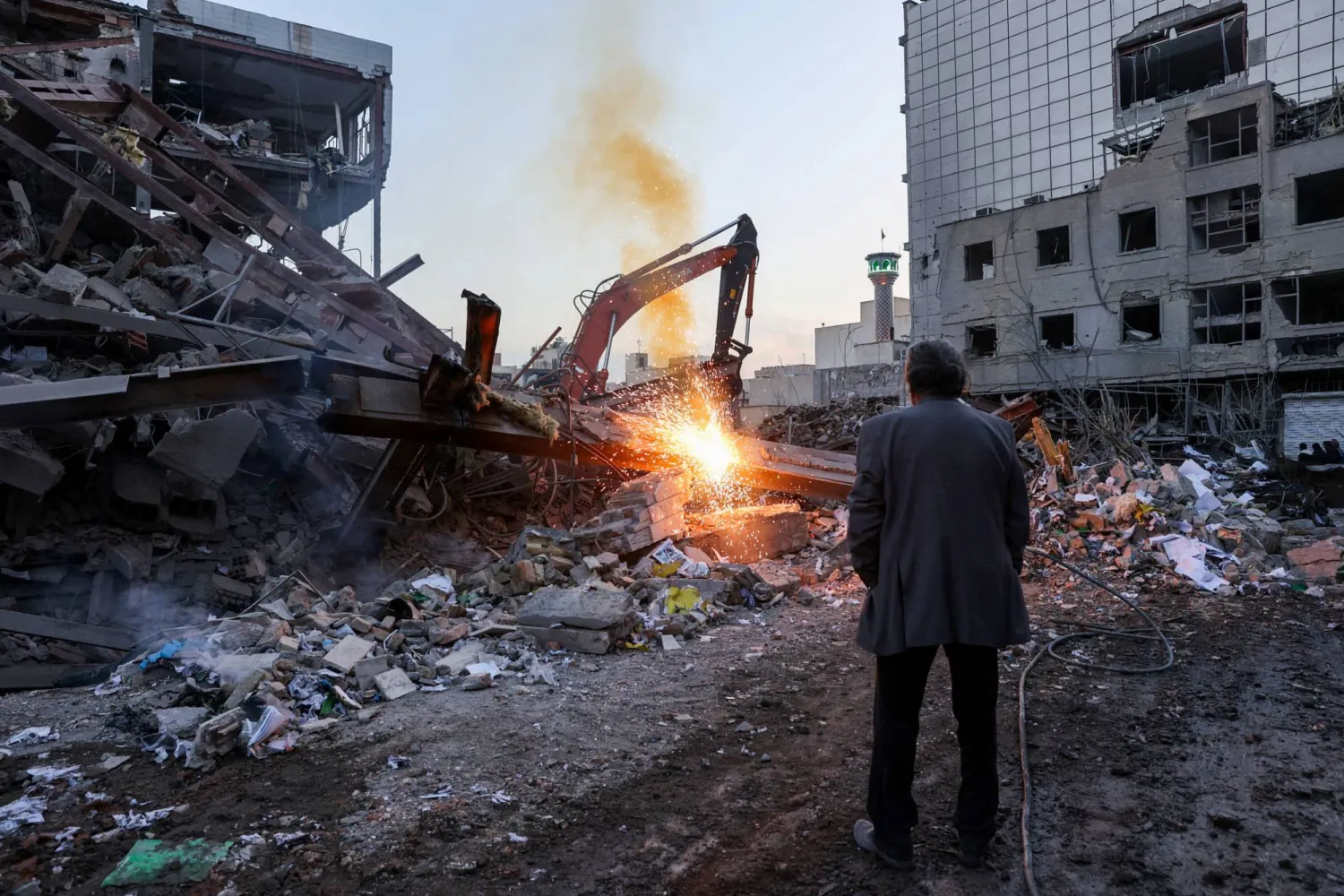
Aftermath of an Israeli and the US strike on a police station, amid the US-Israel conflict with Iran, in Tehran, Iran, March 2, 2026. Majid Asgaripour/WANA (West Asia News Agency) via Reuters
TT

Russia Condemns US-Israel Strikes on Iran as ‘Unprovoked Act of Armed Aggression’

Aftermath of an Israeli and the US strike on a police station, amid the US-Israel conflict with Iran, in Tehran, Iran, March 2, 2026. Majid Asgaripour/WANA (West Asia News Agency) via Reuters

Russia on Saturday condemned the US-Israeli strikes on Iran as “a pre-planned and unprovoked act of armed aggression against a sovereign and independent UN member state,” demanding an immediate halt to the military campaign and a return to diplomacy.

In a statement posted to Telegram, the Foreign Ministry accused “Washington and Tel Aviv” of “hiding behind” concerns about Iran’s nuclear program while actually pursuing regime change.

It warned the attacks risked triggering a “humanitarian, economic and possibly radiological catastrophe” in the region and accused the US and Israel of “plunging the Middle East into an abyss of uncontrolled escalation.”

Russia has emerged as a key trade partner and supplier of weapons and technologies for Iran, which has faced bruising international sanctions. Though Russia’s Foreign Ministry was quick to condemn the US-Israeli attacks, the Kremlin will likely carefully assess its response following a recent warming of ties between Moscow and Washington.

Russian President Vladimir Putin has praised US President Donald Trump’s efforts to mediate an end to the conflict in Ukraine, and Moscow and Washington have discussed ways to revive their economic ties.

Russian Foreign Minister Sergei Lavrov spoke by phone with Iranian Foreign Minister Abbas Araghchi, Russia's Foreign Ministry said. Araghchi briefed Lavrov on Iran’s attempts to repel the attacks and said Iran would seek to convene an urgent UN Security Council session, it said. Lavrov reiterated Russia’s condemnation of the US-Israeli strikes and Moscow’s readiness to help broker peace.

Kremlin spokesman Dmitry Peskov said Putin discussed the situation in Iran with Russia's Security Council via videoconference, but did not give details.

In the Foreign Ministry statement, Moscow called the bombing of nuclear facilities under International Atomic Energy Agency safeguards “unacceptable” and said it stood ready to help broker a peaceful resolution, while placing full responsibility for the escalation on the United States and Israel.

"Responsibility for the negative consequences of this manmade crisis, including an unpredictable chain reaction and spiraling violence, lies entirely with them," the statement said.

Russia's Foreign Ministry also condemned what it called “the serial nature of destabilizing attacks carried out by the US administration," accusing the US of attacking "the international legal pillars of the world order."

Russia has maintained a delicate balancing act in the Middle East for decades, trying to navigate its warm relations with Israel even as it has developed strong economic and military ties with Iran.

Iranian forces and Russian sailors conducted annual drills in the Gulf of Oman and the Indian Ocean last week aimed at “upgrading operational coordination as well as exchange of military experiences,” Iran’s state-run IRNA news agency reported.

Putin and his Iranian counterpart, Masoud Pezeshkian, signed a broad cooperation pact in January last year as their countries deepened their partnership in the face of stinging Western sanctions.

The West alleges that in 2022, Russia and Iran signed a $1.7 billion deal for Shahed drones after Putin sent troops into Ukraine, and the US also believes Iran has transferred short-range ballistic missiles, but neither Moscow nor Tehran ever acknowledged the actions.

Ukrainian President Volodymyr Zelenskyy voiced support for the strikes on Iran, calling it "an accomplice of Putin” for supplying Moscow with Shahed drones and the technology to produce them and other weapons during its four-year war against Ukraine.

Russia and Iran also pooled their efforts to shore up Bashar al-Assad’s government during Syria’s civil war, but failed to prevent his downfall after a lightning offensive by the opposition. Assad and his family fled to Russia.

Some observers in Moscow argue that the focus on the confrontation between Israel and Iran could distract global attention from the war in Ukraine and play into Russia’s hands by potentially weakening Western support for Kyiv.



EU Moves to Sanction Iran over Hormuz Blockade

Traffic through Hormuz, a vital global shipping conduit, has come under Iranian control since the outbreak of war with Israel and the United States on February 28. (Photo by AFP) /
TT

EU Moves to Sanction Iran over Hormuz Blockade

Traffic through Hormuz, a vital global shipping conduit, has come under Iranian control since the outbreak of war with Israel and the United States on February 28. (Photo by AFP) /

European Union nations moved Friday towards imposing sanctions on Iranian officials and others responsible for blocking the Strait of Hormuz, the EU said.

Tehran effectively closed the key shipping lane for global gas and oil in retaliation to US-Israeli strikes launched in February.

Deeming the blockade "contrary to international law", EU governments took a technical step to extend the scope of its existing Iran sanctions regime allowing for more individuals to be targeted under it.

"The EU will now be able to introduce further restrictive measures in response to Iran's actions undermining the freedom of navigation in the Strait of Hormuz," the European Council representing EU nations said.

Brussels' punitive measures on Iran previously targeted the country's military support for Russia in its war against Ukraine and for armed groups across the Middle East.

The European Union has also imposed sanctions over human rights violations in the country.

The EU did not immediately name any individual or entities that would be targeted by the new sanctions, consisting of travel bans and asset freezes.

EU citizens and companies will also be banned from making funds, financial assets or other economic resources available to those listed.

The Iran war and the closure of Hormuz, which normally carries a fifth of global oil production, have sent ripples across the global economy, sending energy prices soaring.


Rubio Cites Some Progress on Iran Talks but 'We're Not There Yet'

United States Secretary of State Marco Rubio during a signing ceremony on the sidelines of a meeting of NATO foreign ministers in Helsingborg, Sweden, Friday, May 22, 2026. Julia Demaree Nikhinson/Pool via REUTERS
TT

Rubio Cites Some Progress on Iran Talks but 'We're Not There Yet'

United States Secretary of State Marco Rubio during a signing ceremony on the sidelines of a meeting of NATO foreign ministers in Helsingborg, Sweden, Friday, May 22, 2026. Julia Demaree Nikhinson/Pool via REUTERS

The United States has seen some progress in talks with Iran and is in constant communication with the Pakistani mediators, but there is more work to be done, Secretary of State Marco Rubio said on Friday.

"There's been some progress. I wouldn't exaggerate it. I wouldn't diminish it," Rubio told reporters after a NATO ministers meeting in Sweden.

"There's more work to be done," he added. "We're not there yet. I hope we get there."

President Donald Trump would prefer to do a good deal, Rubio said. The core concern remains that Iran cannot have a nuclear weapon and the issue of future uranium enrichment needs to be discussed as well as reopening the Strait of Hormuz, he said.

"We're dealing with a very difficult group of people, and if it doesn't change, then the president's been clear he has other options," Rubio said.

"He prefers the negotiated option and having a good deal, but he himself has expressed concern that maybe that's not possible. But we're going to keep trying."

Rubio said the United States was in constant communication with the Pakistanis who are facilitating the talks with Iran.

There was no specific ask from the US on Friday for help from NATO on the Strait of Hormuz but there needs to be a Plan B if Iran refuses to reopen the supply route, Rubio said after the close of the NATO meeting.


Netherlands to Ban Imports from Israel's Jewish Settlements

The Neve Yaakov settlement north of East Jerusalem, with the Israeli wall visible separating the Palestinian neighborhood of al-Ram in the West Bank (AFP). 
TT

Netherlands to Ban Imports from Israel's Jewish Settlements

The Neve Yaakov settlement north of East Jerusalem, with the Israeli wall visible separating the Palestinian neighborhood of al-Ram in the West Bank (AFP). 

The Dutch government has agreed to impose a ban on imports of goods produced in Jewish settlements in Israeli-occupied Palestinian territories, Dutch Prime Minister Rob Jetten said on Friday.

The ban is meant to prevent "any contribution through economic activities by the Netherlands to the unlawful occupation", Jetten said.

The previous Dutch government last year said it was planning the ban, which is now expected to take effect in the second half of the year.

The Netherlands is a leading global buyer of Israeli goods, but the government has never disclosed what volume of goods are currently imported from Jewish settlements.

Most world powers deem Israel's settlements, on land it captured in a 1967 war, illegal. Numerous UN Security Council resolutions have called on Israel to halt all settlement activity.

Israel disputes this, saying it has historical and biblical ties to the land.