


Satellite Imagery Shows Apparent Attack on Iranian Nuclear Site, Report Says

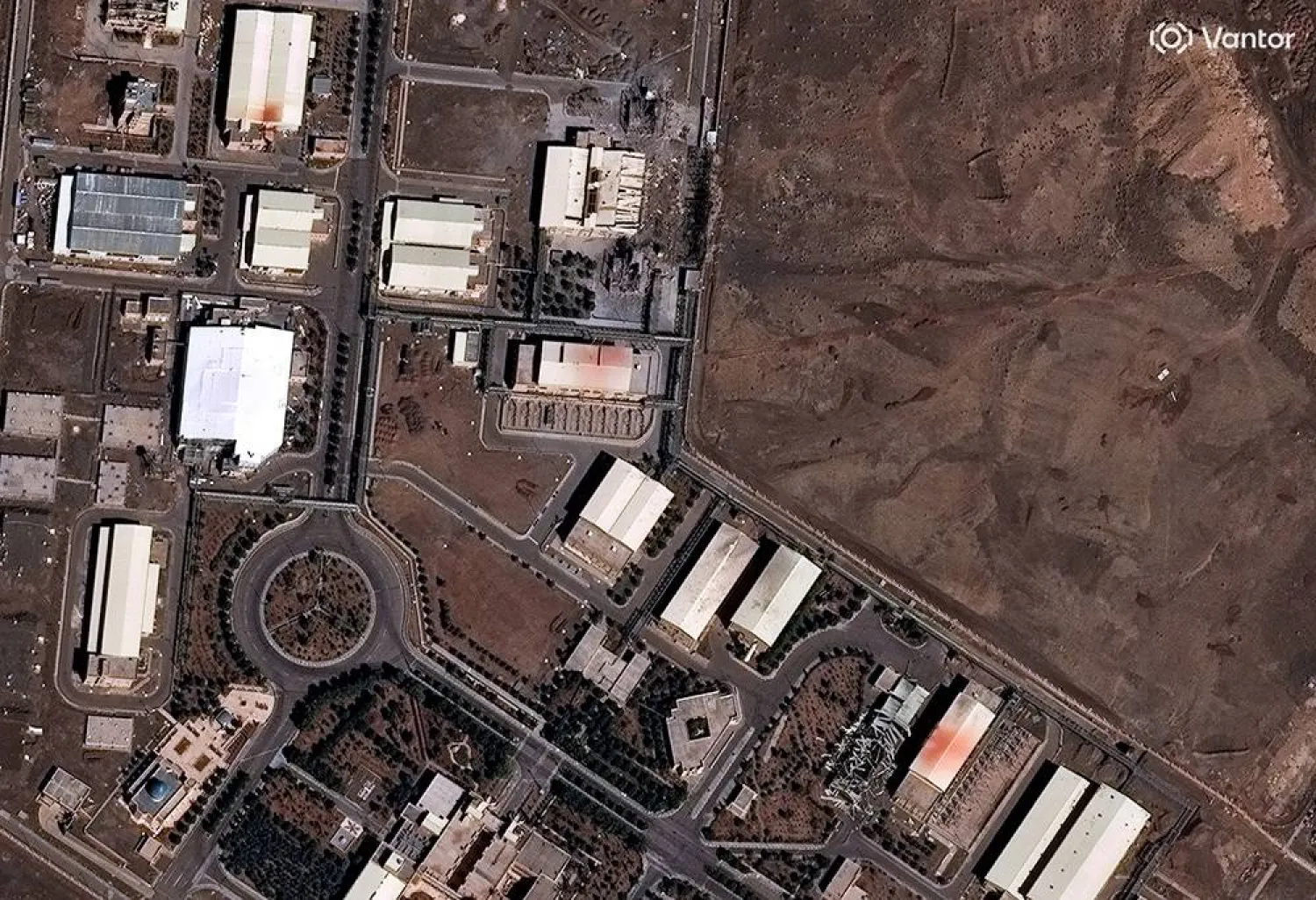
A satellite image shows a closer view of the Natanz Nuclear Facility with new building damage, amid the US-Israeli conflict with Iran, near Natanz, Iran, March 2, 2026. (Vantor/Handout via Reuters)
TT

Satellite Imagery Shows Apparent Attack on Iranian Nuclear Site, Report Says

A satellite image shows a closer view of the Natanz Nuclear Facility with new building damage, amid the US-Israeli conflict with Iran, near Natanz, Iran, March 2, 2026. (Vantor/Handout via Reuters)

Commercial satellite imagery has captured what appears to be the first known strikes on an Iranian nuclear site since the start of the US-Israeli air operation, an independent policy institute said on Monday.

The Institute for Science and International Security said imagery produced by Colorado-based Vantor showed two strikes on access points to the underground uranium enrichment plant at Natanz, which was hit by the US last June.

David Albright, a former UN nuclear inspector and founder of the institute, said the strikes appeared to have occurred sometime between Sunday afternoon and Monday morning local time, based on the satellite imagery his group reviewed.

He was unable to identify whether the US or Israel hit the Natanz complex, one of the main facilities of Iran's nuclear program.

He credited Ben Tzion Macales, an Israeli geo-analyst, as being ‌the first to ‌find satellite imagery of the Natanz strikes.

The US and Israel launched their air ‌war ⁠against Iran early Saturday, ⁠triggering Iranian retaliatory strikes around the region.

Albright's findings appeared to corroborate an earlier statement by Reza Najafi, Iran's envoy to the International Atomic Energy Agency, that Natanz was hit on Sunday. Najafi was disputing a comment by IAEA chief Raphael Grossi, who said there was no sign that any nuclear site had been hit.

Albright said it was likely that Grossi had relied on imagery produced before the pictures obtained by his institute.

The IAEA did not immediately respond to a request for comment. The White House and US Central Command also did not immediately respond.

Iran's nuclear program is among the reasons Israel and the US have given for ⁠the attacks, alleging Iran was getting too close to being able to eventually make ‌a nuclear bomb. Iran has repeatedly denied seeking a nuclear arsenal.

Albright's report ‌said Vantor's imagery showed that three buildings at Natanz had been destroyed. Two were personnel entrances to two underground halls housing thousands of centrifuges, ‌machines that enrich uranium for use in power plants or weapons depending on the duration.

Even though the halls ‌were rendered inoperable by the US attack in June, the strikes could indicate that the halls still contained "recoverable centrifuges" or other related equipment, the report said.

The third building destroyed covered the only vehicle access ramp to the underground halls, it said.

Grossi said in a statement to a meeting of the IAEA's 35-nation board of governors that the agency had no indication that "any of the nuclear installations ... have been ‌damaged or hit."

Moments after Grossi's remarks, Najafi told reporters outside that Natanz had been attacked.

"Again they attacked Iran's peaceful, safeguarded nuclear facilities yesterday," Najafi said. Asked by Reuters which facilities ⁠were hit, he replied: "Natanz" and ⁠left.

IAEA HAS LIMITED CONTACT WITH IRAN

While the IAEA's crisis-response center has been unable to reach Iran's nuclear regulatory authorities, there has been some contact with Iranian officials, Grossi told a press conference.

"We are, of course, in conversation with Iran, but at the moment, it's very limited. Until last Thursday, it was very intense," he said, adding that while the IAEA has no staff in Iran at the moment, it is watching satellite images closely.

Tehran has not let the IAEA return to its bombed facilities since they were attacked in June.

CALLS FOR DIALOGUE TO RESUME

Natanz housed facilities including two uranium-enrichment plants attacked in June - an above-ground one the IAEA says was destroyed and the underground facility containing the two centrifuge halls that were at least badly damaged at the time.

Asked about Najafi's remarks, Grossi stood firm at his later press conference, saying, "I will not get into a polemic on that. We stand by what I said before."

Grossi was in Geneva for the last two rounds of Oman-mediated talks between Iran and the United States, discussing nuclear specifics with both sides.

"An understanding eluded the parties this time. I am sure we are, quite understandably, feeling a strong sense of frustration," Grossi told the board.


European States Move to Secure Red Sea Navigation, Protect Cyprus

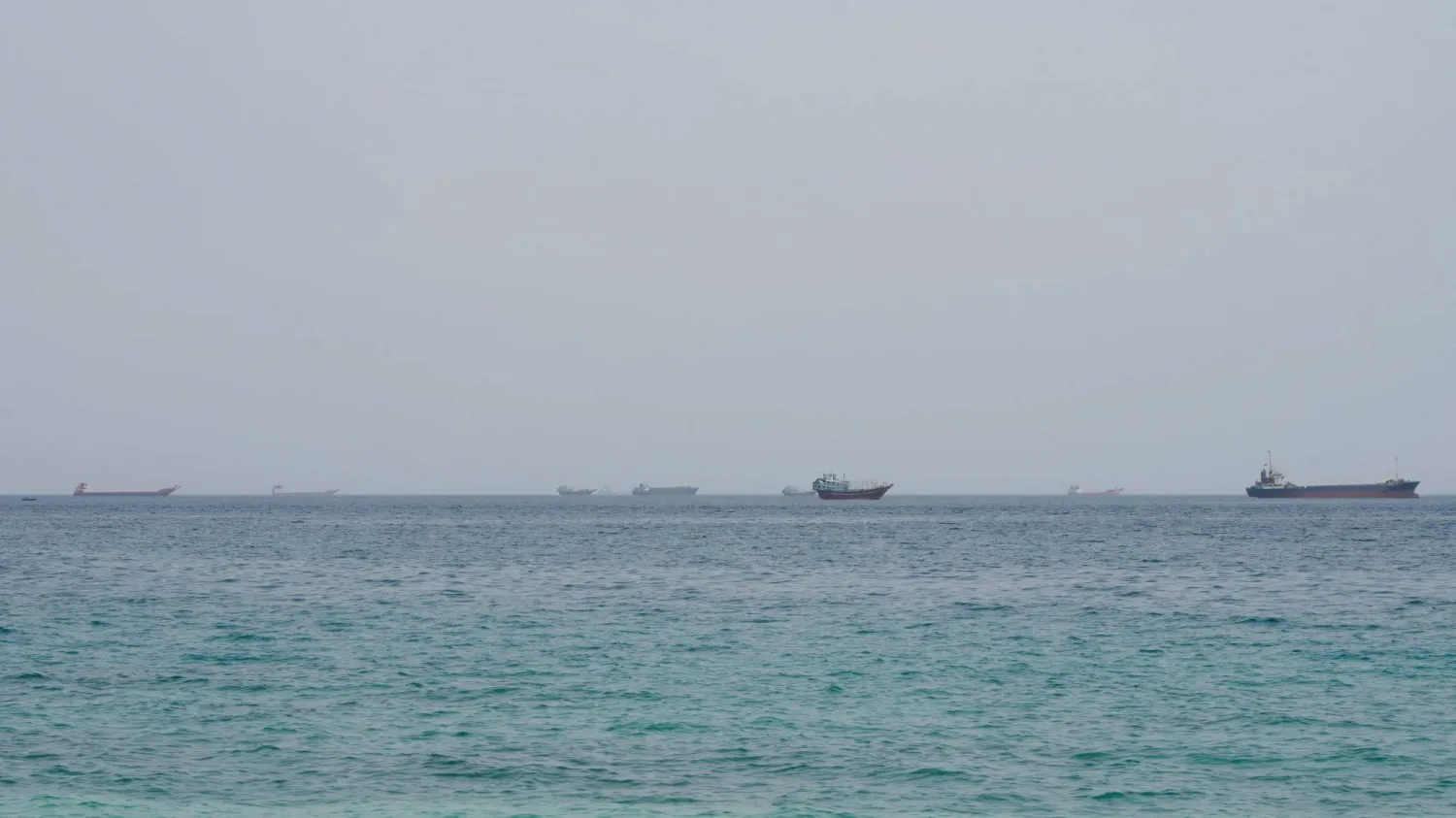
This handout satellite image taken by 2026 Planet Labs PBC shows damage at the military harbor in Iran's southern port of Bandar Abbas along the Strait of Hormuz on March 4, 2026. The United States and Israel launched strikes against Iran on February 28, with the killing of Iran's supreme leader and the Islamic republic retaliated with barrages of missiles at Gulf states and Israel. (Photo by 2026 Planet Labs PBC / AFP)
TT

European States Move to Secure Red Sea Navigation, Protect Cyprus

This handout satellite image taken by 2026 Planet Labs PBC shows damage at the military harbor in Iran's southern port of Bandar Abbas along the Strait of Hormuz on March 4, 2026. The United States and Israel launched strikes against Iran on February 28, with the killing of Iran's supreme leader and the Islamic republic retaliated with barrages of missiles at Gulf states and Israel. (Photo by 2026 Planet Labs PBC / AFP)

European powers said on Thursday they would work together to safeguard shipping in the Red Sea and send naval and other assets to protect Cyprus as the expanding US–Iran war entered its sixth day.

The conflict - which has widened beyond Gulf states to the Mediterranean, where a drone strike hit a British air base on Cypruson Monday, and as far afield as Asia - has convulsed global markets and sent oil and gas prices soaring.

Italy, Spain, France and the Netherlands will send naval assets to protect Cyprus in the coming days, Rome's Defense Minister Guido Crosetto told parliament, Reuters reported.

French President Emmanuel Macron spoke with the prime ministers of Italy and Greece on Thursday and "they all agreed to step up cooperation to safeguard shipping in the Red Sea and to coordinate the dispatch of military assets to Cyprus," a senior source said.

The plans ruled out any direct involvement in the war, underlining the delicate balance European governments are seeking to strike over the conflict involving their long-term ally the United States.

"We are not at war and we do not want to enter a war," Italian Prime Minister Giorgia Meloni said in a radio interview on Thursday.

On Cyprus, British Defense Secretary John Healey met his Cypriot counterpart on Thursday to discuss plans to further reinforce air defences.

“The longstanding friendship between the UK and the Republic of Cyprus is strong in the face of Iranian threats,” Healey said on X.

Britain has said it will deploy a destroyer to the region along with additional helicopters equipped with counter-drone capabilities, although HMS Dragon is not expected to arrive until next week.

Britain has not joined the US and Israel in taking offensive action against Iran, though it has taken part in defensive operations including shooting down drones. The government has also given the United States permission to launch limited defensive actions from some British bases.

Western officials believe a drone that hit the Akrotiri base on Cyprus was most likely launched by Iran-backed Hezbollah from Lebanon.

Both Britain and the Cypriot administration have said the island would not be used for attacks on Iran.

SPAIN TO SEND FRIGATE

Spain, which had so far refrained from involving itself in defensive operations, said on Thursday it will send its Christopher Columbus frigate used for air defense to Cyprus.

The ship will assist the Patriot missile interceptor system that Spain deploys in Türkiye.

The Dutch government said on Wednesday it was weighing a request to help secure maritime traffic threatened by the escalating crisis.

Meloni said on Thursday Rome would respond to requests from Gulf nations seeking air defense equipment to counter Iranian air strikes, citing the need to protect Italian citizens and troops in the region.

"These are people we want to, and must, protect," she told radio station RTL 102.5.

Sources told Reuters this week that supplies could include SAMP/T surface-to-air missile batteries, although no final decision has been taken and Rome has not specified which countries would receive the aid.

A French military official said on Thursday that Paris has authorized a temporary presence of US aircraft at certain bases in France, provided they do not take part in operations against Iran.

The agreement did not cover French bases in the Middle East, the official said. "Given the context, France demanded that these assets strictly support the defense of our partners in the region," the official said.


Man Accused of Plot to Kill Trump Says Iran Pressured Him

FILE - This image provided by the Justice Department, contained in the complaint supporting the arrest warrant, shows Asif Merchant. (Justice Department via AP, File)
TT

Man Accused of Plot to Kill Trump Says Iran Pressured Him

FILE - This image provided by the Justice Department, contained in the complaint supporting the arrest warrant, shows Asif Merchant. (Justice Department via AP, File)

A Pakistani man accused of plotting to kill US politicians including President Donald Trump said Wednesday he was pressured by Iran's Revolutionary Guard Corps to devise the murder-for-hire scheme, according to US media.

Asif Raza Merchant, 47, was charged in September 2024 with seeking to hire a hitman to assassinate unidentified US politicians. He pleaded not guilty to the charges.

The Revolutionary Guards have previously sought to kill top US officials, such as Trump following the 2020 killing of one of their commanders, Qasem Soleimani, by the United States.

During his trial Wednesday, Merchant testified that he was forced into the plot to protect his family in the Iranian capital Tehran from the Guards, adding that he thought he would get caught before anyone was killed, multiple media outlets reported.

He said he was never ordered to kill a specific person but noted his Iranian contact had mentioned three people in connection with the plot: Trump, former president Joe Biden and former UN ambassador Nikki Haley.

"My family was under threat, and I had to do this," Merchant told the court through an Urdu interpreter, according to the Washington Post.

"I was not wanting to do this so willingly."

Merchant's trial comes as the US and Israel carry out attacks on Iran, which have killed Iranian supreme leader Ali Khamenei.

US officials previously said Merchant had "close ties to Iran" and described his alleged plot as "straight out of the Iranian regime's playbook."

Merchant said this week he began working with a member of the Guards about 2022, when the man asked him if he was "interested in doing some work with the Iranian government," the New York Times reported.

He was eventually instructed to orchestrate a plot that involved arranging protests, stealing documents, laundering money and potentially having someone killed.

The Times reported that Merchant said he had been worried about what would happen to his wife and adopted daughter in Iran, so he agreed to the operation.

He was arrested after reportedly trying to hire hitmen that turned out to be undercover FBI agents.


Syrian Man Handed 13-year Sentence for Berlin Holocaust Memorial Stabbing

(FILES) Members of the emergency services use a crane as they work at the scene where a person was stabbed near the memorial of the murdered jews of Europe in Berlin on February 21, 2025. (Photo by Odd ANDERSEN / AFP)
TT

Syrian Man Handed 13-year Sentence for Berlin Holocaust Memorial Stabbing

(FILES) Members of the emergency services use a crane as they work at the scene where a person was stabbed near the memorial of the murdered jews of Europe in Berlin on February 21, 2025. (Photo by Odd ANDERSEN / AFP)

A Syrian refugee who stabbed a tourist at Berlin's Holocaust memorial last year has been sentenced to 13 years in prison on charges of attempted murder, among others, said a Berlin court spokesperson on Thursday.

The now 20-year-old ⁠ISIS supporter ⁠used a knife to stab a 30-year-old Spanish tourist in the neck at the memorial in the heart of ⁠the German capital.

He inflicted life-threatening injuries that required the man to undergo emergency surgery and be placed in an induced coma.

Prosecutors said at the time that the Syrian national appeared to have been planning to ⁠kill ⁠Jews for several weeks, apparently motivated by the Middle Eastern conflict, which is why he chose the location.

The memorial commemorates the murder of 6 million Jews by Adolf Hitler's Nazis during World War Two.