


Israel Eases Restrictions as Iranian Missile Fire Drops

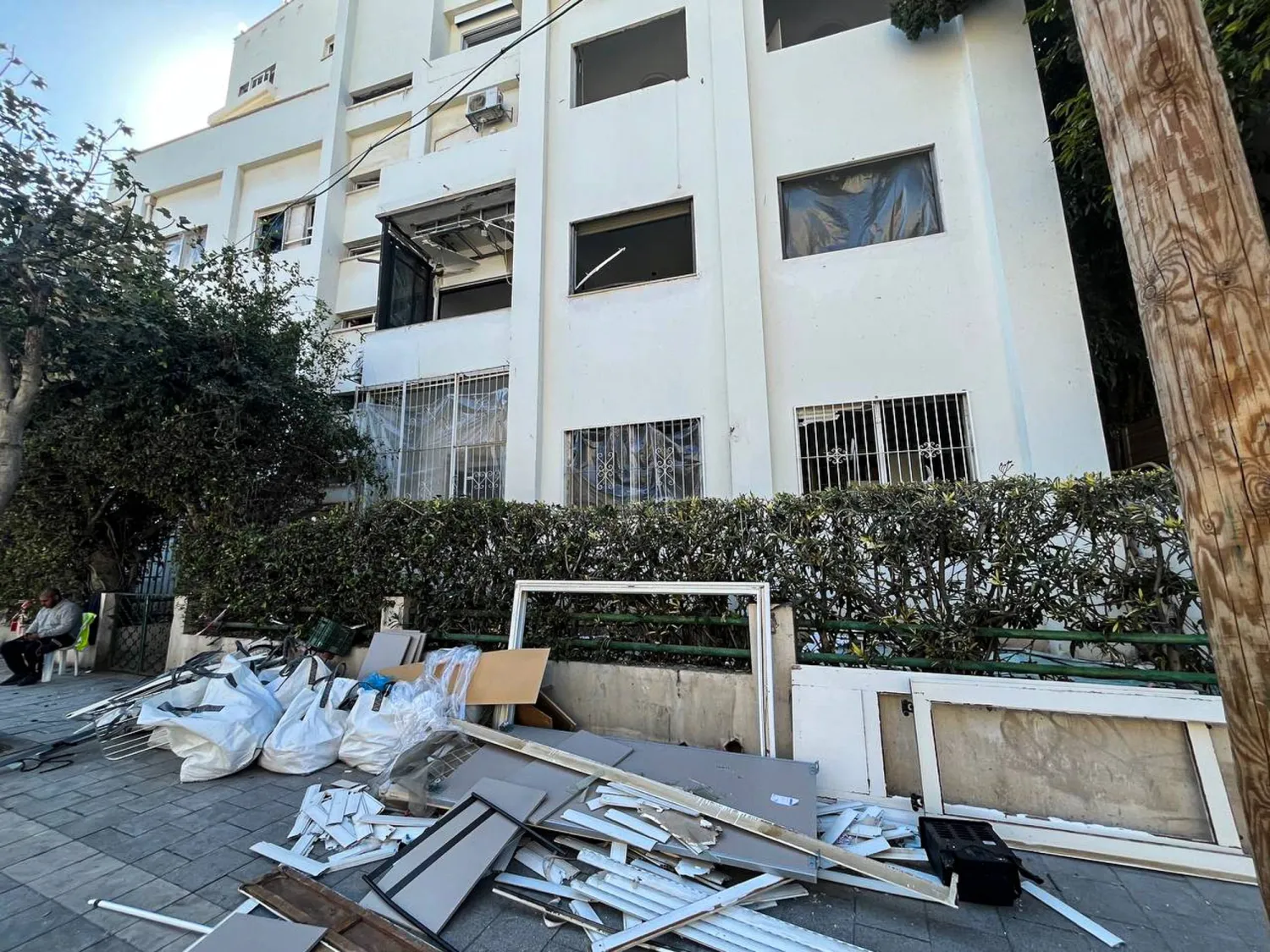
 05 March 2026, Israel, Tel Aviv: A building suffers damage from missile fragments after an Iranian military strike. (TASS via ZUMA Press/dpa)
05 March 2026, Israel, Tel Aviv: A building suffers damage from missile fragments after an Iranian military strike. (TASS via ZUMA Press/dpa)
TT

Israel Eases Restrictions as Iranian Missile Fire Drops

 05 March 2026, Israel, Tel Aviv: A building suffers damage from missile fragments after an Iranian military strike. (TASS via ZUMA Press/dpa)
05 March 2026, Israel, Tel Aviv: A building suffers damage from missile fragments after an Iranian military strike. (TASS via ZUMA Press/dpa)

Life has started to partially return to normal in Israel as the number of missiles fired from Iran has dropped sharply and been partly replaced by attacks from Lebanon’s Hezbollah, which Israeli officials say have had a more limited impact.

Despite continuing military operations against Iran and Lebanon, Israel has decided to partially reopen Ben Gurion International Airport and resume some economic activities.

Officials said that if the current lower level of missile attacks continues, the country will shift from the strict emergency policy known as the “Red Status” under which most economic activity is halted except for essential services and all educational activities are suspended to a more relaxed “Orange Status.” The change is expected to take effect starting Sunday.

Figures show that the number of Iranian missile barrages has steadily decreased. On the first day of the war there were 25 waves of attacks, rising to 62 on the second day, then falling to 24 on the third day, seven on the fourth, and ten on the fifth.

Meanwhile, Hezbollah began launching its own attacks from Lebanon on Monday. It carried out 10 missile and drone strikes on the third day of the conflict, 14 on the fourth day, and 39 on the fifth.

Air superiority

The Israeli military has intensified airstrikes on Lebanon and has urged residents of the southern suburbs of Beirut to evacuate, hoping to weaken Hezbollah’s military capabilities. At the same time, Israeli forces have expanded joint military operations with the United States against Iran.

Israeli generals say they have achieved significant air superiority over western Iran and above Tehran, and they expect to gain full control of Iranian airspace soon. Under such conditions, US aircraft would be able to operate more effectively over eastern Iran.

Officials added that Israel’s targeted assassinations of senior figures have not stopped and will continue. They also said US forces expect to eliminate Iran’s naval capabilities within two days.

Israeli officials acknowledged that these achievements would not have been possible without close cooperation with the United States.

Military estimates attribute the gradual decline in Iranian missile launches in recent days to the results of heavy airstrikes: more than 2,000 conducted by the US Air Force and more than 1,500 by Israel. According to these estimates, the strikes have killed 48 senior figures and caused 926 deaths and 6,186 injuries in Iran.

In Lebanon, the toll is reported as 72 dead and 347 wounded. Around 60,000 residents of southern Lebanon have also been displaced from their homes.

Military deception

However, some Israeli assessments urge caution, warning that Iran may have deliberately reduced the intensity of its attacks as part of a military deception aimed at preparing a longer war of attrition against Israel and US forces.

According to these assessments, both Iran and Hezbollah possess large stockpiles of weapons, making it unlikely they would leave them unused.

Israeli language media reports that the Israeli military is also monitoring the possibility that the conflict could expand to additional fronts, including Yemen and the Red Sea. The Houthi militia is believed to possess missile capabilities that could be used in the war. The reasons for its limited involvement so far remain unclear, but Israeli forces are preparing for the possibility that this could change.

According to Ron Ben-Yishai, a strategic analyst at the Israeli newspaper Yedioth Ahronoth, the fifth day of the war saw a notable development: coordinated attacks launched simultaneously from Iran and Lebanon in an apparent attempt to overwhelm Israel’s air defense systems.

Analysts said the synchronized attacks indicate Iran’s determination to continue the conflict and suggest a clearer involvement by Hezbollah. While the group initially appeared cautious about entering the war fully, the latest attacks from Lebanon point to a growing role in the military response.

Strategic challenges

Israeli assessments also suggest that both Iran and Hezbollah are facing increasing strategic challenges. Continued Israeli strikes and mounting pressure on Iran, Hezbollah’s main supporter, raise questions about the group’s political and military future and whether it will continue operating as part of what Israel calls the “Iranian axis” or adjust its strategy to preserve its position in Lebanon.

Some analysts believe the prolonged conflict could alter the balance of power inside Lebanon. At the same time, Israeli and US expectations that intense strikes against Iranian leadership figures and security institutions might trigger widespread internal unrest have not yet materialized. So far, there have been no major public protests or significant defections within Iran’s security forces.



Putin Calls for Immediate Halt to Iran Conflict

 Russian President Vladimir Putin attends a meeting with women representing various professional fields to congratulate them on the upcoming International Women's Day at the Kremlin in Moscow, Russia March 5, 2026. (Sputnik/Valeriy Sharifulin/Pool via Reuters)
Russian President Vladimir Putin attends a meeting with women representing various professional fields to congratulate them on the upcoming International Women's Day at the Kremlin in Moscow, Russia March 5, 2026. (Sputnik/Valeriy Sharifulin/Pool via Reuters)
TT

Putin Calls for Immediate Halt to Iran Conflict

 Russian President Vladimir Putin attends a meeting with women representing various professional fields to congratulate them on the upcoming International Women's Day at the Kremlin in Moscow, Russia March 5, 2026. (Sputnik/Valeriy Sharifulin/Pool via Reuters)
Russian President Vladimir Putin attends a meeting with women representing various professional fields to congratulate them on the upcoming International Women's Day at the Kremlin in Moscow, Russia March 5, 2026. (Sputnik/Valeriy Sharifulin/Pool via Reuters)

Russian ‌President Vladimir Putin expressed his condolences to Iran's president over the numerous civilian casualties resulting from "the armed Israeli-American aggression against Iran" and called for an immediate halt to hostilities, the Kremlin said.

In a phone call late on Friday with Iranian President ‌Masoud Pezeshkian, Putin ‌expressed his deep condolences ‌over ⁠the killing of Iranian ⁠Supreme Leader Ali Khamenei, members of Khamenei's family, Iranian political and military leaders and "numerous civilians".

"Vladimir Putin reaffirmed Russia's principled stance in favor of an ⁠immediate cessation of hostilities, ‌the rejection of ‌force as a method to solve ‌any issues surrounding Iran or arising ‌in the Middle East, and a swift return to the path of diplomatic resolution," the Kremlin said.

Putin ‌said he was in constant contact with the ⁠leaders ⁠of Gulf Cooperation Council member states.

"Masoud Pezeshkian expressed gratitude for Russia's solidarity with the Iranian people as they defend their sovereignty and the independence of their country. He also provided a detailed update on the developments during the latest active phase of the conflict," the Kremlin said.


Iran President Says Country Will Not Surrender to Israel, US

Smoke and fire rise from the site of airstrikes at Mehrabad International Airport in Tehran on March 7, 2026. (AFP)
TT

Iran President Says Country Will Not Surrender to Israel, US

Smoke and fire rise from the site of airstrikes at Mehrabad International Airport in Tehran on March 7, 2026. (AFP)

Iran's President Masoud Pezeshkian said on Saturday that his country would never surrender to Israel and the United States, as Middle East war entered its second week.

Iran's enemies "must take their wish for the unconditional surrender of the Iranian people to their graves," Pezeshkian said, in a speech broadcast on state TV.

Israel and the United States launched strikes against Iran on February, 28 killing the country’s supreme leader Ali Khamenei and triggering a regional conflict.

Iran has since responded with missile and drone strikes on Israel and US interests in regional countries, mainly in the Gulf.

Pezeshkian is among three members of an interim leadership council that has been in charge of Iran since Khamenei's killing.

During the speech, Pezeshkian apologized to neighboring countries for Iran's attacks across the region, saying that they would not be targeted unless attacks originated from them.

"I must apologize on my own behalf and on behalf of Iran to the neighboring countries that were attacked by Iran," he said.

"The interim leadership council agreed yesterday that no more attacks will be made on neighboring countries and no missiles will be fired unless an attack on Iran originates from those countries."


US ‘Not Concerned’ by Reports Russia Aiding Iran’s Targeting

US Secretary of Defense Pete Hegseth speaks during a press conference at CENTCOM headquarters at MacDill Air Force Base in Tampa, Florida, USA, 05 March 2026. (EPA)
TT

US ‘Not Concerned’ by Reports Russia Aiding Iran’s Targeting

US Secretary of Defense Pete Hegseth speaks during a press conference at CENTCOM headquarters at MacDill Air Force Base in Tampa, Florida, USA, 05 March 2026. (EPA)

US Defense Secretary Pete Hegseth said Friday that the United States is "not concerned" about reports that Russia is providing intelligence to Iran on US troop positions and movements.

While declining to confirm the reports, Hegseth, in an interview with CBS's "60 Minutes," said: "We're tracking everything."

"Our commanders are aware of everything," he said. "We have the best intelligence in the world. We're aware of who's talking to who."

"We're not concerned about that," the defense secretary said. "We mitigate it as we need to."

Earlier Friday, the White House also downplayed a report that Russia is providing Iran with targeting information about US forces in the Middle East.

"It clearly is not making a difference with respect to the military operations in Iran because we are completely decimating them," White House Press Secretary Karoline Leavitt told reporters.

"We are achieving the military objectives of this operation and that is going to continue," Leavitt said.

The Washington Post, citing officials familiar with the intelligence, said Russia has provided Iran with the locations of US military assets, including ships and aircraft.

Six US service members were killed in a drone attack on a US base in Kuwait on Sunday.

The Post said China did not appear to be aiding Iran's defenses.

Russia and China have longstanding diplomatic and trade ties with Iran, while Russia has close military links to the country.

Both Moscow and Beijing have criticized the US-Israeli war against Iran.