
Iraq's Kurds Caught Between Washington and Tehran

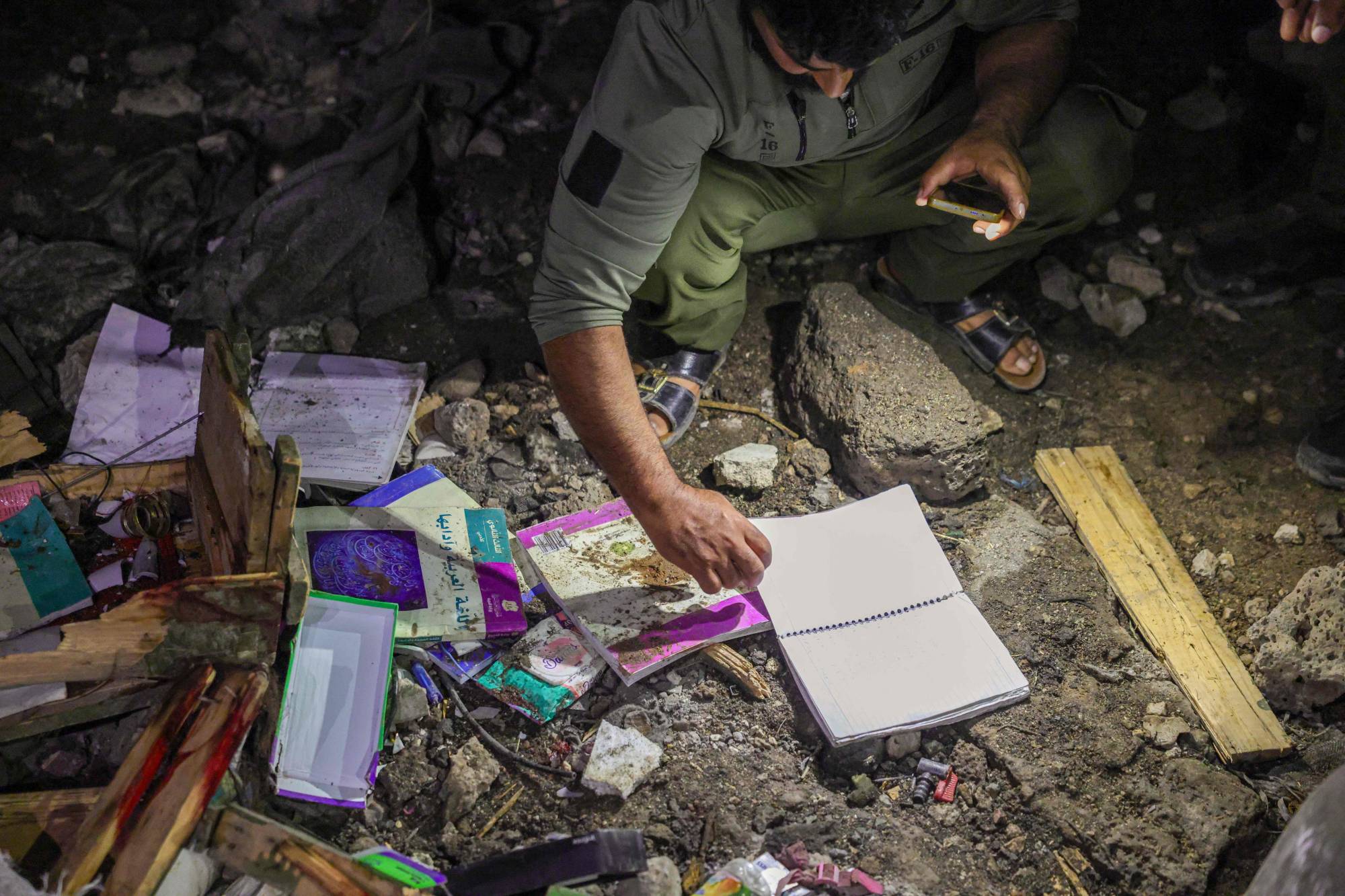
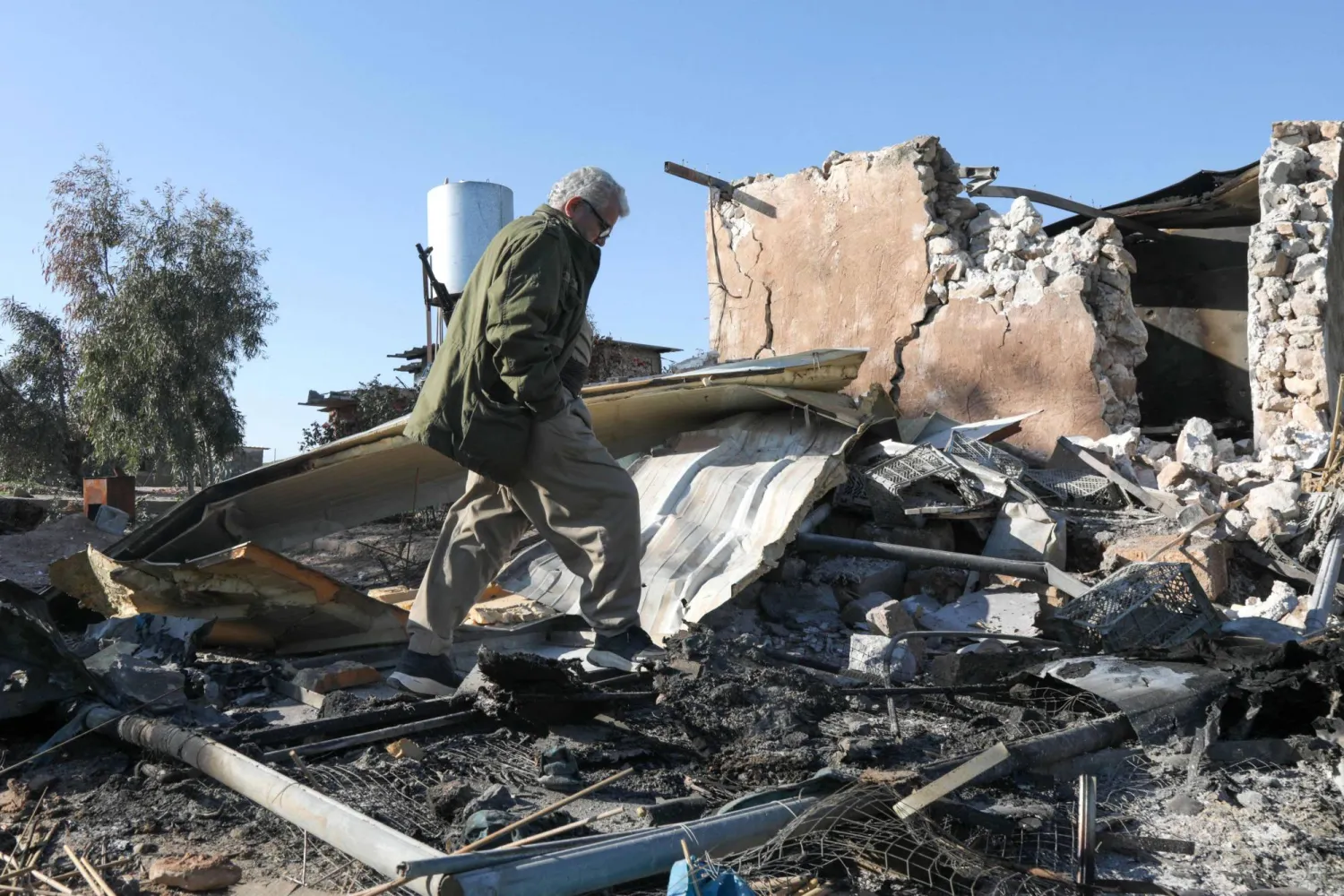
An Iranian Kurdish Peshmerga member of the Kurdistan Democratic Party of Iran (KDPI) inspects the damage sustained at the Azadi Camp of the Kurdistan Democratic Party of Iran (KDPI) following an Iranian cross-border attack in the town of Koye (Koysinjaq), in the east of Erbil district in the autonomous Kurdish region of northern Iraq on March 3, 2026. (Photo by Safin HAMID / AFP)
TT

Iraq's Kurds Caught Between Washington and Tehran

An Iranian Kurdish Peshmerga member of the Kurdistan Democratic Party of Iran (KDPI) inspects the damage sustained at the Azadi Camp of the Kurdistan Democratic Party of Iran (KDPI) following an Iranian cross-border attack in the town of Koye (Koysinjaq), in the east of Erbil district in the autonomous Kurdish region of northern Iraq on March 3, 2026. (Photo by Safin HAMID / AFP)

Despite repeated pledges by Kurdish leaders in Iraq’s Kurdistan region to remain neutral in the war between the United States and Israel on one side and Iran on the other, their territory has come under near-daily attacks from Iran or Tehran-aligned armed factions in Iraq.

The attacks have left Kurdish leaders facing what one Kurdish official described as an “existential dilemma,” particularly as they coincide with US pressure to open a military front in western Iran in cooperation with Iranian Kurdish opposition parties.

In recent days, US media reported that President Donald Trump spoke by phone with Kurdish leaders Masoud Barzani and Bafel Talabani, urging them to “assist the Iranian Kurdish opposition” participating in the conflict. According to those reports, the two leaders expressed reservations.

Iran has long viewed Kurdish opposition groups based in Iraq’s Kurdistan region with suspicion. In September 2023, Baghdad and Tehran signed a security agreement requiring the disarmament of those groups, the closure of their headquarters and their relocation away from the shared border. Iran had previously launched several attacks on their positions.

By Saturday, the Kurdistan region had faced 100 missile and drone attacks carried out by Iran and allied Iraqi factions.

A headquarters of the Peshmerga, the region’s guard forces, in Sulaimaniyah came under a drone attack late on Friday that was shot down by ground defenses. The Iran-aligned group Saraya Awliya al-Dam claimed responsibility.

Bridge, not battlefield

Reiterating Kurdish pledges to stay out of the war, Talabani, leader of the Patriotic Union of Kurdistan, restated the position in an interview with Fox News on Friday.

“Kurdistan needs to be a bridge, not a battlefield,” he said.

According to Talabani, the Kurds are in a unique position, as they are close allies of the US and at the same time neighbors of Iran. The Kurds can play a role in de-escalation when the time comes, he added.

Talabani said he currently sees a weaker Iranian regime, but added that its institutions remain intact despite differences with those in Kurdistan.

When the military objectives are achieved, diplomacy will begin, he said.

Talabani also described his call with Trump, saying the US president was very kind and very polite.

Talabani did not detail what the US president asked of Kurdish leaders, but said he understood that protecting civilians in Iraq was a priority and that Kurds in Iran deserve better treatment.

‘Existential dilemma’

A senior Kurdish official, speaking to Asharq Al-Awsat on condition of anonymity, described the situation as an “existential Kurdish dilemma.”

“Kurds often find themselves facing the same complex circumstances in conflicts across Iraq and the wider Middle East,” he said.

Today, he added, they face renewed fears about what might come next, especially as the Kurdistan region remains fragile because of internal divisions, disputes with Baghdad and hostility from Iran-aligned factions.

“Most Kurds hope the situation of their Iranian Kurdish brothers will improve, but they cannot offer meaningful assistance,” the official said. “The situation is extremely complicated, and involvement could turn into a real catastrophe for Kurdistan.”

He added that Kurdish experiences with the United States “have not been entirely encouraging,” noting that Washington recently abandoned Kurdish allies in Syria.

“Any Kurdish gamble in Iran will later backfire on Iraqi Kurdistan, especially if Washington eventually reaches some kind of settlement with Tehran,” he said.

The official also warned that the Kurdistan region is surrounded by hostile forces that could become even more antagonistic if it becomes involved in the war.

“Türkiye to the north will not allow the Iraqi Kurdistan model to be repeated in Iran,” he said.

“To the south we have the Iraqi government and Iran-aligned factions. If those factions overcome the consequences of the current war, they will vent their anger on us. I would not rule out an invasion of the region.”

Iraqi Prime Minister Mohammed Shia al-Sudani discussed the latest security developments in a phone call on Friday with Kurdistan Region President Nechirvan Barzani, according to a government statement.

Both sides reaffirmed their rejection of attacks targeting Iraqi cities, including those in the Kurdistan region, and stressed that Iraqi territory should not be used as a launchpad for attacks on neighboring countries, while supporting steps aimed at strengthening security and stability in the region.

US Only Guarantees Security of Beirut Airport, Road Leading to it

 Departures area inside Beirut–Rafik Hariri International Airport, following an escalation between Hezbollah and Israel, amid the US-Israel conflict with Iran, in Beirut, Lebanon, March 4, 2026. (Reuters)
Departures area inside Beirut–Rafik Hariri International Airport, following an escalation between Hezbollah and Israel, amid the US-Israel conflict with Iran, in Beirut, Lebanon, March 4, 2026. (Reuters)
TT

US Only Guarantees Security of Beirut Airport, Road Leading to it

 Departures area inside Beirut–Rafik Hariri International Airport, following an escalation between Hezbollah and Israel, amid the US-Israel conflict with Iran, in Beirut, Lebanon, March 4, 2026. (Reuters)
Departures area inside Beirut–Rafik Hariri International Airport, following an escalation between Hezbollah and Israel, amid the US-Israel conflict with Iran, in Beirut, Lebanon, March 4, 2026. (Reuters)

An official Lebanese source revealed to Asharq Al-Awsat that the only guarantee the United States has offered Lebanon in the latest war with Israel is the safety of Rafik Hariri International Airport and the road leading to it.

The Americans “are not responding to Lebanese contacts because they have grown convinced that the Lebanese authorities are incapable of meeting their pledges,” it added.

The source said Washington informed Lebanese officials that “lessons are learned from implementing decisions, not taking them,” a reference to the government’s decision last week to ban Hezbollah’s military and security activities.

Lebanon was dragged into conflict with Israel after Hezbollah fired rockets at Israel last week in support of Iran, its main backer.

Lebanon's health minister Rakan Nassereddine said on Sunday that Israeli strikes on Lebanon had killed 394 people over the past week, including 83 children and 42 women.


HRW Accuses Israel of 'Unlawfully' Using White Phosphorus in New Lebanon Attacks

A picture taken from Israel, along the border with southern Lebanon on March 4, 2024, shows smoke billowing following Israeli bombardment on the Lebanese village of Markaba. Jalaa Marey, AFP
TT

HRW Accuses Israel of 'Unlawfully' Using White Phosphorus in New Lebanon Attacks

A picture taken from Israel, along the border with southern Lebanon on March 4, 2024, shows smoke billowing following Israeli bombardment on the Lebanese village of Markaba. Jalaa Marey, AFP

Human Rights Watch on Monday accused Israel of "unlawfully" using white phosphorus over residential parts of a southern Lebanese town last week.

"The Israeli military unlawfully used artillery-fired white phosphorus munitions over homes on March 3, 2026, in the southern Lebanese town of Yohmor," the New York-based rights group said in a report.

HRW added that it "verified and geolocated seven images showing airburst white phosphorus munitions being deployed over a residential part of the town and civil defense workers responding to fires in at least two homes and one car in that area".

White phosphorus, a substance that ignites on contact with oxygen, can be used to create smokescreens and to illuminate battlefields, said AFP.

But the munition can also be used as an incendiary weapon and can cause fires, horrific burns, respiratory damage, organ failure and death.

Israel -- which kept up strikes targeting Hezbollah despite a 2024 ceasefire -- launched multiple waves of strikes across Lebanon since last week and sent ground troops into border areas after the Iran-backed group attacked it.

The Israeli army has since repeatedly called on people living south of the Litani River, around 30 kilometers (20 miles) north of the Israeli border, to leave.

At least 394 people have been killed in Israeli attacks, Lebanese authorities said, registering more than half a million people as displaced.

"The Israeli military's unlawful use of white phosphorus over residential areas is extremely alarming and will have dire consequences for civilians," Ramzi Kaiss, Lebanon researcher at HRW, was quoted saying in the report.

"Israel should immediately halt this practice and states providing Israel with weapons, including white phosphorus munitions, should immediately suspend military assistance and arms sales and push Israel to stop firing such munitions in residential areas," he added.

Lebanese authorities and HRW have over the past years accused Israel of using controversial white phosphorus rounds, in attacks authorities say have harmed civilians and the environment.

Lebanon's state-run National News Agency on Sunday said Israeli forces targeted the towns of Khiam and Tal Nahas, near the border with Israel, "with artillery and phosphorus shelling".

Last month, Lebanon accused Israel of spraying the herbicide glyphosate on the Lebanese side of their shared border, with President Joseph Aoun decrying it as a "crime against the environment".


Hezbollah Says Fighting Israeli Forces Who Landed in East Lebanon

This photograph taken during a media tour organized by the Hezbollah shows a flag of Hezbollah installed on the balcony of a damaged building at Nabi Sheet town after an Israeli military operation in the Bekaa Valley of Lebanon, on March 7, 2026. (Photo by FADEL itani / AFP)
TT

Hezbollah Says Fighting Israeli Forces Who Landed in East Lebanon

This photograph taken during a media tour organized by the Hezbollah shows a flag of Hezbollah installed on the balcony of a damaged building at Nabi Sheet town after an Israeli military operation in the Bekaa Valley of Lebanon, on March 7, 2026. (Photo by FADEL itani / AFP)

Hezbollah said on Monday it was fighting Israeli forces who landed in eastern Lebanon by helicopter across the Syrian border, the second such operation since the outbreak of the latest conflict with Israel.

Lebanon was drawn into the Middle East war last week when Iran-backed militant group Hezbollah attacked Israel in response to the killing of Iranian supreme leader Ali Khamenei during US-Israeli strikes.

Israel, which has kept up strikes targeting Hezbollah despite a 2024 ceasefire, launched multiple waves of strikes last week across Lebanon and sent ground troops into border areas, said AFP.

In a statement on Monday, Hezbollah said it detected "the infiltration of approximately 15 Israeli enemy helicopters" from the Syrian side of the border in eastern Lebanon, an area where Hezbollah holds sway.

The group said its fighters "engaged the helicopters and the infiltrating force with appropriate weapons, and the confrontation" was ongoing.

Lebanon's state-run National News Agency (NNA) earlier reported "fierce clashes... towards the outskirts of the town of Nabi Sheet to repel Israeli forces that carried out a landing by helicopters" in the area.

Two Hezbollah officials in the Bekaa region, where Nabi Sheet is located, told AFP that an Israeli helicopter was downed.

The Israeli army did not immediately comment on the incident.

It is the second such attack after an Israeli commando operation in Nabi Sheet and its surrounding areas overnight Friday failed to find the remains of Ron Arad, an airman missing since 1986, killing 41 people.

- Beirut strikes -

In the Hezbollah stronghold of Beirut's southern suburbs, an AFP correspondent said a loud explosion was heard on Monday, with smoke seen rising from the area.

A brief statement from the Israeli military said it had "struck infrastructure belonging to the Hezbollah terrorist organization in Beirut".

The area was pounded by Israel over the past week but had not suffered any strikes since Saturday.

The military had told residents of the Beirut suburbs as well as Lebanon's south -- both strongholds of Hezbollah -- to evacuate, warning of attacks against the militant group.

The NNA reported several strikes early Monday, including one on the town of Tayr Debba near the southern city of Tyre, which "resulted in an initial toll of three citizens martyred and 15 others wounded".

Closer to the Israeli border, Hezbollah said on Monday that it targeted Israeli soldiers entering the towns of Odaisseh and Aitaroun with artillery shells.

It also said it clashed with Israeli soldiers in Odaisseh.

Lebanon's health minister Rakan Nassereddine said on Sunday that Israeli strikes on Lebanon had killed 394 people over the past week, including 83 children and 42 women.

Israel's military said that two of its soldiers were killed in combat in southern Lebanon, the first fatalities among its forces since the latest offensive began on March 2.