
The town of Nabi Sheet in Lebanon’s northern Bekaa is in shock after an Israeli military operation that left dozens of residents and people from nearby villages dead and wounded.
The operation involved an Israeli commando raid backed by more than 40 air strikes carried out by fighter jets, attack helicopters and drones, causing widespread destruction across the town and its surroundings.
Attempt to recover Arad’s remains
The Israeli force, made up of about 50 paratroopers, entered the town from three directions, residents said: The Qouz axis toward Serghaya, the Khraibeh axis, and the main western road linking the town entrance to Nabi Sheet square.
Hamm mayor Mohammad Hassan said the infiltration had been preceded by movement through the Eastern Mountain Range from two axes — Abu Fares field and the Shaara area — suggesting multiple routes of advance during the operation.
Residents told Asharq Al-Awsat the force appeared to be attempting to recover the remains of Israeli pilot Ron Arad, missing since 1986 and believed to be buried in the Shokr family cemetery near the mountain road linking Nabi Sheet to the towns of Khraibeh, Janta and Shaara near Serghaya on the Lebanese-Syrian border.
Helicopter landing
During the operation, Israeli troops deployed observation and security positions inside the town, particularly in the Shokr neighborhood near the cemetery entrance and close to the Shokr mosque and husseiniya. Other troops spread along the town’s main street in anticipation of possible clashes.
Information obtained by Asharq Al-Awsat said the force landed by three helicopters in the Qouz area before moving into the town through the surrounding highlands.
Residents also said ambulances and vehicles carrying Lebanese license plates were used, along with personnel wearing the uniforms of Hezbollah’s Islamic Health Authority and Lebanese Army military attire — raising questions about how the force reached the town.
Operation exposed
The operation was uncovered when members of the force opened fire with silenced rifles on a Hezbollah member passing through the area, killing him instantly.
The shooting alerted residents and Hezbollah members, who moved quickly to surround the Israeli force and engage it.
Before being exposed, the force had dug a narrow pit at the cemetery measuring about one-meter-long, 50 centimeters deep and 40 centimeters wide. Heavy gunfire across the town forced the force to withdraw before reaching its objective.
Hamda Assad al-Halbawi woke to the sound of digging near the cemetery. When she stepped outside to see what was happening, commando members fired at her from the direction of the graveyard, hitting her in the head. When her son tried to rescue her, a drone struck their car, killing them both.
Air strikes and ambushes
After the force was exposed, Israeli aircraft launched intense strikes on roads leading to the town to prevent reinforcements from nearby villages.
The strikes targeted the Nabi Sheet–Nasiriyah road, the Nabi Sheet–Sarein secondary road, the plain road, the Nabi Sheet–Khodr road and the Aqabeh–Baalbek road. The mountain road and the main road were left open to facilitate the force’s withdrawal.
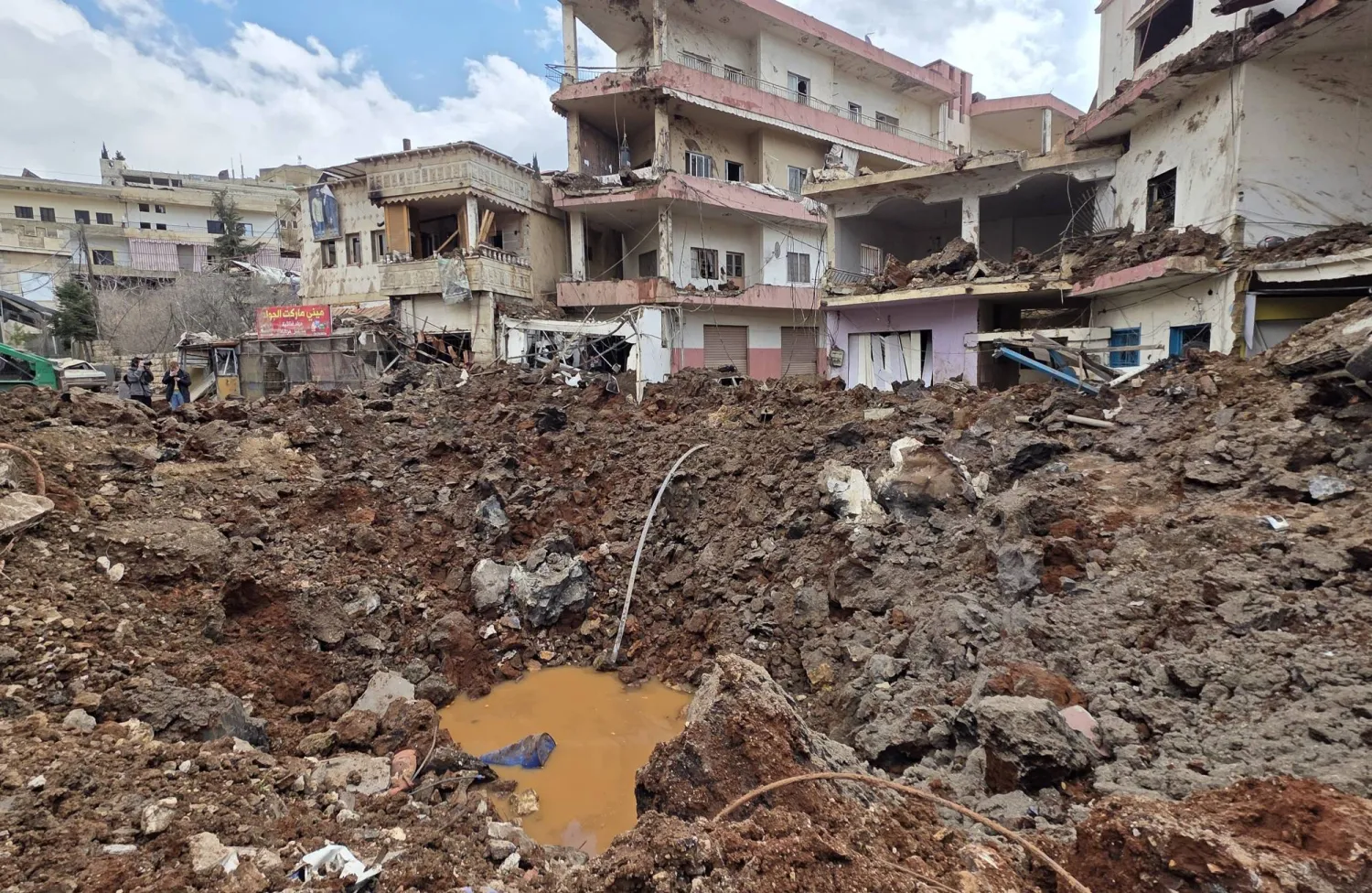
Missiles fired during the strikes created a massive crater estimated to be about 10 meters deep and roughly 80 meters wide. The bombardment caused extensive destruction, with cars hurled onto building rooftops, particularly in Nabi Sheet square.
As the force withdrew, it came under ambush along the Khraibeh–Janta–Shaara road, where the fiercest clashes took place.
Heavy toll
The clashes and withdrawal left many dead, including about 35 people from Nabi Sheet, nine from Khraibeh, one from Sarein and another from Ali al-Nahri. Three Lebanese Army soldiers and one member of General Security were also killed.
Residents said Israeli forces used 16 mm rifles fitted with silencers.
Questions remain
Residents remain stunned by the scale of the operation and the destruction it caused, while questioning how the force managed to infiltrate an area they say is under constant surveillance.
They say the Israeli force ultimately failed to achieve its objective and withdrew under heavy fire and pressure from the clashes.
That account does not contradict Israel’s version of events. Israeli army spokesman Avichay Adraee said no evidence linked Arad was found at the search site.