


HRW Accuses Israel of 'Unlawfully' Using White Phosphorus in New Lebanon Attacks

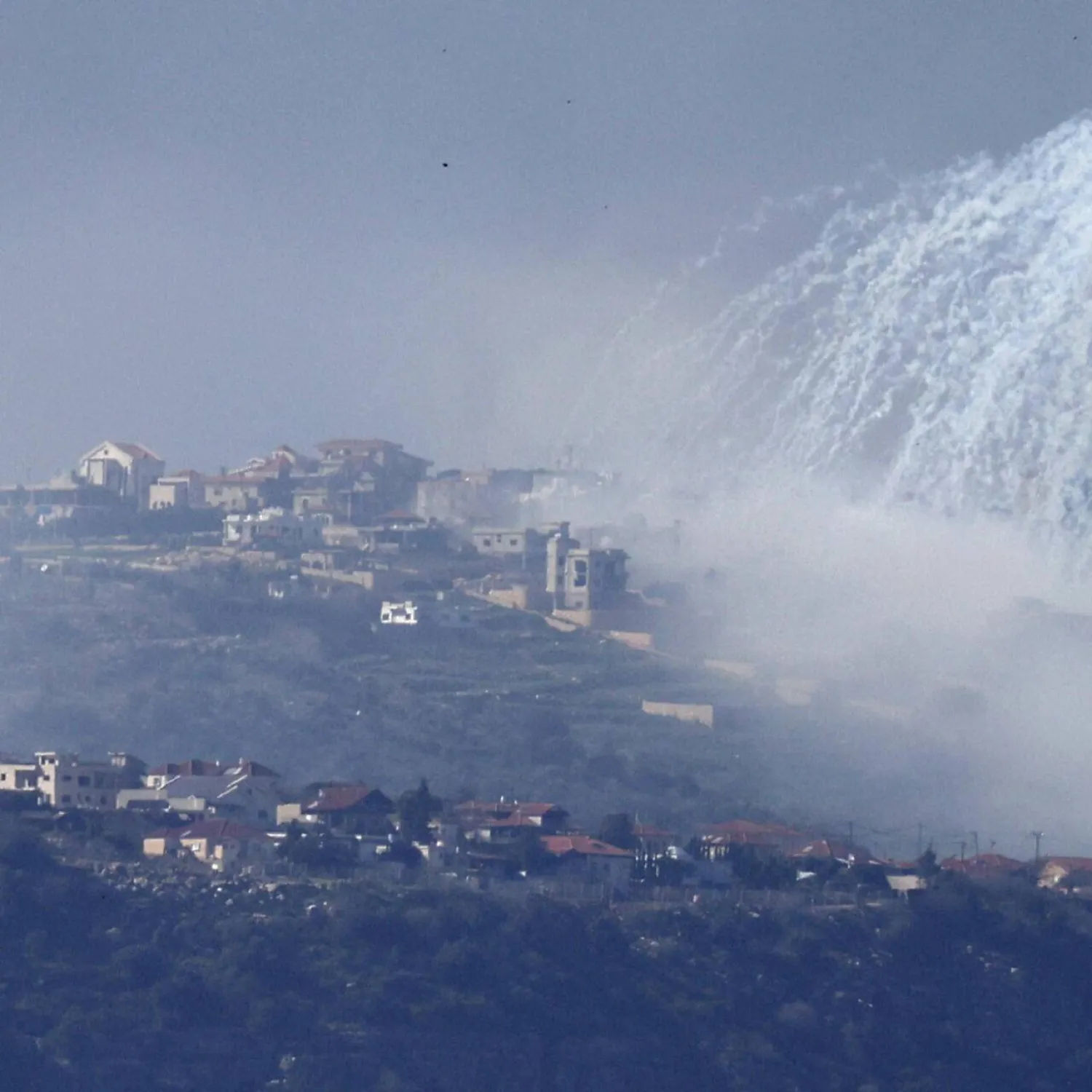
A picture taken from Israel, along the border with southern Lebanon on March 4, 2024, shows smoke billowing following Israeli bombardment on the Lebanese village of Markaba. Jalaa Marey, AFP
TT

HRW Accuses Israel of 'Unlawfully' Using White Phosphorus in New Lebanon Attacks

A picture taken from Israel, along the border with southern Lebanon on March 4, 2024, shows smoke billowing following Israeli bombardment on the Lebanese village of Markaba. Jalaa Marey, AFP

Human Rights Watch on Monday accused Israel of "unlawfully" using white phosphorus over residential parts of a southern Lebanese town last week.

"The Israeli military unlawfully used artillery-fired white phosphorus munitions over homes on March 3, 2026, in the southern Lebanese town of Yohmor," the New York-based rights group said in a report.

HRW added that it "verified and geolocated seven images showing airburst white phosphorus munitions being deployed over a residential part of the town and civil defense workers responding to fires in at least two homes and one car in that area".

White phosphorus, a substance that ignites on contact with oxygen, can be used to create smokescreens and to illuminate battlefields, said AFP.

But the munition can also be used as an incendiary weapon and can cause fires, horrific burns, respiratory damage, organ failure and death.

Israel -- which kept up strikes targeting Hezbollah despite a 2024 ceasefire -- launched multiple waves of strikes across Lebanon since last week and sent ground troops into border areas after the Iran-backed group attacked it.

The Israeli army has since repeatedly called on people living south of the Litani River, around 30 kilometers (20 miles) north of the Israeli border, to leave.

At least 394 people have been killed in Israeli attacks, Lebanese authorities said, registering more than half a million people as displaced.

"The Israeli military's unlawful use of white phosphorus over residential areas is extremely alarming and will have dire consequences for civilians," Ramzi Kaiss, Lebanon researcher at HRW, was quoted saying in the report.

"Israel should immediately halt this practice and states providing Israel with weapons, including white phosphorus munitions, should immediately suspend military assistance and arms sales and push Israel to stop firing such munitions in residential areas," he added.

Lebanese authorities and HRW have over the past years accused Israel of using controversial white phosphorus rounds, in attacks authorities say have harmed civilians and the environment.

Lebanon's state-run National News Agency on Sunday said Israeli forces targeted the towns of Khiam and Tal Nahas, near the border with Israel, "with artillery and phosphorus shelling".

Last month, Lebanon accused Israel of spraying the herbicide glyphosate on the Lebanese side of their shared border, with President Joseph Aoun decrying it as a "crime against the environment".



Iraqi PM to Visit Tehran This Week

Iraqi Prime Minister Ali al-Zaidi attends a meeting with US President Donald Trump (not pictured) in the Oval Office of the White House in Washington, DC, USA, 14 July 2026. (EPA)
TT

Iraqi PM to Visit Tehran This Week

Iraqi Prime Minister Ali al-Zaidi attends a meeting with US President Donald Trump (not pictured) in the Oval Office of the White House in Washington, DC, USA, 14 July 2026. (EPA)

Iraqi Prime Minister Ali al-Zaidi will visit Tehran ‌within ‌the coming ‌week, ⁠the Iraqi state ⁠news agency reported on ⁠Sunday.

During ‌the visit, ‌the prime minister will ‌sign memoranda of ⁠understanding in ⁠Tehran in areas of cooperation.

Al-Zaidi had visited the United States earlier this week where he met with President Donald Trump.

Trump praised the new PM, saying the US is “going to have a long-term relationship with Iraq. We're going to have a long-term relationship with a man that will be a great leader.”

“It's a great honor to have the Prime Minister of Iraq with us. He's been a great fighter, and he's been a great fan of America,” he went on to say.

Iraq signed 48 agreements and partnerships with American companies, many in the oil sector, during al-Zaidi's visit.

Al-Zaidi, a businessman, came to power this year with US blessing after Trump vetoed another candidate.

He has vowed to boost Iraq's fragile economy and disarm pro-Iran armed groups in Iraq that have targeted US facilities.

Iraq has long walked a tightrope between the competing influences of allies the United States and neighboring Iran.


Rubio Hails Lebanon for Peace Efforts After Meeting Aoun

Lebanese President Joseph Aoun attends a press conference, at the presidential palace, in Baabda, Lebanon January 17, 2025. (Reuters)
TT

Rubio Hails Lebanon for Peace Efforts After Meeting Aoun

Lebanese President Joseph Aoun attends a press conference, at the presidential palace, in Baabda, Lebanon January 17, 2025. (Reuters)

US Secretary of State Marco Rubio met with Lebanese President Joseph Aoun in Washington on Sunday, praising the country for its "move towards peace" after the latest round of Lebanon-Israel talks. 

It was the first trip to the US capital by a Lebanese head of state since Michel Suleiman was received by Barack Obama in 2009. 

Aoun and Rubio held talks at the State Department, and Lebanese officials said Aoun is due to meet with President Donald Trump on Tuesday. 

Rubio commended the Lebanese government for its "determined effort to reclaim Lebanon's sovereignty, disarm Hezbollah and dismantle its terrorist infrastructure, and move towards peace," the State Department said following the talks. 

Lebanon and Israel, which do not have formal diplomatic relations, began US-sponsored negotiations in April aimed at reaching a peace deal and permanently ending the Israel-Hezbollah war. 

On June 26, they reached a framework agreement in Washington under which the Israeli military is to withdraw from southern Lebanon and the Lebanese army is to deploy, starting with two "pilot zones." 

But the agreement is contingent on the disarmament of Iran-backed group Hezbollah, which has flatly rejected both the deal and the Israel-Lebanon negotiations that underpin it. 

Following the latest round of talks last week in Rome, Israel and Lebanon agreed on the structure and guidelines for implementing the pilot zones, according to the United States. 

Rubio said Washington was committed "to supporting the successful implementation of the Trilateral Framework and to backing the Government of Lebanon's efforts to deliver peace, economic recovery, and a better future for the Lebanese people." 

Hezbollah pulled Lebanon into the Middle East war on March 2, when it began striking Israel in support of its backer Iran. 

Israel responded with airstrikes and a ground invasion, and despite a ceasefire it continues sporadic attacks and holds territory in the south in what it describes as a "security zone." 

While in Washington, Aoun planned talks "on the situation in Lebanon and ways to strengthen the ceasefire" as well as on "the withdrawal of Israel from the Lebanese regions it occupies," his office said earlier. 

The United States carried out airstrikes on Sunday to "punish" Iran after the first US military deaths since open hostilities rekindled the Middle East war. 


Jordan Summons Iranian Diplomat Over ‘Unjustified’ Attacks

The Jordanian capital, Amman. Petra file photo
TT

Jordan Summons Iranian Diplomat Over ‘Unjustified’ Attacks

The Jordanian capital, Amman. Petra file photo

Jordan has summoned Iran's charge d'affaires in Amman over what it ‌called "unjustified ‌and blatant Iranian ‌attacks" ⁠and "provocative and inflammatory ⁠statements targeting the Kingdom's territory," Jordan's ministry of foreign affairs ⁠said in ‌a ‌statement on ‌Sunday. 

Over the ‌last week, Jordan has repeatedly said that ‌it has intercepted Iranian missiles flying ⁠over ⁠its territory, including three that it shot down on Sunday, according to the country's military.