


Airlines Hike Ticket Prices as Iran War Propels Fuel Costs

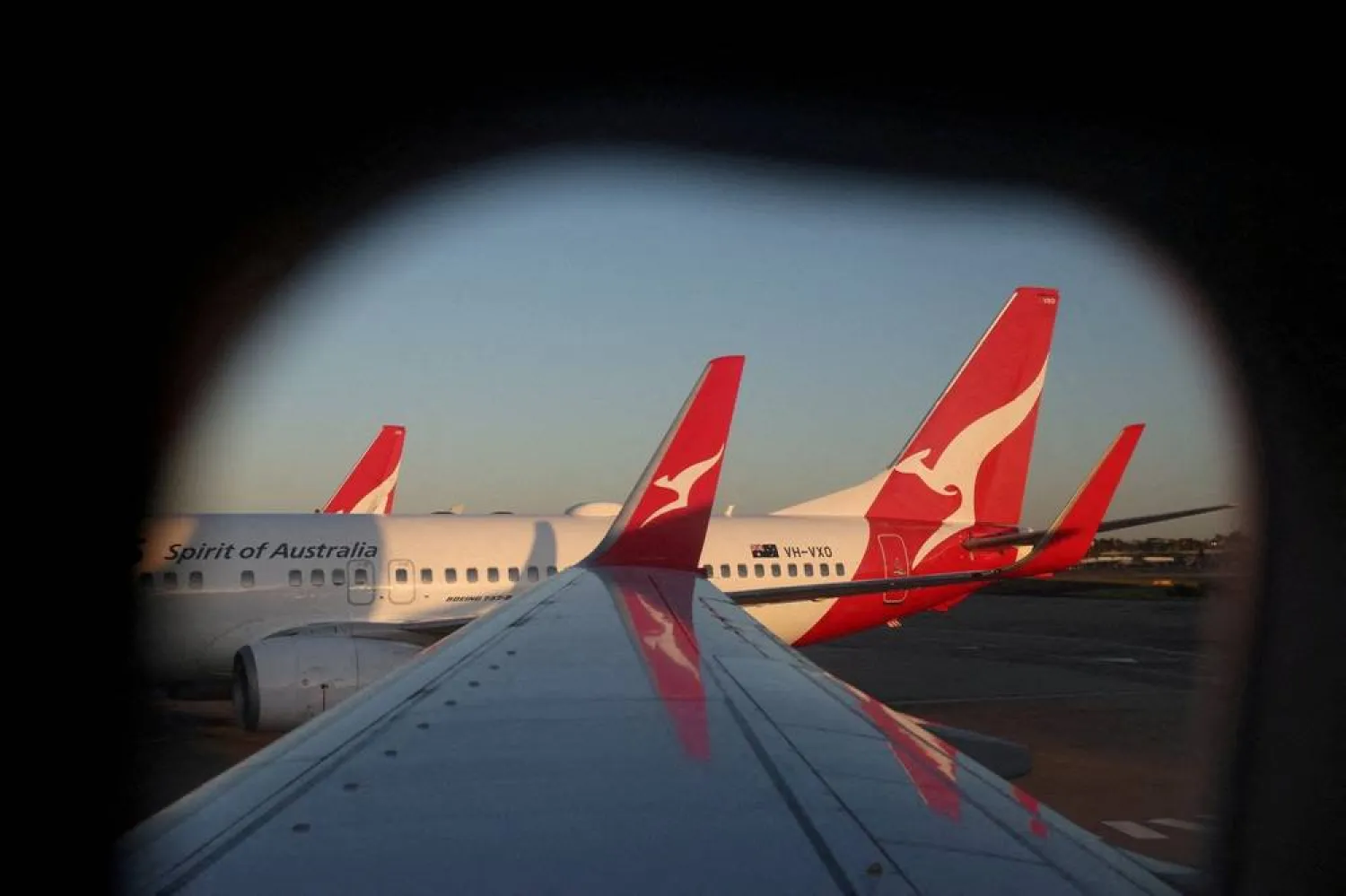
A Qantas logo is visible on the tail of an airplane at an airport in Sydney, Australia, September 18, 2025. (Reuters)
TT

Airlines Hike Ticket Prices as Iran War Propels Fuel Costs

A Qantas logo is visible on the tail of an airplane at an airport in Sydney, Australia, September 18, 2025. (Reuters)

Australia's Qantas Airways , Scandinavia's SAS and Air New Zealand announced airfare hikes on Tuesday, blaming an abrupt spike in the cost of fuel caused by the Middle East conflict.

Jet fuel prices, which were around $85 to $90 per barrel before US-Israeli strikes on Iran, have soared to between $150 and $200 per barrel in recent days, New Zealand's flag carrier said as it suspended its financial outlook for 2026 due to uncertainty over the conflict.

The war, which disrupted shipping via the world's most vital oil export route, has sent oil prices surging, upending global travel, pushing airline tickets on some routes sky-high, and sparking fears of a deep travel slump that could lead to widespread grounding of planes.

"Increases of this magnitude make it necessary to react in order to maintain stable and reliable operations," an SAS spokesperson said in a statement to Reuters, adding it had implemented a "temporary price adjustment".

The largest Scandinavian airline said last ‌year it had temporarily ‌adjusted its fuel hedging policy due to uncertain market conditions and that it had no ‌fuel ⁠consumption hedged for the ⁠following 12 months.

While several Asian and European airlines, including Lufthansa and Ryanair, have oil hedging in place, securing a part of their fuel supplies at fixed prices, Finnair warned that even the availability of fuel could be at risk if the conflict dragged on.

"A prolonged crisis could affect not only the price of fuel but also its availability, at least temporarily," a Finnair spokesperson said, adding that it had not seen this happening yet. It had hedged over 80% of its first-quarter fuel purchases.

AIRSPACE CHAOS IN THE MIDDLE EAST

Highlighting the airspace chaos in the Middle East, planes arriving in Dubai were briefly placed in a ⁠holding pattern on Tuesday due to a potential missile attack, flight tracking service Flightradar24 said on X. ‌The planes eventually landed.

Qantas said in addition to increasing international fares, it was exploring ‌options to redeploy capacity to Europe as airlines and passengers seek to evade disruptions in the Middle East, where drone and missile fire have ‌curtailed flights.

Airfares have soared on Asia-Europe routes due to airspace closures and capacity constraints, and Hong Kong's Cathay Pacific Airways said on ‌Tuesday it was adding extra flights to London and Zurich in March.

Air New Zealand said it had raised one-way economy fares by NZ$10 ($6) on domestic routes, NZ$20 on short-haul international services and NZ$90 on long-haul, with more adjustments to prices and schedules possible if jet fuel costs remain elevated.

Hong Kong Airlines said on its website it would raise its fuel surcharges by up to 35.2% from Thursday, with the sharpest increase on flights between ‌Hong Kong and the Maldives, Bangladesh and Nepal.

AIRLINE SHARES STABILISE AFTER SELLOFF

Some airline stocks rose and oil prices fell to around $90 a barrel on Tuesday from a high of $119 on Monday ⁠after US President Donald Trump said ⁠on Monday the war could be over soon. When markets opened in Europe, airline shares were up between 4% and 7%.

In Asia, airline shares showed signs of stabilising, with Qantas closing up 0.5%, Korean Air Lines rising 3% and Cathay Pacific up 3.6%. All had recorded sharp declines on Monday.

Fuel is the second-largest expense for air carriers after labor, typically accounting for a fifth to a quarter of operating expenses.

CONFLICTS SHRINKING AVAILABLE AIRSPACE

In addition to high fuel costs, tightening airspace also threatens to derail the global travel industry, as pilots reroute to avoid the Middle East conflict and capacity on popular routes fills up.

Emirates, Qatar Airways and Etihad typically jointly account for about one-third of the passenger traffic between Europe and Asia and fly more than half of all passengers from Europe to Australia, New Zealand and nearby Pacific Islands, according to Cirium.

European airlines have already struggled with the shortage of available airspace created by the war in Ukraine, with many avoiding Russian airspace and flying longer international routes. Now, with even less available airspace, they say their business has become even more challenging.



Saudi Arabia Expands Investment Prospects in Military Industries

The Saudi pavilion reinforced the Kingdom’s position as a leading investment destination in the military industry sector. (Asharq Al-Awsat)
TT

Saudi Arabia Expands Investment Prospects in Military Industries

The Saudi pavilion reinforced the Kingdom’s position as a leading investment destination in the military industry sector. (Asharq Al-Awsat)

Saudi Arabia used the Eurosatory 2026 defense and security show to open new investment horizons, showcasing promising opportunities and a regulatory environment designed to attract capital.

The participation helped sharpen the appeal of the Kingdom’s military industries and drew the attention of major global companies seeking strategic partnerships that support Saudi localization targets.

The Saudi pavilion, held at the Paris exhibition from June 15 to 19, reinforced the Kingdom’s position as a leading investment destination in the military industry sector.

Organized by the General Authority for Military Industries (GAMI), the pavilion brought together 10 government and private entities alongside the authority.

The participation underlined Saudi Arabia’s welcome to investors from around the world seeking opportunities in the military industries sector. It also highlighted the Kingdom’s efforts to localize more than 50% of military spending by 2030.

On the sidelines of the exhibition, GAMI Governor Ahmad Al-Ohali met Patrick Pailloux, French Director General for Armament (DGA), as well as representatives of major global defense companies.

The meetings focused on ways to strengthen cooperation in military industries and exchange expertise, supporting the development of a sustainable sector, improving the readiness of military equipment, boosting self-sufficiency and contributing to the national economy.

The Saudi participation also saw the signing of several agreements and memorandums of understanding, part of GAMI’s efforts to develop military industries, strengthen supply chains and enable strategic partnerships.

The authority organized a workshop titled “Developing Supply Chains in Military Industries,” which discussed how an attractive investment environment for local and international investors can help build a diversified and prosperous economy in the sector.

The pavilion showcased the integration of government efforts, national industrial and service capabilities, and the innovative technologies presented by participating Saudi companies. It also highlighted the country’s attractive investment environment and the rapid growth of its military industries sector.

The sector’s contribution to GDP rose from 2.2 billion riyals, or about $587 million, in 2021 to 6.6 billion riyals, or about $1.76 billion, in 2024. The localization rate of military spending also climbed to nearly 25% in 2024, as the Kingdom works toward localizing more than 50% of military spending by 2030.

GAMI said the Saudi pavilion’s participation strengthened the Kingdom’s position as a trusted international partner, expanded its network of relations with major global companies and enabled national firms to showcase their capabilities while exploring opportunities for growth and expansion in global markets.


Iraq Raises Southern Oil Output to 1.75 Million bpd

Technicians working at the Majnoon oil field in Basra, Iraq. (Reuters)
TT

Iraq Raises Southern Oil Output to 1.75 Million bpd

Technicians working at the Majnoon oil field in Basra, Iraq. (Reuters)

Iraq has increased crude oil production from its southern fields by 250,000 barrels per day to around 1.75 million barrels per day as more tankers load crude from the country's ports, Iraqi oil officials told Reuters on Friday, Reuters reported.


The officials said Iraq plans to raise production further to two million barrels per day in the coming few days.


Iraq, like other Gulf oil producers, has suffered the biggest drop in oil revenue as a result of the effective closure of the Strait of Hormuz amid the US-Iran War.


Saudi Arabia Showcases Tourism Success at FII Europe Summit

The minister's participation in the leading global forum aims to underline the global success story of Saudi Arabia's tourism sector - SPA
TT

Saudi Arabia Showcases Tourism Success at FII Europe Summit

The minister's participation in the leading global forum aims to underline the global success story of Saudi Arabia's tourism sector - SPA

Minister of Tourism Ahmed Al-Khateeb participated in the FII PRIORITY Europe Summit, held in Rome from June 17 to 19, 2026, where he showcased Saudi Arabia's remarkable transformation of its tourism sector in line with the ambitious goals of Saudi Vision 2030.

As part of the summit's official program, the minister participated in a fireside chat titled "Resilient by Design: Vision 2030 and the Architecture of Enduring Value." During the session, he shared insights into the evolution of Saudi Arabia's tourism sector, highlighting its robust performance amid regional challenges over the past six months and emphasizing the sector's resilience, its ability to recover quickly, and its continued momentum toward sustained growth, SPA reported.

Al-Khateeb also underscored the Kingdom's significant investments in developing world-class tourism destinations, noting the tangible economic and social impact these investments are generating, including the creation of employment opportunities for Saudi nationals.
Addressing the role of emerging technologies, Al-Khateeb spoke about the integration of artificial intelligence (AI) in the tourism sector: "In Saudi Arabia, we are using AI, and we will continue to use AI, because we are very advanced when it comes to technology.

At the same time, we are committed to preserving the human element in the sector. We want AI to empower people, support them, and help them in welcoming our guests and sharing our culture and hospitality".

The minister's participation in the leading global forum aims to underline the global success story of Saudi Arabia's tourism sector, which in less than a decade has evolved into a dynamic, integrated ecosystem, offering a wide range of investment opportunities across destinations, hospitality, infrastructure, digital services, and human capital development.

The participation also served as a platform to highlight what the Kingdom's tourism sector offers European partners: a fast-growing and stable market, positioned as a global gateway for collaboration in investment, artificial intelligence, and innovation.

On the sidelines of FII PRIORITY Europe, Al-Khateeb held a series of bilateral meetings with international investors and industry leaders, focused on strengthening strategic partnerships and unlocking new opportunities for investment and tourism experience development in the Kingdom.

Coinciding with the summit, the Ministry of Tourism released its annual statistical report 2025, showing how Saudi Arabia's tourism sector moved from ambition to scale, emerging as one of the Kingdom's strongest growth drivers in non-oil sectors.

According to the report, Saudi Arabia recorded historic results in 2025 with around 123 million inbound and domestic tourists, representing growth of approximately 6% compared to 2024. This included 29.3 million inbound tourists and 93.3 million domestic tourists. Total tourism spending reached approximately SAR304 billion, reflecting growth of 7% compared to 2024, with inbound tourism contributing SAR176.6 billion and domestic tourism contributing SAR127.1 billion.