


IEA Agrees to Record Release of Emergency Oil Reserves in an Effort to Calm Surging Prices

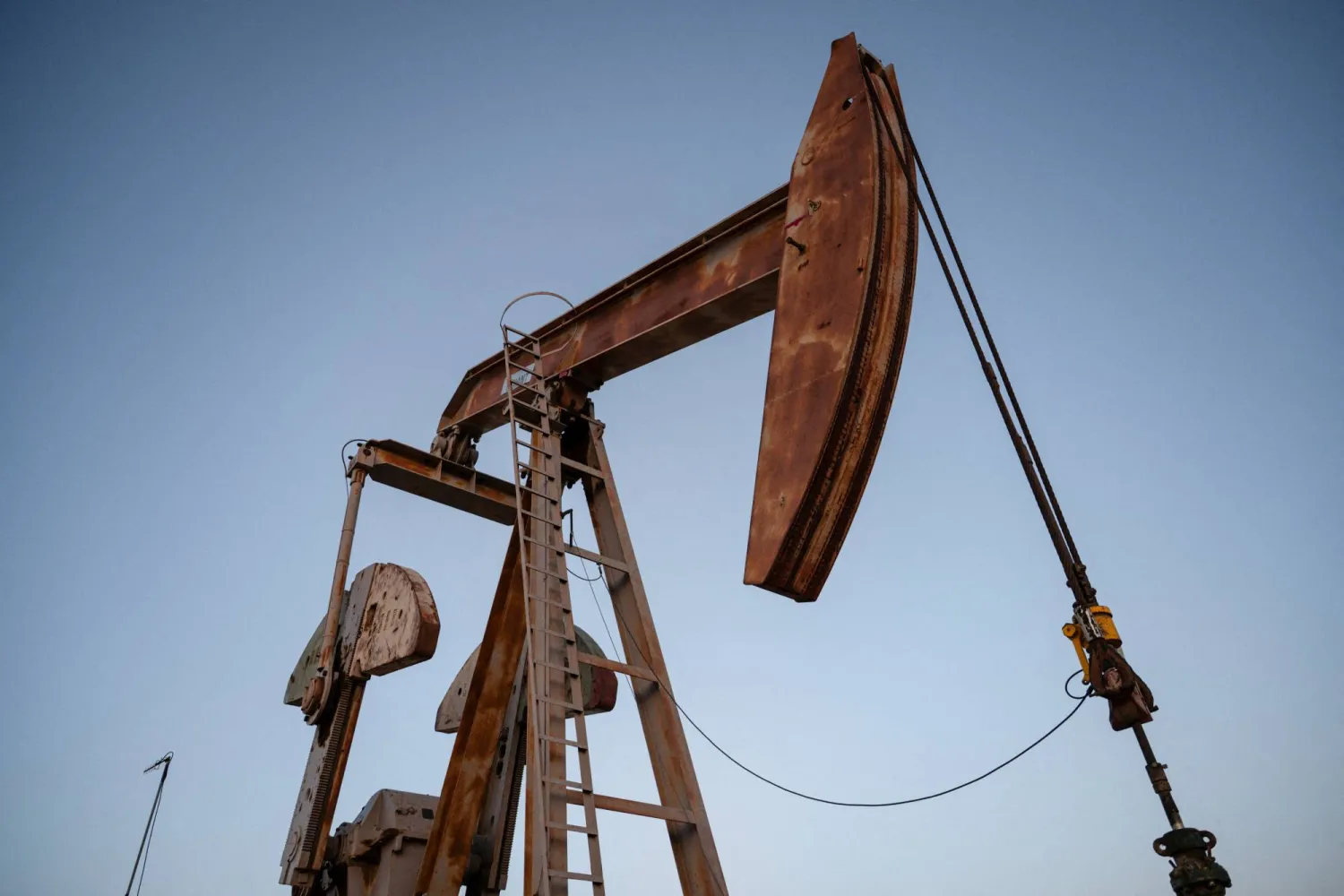
FILE PHOTO: A pump jack operates outside of Midland, Texas, US June 11, 2025. REUTERS/Eli Hartman/File Photo
TT

IEA Agrees to Record Release of Emergency Oil Reserves in an Effort to Calm Surging Prices

FILE PHOTO: A pump jack operates outside of Midland, Texas, US June 11, 2025. REUTERS/Eli Hartman/File Photo

The International Energy Agency agreed Wednesday to release the largest volume of emergency oil reserves in its history, in a bid to counter the effects on energy markets of the war in the Middle East.

The Paris-based organization said it will make 400 million barrels of oil available from its members’ emergency reserves. It’s a larger stock than the 182.7 million barrels that were released in 2022 by the IEA's 32 member countries in response to Russia’s full-scale invasion of Ukraine.

“Without sufficient routes to market and with no more available storage, Middle East oil producers have started to reduce production," IEA executive director Fatih Birol said. "And we have seen further attacks and damage to energy and energy-related infrastructure. Refinery operations have also been disrupted, with major implications for jet fuel and diesel supplies in particular.”

IEA member countries currently hold over 1.2 billion barrels of public emergency oil stocks, with a further 600 million barrels of industry stocks held under government obligation.

In response to US and Israeli strikes, Iran has attacked commercial ships across the Persian Gulf, escalating a campaign of squeezing the oil-rich region as global energy concerns mount.

Iran has effectively stopped cargo traffic in the narrow Strait of Hormuz through which about a fifth of all oil is shipped from the Persian Gulf toward the Indian Ocean. It has also targeted oil fields and refineries in Gulf Arab nations, aiming at generating enough global economic pain to pressure the United States and Israel to end their strikes.

Germany and Austria said earlier Wednesday they would release parts of their oil reserves following an IEA request for members to release the record 400 million barrels to help temper energy price spikes due to the Iran war. Japan also said it will release some of its reserves starting Monday.

Group of Seven energy ministers met Tuesday at IEA headquarters in Paris to look at ways to bring down prices. Birol said afterward that they discussed all available options, including making IEA emergency oil stocks available to the market.

The IEA reserves were established in 1974 following the Arab oil embargo.

“This is a major action aiming to alleviate the immediate impacts of the disruption in markets,” Birol added. "But, to be clear, the most important thing for a return to stable flows of oil and gas is the resumption of transit through the Strait of Hormuz.”

The G7 is comprised of the leading industrialized nations of Canada, the United States, France, Italy, Japan, Germany and Britain. Austria is not a member. The group's leaders were set to hold a meeting via videoconference later Wednesday to discuss energy issues.

The German economy ministry, Katherina Reiche, said the IEA asked Germany to release 2.64 million tons of its oil reserves. It was not immediately clear how much Austria was releasing.

She said it would take a couple of days before the delivery of the first quantities.

“Germany stands behind the IEA’s most important principle of mutual solidarity," Reiche said.

The G7 energy ministers announced Tuesday that they supported in principle “the implementation of proactive measures to address the situation, including the use of strategic reserves.”

According to the IEA, export volumes of crude and refined products are currently at less than 10% of prewar levels.

Austrian Economy Minister Wolfgang Hattmannsdorfer said his country was releasing part of the emergency oil reserve and extending the national strategic gas reserve, adding: “One thing is clear: in a crisis, there must be no crisis winners at the expense of commuters and businesses.”

The German government also said it will introduce a measure to allow gas stations in Germany to raise fuel prices no more than once a day. The federal government wants to introduce this as quickly as possible, Reiche said.

In Austria, starting Monday, price increases at gas stations will be allowed only three times a week, the country’s economy minister said.



Middle East War Presents ‘Serious Risk’ for Africa, Warns Report

Festus Mwirotsi, 34, scouts for pests and diseases in roses meant for export at Isinya Roses farm in Kajiado, Kenya, March 24, 2026, as Kenya's flower industry is losing up to $1.4 million a week as the Iran war cuts demand and disrupts shipping. (AP)
TT

Middle East War Presents ‘Serious Risk’ for Africa, Warns Report

Festus Mwirotsi, 34, scouts for pests and diseases in roses meant for export at Isinya Roses farm in Kajiado, Kenya, March 24, 2026, as Kenya's flower industry is losing up to $1.4 million a week as the Iran war cuts demand and disrupts shipping. (AP)

The Middle East war "presents a serious risk to Africa", the African Union and the African Development Bank (AfDB) said in a report seen by AFP Saturday.

The conflict threatens to increase the cost of living and curtail growth on the continent, the report warned.

The Middle East accounts for 15.8 percent of Africa's imports and 10.9 percent of its exports, the report noted.

"The conflict, which already has triggered a trade shock, could quickly turn into a cost-of-living crisis across Africa through higher fuel and food prices, rising shipping and insurance costs, exchange rate pressures, and tighter fiscal conditions," it added.

The growth rate of most African countries continues to be slower than before the Covid pandemic, it noted.

"A loss in output growth of 0.2 percentage points on Africa's GDP is projected for 2026 if it (the conflict) exceeds six months," it said.

"The longer the conflict lasts and the more severe the disruption to shipping routes and energy and fertilizer supplies, the greater the risk of a significant growth slowdown across the continent."

Reduced deliveries of liquefied natural gas (LNG) from the Gulf will impact fertilizer production, limiting its availability during the crucial planting period up to May, it added.

- Currencies hit -

The report was compiled by the UN Development Program (UNDP) and the United Nations Economic Commission for Africa (UNECA).

According to recent data from the AfDB, the currencies of 29 African countries have already depreciated, increasing the cost of servicing external debt, making imports more expensive and reducing foreign exchange reserves,

Some countries could see some short-term gains, such as Nigeria for its oil exports or Mozambique for its LNG.

The rerouting of ships around Cape of Good Hope could benefit ports in Mozambique, South Africa, Namibia and Mauritius.

Kenya is establishing itself as a logistics hub in East Africa, while Ethiopian Airlines, the leading carrier in Africa, is serving as an "emergency air bridge" between the continent, Asia, and Europe, the report noted.

But these gains are likely to be uneven and will not offset the consequences for inflation, budgets, and food security in Africa, they warned.

Above all, the current crisis could hit the costs of humanitarian aid and divert donor funds towards other priorities.


Taiwan Says It Has Assurances over LNG Supplies from 'Major' Country

The Taipei 101 skyscraper is seen lit up before the Earth Hour in Taipei, Taiwan, Saturday, March 28, 2026. (AP Photo/ Chiang Ying-ying)
TT

Taiwan Says It Has Assurances over LNG Supplies from 'Major' Country

The Taipei 101 skyscraper is seen lit up before the Earth Hour in Taipei, Taiwan, Saturday, March 28, 2026. (AP Photo/ Chiang Ying-ying)

Taiwan has received ‌supply assurances from the energy minister of a "major" liquefied natural gas-producing country, the island's economy minister said on Saturday, speaking about the Iran war's impact on Middle East energy imports.

Taiwan, a major semiconductor producer, had relied on Qatar for around a third of its LNG before the conflict, and has said it has secured alternate supplies for the months ahead from countries including Australia and the United States, said Reuters.

Speaking to ‌reporters in Taipei, ‌Economy Minister Kung Ming-hsin said that ‌because ⁠Taiwan has good ⁠relationships with its crude oil and natural gas suppliers, neither adjusting shipment origins nor purchasing additional spot cargoes would be a problem.

Kung said that about two weeks ago the energy minister of a certain "major energy-producing country" proactively contacted him.

The person "explained to us that they ⁠would fully support our natural gas needs. ‌If we have any ‌demand, we can let them know," he added.

"Another country even ‌said that some countries have released strategic petroleum ‌reserves, and they could also help coordinate matters if Taiwan needs assistance," Kung said.

"This shows that Taiwan has in fact earned considerable goodwill internationally through the long-term trust ‌it has built over the years," he said.

He declined to name the countries involved.

Angela ⁠Lin, ⁠spokesperson for state-owned refiner CPC, said at the same news conference that crude oil inventories were being maintained at pre-conflict levels and overall petrochemical feedstock supplies have remained stable.

CPC Chairman Fang Jeng-zen said that to reduce dependence on the Middle East, a new contract with the US will see 1.2 million metric tons of LNG supplied annually, with even more to come in the future, including eventually from Alaska.

However, Taiwan is not considering importing crude or LNG from Russia, he added.


India Says Crude Oil Supplies Secured, No Payment Issues for Iran Imports

The Indian-flagged carrier Jag Vasant, carrying liquefied petroleum gas (LPG) via the Strait of Hormuz, arrives at Mumbai Port in Mumbai, India, 01 April 2026. EPA/DIVYAKANT SOLANKI
TT

India Says Crude Oil Supplies Secured, No Payment Issues for Iran Imports

The Indian-flagged carrier Jag Vasant, carrying liquefied petroleum gas (LPG) via the Strait of Hormuz, arrives at Mumbai Port in Mumbai, India, 01 April 2026. EPA/DIVYAKANT SOLANKI

India's petroleum ministry said in a post on X on ‌Saturday ‌that the ‌country's ⁠refiners have secured their ⁠crude requirements, including from Iran, ⁠and ‌there are ‌no payment hurdles ‌for ‌Iranian imports.

India's crude oil ‌requirements remain fully secured ⁠for the coming ⁠months, the ministry added.