
Egypt Renews Call for Joint Arab Force, Warns of ‘Total Chaos’

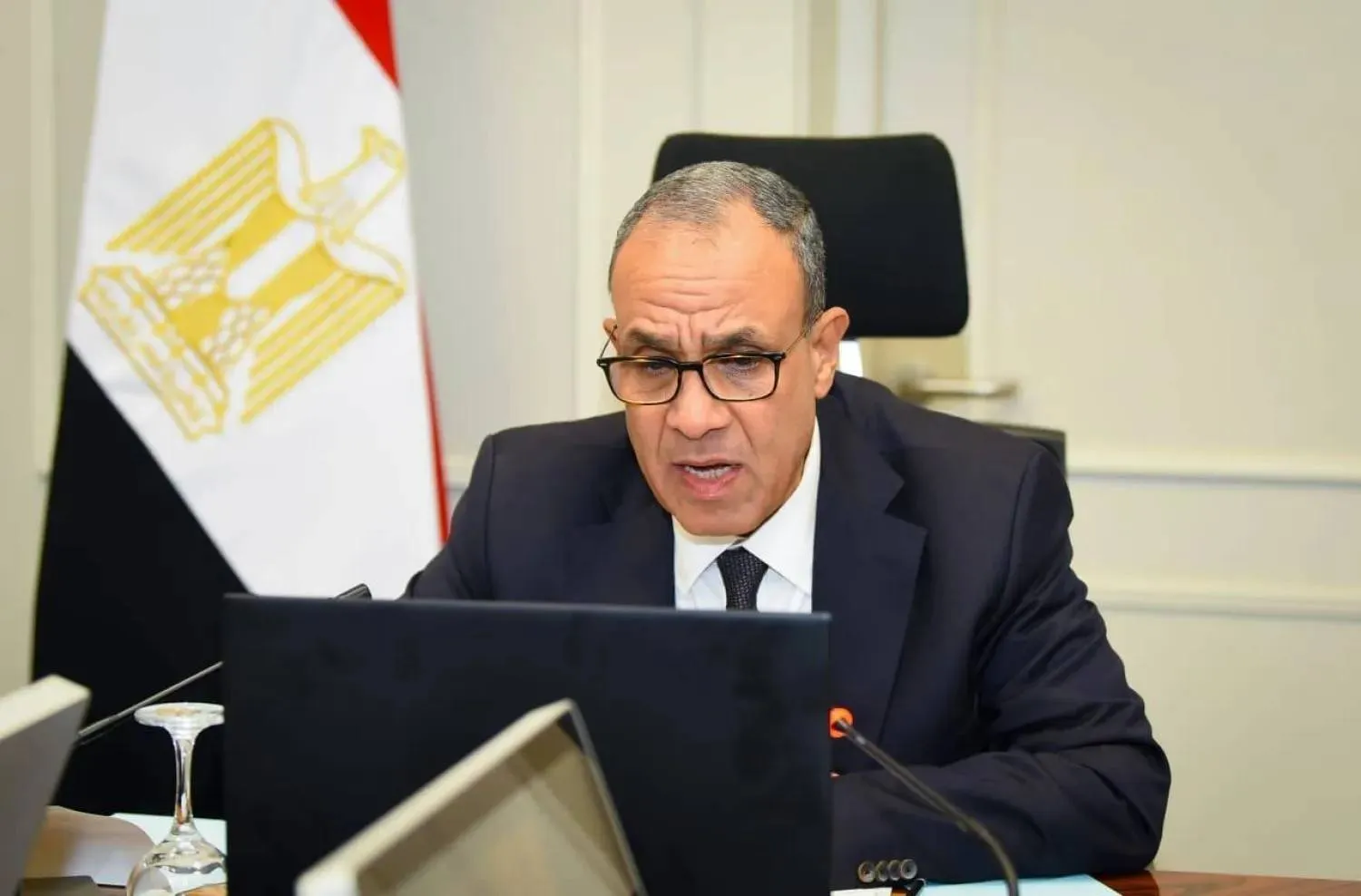
Egyptian Foreign Minister Badr Abdelatty (Egyptian Foreign Ministry)
TT

Egypt Renews Call for Joint Arab Force, Warns of ‘Total Chaos’

Egyptian Foreign Minister Badr Abdelatty (Egyptian Foreign Ministry)

Egypt renewed calls to form a joint Arab force capable of effectively confronting threats and risks facing Arab states, warning of “the dangers of the conflict widening in the region and the possibility of sliding into comprehensive chaos.”

It also reaffirmed its solidarity with the Gulf states and rejected any attempt by non-Arab regional powers or actors outside the region to impose regional security arrangements on Arab countries.

The remarks came as Egyptian Foreign Minister Badr Abdelatty participated in the fourth joint ministerial meeting between Egypt and the Gulf Cooperation Council's foreign ministers, held virtually on Thursday evening.

The meeting was chaired by Bahraini Foreign Minister Abdullatif bin Rashid Al Zayani, the current chair of the GCC ministerial council, and attended by GCC Secretary-General Jassim Albudaiwi.

In a statement on Friday, Egyptian Foreign Ministry spokesman Tamim Khallaf said Abdelatty reaffirmed Egypt’s “firm and strong support” for the “brotherly Gulf states” and its solidarity with them in confronting the “unacceptable and unjustified attacks” they faced from Iran in recent days.

He stressed Egypt’s “categorical rejection of any pretexts aimed at undermining the sovereignty or capabilities of the brotherly Gulf states, Jordan and Iraq,” saying “the security of the Gulf states is an integral part of Egyptian and Arab national security, and Egypt stands by its brothers in this delicate regional moment.”

Abdelatty also stressed the “utmost importance” of de-escalation, calming tensions and prioritizing diplomacy and dialogue. He underlined the need to ensure freedom of international maritime navigation and voiced “complete rejection of any attempts to obstruct it,” warning such moves would pose a direct threat to regional stability and global trade flows.

Khallaf said Abdelatty also renewed calls to activate Arab national security frameworks and deepen joint cooperation, urging swift practical steps and new mechanisms to safeguard the security and sovereignty of Arab states, including Gulf countries. These steps include accelerating the activation of the Arab League’s 1950 Joint Defense and Economic Cooperation Treaty and forming a joint Arab force.

Abdelatty told a meeting of the Egyptian cabinet on Tuesday that Egypt is currently leading initiatives to establish a joint Arab force to protect Arab national security, according to Cairo News television.

GCC foreign ministers praised what they described as the “principled, strong and supportive positions” of the Egyptian leadership, particularly Cairo’s unequivocal condemnation of attacks targeting Gulf states and its declaration of full solidarity with them at this sensitive moment.

They also commended Egypt’s continued support for the Palestinian cause and its pivotal role in backing Arab issues, strengthening joint Arab action and safeguarding regional security and stability amid current challenges.

Khallaf said the ministers also reviewed institutional ties between Egypt and the GCC, praising the “qualitative leap” in relations since the signing of a memorandum of understanding on political consultations and the adoption of a joint action plan for 2024-2028.

They also highlighted momentum generated by the Egyptian-Gulf Trade and Investment Forum hosted by Cairo last November and discussed efforts to elevate relations to a comprehensive strategic partnership that would strengthen economic, trade and investment cooperation for the mutual benefit of the region’s peoples.

Saudi Arabia Stresses Importance of Strengthening Lebanon’s Stability

Patriarch al-Rahi receives Ambassador Bukhari in Bkerke (NNA)
TT

Saudi Arabia Stresses Importance of Strengthening Lebanon’s Stability

Patriarch al-Rahi receives Ambassador Bukhari in Bkerke (NNA)

A meeting between Maronite Patriarch Beshara Boutros al-Rahi and Saudi Ambassador to Lebanon Walid Bukhari in Bkerke underscored the priority of consolidating stability in Lebanon by supporting the state and its institutions and fostering a climate of national unity.

A statement from the Maronite Patriarchate said the talks focused on “ways to strengthen stability in Lebanon and support the path of the state and its institutions.”

Bukhari conveyed greetings from the Saudi leadership and praised the patriarch’s “national and spiritual role,” stressing that the current phase requires wise leadership capable of reinforcing stability and supporting Lebanon’s constitutional authorities as they confront ongoing challenges.

He added that “building people comes before building infrastructure, and that fostering loyalty to the nation remains the fundamental pillar of any future recovery.”

The discussion also addressed Lebanon’s situation from a historical and intellectual perspective, drawing on the works of historians such as Philippe Hitti, Kamal Salibi and Asad Rustom.

The meeting’s participants raised the notion that Lebanon’s various communities may have reached a stage of “symbolic exhaustion” from recurring crises, potentially opening the door to renewed emphasis on shared national ground rather than division.

They stressed that Lebanon’s history, marked by repeated cycles, calls for drawing lessons to avoid future crises and move toward a new phase centered on national cohesion.

The meeting also highlighted the importance of supporting dialogue initiatives, particularly interfaith and national gatherings, given their role in reinforcing stability and promoting unity among Lebanon’s diverse communities.

Rahi stressed the importance of upholding national principles and safeguarding the dignity and future of the Lebanese people.

He expressed appreciation for efforts to support Lebanon and its stability, saying the current phase “requires collective awareness and national responsibility to protect the country and rebuild it on solid foundations.”


Lebanon: Disagreements Over Israel Talks Strain Aoun-Berri Ties

Israeli soldiers operate in southern Lebanon, as seen from northern Israel, Wednesday, April 29, 2026. (AP Photo/Ariel Schalit)
TT

Lebanon: Disagreements Over Israel Talks Strain Aoun-Berri Ties

Israeli soldiers operate in southern Lebanon, as seen from northern Israel, Wednesday, April 29, 2026. (AP Photo/Ariel Schalit)

Disagreements between Lebanese President Joseph Aoun and Parliament Speaker Nabih Berri over negotiations with Israel have come to the surface as violence has continued despite a recently extended ceasefire between Israel and Hezbollah.

Aoun said Wednesday that he had coordinated all steps with Berri and Prime Minister Nawaf Salam. But Berri responded sharply, saying the president’s remarks were “inaccurate, if not otherwise.”

Aoun had said Israel must “understand that it must first fully implement the ceasefire before moving on to negotiations,” stressing that every step he had taken regarding talks “was coordinated and consulted on with Speaker Nabih Berri and Prime Minister Nawaf Salam, contrary to what is being reported in the media.”

Berri quickly pushed back in a statement: “With all due respect to the presidency and to what His Excellency the president is saying, the remarks attributed to him ... are inaccurate, if not otherwise - particularly regarding the November 2024 arrangement and the issue of negotiations.”

Aoun also said he was “making every possible effort to reach a solution far from violence and the bloodshed in the South,” adding that such a solution could be achieved through negotiations, “which are war without bloodshed.”

Amid mounting criticism over the decision to pursue direct negotiations with Israel, Aoun reiterated: “In every step I have taken, I was in coordination and consultation with Speaker Nabih Berri and Prime Minister Nawaf Salam, contrary to what is being reported in the media.”

He added: “As for the criticism that Lebanon, through the US statement issued after the trilateral talks in Washington, agreed to grant Israel the freedom to continue its attacks on Lebanon, I say that this wording appeared in a statement issued by the US State Department. It is the same text adopted in November 2024 and approved by all parties. It is a statement, not an agreement, because an agreement comes after negotiations are concluded.”

The Lebanese president stressed that if Israel believes it can achieve security through violations and the destruction of border villages, it is mistaken, noting that it has tried this approach before without success.

“The only thing that can protect the borders is when the Lebanese state, in full strength, is present throughout the entire south, up to the international border,” he underlined.

“Israel must definitively understand that the only path to security is through negotiations, but it must first fully implement the ceasefire before moving to negotiations.”

Aoun acknowledged “many difficulties” facing efforts to reach that goal, saying Lebanon is working to mitigate the consequences of Israeli attacks through intensive diplomatic contacts.

“It is unacceptable for Israeli attacks to continue after the ceasefire has been declared,” he said. “We are now awaiting the United States to set a date to begin negotiations. All European Union countries, along with Arab states, have supported our choice of negotiations. There is also broad consensus among the Lebanese people, especially in the south, on the need to end the war,” he added.

The president highlighted a positive development, saying that the Lebanon file is now on the desk of US President Donald Trump. “He holds a special regard for Lebanon and spoke highly, in a very moving way, about Lebanon and its people during our phone call. This is an opportunity we must seize to guide our country toward safety and peace,” Aoun said.

Hezbollah drew Lebanon into the Middle East war on March 2, and Israeli and Lebanese representatives have since met twice in Washington, the first such meetings in decades, for discussions that Hezbollah has categorically rejected.

After the first talks, Trump announced a 10-day ceasefire that began on April 17, and a three-week extension after the second round.

Israel has repeatedly bombed Lebanon, particularly the south, despite the truce, and has carried out demolitions of border villages inside a "Yellow Line" it established in southern Lebanon.

It said on Wednesday that it struck "approximately 20 command centers and military structures used by Hezbollah.”


Libya: 17 Migrants Perish at Sea, 9 Missing Feared Dead

Migrants rescued after their boat, which departed from Libya's coast towards Europe, sank (AP)
TT

Libya: 17 Migrants Perish at Sea, 9 Missing Feared Dead

Migrants rescued after their boat, which departed from Libya's coast towards Europe, sank (AP)

At least 17 migrants died and nine are missing after their boat broke down and drifted for eight days in the Mediterranean Sea, Libya's Red Crescent and Libyan security sources said on Wednesday.

The Red Crescent said in a statement that the volunteers in cooperation with naval forces and coast guards of the Libyan National Army rescued seven survivors during recovery operations off Tobruk city in eastern Libya, ⁠near the border ⁠with Egypt.

Libya is a transit route for migrants, many of them from sub-Saharan Africa, who risk their lives to flee to Europe across desert and sea in the hope of escaping conflict and poverty. The ⁠security sources said they expected the bodies of the nine missing migrants to wash ashore in the next few days.

Pictures posted on the internet by the Red Crescent showed the volunteers placing the bodies in black plastic bags and loading them into the back of pick-up vehicles, Reuters reported.

On Tuesday, the country's attorney general said Tripoli Criminal Court sentenced four ⁠members ⁠of a "criminal gang" in Zuwara, western Libya, to up to 22 years in jail for human trafficking, abductions for ransom and torture.

In a separate case, the Public Prosecutor's Office ordered on Monday the arrest of another gang that allegedly sent migrants from Tobruk on a dilapidated boat that capsized, resulting in the death of 38 Sudanese, Egyptian, and Ethiopian nationals, according to the attorney general.