
Mohammed bin Salman in Nine Years: Domestic Growth and Global Engagement

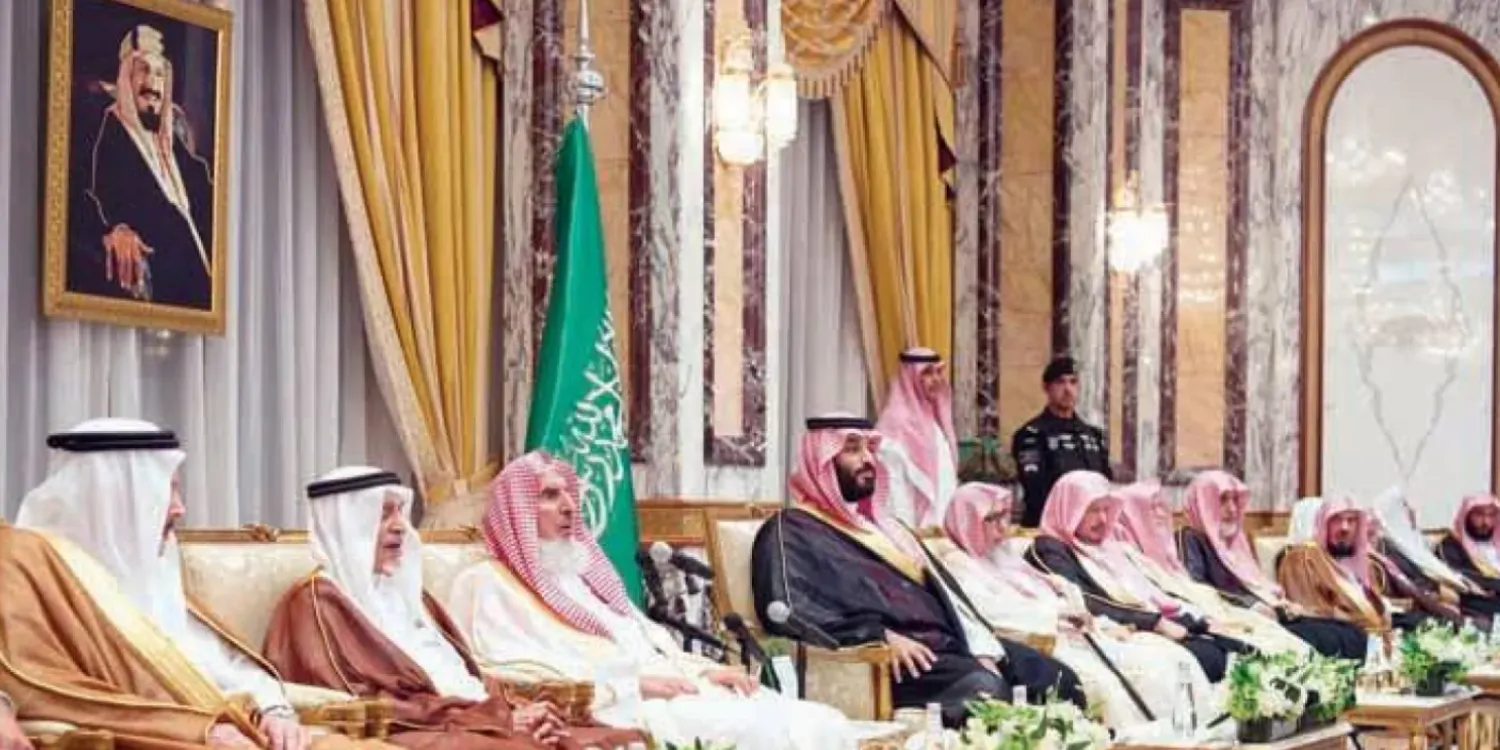
Saudi Crown Prince Mohammed bin Salman receives the pledge of allegiance as crown prince at Al-Safa Palace in Makkah. (SPA)
TT

Mohammed bin Salman in Nine Years: Domestic Growth and Global Engagement

Saudi Crown Prince Mohammed bin Salman receives the pledge of allegiance as crown prince at Al-Safa Palace in Makkah. (SPA)

Nine years have passed since the royal decree issued by the Custodian of the Two Holy Mosques, King Salman bin Abdulaziz, appointing Prince Mohammed bin Salman as crown prince.

The prince’s presence in a leadership role that reflects the pulse and ambitions of Saudi youth, alongside the guidance of the king, helped launch a domestic vision that accelerated economic and social development while strengthening Saudi Arabia’s position as a leading actor in addressing the region’s shifting landscape, in addition to expanding its global reach and influence.

Fundamental transformations

Over the years, the Kingdom has witnessed turning points marked by positive developments and fundamental transformations. These were not merely superficial changes, but efforts to shape new directions that redefine the concept of success in the 21st century. The objective extended beyond change within Saudi Arabia itself to efforts aimed at shifting the broader region from conflict toward development.

Among the latest manifestations of that approach has been work to calm several regional conflicts and create opportunities for peace. In parallel, Saudi Arabia has become an influential international destination on the global map, according to numerous studies, commentaries, and research addressing major international issues and regional transformations.

As a result, the Kingdom has hosted dozens of summits and hundreds of high-level meetings on key global issues, particularly political ones. The king and crown prince have also met a large number of world leaders, with nearly 120 visits recorded in recent years.

From an early stage, the Saudi crown prince led a drive to expand the Kingdom’s engagement with the world on multiple fronts, including economic and cultural ties. Political openness has also emerged as a defining feature of recent years, reaching levels not previously seen in Saudi Arabia or the wider region.

Many observers say that Riyadh’s policies under the leadership of Crown Prince Mohammed bin Salman in recent years have strengthened the Kingdom’s role in complex international issues and helped bring various parties to the negotiating table, including through efforts to promote peace through dialogue.
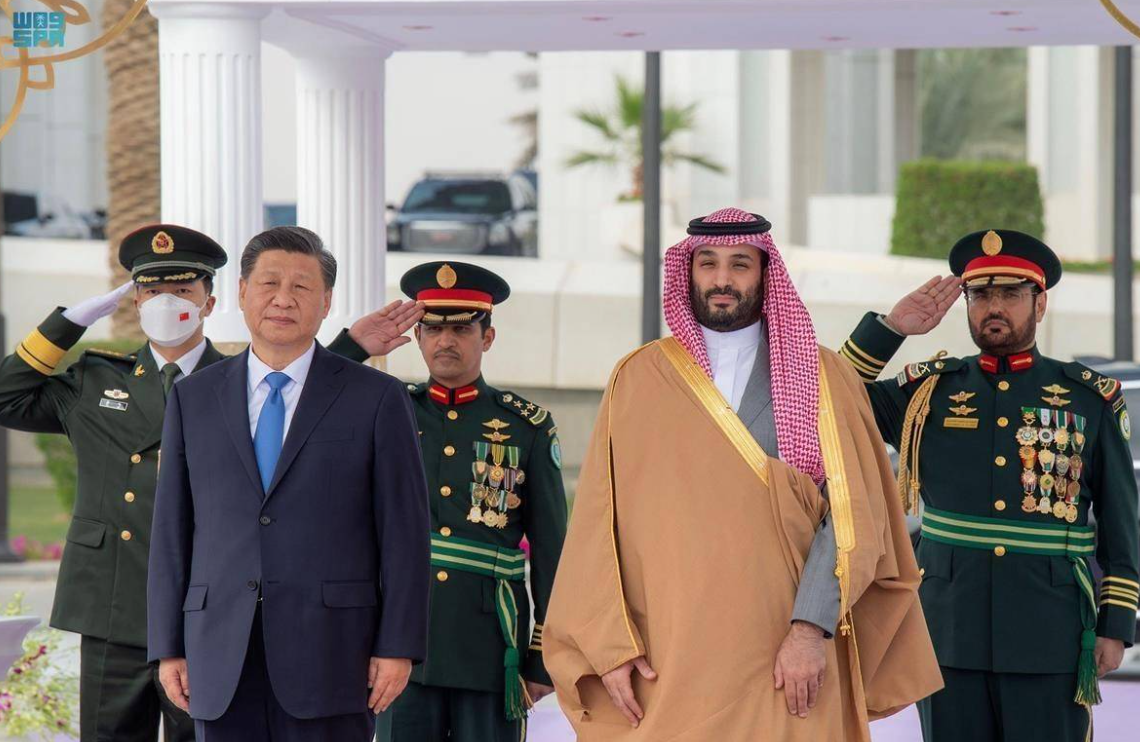
Saudi Crown Prince Mohammed bin Salman and the Chinese president during one of his visits to Saudi Arabia (SPA).

International standing

Over the past decade, Saudi Arabia has been the only Middle Eastern country to host the leaders of the United States, China and Russia within a span of just a few months, despite intensifying geopolitical tensions worldwide.

This period has been marked by a series of global crises, from the war in Ukraine and trade and economic disputes to the war in Gaza and tensions across the Middle East. The developments have positioned Saudi Arabia as a key actor influencing international policies, reflected in the scale, number and level of diplomatic visits and consultations with the Kingdom, particularly since the outbreak of the war in Gaza, as well as the international summits and meetings held on Saudi soil aimed at achieving peace.

International mediation

Saudi diplomacy has also played an active role in recent years. Under the direction of Crown Prince Mohammed bin Salman, who also serves as prime minister, the Kingdom hosted US-Ukrainian talks as part of efforts to address the crisis, drawing on its balanced relations with various parties.

These efforts also included meetings in Diriyah and Jeddah last year involving the United States, Russia and Ukraine. The initiatives reflect an increasingly international orientation in Saudi foreign policy centered on peace efforts, ceasefires and ending wars, including continued mediation initiatives and promoting dialogue as a primary solution during the Russia-Ukraine crisis.

Saudi Arabia has also directed the provision of multiple forms of humanitarian assistance and relief support, as well as mediation efforts aimed at securing the release of prisoners.

Commenting on those efforts, Michael Mitchell, a regional spokesperson for the US State Department, previously told Asharq Al-Awsat that the world had become closer than ever to reaching a ceasefire between Russia and Ukraine following negotiations hosted by Saudi Arabia. He expressed Washington’s appreciation for the Kingdom’s role in advancing ongoing diplomatic efforts and hosting key talks, while reaffirming the US commitment to working with all relevant parties to achieve lasting peace in Ukraine.

The Palestinian issue

The Palestinian issue has witnessed diplomatic momentum described as unprecedented in decades. In recent months and years, Saudi Arabia has pushed many countries to recognize a Palestinian state, bringing the total number of recognizing states to 149, according to the Palestinian Foreign Ministry.

The Saudi crown prince has also reiterated the Kingdom’s position that normalization with Israel would not proceed without the establishment of a Palestinian state. Saudi Arabia has hosted Arab and Islamic countries in Riyadh on two consecutive occasions to unify positions and increase pressure on the international community.

The Kingdom also chaired the committee formed by the summit, led an international coalition supporting the two-state solution, and presided over an international conference on the issue in New York.

In remarks previously made to Asharq Al-Awsat, Palestinian Prime Minister Mohammad Mustafa praised what he described as “Saudi Arabia’s firm positions, which contributed to shaping international consensus toward recognizing a Palestinian state and providing all possible support, given that its realization within the framework of a two-state solution represents the foundation of peace, security and stability in the Middle East.”

Supporting Syria’s recovery

The Kingdom began expanding its support for Syria after it announced in late December 2025 that a Saudi delegation led by an adviser to the Royal Court had visited Damascus and met with Ahmad Al-Sharaa, then the “leader of the new administration” and now Syria's president.

Saudi air and land bridges continued to deliver aid to the Syrian people, alongside humanitarian, medical and development projects. By the end of last year, those projects had increased by more than 100 percent compared with 2024, reaching more than 103 initiatives with a total cost approaching $100 million.

Saudi Arabia also welcomed Syrian President Ahmad Al-Sharaa three times during the year. The Kingdom pushed for the lifting of US sanctions on Syria, which the US president announced from Riyadh in May at the request of Crown Prince Mohammed bin Salman.

Additional support included paying roughly $15 million in Syrian debt to the World Bank and covering part of Syrian government employees’ salaries through a joint initiative with Qatar and the United Nations.

Regional initiatives

Saudi diplomatic initiatives have also extended to multiple regional crises. These include efforts to end the Yemeni crisis and hosting Yemeni parties, including southern groups, while facilitating the first consultative meeting on the southern issue and providing a framework for dialogue on the matter this year.

Saudi Arabia also supported evacuation operations in Sudan, hosted the Jeddah platform on Sudan, and continued humanitarian assistance. More recently, high-level Saudi-US discussions led by the Saudi crown prince and the US president have focused on efforts to resolve the Sudanese crisis.
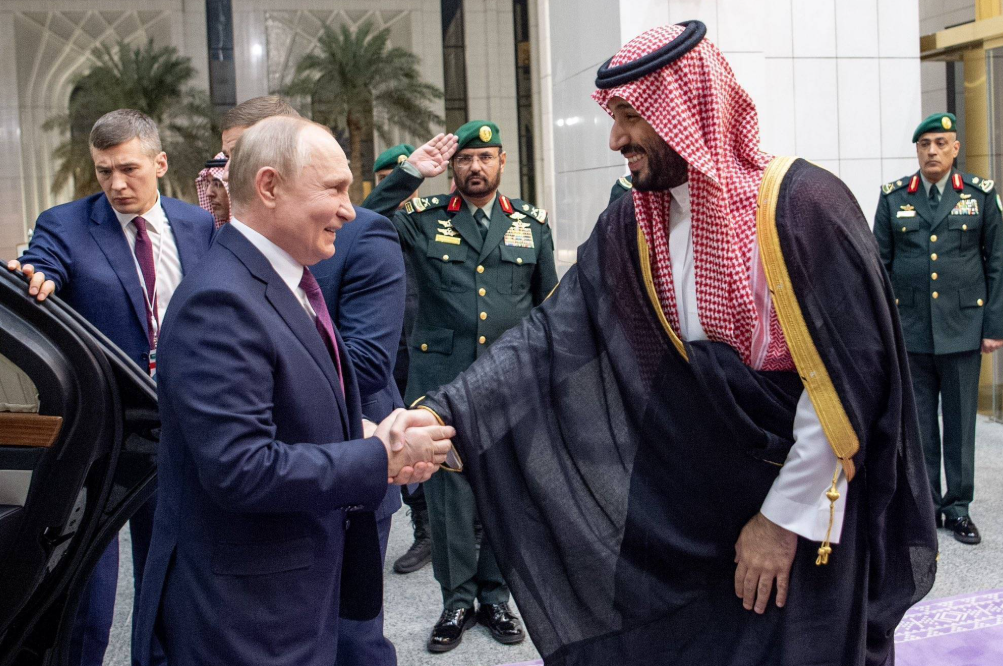
Saudi Crown Prince Mohammed bin Salman and Russian President Vladimir Putin in Riyadh in December 2023 (SPA).

Summits and consensus

Alongside its expanding regional and international role, Saudi Arabia has also played a significant role on the Arab and Islamic fronts during the nine years since Crown Prince Mohammed bin Salman assumed his position.

Under his direction, the Kingdom hosted seven Arab and Islamic summits between 2018 and 2024. These included the Dhahran Arab Summit in April 2018, the Makkah Summit in Support of Jordan in June 2018, the Emergency Arab Summit in Makkah in May 2019, the Arab-China Summit in December 2022, the Jeddah Arab Summit in May 2023, the Joint Arab-Islamic Extraordinary Summit in November 2023, and a follow-up summit in November 2024.

Last year, Saudi Arabia also strengthened its defense and strategic capabilities through a defense agreement with Pakistan stipulating that any attack on either country would be considered an attack on both. The Kingdom also signed a defense agreement with Washington during a historic visit to the United States in November 2025, in addition to expanding cooperation with major international powers including China, Russia and European countries.
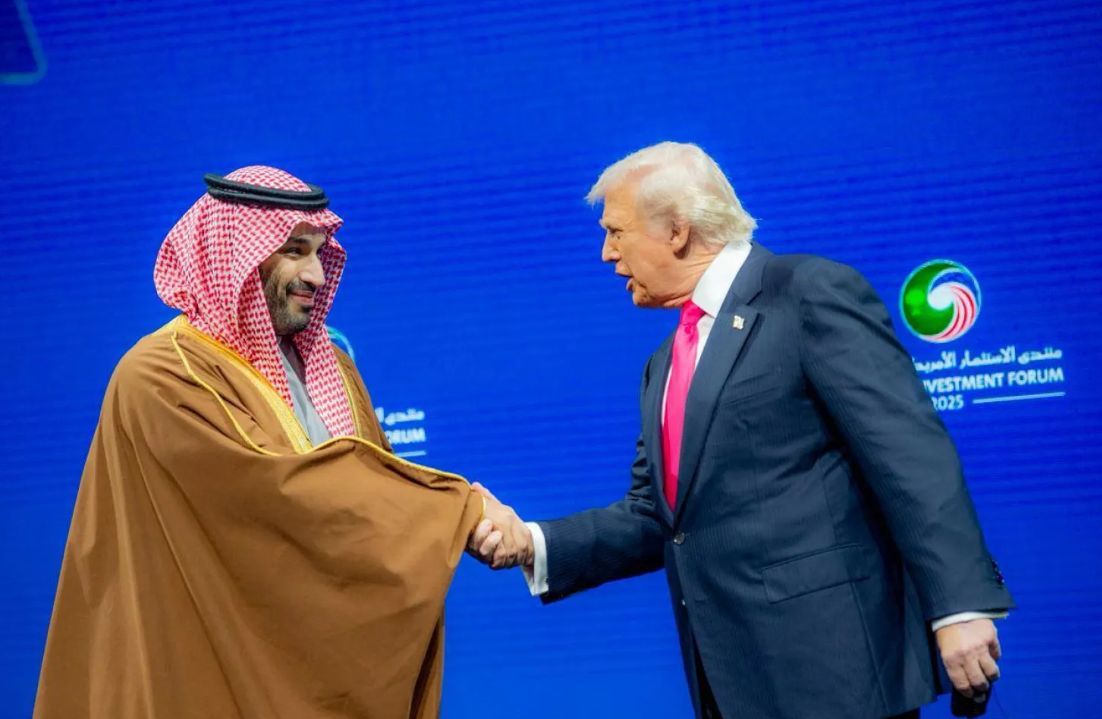
Saudi Crown Prince Mohammed bin Salman and Donald Trump in Washington in November 2025 (SPA).

“A great dawn” in relations with the United States

US President Donald Trump praised the leadership of the Saudi crown prince, saying, “The Saudi crown prince best represents our strong allies,” and adding that “a great dawn” awaits the Middle East.

Trump also described Saudi Arabia as “the heart and center of the world,” and said Riyadh was on track to become a global business hub.

During the crown prince’s visit to Washington late last year, the two countries signed a wide-ranging package of agreements that included a strategic defense agreement, the Kingdom’s second defense agreement signed in 2025, along with a package of defense sales, cooperation in civilian nuclear energy, a strategic partnership in artificial intelligence, a framework for securing supply chains for uranium and minerals, and measures to accelerate investment.

The US president also announced the designation of Saudi Arabia as a major non-NATO ally and praised Saudi negotiating capabilities, describing the Saudis as “great negotiators.”


Report: Europe’s Options in the Strait of Hormuz Are Few and Risky

A cargo ship in the Gulf, near the Strait of Hormuz, as seen from northern Ras al-Khaimah, near the border with Oman’s Musandam, amid the US-Israeli conflict with Iran, in United Arab Emirates, March 11, 2026. (Reuters file)
TT

Report: Europe’s Options in the Strait of Hormuz Are Few and Risky

A cargo ship in the Gulf, near the Strait of Hormuz, as seen from northern Ras al-Khaimah, near the border with Oman’s Musandam, amid the US-Israeli conflict with Iran, in United Arab Emirates, March 11, 2026. (Reuters file)

When senior officials from 40 countries met virtually this week to discuss how to bring shipping traffic back to the Strait of Hormuz, Italy’s foreign minister had a proposal. He urged them to establish a “humanitarian corridor” allowing safe passage for fertilizer and other crucial goods headed to impoverished nations.

The plan, described after the meeting by Italian officials, was one of several competing proposals from Europe and beyond that were meant to prevent the Iran war from causing widespread hunger. But it was not endorsed by the envoys on the call, and the meeting ended with no concrete plan to reopen the strait, militarily or otherwise, reported the New York Times.

European leaders are under pressure from US President Donald Trump to commit military assets, immediately, to end Iran’s blockage of the strait and tame a growing global energy and economic crisis. They have refused to meet his demands by sending warships now. Instead, they are hotly debating what to do to help unclog the vital shipping lane once the war ends.

But they are struggling to rally around a plan of action.

That partly reflects the slow gears of diplomacy in Europe and the sheer number of nations, including Gulf states, that are invested in safeguarding the strait once the war ends. Many nations involved in the talks, including Italy and Germany, have insisted that any international effort be blessed by the United Nations, which could slow action further. Military leaders will take up the issue in discussions next week.

More than anything, the struggle reflects how difficult it could be to actually secure the strait under a fragile peace — for Europe or for anyone else. None of the options available to Europe, the Gulf states and other countries look foolproof, even under the assumption that the major fighting will have stopped.

Naval escorts

French officials, including President Emmanuel Macron, have repeatedly raised the possibility that French naval vessels could help escort merchant ships through the strait after the war ends.

American officials have pushed for Europeans and other allies, like Japan, to escort ships sailing under their own countries’ flags.

Naval escorts are expensive. Also, their air defense systems alone might not be sufficient to stop some types of attacks, like drone strikes, should Iran choose to start firing again.

“What does the world expect, what does Donald Trump expect, from let’s say a handful or two handfuls of European frigates there in the Strait of Hormuz,” Defense Minister Boris Pistorius of Germany said last month, “to achieve what the powerful American Navy cannot manage there alone?”

Sweep for mines

German and Belgian officials, among others, say they are prepared to send minesweepers to clear the strait of explosives after the war.

Western military leaders aren’t convinced that Iran has actually mined the strait, in part because some Iranian ships still pass through it. So while minesweepers might be deployed as part of a naval escort, they might not have much to do.

Help from above

Another option is sending fighter jets and drones to intercept any Iranian air assaults on ships. American officials have pushed Europe to do this.

It is quite expensive and still not guaranteed to work. Iran can attack ships with a single soldier in a speedboat, and if just a few attempts succeed, that could be enough to spook insurers and shipowners out of attempting passage.

Diplomacy

Another option are negotiations and economic leverage to pressure Iran to refrain from future attacks, and deploy a variety of military means to enforce that. This effort would go beyond Europe. On Thursday, the German foreign ministry called on China to use its influence with Iran “constructively” to help end the hostilities.

This option is expensive and still not guaranteed. Negotiations seem to have done little to stop the fighting. But this may be Europe’s best bet, for lack of a better one.

What if none of that works?

Iranian officials said this week that they would continue to control traffic through the strait after the war. They have already made plans to make ships pay tolls for passing through the strait, which is supposed to be an unfettered waterway under international law.

A continued blockage risks global economic disaster. Countries around the world rely on shipments through the strait for fuel and fertilizer, among other necessities.

In some regions, shortages loom. In others, like Europe, high oil, gas and fertilizer prices have raised the specter of spiking inflation and cratering economic growth.

“The big threat right now is stagflation,” said Hanns Koenig, a managing director at Aurora Energy Research, a Berlin consultancy. “You’ve got higher prices, and they strangle the tiny growth we would have seen this year.”

*Jim Tankersley for the New York Times


US Military Jets Hit in Iran War Are the First Shot Down by Enemy Fire in Over 20 Years

An F-15E Strike Eagle turns toward the Panamint range over Death Valley National Park, Calif., on Feb. 27, 2017. (AP)
TT

US Military Jets Hit in Iran War Are the First Shot Down by Enemy Fire in Over 20 Years

An F-15E Strike Eagle turns toward the Panamint range over Death Valley National Park, Calif., on Feb. 27, 2017. (AP)

Iran shooting down two American military jets marks an exceedingly rare assault for the US that has not happened in more than 20 years and shows Iran’s continued ability to hit back despite President Donald Trump asserting it has been “completely decimated.”

The attacks came five weeks after US and Israeli strikes first pounded Iran, with Trump saying earlier this week that Tehran's “ability to launch missiles and drones is dramatically curtailed."

Iran shot down a US F15-E Strike Eagle fighter jet Friday, with one service member getting rescued and the search still underway for a second, US officials say. Iranian state media also said a US A-10 attack aircraft crashed after being hit by Iranian defense forces.

The last time a US warplane was shot down by enemy fire in combat was an A-10 Thunderbolt II during the 2003 US invasion of Iraq, said retired Air Force Brig. Gen. Houston Cantwell, a former F-16 fighter pilot.

But, he said, that’s because the US had largely been fighting insurgents who didn’t have the same anti-aircraft capabilities. The fact that there have not been more fighter jets lost in Iran, Cantwell said, is a testament to the capabilities of US forces.

"The fact that this hasn’t happened until now is an absolute miracle,” said Cantwell, who served four combat tours and is now a senior resident fellow at the Mitchell Institute for Aerospace Studies. “We’re flying combat missions here, they are being shot at every day.”

Shoulder-fired missile likely used, experts say

US Central Command said in a statement Wednesday that American forces have flown more than 13,000 missions in the Iran war while striking more than 12,300 targets.

After more than a month of punishing US-Israeli airstrikes, a degraded Iranian military nonetheless remains a stubborn foe. Its steady stream of strikes against Israel and Gulf Arab neighbors have been causing regional upheaval and global economic shock.

When it comes to American dominance over Iran's airspace, there’s still a distinction between air superiority and air supremacy, said Behnam Ben Taleblu, Iran program senior director at the Foundation for Defense of Democracies, a hawkish Washington think tank.

“A disabled air defense system is not a destroyed air defense system,” he said. “We shouldn’t be shocked that they’re still fighting.”

American planes have been flying missions at lower altitudes, which makes them more vulnerable to Iran's missiles, Taleblu said. It’s possible that Iran fired at the F-15 with a surface-to-air missile, but it's more likely that a portable, shoulder-fired missile was used, he said. Those are much harder to detect and reflect how Iran is “weak but still lethal.”

“This is a regime that is fighting for its life,” he said.

Mark Cancian, a retired Marine colonel and a senior defense adviser with the Center for Strategic and International Studies, agreed that a shoulder-fired missile was likely used against the fighter jet.

Nonetheless, the American air war against Iran has been a “tremendous success” so far, he said.

To put things in perspective, he said the loss rate for American warplanes flying over Germany during World War II was 3% at one point, which would equal about 350 warplanes in the US war against Iran.

“But then there’s the political side — you have an American public that is accustomed to fighting bloodless wars,” Cancian said. “Then a large part of the country doesn’t support the war. So to them, any loss is unacceptable.”

Pilots are trained on what to do if their plane is hit

The last US jet shot down in combat was struck by an Iraqi surface-to-air missile over Baghdad on April 8, 2003. The pilot safely ejected and was rescued, according to the Air Force.

In high-threat environments like missions over Iran, Cantwell, the retired general, said an aviator's blood pressure goes up and they become highly alert to incoming missiles. Those are typically either infrared- or radar-guided missiles, he said, requiring different evasive tactics.

If they are hit and need to eject from their aircraft, they are trained on what to do next, he said.

Pilots learn to check for wounds after a violent ejection and the shock of a missile explosion and, most crucially, how they are going to communicate their location so rescuers can find them.

At the same time, he said, the enemy is likely working to intercept the communications or even spoof the location.

Helicopters are more at risk than other aircraft

The planes that went down Friday were not the first crewed American aircraft to be lost overall in Iran.

A military helicopter and airplane exploded in 1980 during an aborted mission to rescue several dozen American hostages at the US embassy in Tehran, according to the Air Force Historical Support Division.

After a series of setbacks, including severe dust storms and mechanical failures, the mission was called off. As the aircraft took off, the rotor blades of one of the RH-53 helicopters collided with an EC-130 aircraft full of fuel and both exploded, killing eight.

More US helicopters have been shot down in recent decades, including a MH-47 Army Chinook helicopter that was struck by a rocket-propelled grenade in Afghanistan in 2005, killing 16. Helicopters are more dangerous because “the lower and the slower, the more susceptible you are,” Cantwell said.

That’s why those who went out on this week's rescue missions, likely in helicopters, he said, did “such a brave and honorable act.”


Iran Leaders Join Crowds on Tehran’s Streets to Project Control in Wartime

An Iranian flag is seen on a residential building that was damaged by recent strikes at Vahdat town in Karaj, southwest of Tehran on April 3, 2026. (AFP)
TT

Iran Leaders Join Crowds on Tehran’s Streets to Project Control in Wartime

An Iranian flag is seen on a residential building that was damaged by recent strikes at Vahdat town in Karaj, southwest of Tehran on April 3, 2026. (AFP)

After more than a month of being stalked by targeted assassinations, Iran's leadership has adopted a new tactic to show it is still in control - with senior officials walking openly in the streets among small crowds who have gathered in support of the regime.

In recent days, Iran's president and foreign minister have separately mixed with groups of several hundred people in central Tehran. On Tuesday, state television aired footage of the two posing for selfies, talking to members of the public and shaking hands with supporters who had gathered in public areas.

According to insiders and analysts, the appearances are part of a calculated effort by Iran's theocratic leadership to project resilience and authority — not only over the vital Strait of Hormuz but also over the population — despite a sustained US-Israeli campaign aimed at "obliterating" it.

One insider close to the hardline establishment said such public outings are intended to show that the regime is "unshaken by strikes and that it remains in control and vigilant" as the war grinds on.

The US-Israeli war ‌on Iran began on ‌February 28 with the killing of veteran Supreme Leader Ali Khamenei and several senior military ‌commanders ⁠in waves of ⁠strikes that have since continued to target top officials.

Iran's new Supreme Leader, Mojtaba Khamenei, has not been seen in public since taking over on March 8 from his father. Foreign Minister Abbas Araqchi, meanwhile, was removed from Israel's hit list amid mediation efforts last month, including by Pakistan, to bring Tehran and Washington together for talks to end the war.

Talks aimed at ending the war have since appeared to have petered out, as Tehran brands US peace proposals "unrealistic". Against that backdrop, recent public appearances by President Masoud Pezeshkian and Araqchi appear designed to project defiance, if not a convincing display of public support.

A senior Iranian source said officials' public presence demonstrates that "the establishment is not intimidated by Israel's targeted killing of top Iranian ⁠figures".

Asked whether Iran's foreign minister or president were on any sort of kill list, an Israeli ‌military spokesperson, Nadav Shoshani, said on Friday he would not "speak about specific personnel."

NIGHTLY RALLIES TO ‌SHOW RESILIENCE

Despite widespread destruction, Tehran appears emboldened by surviving weeks of intense US-Israeli attacks, firing on Gulf countries hosting US troops and demonstrating its ability ‌to effectively block the Strait of Hormuz.

On Wednesday, US President Donald Trump vowed more aggressive strikes on Iran, without offering a timeline ‌for ending hostilities. Tehran responded by warning the United States and Israel that "more crushing, broader and more destructive" attacks were in store.

Encouraged by clerical rulers, supporters of the regime take to the streets each night, filling public squares to show loyalty even as bombs rain down across the country.

Analysts say the establishment is also seeking to raise the "political and reputational" cost of the strikes at a time when civilian casualties are deeply disturbing for Iranians.

Omid Memarian, ‌a senior Iran analyst at DAWN, a Washington-based think tank, said the decision to send officials into gatherings reflects a layered strategy, including an effort to sustain the morale of core supporters ⁠at a moment of acute pressure.

"The system ⁠relies heavily on this base; if its supporters withdraw from public space, its ability to project control and authority weakens significantly," Memarian said.

Speaking to state television, some in the crowds voice unwavering loyalty to Iran's leadership; others oppose the bombing of their country regardless of politics; and some have a stake in the system, including government employees, students and others whose livelihoods are tied to it.

Hadi Ghaemi, head of the New York-based Center for Human Rights in Iran, said the establishment is using such loyal crowds as human shields to raise the cost of any assassination attempts.

"By being in the middle of large crowds they have protections that would make Israeli-American attacks against them very bloody and generate sympathy worldwide," he said.

POTENTIAL PROTESTERS STAY OFF STREETS AT NIGHT

The Islamic republic emerged from a 1979 revolution backed by millions of Iranians. But decades of rule marked by corruption, repression and mismanagement have thinned that support, alienating many ordinary people.

While there has been little sign so far of anti-government protests that erupted in January and abated after a deadly crackdown, the establishment has adopted harsh measures, such as arrests, executions and large-scale deployment of security forces, to prevent any sparks of dissent.

Rights groups have warned about "rushed executions" during wartime after Iran hanged at least seven political prisoners during the war.

"Many potential protesters are frightened by the continuing presence of armed men and violent crowds in the streets and largely stay at home once darkness falls," Ghaemi said.