


Trump Says US Not Ready to Agree Deal to End Iran War

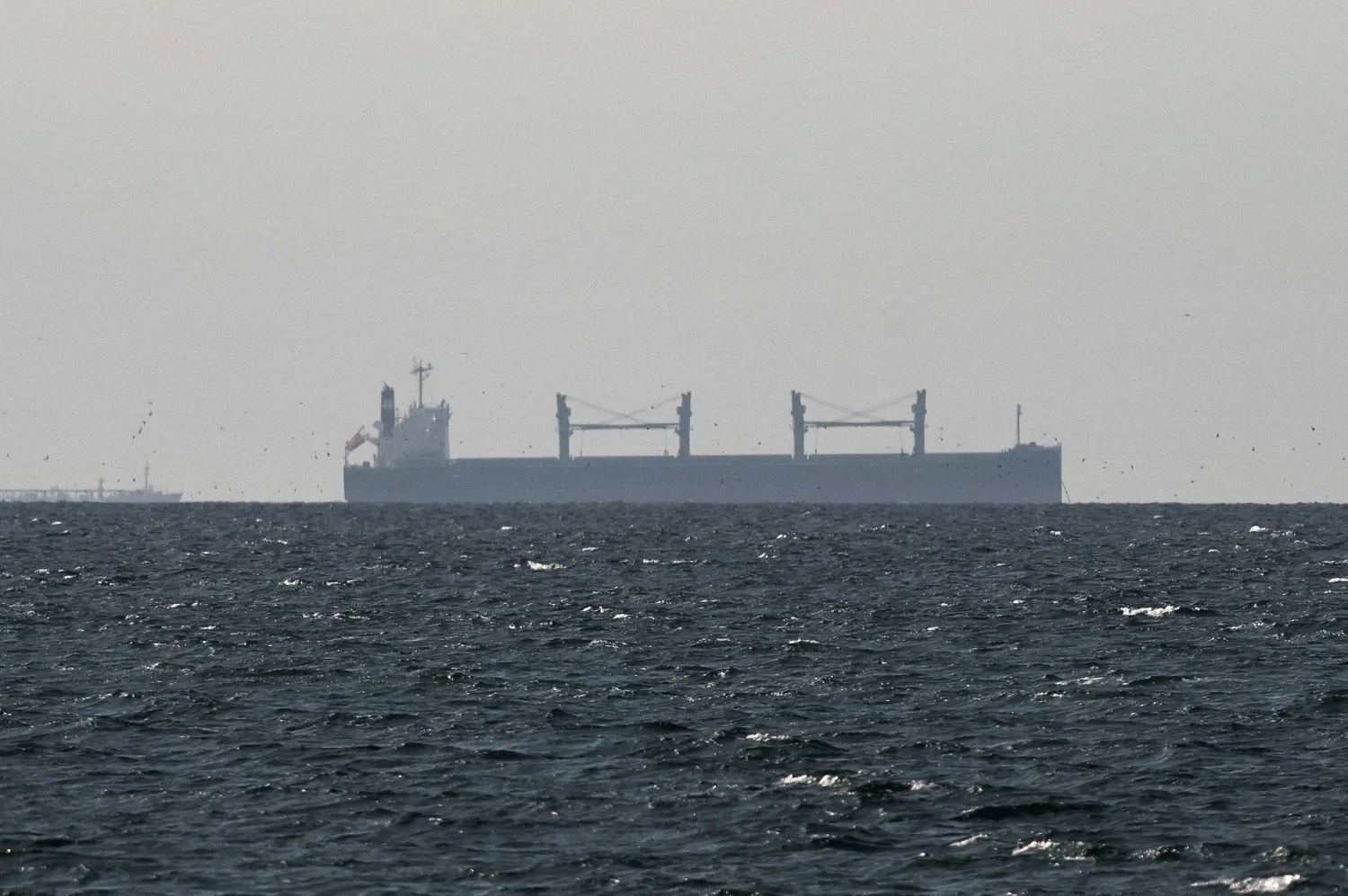
A tanker sails in the Gulf, near the Strait of Hormuz, as seen from northern Ras al-Khaimah, near the border with Oman’s Musandam governance, amid the US-Israeli conflict with Iran, in United Arab Emirates, March 11, 2026. (Reuters)
TT

Trump Says US Not Ready to Agree Deal to End Iran War

A tanker sails in the Gulf, near the Strait of Hormuz, as seen from northern Ras al-Khaimah, near the border with Oman’s Musandam governance, amid the US-Israeli conflict with Iran, in United Arab Emirates, March 11, 2026. (Reuters)

Donald Trump warned that he is not ready to seek a deal to end the war with Iran, as US ally Israel launched a new wave of strikes Sunday and Tehran's Revolutionary Guards threatened to hunt down and kill the Israeli leader. 

The US president, in an interview with NBC News, said he thought Tehran was keen to come to the table, but that Washington would fight on for better terms and might bomb targets on Iran's oil hub Kharg Island once, again, "just for fun". 

More than two weeks into the US-Israeli war against Iran, neither side is moderating its rhetoric despite a mounting death toll and economic damage from soaring oil prices caused by the effective closure of the Strait of Hormuz sea lane. 

"Iran wants to make a deal, and I don't want to make it because the terms aren't good enough yet," Trump told NBC News, warning that US forces would step up strikes on the Iranian coast north of the strait to clear a path for oil shipments to resume. 

Iran's new supreme leader, Mojtaba Khamenei, has -- in a written statement -- vowed to keep Hormuz closed. But Trump dismissed this and suggested his foe might not even be in control, saying: "I don't know if he's even alive. So far, nobody has been able to show him." 

Iran said on Saturday that "there is no problem with the new supreme leader", even though he has yet to appear in public. 

The Israeli military, meanwhile, announced a wave of strikes against targets in Western Iran, after Iran's Revolutionary Guards branded Prime Minister Benjamin Netanyahu a criminal and vowed that they would pursue and kill him. 

- Tehran cafes reopen - 

The United States has urged its citizens to leave Iraq, where pro-Iranian groups have launched attacks on the US embassy and bases hosting western military units, 

Despite the hardline talk from all sides, the citizens of Tehran were able to go about their work week in the most normal atmosphere since the start of the war on February 28, when US-Israeli strikes killed the previous supreme leader, Mojtaba's father Ali Khamenei. 

Traffic was busier than last week and some cafes and restaurants had reopened. 

One resident whizzed down the street on an electric hoverboard, and more than a third of stalls in the Tajrish bazaar, a popular shopping hub in the north of the capital, had reopened, five days before Nowruz, the Persian New Year. 

Some shoppers queued at ATMs to withdraw cash. Online operations at Bank Melli, one of the country's largest, had been paralyzed in recent days. 

Further on, passengers were waiting at bus stops, which had been largely deserted since the beginning of the war. 

Trump has suggested an international naval operation could escort oil tankers through the Strait of Hormuz, lessening pressure on the oil price and securing supplies for countries whose economies are most exposed to the conflict. 

"Hopefully China, France, Japan, South Korea, the UK, and others, that are affected by this artificial constraint, will send Ships to the area," Trump said in a social media post on Saturday. 

Asked about this, the UK ministry of defense was non-committal. "As we've said previously, we are currently discussing with our allies and partners a range of options to ensure the security of shipping in the region," it said. 

South Korea said it was "closely monitoring President Trump's remarks on social media". 

- Missile barrage - 

The policy chief of Japanese Prime Minister Sanae Takaichi's ruling party, Takayuki Kobayashi, said the bar for sending Japanese navy ships to the region under existing laws was "extremely high". 

Saudi Arabia and Bahrain said separately on Sunday they had intercepted renewed barrages of projectiles after an AFP journalist heard warning sirens in Manama. 

Late Saturday, authorities in Dubai also said air defenses had made further interceptions after Iran's military warned UAE civilians to avoid port areas. 

US forces struck Iran's Kharg Island on Friday -- from which nearly all of Iran's oil exports flow -- but both sides confirmed that the strikes only took out military defenses and left the oil export terminals intact. 

More than 1,200 people have been killed by US and Israeli strikes, according to Iranian health ministry figures that could not be independently verified. 

The UN refugee agency says up to 3.2 million people have been displaced in Iran, most of them fleeing the capital and other cities to seek safety. 

The Pentagon says more than 15,000 targets in Iran have been hit by US and Israeli forces. 

US media reported that the Pentagon has dispatched the amphibious assault ship USS Tripoli and around 2,500 Marines to the region. 


War-Related Oil Squeeze a ‘Short-Term Pain,’ US Official Insists

 A customer fuels up with regular gasoline priced at $5.29 at a Chevron gas station in Bellevue, Wash., Friday, March 13, 2026. (AP)
A customer fuels up with regular gasoline priced at $5.29 at a Chevron gas station in Bellevue, Wash., Friday, March 13, 2026. (AP)
TT

War-Related Oil Squeeze a ‘Short-Term Pain,’ US Official Insists

 A customer fuels up with regular gasoline priced at $5.29 at a Chevron gas station in Bellevue, Wash., Friday, March 13, 2026. (AP)
A customer fuels up with regular gasoline priced at $5.29 at a Chevron gas station in Bellevue, Wash., Friday, March 13, 2026. (AP)

President Donald Trump's top energy official said Sunday that Americans will have to endure the "short-term pain" of higher prices at the pump as US forces conduct their war against Iran.

Now in the third week of a multi-dimensional Middle East conflict that has seen US and Israeli forces pound Iran's military targets, and Tehran responding with missile and drone attacks against several neighboring states, global energy prices have soared.

And concern has swelled that a lengthy blockage by Iran of the critical Strait of Hormuz could send crude prices through the roof.

"President Trump needed to act now... to stop the killing of American soldiers, to stop the destabilization of the region, and to end Iran's ability to threaten energy markets," US Energy Secretary Chris Wright told ABC News talk show "This Week."

He said economic conditions would grow dramatically worse without the ongoing military operation "to defang the Iranian regime" and ensure it can no longer threaten the world with nuclear weapons.

"This is short-term pain to get through to a much better place where the Middle East can no longer be held hostage by the one rogue nation in Iran," Wright added.

The energy secretary also said he predicted the war could end "in the next few weeks, and we'll see a rebound in (fuel) supplies and a pushing down of prices after that."

Since the war began, gas prices have soared in the United States, where Trump in 2024 campaigned relentlessly on a vow to lower fuel costs for Americans. The issue is a critical one for US voters, who head to the polls in November for the country's mid-term congressional elections.

Gas prices have jumped 25 percent in the past month, to $3.70 per gallon, according to the American Automobile Association.

The Trump administration has stressed other governments should help in a possible effort to unblock the Strait of Hormuz by escorting tankers through the narrow waterway along Iran's coast.

US Transportation Secretary Sean Duffy, speaking on Fox News "Sunday Morning Futures," said oil could soon flow through the strait if such escorts -- and shipping insurance -- are worked out.

"Could be a day, could be a week," Duffy said of possible escorts.


Israel Says ‘No Interceptor Shortage’ After Reports of Scarcity as Iranian Missiles Injure at Least 8

15 March 2027, Israel, Tel Aviv: People watch the site of a projectile impact following an Iranian strike on Tel Aviv. (dpa)
TT

Israel Says ‘No Interceptor Shortage’ After Reports of Scarcity as Iranian Missiles Injure at Least 8

15 March 2027, Israel, Tel Aviv: People watch the site of a projectile impact following an Iranian strike on Tel Aviv. (dpa)

An Israeli military source on Sunday denied media reports that Israel was running low on missile interceptors crucial to its air defenses, adding that the army was "continuously monitoring the situation". 

Citing US officials, news outlet Semafor had reported that Israel had informed the United States that it was "running critically low on ballistic missile interceptors", as the US-Israeli war against Iran entered its third week. 

"As of now, there is no interceptor shortage. The Israeli army is prepared for prolonged combat. We are continuously monitoring the situation," the military source said, in response to media queries. 

Israeli Foreign Minister Gideon Saar also dismissed the reports when questioned by journalists earlier on Sunday. 

At least eight people were injured in Israel Sunday following repeated missile launches from Iran, at least two of which contained cluster munitions according to Israeli authorities. 

Israeli police released footage from a CCTV camera in the Tel Aviv area showing an impact on a road, saying that it was from "cluster munitions" that caused "damage at several locations". 

Bomblets and shrapnel from the missile wounded four people in various parts of the Tel Aviv metropolitan area, according to the Magen David Adom (MDA) rescue service. 

A man in his 60s was hospitalized with moderate injuries to his head from broken glass, while three were treated due to the shock waves from the blast. 

In another barrage shortly before noon, two men aged 62 and 44 reported minor injuries "from pieces of asphalt that struck them as a result of the blast", according to MDA. 

During a salvo toward the Tel Aviv area at around 3:00 am (0100 GMT), a man and a woman in their 80s suffered light injuries, from glass shards and smoke inhalation respectively. 

Another Iranian missile directed at Israel's southernmost city of Eilat was intercepted before reaching the target, without causing injuries. The municipality of Eilat quoted security sources saying it was a cluster missile. 

By late midday on Sunday, seven missile salvos were launched from Iran toward the State of Israel, some of which were intercepted. 

Saar on Sunday accused Iran of targeting civilian areas, during a visit to the northern Arab Israeli town of Zarzir, hit two days prior by shrapnel from an Iranian missile that lightly wounded almost 60 residents. 

"While we are targeting military objectives... the Iranian regime is targeting civilians," Saar said. 

"All the casualties we faced during these two weeks of confrontation... are civilians from Iranian missiles. This is of course a war crime," he added. 

His words were echoed by police superintendent Shlomi Schlezinger while speaking near the site of one of the impacts on Sunday. 

Iran is "always targeting crowded places, with people, the big major cities," he said in central Tel Aviv. 

He attributed the relatively low number of Israeli casualties to civilians' adherence to safety instructions. 

"We have a lot of collateral damage to cars and buildings, as you can see," he said. 

"We're used to, in the last 16 days, to be in shelters and in safe rooms when we have the alarm." 

According to Haaretz, citing security officials, 250 ballistic missiles had been fired by Iran at Israel as of March 13. 

Twelve people have been killed in Israel by missiles or falling debris since the start of the war, according to an AFP tally of figures given by Israeli authorities and first responders. 


Iran FM Sees No Reason for Talks After Trump Says It Wants Deal

09 September 2025, Egypt, Cairo: Iranian Foreign Minister Abbas Araghchi attends a joint press conference in Cairo. (dpa)
TT

Iran FM Sees No Reason for Talks After Trump Says It Wants Deal

09 September 2025, Egypt, Cairo: Iranian Foreign Minister Abbas Araghchi attends a joint press conference in Cairo. (dpa)

Foreign Minister Abbas Araghchi said Iran was not interested in talks with the United States, pushing back on President Donald Trump's stance that Tehran wants a deal to end the war.

"We are stable and strong enough. We are only defending our people," Araghchi told CBS's "Face The Nation," in an interview aired Sunday.

"We don't see any reason why we should talk with Americans, because we were talking with them when they decided to attack us.

"There is no good experience talking with Americans."

Trump on Saturday said Iran wanted a deal, but that he was not prepared to make one on current terms, without giving further details.

"We never asked for a ceasefire, and we have never asked even for negotiation," Araghchi said.

He added that Iran was ready to talk to countries who want to negotiate for selected oil tankers to pass through the key Strait of Hormuz export route.

"I cannot mention any country in particular, but we have been approached by a number of countries who want to have a safe passage for their vessels," he said.
