


Pakistan Says Hit Military Facilities in Afghanistan

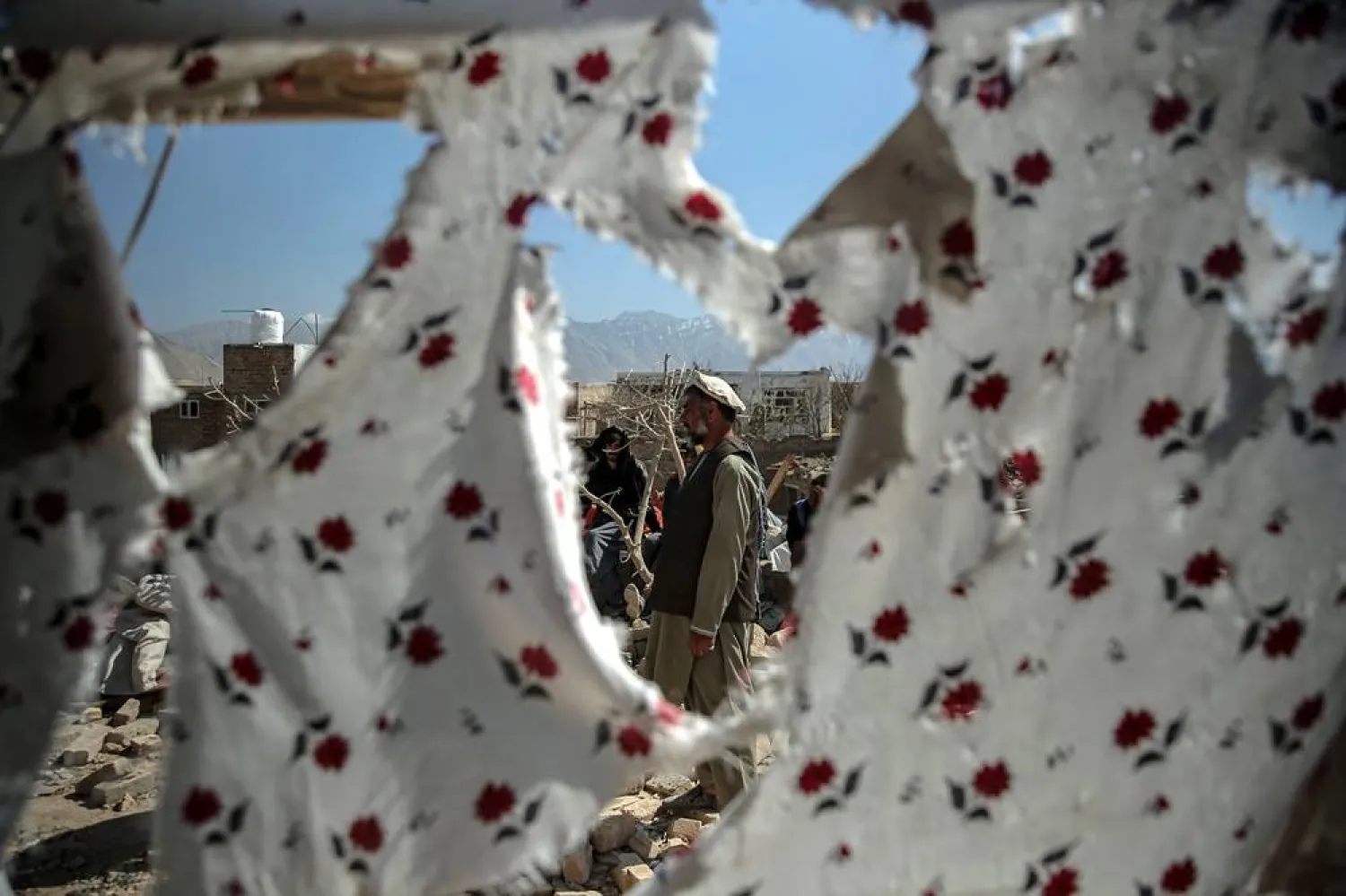
A man surveys the damage following alleged Pakistani airstrikes in Kabul, Afghanistan, 14 March 2026. (EPA)
TT

Pakistan Says Hit Military Facilities in Afghanistan

A man surveys the damage following alleged Pakistani airstrikes in Kabul, Afghanistan, 14 March 2026. (EPA)

Pakistan said on Sunday its forces had attacked military facilities in southern Afghanistan, as well as "terrorist hideouts", in the latest strikes between the two sides.

Security sources said troops "effectively destroyed technical support infrastructure and equipment storage facility in Kandahar", which is home to the Taliban administration's supreme leader Hibatullah Akhundzada.

Another strike targeted a tunnel in Kandahar purportedly used by the Afghan Taliban and the Pakistani Taliban militant group or TTP, which Islamabad blames for a wave of strikes, they added.

Local residents in Kandahar told AFP they saw jet planes flying over the city and heard explosions during the night.

"Military planes flew over the mountain where there is a military facility, and an explosion followed," one said, adding flames could be seen.

An air strike was also heard in Spin Boldak, southeast of Kandahar, residents said, while authorities in the eastern border province of Khost said there were clashes on Saturday night.

Taliban government spokesman Zabihullah Mujahid told AFP that the strikes caused some damage to a drug rehabilitation center and an empty container in Kandahar.

"The places they are talking about are far away from these two places," he added.

Pakistan said on Saturday it had thwarted "drone attacks" launched by Afghanistan which were intercepted on Friday night.

At least three locations were targeted, including the Pakistani military headquarters in Rawalpindi, near the capital Islamabad, authorities said.

Pakistan President Asif Ali Zardari's office said the Afghan Taliban had "crossed a red line" by targeting civilians and promised a response.

Islamabad launched a military operation against Afghanistan last month, targeting what it said were Islamist extremists following attacks in Pakistan.

The Taliban government has denied any involvement or the use of Afghan territory for militancy, while Pakistan insists it does not target civilians.

There have been repeated clashes at the border in recent weeks, hampering trade and forcing nearby residents to leave their homes.

The UN mission in Afghanistan said on Friday that at least 75 civilians have been killed and 193 injured in Afghanistan as a result of the clashes since February 26.



Pope Renews Appeal for Peace in Middle East

 Pope Leo XIV appears at the window of his studio overlooking St. Peter's Square at the Vatican where Catholic faithful and pilgrims gathered for the traditional Sunday blessing at the end of the noon Angelus prayer, Sunday, March 15, 2026. (AP)
Pope Leo XIV appears at the window of his studio overlooking St. Peter's Square at the Vatican where Catholic faithful and pilgrims gathered for the traditional Sunday blessing at the end of the noon Angelus prayer, Sunday, March 15, 2026. (AP)
TT

Pope Renews Appeal for Peace in Middle East

 Pope Leo XIV appears at the window of his studio overlooking St. Peter's Square at the Vatican where Catholic faithful and pilgrims gathered for the traditional Sunday blessing at the end of the noon Angelus prayer, Sunday, March 15, 2026. (AP)
Pope Leo XIV appears at the window of his studio overlooking St. Peter's Square at the Vatican where Catholic faithful and pilgrims gathered for the traditional Sunday blessing at the end of the noon Angelus prayer, Sunday, March 15, 2026. (AP)

Pope Leo XIV renewed his appeal for peace in the Middle East on Sunday, calling for an end to the war and reopening of dialogue.

"Dear brothers and sisters, for two weeks the peoples of the Middle East have suffered the atrocious violence of war," the US pontiff said at his weekly Angelus prayer at the Vatican.

"Thousands of innocent people have been killed, and countless others have been forced to flee their homes.

"I renew my closeness to all those who have lost loved ones in the attacks that have hit schools, hospitals, and residential areas."

Leo said the situation in Lebanon was a particular cause for concern.

"On behalf of the Christians of the Middle East and of all women and men of goodwill, I address those responsible for this conflict," he said in Italian.

"Cease fire! Let paths of dialogue be reopened!

"Violence can never lead to the justice, stability and peace that people await."


Israel Approves Emergency Military Funding as Iran War Rages

Israeli security forces check the damage to cars after a rocket strike in Holon, in the Tel Aviv District on March 15, 2026. (AFP)
TT

Israel Approves Emergency Military Funding as Iran War Rages

Israeli security forces check the damage to cars after a rocket strike in Holon, in the Tel Aviv District on March 15, 2026. (AFP)

Israel has approved an $827-million emergency budget allocation for military purchases, Israeli media reported Sunday, as the war with Iran entered its third week.

The 2.6-billion-shekel package was approved over the weekend by cabinet ministers during a telephone meeting, the daily Haaretz reported.

It will be used for "security purchases" and to address "urgent needs", it said, without providing further details.

A finance ministry document circulated to all ministers and reported by several media outlets, including Channel 12, said that "given the intensity of the fighting" the additional budget allocation was necessary.

"An urgent and immediate need has arisen to provide an operational response, including the acquisition of munitions, the procurement of advanced weapons systems and the replenishment of critical combat stocks," the document said.

The document added that the move constituted "an exceptional emergency decision intended solely to address needs arising from the conduct of the fighting".

The funds will be drawn from the state budget, totaling $222 billion and approved by the government on March 12, and expected to be adopted by the Knesset by March 31, according to the reports.

The government of Prime Minister Benjamin Netanyahu has not yet officially commented on the measure or specified what purchases the funds will cover.

Since the Israeli-US bombardments against Iran that began on February 28, Israel has been targeted daily by Iranian ballistic missile fire, which the military has mostly intercepted using its missile defense systems.

According to Haaretz, citing security officials, 250 ballistic missiles had been fired by Iran at Israel as of March 13.

Twelve people have been killed in Israel by missiles or falling debris since the start of the war, according to an AFP tally of figures given by Israeli authorities and first responders.


UK Says Vital to 'De-escalate' Middle East War

FILE PHOTO: An aerial view of the island of Qeshm, separated from the Iranian mainland by the Clarence Strait, in the Strait of Hormuz, December 10, 2023. REUTERS/Stringer/File Photo
TT

UK Says Vital to 'De-escalate' Middle East War

FILE PHOTO: An aerial view of the island of Qeshm, separated from the Iranian mainland by the Clarence Strait, in the Strait of Hormuz, December 10, 2023. REUTERS/Stringer/File Photo

A British minister on Sunday said it was essential to calm the situation in the Middle East after US President Donald Trump demanded that other nations help protect world oil supplies passing through the Strait of Hormuz. 

The "plan now has to be to de-escalate the conflict", Energy Security Minister Ed Miliband told the BBC. 

"We are talking to our allies. There are different ways in which we can make maritime shipping possible. We are intensively looking with our allies at what can be done, because it's so important that we get the strait reopened," he added, speaking to Sky News. 

A spokesperson for the defense ministry said late on Saturday: "As we've said previously, we are currently discussing with our allies and partners a range of options to ensure the security of shipping in the region."