What to Know About Iran’s Bushehr Nuclear Power Plant After Report of Projectile Hitting Its Complex

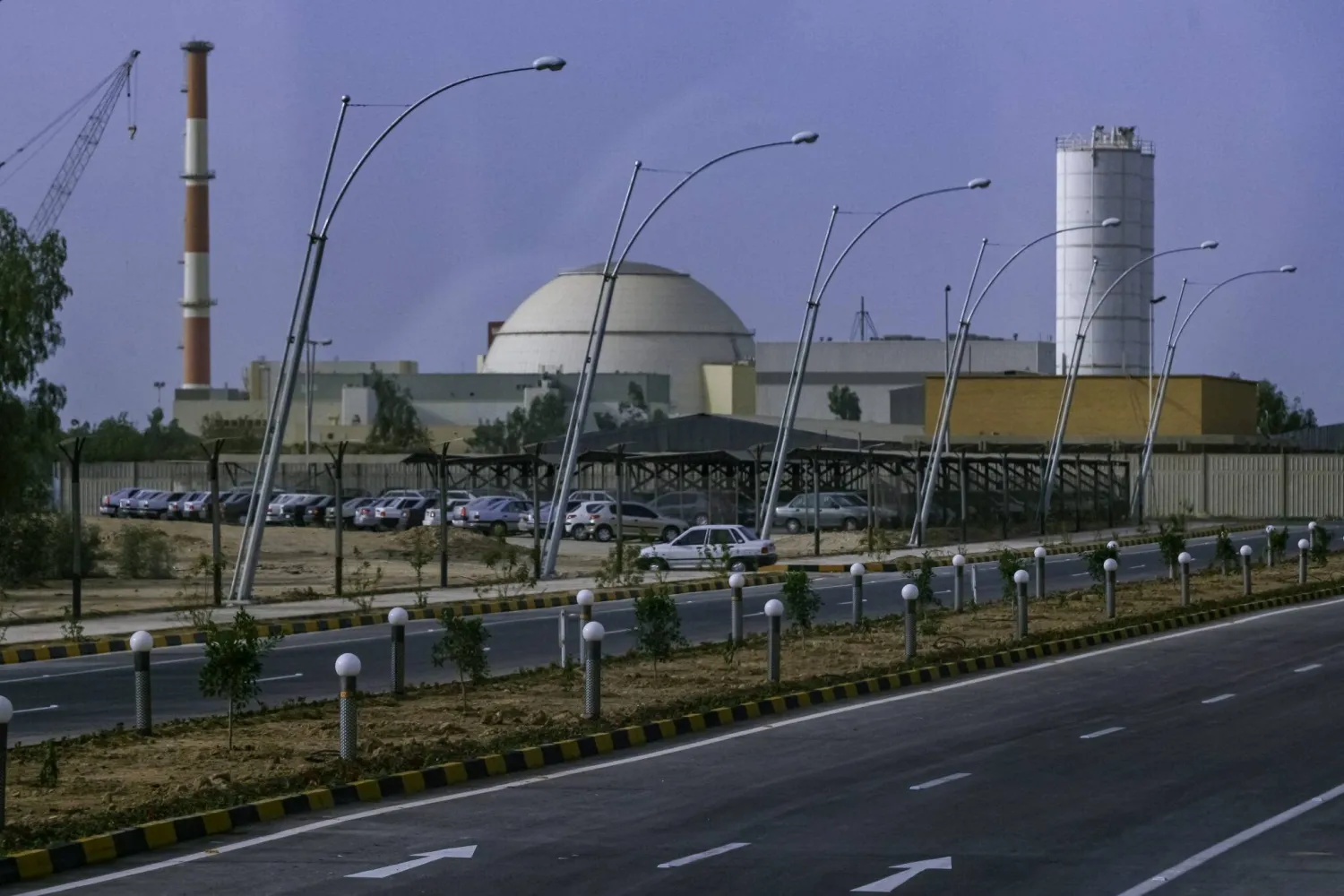
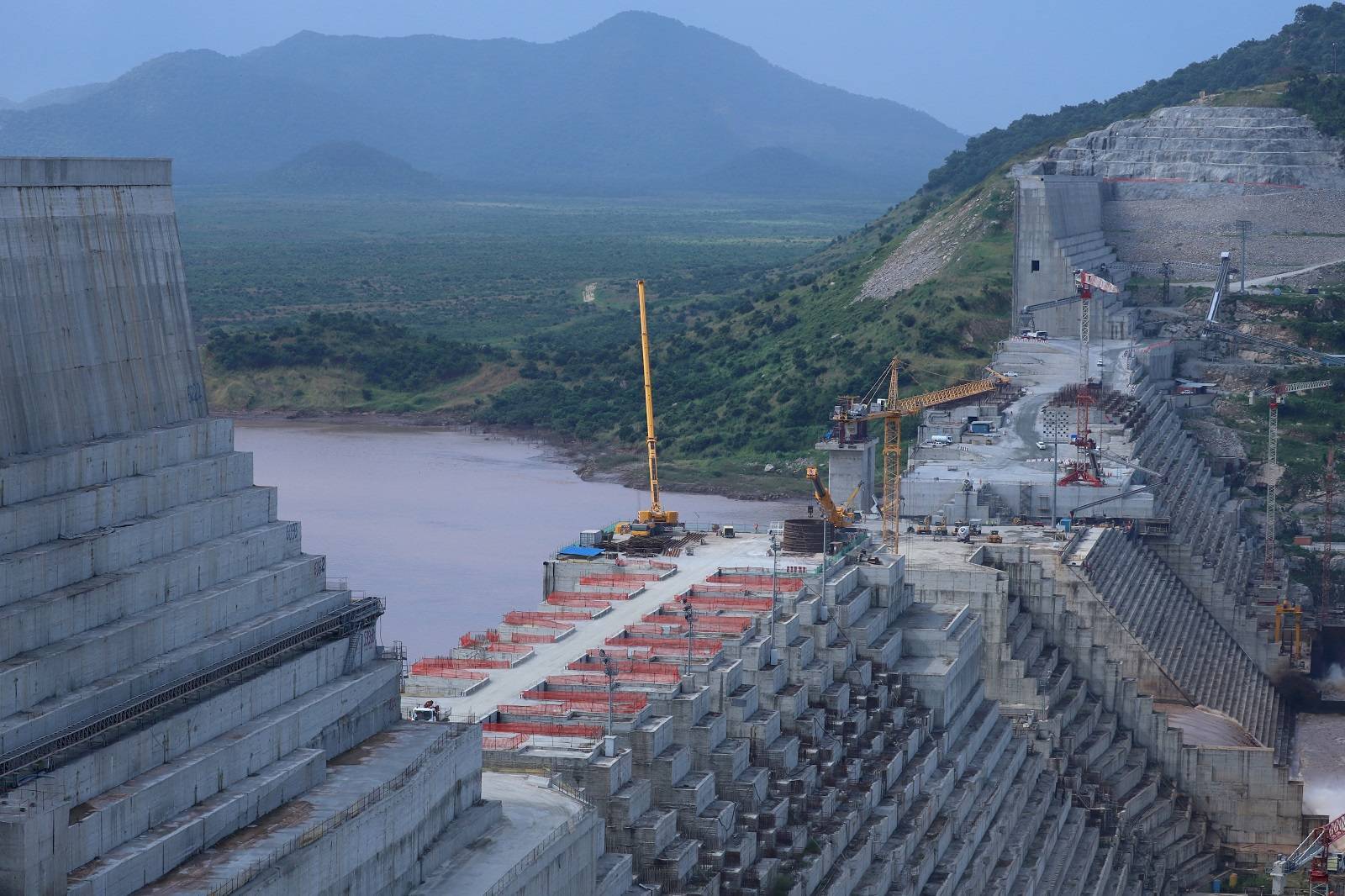
 A view of the containment dome of Bushehr Nuclear Power Plant in Bushehr, Iran. (AFP)
A view of the containment dome of Bushehr Nuclear Power Plant in Bushehr, Iran. (AFP)
TT

What to Know About Iran’s Bushehr Nuclear Power Plant After Report of Projectile Hitting Its Complex

 A view of the containment dome of Bushehr Nuclear Power Plant in Bushehr, Iran. (AFP)
A view of the containment dome of Bushehr Nuclear Power Plant in Bushehr, Iran. (AFP)

Iran and Russia both allege a projectile struck the grounds of the Bushehr nuclear power plant in the country, raising the specter of a radiological incident as Tehran's war with Israel and the United States rages.

Neither Iran nor Russia say there was any release of nuclear material in the incident on Tuesday evening, but it again underlines a longtime worry of Iran's neighbors — that the power plant on the shores of the Gulf could be hit by either an attack or an earthquake.

Here's what to know about the incident, the plant itself and Iran's wider nuclear program, which remains a reason US President Donald Trump points to for starting the war alongside Israel against Iran on Feb. 28.

Reports of a projectile striking there

Russia’s state-run Tass news agency quoted Rosatom CEO Alexey Likhachev late Tuesday as claiming “a strike hit the area adjacent to the metrology service building located at the Bushehr Nuclear Power Plant site, in close proximity to the operating power unit.” Russian technicians from Rosatom operate the plant, using Russian-made, low-enriched uranium.

“There were no casualties among Rosatom State Corporation personnel,” Likhachev said. “The radiation situation at the site is normal.”

About 480 Russian nationals remain at the plant, Likhachev said, and authorities are preparing for another round of evacuations from there.

The Atomic Energy Organization of Iran later issued a statement saying “no financial, technical, or human damage occurred and no part of the plant was harmed.”

The International Atomic Energy Agency, which has had its inspections of Iran restricted over years of tensions over Tehran's program after Trump unilaterally withdrew America from the 2015 nuclear deal with world powers, issued a carefully worded statement early Wednesday.

“The IAEA has been informed by Iran that a projectile hit the premises of the Bushehr NPP on Tuesday evening,” the United Nations agency said, using an acronym for nuclear power plant. “No damage to the plant or injuries to staff reported.”

No other independent expert has seen the damage. Neither Iran nor Russia published images of the damage. Moscow has made claims about nuclear sites during its war on Ukraine that turned out not to be true, while Iran has been trying to use both force and coercive diplomacy to pressure its neighbors to in turn push the US to halt the war.

It remains unclear what the “projectile” that hit the complex was. The US military’s Central Command, which is in charge of forces launching airstrikes across southern Iran, did not immediately respond to a request for comment.

Shrapnel from missile interceptions and other air defense fire also have caused damage in the region since the war started. Bushehr, some 750 kilometers (465 miles) south of Iran’s capital, Tehran, is home to an Iranian navy base and a dual-use, civilian-military airport with air defense systems protecting the area.

Bushehr a long sought project by Iran Iran’s Shah

Mohammad Reza Pahlavi announced plans in the 1970s to build 23 nuclear reactors while also having full control of the nuclear fuel cycle — opening the door to being able to build atomic weapons. That rattled US officials, who imposed limits on American companies from selling to Iran. German firm Kraftwerk Union began construction of the Bushehr plant in 1975 as part of $4.8 billion deal for four reactors.

But the 1979 revolution halted the project. Iraq repeatedly bombed the site during its eight-year war with Iran in the 1980s, seeking to stop Tehran's program.

Russia ultimately signed onto the project, which saw the power plant connected to the Iranian grid in 2011, running a pressurized-water reactor that generates up to 1,000 megawatts of electricity, which can power hundreds of thousands of homes and other businesses and industries. But it contributes only 1% to 2% of Iran's power.

Iran has been trying to expand Bushehr to multiple reactors. In 2019, it began a project that ultimately plans to add two additional reactors to the site, each adding another 1,000 megawatts apiece. A satellite image from December from Planet Labs PBC showed the construction still ongoing at the site, with cranes over both sites.

The reactor currently running at Bushehr uses uranium from Russia enriched to 4.5%, a low level needed for power generation in such plants.

Bushehr was untouched in 12-day war in June

Bushehr, as a running, civilian nuclear power plant, was left untouched during the 12-day war in June between Israel and Iran. During that war, the US bombed three Iranian nuclear enrichment sites, destroying centrifuges and likely trapping Tehran's stockpile of highly enriched, 60% uranium underground. In the time since, Iran has blocked IAEA inspectors from visit those sites.

A possible strike on a nuclear power plant could see a leak of radiation into the environment. That's been a major concern in the years after Russia launched its full-scale invasion of Ukraine in 2022. Nuclear plants in Ukraine, built when the country was part of the Soviet Union, have come under attack and found themselves on the front lines of that war.


As US and Iran Talk Truce, Israel Digs in for a 'Forever War'

An Israeli soldier gestures from an Israeli armored personnel carrier (APC), as they leave southern Lebanon and enter Israel, as seen from the Israeli side of the border, April 8, 2026. REUTERS/Ayal Margolin
TT

As US and Iran Talk Truce, Israel Digs in for a 'Forever War'

An Israeli soldier gestures from an Israeli armored personnel carrier (APC), as they leave southern Lebanon and enter Israel, as seen from the Israeli side of the border, April 8, 2026. REUTERS/Ayal Margolin

Even as the US and Iran seek to cement a ceasefire, Israel is seizing more territory from its neighbors in preparation for a long, drawn-out conflict across the Middle East.

Israel's creation of "buffer zones" in Gaza, Syria and now Lebanon reflects a strategic shift after the attacks of October 7, 2023, one that puts the country in a semi-permanent state of war, six Israeli military and defense officials told Reuters.

The approach also acknowledges a reality the officials said had become increasingly clear after two-and-a-half years of conflict: Iran's clerical leadership, Hezbollah in Lebanon, Hamas in Gaza and militias across the region cannot be eliminated outright.

"Israel's leaders have concluded that they are in a forever war against adversaries who have to be intimidated and even dispersed," said Nathan Brown, of the Carnegie Endowment for International Peace.

The US and Iran agreed on Wednesday to a pause in fighting while they negotiate a broader end to the war, which erupted on February 28. Israel agreed to halt its attacks on Iran but says it will not stop its campaign against Iranian-backed Hezbollah.

Hezbollah joined the war on March 2 by firing rockets at Israel, which then launched a ground invasion of southern Lebanon to clear a buffer zone up to the Litani River - a broad swathe of land that makes up about 8% of Lebanese territory.

Israel has ordered the area's hundreds of thousands of residents to flee and is in the early stages of destroying homes in Shi'ite Muslim villages that it believes have been used by Hezbollah to store weapons or stage attacks.

A senior ‌military official, who requested ‌anonymity to discuss security matters, said the aim was to "clear" an area stretching 5-10 km beyond the border, putting Israeli border towns out ‌of range ⁠of Hezbollah rocket-propelled ⁠grenade fire.

In some Lebanese villages close to the border, Israeli troops found evidence that nearly 90% of homes contain weapons or equipment linking them to Hezbollah, the official said.

That means the homes are viewed as enemy military positions that must be destroyed, according to the official who said that many southern Lebanese villages sat on hilltops, giving them a direct line of sight into Israeli towns or army positions.

The use of buffer zones represents a new security doctrine that "border communities cannot be protected from the border", according to Assaf Orion, a retired Israeli brigadier general and former head of military strategy.

"Israel no longer waits for the attack to come," he added. "It sees an emerging threat and it attacks it preemptively."

Once the buffer against Hezbollah is secured, Israel will have seized or occupied territory in Lebanon, Syria, the West Bank and the Gaza Strip, where it remains in control of over half the territory after an October ceasefire with Hamas.

Under the ceasefire, Israel is meant to withdraw from all of Gaza as Hamas disarms, though ⁠the chances of that happening in the near future appear slim.

"We have established security belts deep beyond our borders," Israeli Prime Minister Benjamin ‌Netanyahu said in a video message released by his office on March 31.

"In Gaza - more than half of the Strip's ‌territory. In Syria, from the Mount Hermon summit until the Yarmuch River. In Lebanon - a vast buffer zone that thwarts the threat of invasion and keeps anti-tank fire a distance away from our communities."

The Lebanese buffer ‌zone plan has yet to be presented to Netanyahu's cabinet, according to a member of the cabinet and two of the officials.

The Israeli military referred queries about the buffer zones to ‌Netanyahu's office, which didn't immediately respond to a request for comment.

DEFENCE MINISTER VOWS TO RAZE VILLAGES

Israel has long held territory beyond its borders, including the occupied West Bank and Gaza, as well as the Golan Heights in southern Syria, territories captured in a 1967 regional war. Israel subsequently annexed the Golan Heights in 1981.

Hundreds of thousands of Israeli settlers now live in the West Bank among about 3 million Palestinians, who seek the territory as the heartland of a future state.

To many displaced Lebanese and Palestinian people, Israel's seizure of their land and destruction of their villages signals further territorial expansion, an interpretation reinforced by rhetoric from some far-right members ‌of Netanyahu's cabinet.

Bezalel Smotrich, Netanyahu's finance minister, said in March that Israel should extend its border up to the Litani River. He has made similar comments about Gaza, saying the territory should be annexed and settled by Israelis.

However, another Israeli military official, who also ⁠spoke on the condition of anonymity to discuss operational ⁠planning, said the Litani would not mark a new border. Rather, the buffer zone would be monitored with ground troops carrying out raids as needed, without necessarily holding positions along the river.

Israeli Defense Minister Israel Katz likened the devastation exacted on southern Lebanon to the scorched-earth policy used against Hamas in Gaza that saw entire cities depopulated.

"The village homes adjacent to the border, which serve as Hezbollah outposts for all intents and purposes, will be destroyed according to the Rafah and Khan Younis model in Gaza, to remove the treat from Israeli towns," he said on March 31.

Eran Shamir-Borer, an international law expert at the Israel Democracy Institute, said the destruction of civilian property was largely unlawful, with exceptions that include the property being used for a military purpose.

"Sweeping destruction of houses in southern Lebanon that is not based on individual analysis would be unlawful," he added.

ISRAELIS SCEPTICAL OF LONG-TERM PEACE DEALS

Israeli leaders' preference for a strategy led by the use of buffer zones follows decades of failed attempts to secure long-term peace agreements with the Palestinians, Lebanon and Syria.

The Israeli public is deeply skeptical of negotiated peace agreements with the Palestinians. A 2025 poll from the Pew Research Center found that just 21% of Israelis believe Israel and a potential future Palestinian state could coexist peacefully.

A poll from the Tel Aviv-based Institute for National Security Studies found that just 26% of Israelis believed the October ceasefire in Gaza would lead to many years of calm. Most expected a swift resumption of fighting, the poll showed.

Ofer Shelah, a research program director at the institute, said that in the absence of a negotiated peace settlement with Lebanon, having a buffer zone in the north would prevent the threat of attacks or a ground incursion by Hezbollah forces.

But he said the increased personnel needed to patrol fronts across Lebanon, Gaza, Syria and the occupied West Bank would eventually put major strain on the military's forces.

"We would be better off eventually going back to the international border and maintaining a mobile active defenses beyond the border, without having outposts there," Shelah added.


Lebanon Becomes an Alternate Arena for Iran’s Revolutionary Guards after Assad’s Fall

A view of a damaged building following an Israeli strike near the Rafik Hariri University Hospital (RHUH), in the Jnah District of Beirut, Lebanon, 06 April 2026. (EPA)
TT

Lebanon Becomes an Alternate Arena for Iran’s Revolutionary Guards after Assad’s Fall

A view of a damaged building following an Israeli strike near the Rafik Hariri University Hospital (RHUH), in the Jnah District of Beirut, Lebanon, 06 April 2026. (EPA)

A multi-layered structure run by Iran’s Revolutionary Guards is taking shape in Lebanon, spanning Lebanese and Palestinian arms across intertwined security, military, and political roles.

The model echoes Syria before the fall of Bashar al-Assad’s regime in 2024, raising fears that Lebanon is shifting from a traditional battleground into a more complex hub for managing conflict and influence.

As signs of this overlap grow, Israel Defense Forces Radio said on Monday that an attempted assassination on Sunday in a Beirut apartment targeted a member of the “Palestine Corps,” linked to the Revolutionary Guards’ external arm, the Quds Force.

Israel has previously said it killed several Iranian figures in Lebanon, including two strikes on “central commanders in the Lebanon Corps,” affiliated with the Quds Force and operating in Beirut. One strike hit the Ramada Hotel in Raouche.

On March 11, the Israeli military said it targeted Hisham Abdel Karim Yassin, describing him as “a senior commander in Hezbollah’s communications unit, and in the Palestine Corps of the Quds Force.”

A Palestinian source in Lebanon told Asharq Al-Awsat the Iran-linked structure resembles a parent body branching into multiple formations, with the Quds Force at its core. Local and Palestinian arms operate under different names for organizational and media purposes.

The structure extends beyond the Shiite base tied to Hezbollah, incorporating groups from other communities, including Sunni elements integrated into parallel formations similar to the Resistance Brigades, alongside carefully organized Palestinian frameworks.

“The Palestinian cover is essential,” the source said, adding that the aim is to avoid portraying Hezbollah as acting alone, instead projecting a broader alliance of Palestinian and Islamic factions to boost legitimacy and reduce Hezbollah’s domestic isolation.

Concealment

Names such as “Lebanon Corps” and “Palestine Corps” reflect composition, and are not arbitrary, the source said. The Lebanon Corps refers to Lebanese members from outside the Shiite community, while the Palestine Corps includes fighters from Palestinian factions, both Islamist groups such as Hamas and Palestinian Islamic Jihad, and non-Islamist factions.

The labels also serve as concealment tools, adopted after older structures were exposed, allowing networks to reorganize and evade monitoring.

With Iran’s reduced ability to use Syria as before, in terms of movement and deployment, the base of operations was moved to Lebanon, the source said.

Lebanon is now used as an alternative arena in practice, an advanced platform for managing confrontation, not just a support front. Its geography next to Israel, its complex environment offering multiple Lebanese, Palestinian, and Sunni covers, and an existing military structure all support this shift.

The change has moved the role from logistical support in Syria to direct operational management from inside Lebanon. The country is now treated as “the most sensitive and valuable geography in this axis,” both for confrontation with Israel and as a pivot for escalation or negotiations.

Multiple structures, unified command

Political writer Ali al-Amine said Iran-linked structures in Lebanon span multiple levels and labels but converge under the Iranian Revolutionary Guard Corps, particularly through the Quds Force.

Some groups are directly tied to the Quds Force, while others operate under a Palestinian banner, often composed of Palestinian members, each with its own role and title.

“These individuals are organizationally linked to the Revolutionary Guards, but are not necessarily Iranian,” he said. “They can be Lebanese or Palestinian, while their direct leadership reference lies within the Guards, not local frameworks.”

He added that some figures classified within Hezbollah are in fact closer organizationally to the Revolutionary Guards, highlighting overlap between Lebanese and Iranian roles.

The Palestine Corps manages ties with Iran-linked Palestinian factions, while the Lebanon Corps handles the Lebanese arena.

“What is known as the Lebanon Corps is not a traditional military force, but an administrative, coordinating and supervisory body directly linked to the Revolutionary Guards, while field execution remains with Hezbollah,” he said.

He added that the Revolutionary Guards have long maintained a direct presence inside Hezbollah through representatives across financial, security, military, and social sectors, ensuring oversight and influence. These figures typically fall under the Quds Force, responsible for operations outside Iran.

Al-Amine said Lebanon has become a primary arena for the Revolutionary Guards after Iran’s loss of the Syrian theater, explaining Tehran’s strong commitment to maintaining its influence.

“Iran will strongly defend this influence, because losing Lebanon would be a strategic blow and would directly affect its regional position,” he said.

He said a key part of the current conflict centers on Iran’s efforts to entrench its influence in Lebanon and prevent its erosion, whether through the Revolutionary Guards, Hezbollah, or affiliated networks, as it seeks to preserve its regional role and leverage.


Majid Khademi: Brief Tenure at Helm of Embattled IRGC Intelligence Ends in Assassination

A photo published by the Iranian Supreme Leader’s website from an interview with Khademi, February 18. 
TT

Majid Khademi: Brief Tenure at Helm of Embattled IRGC Intelligence Ends in Assassination

A photo published by the Iranian Supreme Leader’s website from an interview with Khademi, February 18. 

Majid Khademi’s rise to the top of Iran’s Revolutionary Guard Corps (IRGC) intelligence apparatus was as abrupt as his fall.

During the 12-day war in June 2025, Khademi was appointed head of the IRGC Intelligence Organization following the killing of his predecessor, Mohammad Kazemi, at a time when Iran’s security establishment was under intense pressure from external strikes, internal unrest and mounting concerns over infiltration.

Less than a year later, on April 6, 2026, Israel announced it had assassinated Khademi in an air strike. The IRGC later confirmed his death.

His killing marked the second time in under a year that the head of one of Iran’s most sensitive intelligence bodies had been eliminated in a targeted strike, underscoring both the exposure of the apparatus and the strain on its ranks.

Khademi, a career security officer, was not among the IRGC’s publicly prominent figures. Unlike commanders known for battlefield roles or political visibility, he emerged from the opaque world of internal protection and counterintelligence, a domain focused on safeguarding the system from within.

His appointment reflected that background and came at a moment when the IRGC was grappling with assassinations, intelligence breaches, and operational setbacks that raised questions about its internal cohesion.

A parallel apparatus

To understand Khademi’s role, it is necessary to situate the body he led within Iran’s broader intelligence architecture. Iran operates two major intelligence services with overlapping mandates.

The Ministry of Intelligence is the state’s official civilian agency, while the IRGC Intelligence Organization has evolved into a powerful parallel structure, particularly since 2009. More closely aligned with Supreme Leader Ali Khamenei and the ideological core of the system, the IRGC’s intelligence arm operates with a mandate that blends security, political oversight and military intelligence.

Within this ecosystem, the IRGC’s Intelligence Protection Organization, where Khademi spent much of his career, plays a critical internal role. It is tasked with counterintelligence inside the corps, including preventing leaks, monitoring discipline and loyalty among personnel, and detecting infiltration before it develops into a broader crisis.

In recent years, the IRGC intelligence apparatus has expanded beyond its traditional military remit to include monitoring protests, cyberspace operations, influence campaigns and surveillance of political and social actors, alongside pursuing external adversaries.

This expansion has effectively transformed it into a hybrid political-security institution, requiring its leadership to possess detailed knowledge of the IRGC’s internal networks of loyalty and control. Khademi’s career trajectory, rooted in protection and internal oversight, aligned closely with these demands.

A closed biography

Information about Khademi remains limited, reflecting the nature of his roles. His name appears in various forms in Iranian sources, including Majid Khademi, Majid Khademi Hosseini and Majid Hosseini. He is reported to have been born in the village of Amir Hajilu, in Fasa county in the southern province of Fars. He belonged to an early generation of IRGC cadres who rose through internal security structures, particularly within the protection apparatus.

By at least 2014, Khademi was serving as a deputy to Hossein Taeb, then head of IRGC intelligence. He later held senior positions within the Intelligence Protection Organization. In May 2018, he was appointed head of intelligence protection at the Ministry of Defense.

He returned to the IRGC’s protection apparatus in 2022 as its chief, succeeding Mohammad Kazemi, who had been promoted to lead IRGC intelligence after Taeb’s removal. Following Kazemi’s killing in June 2025, Khademi was elevated to head the IRGC Intelligence Organization.

“Security contamination”: the post-Taeb phase

Khademi’s rise was closely tied to a broader reshuffle within Iran’s security establishment. In 2022, Hossein Taeb was removed from his post after a period marked by a string of security breaches, assassinations, and reported intelligence failures. His replacement, Kazemi, was drawn from the protection apparatus, signaling a shift toward tightening internal control. Khademi’s appointment to head intelligence protection formed part of this restructuring, which also affected other security bodies close to the core of power.

The changes took place amid growing concern among officials over what was described in Iranian discourse as “security contamination”, referring to infiltration, leaks and compromised networks within sensitive institutions. Statements by senior political and security figures indicated that these concerns had moved from theoretical risk to a central element of the security crisis.

Between 2022 and 2025, Khademi oversaw one of the most sensitive portfolios in the IRGC at a time when fears of infiltration were intensifying within the organization itself. Some Iranian analysts associated his rise with the camp of Mohammad Bagher Zolghadr, a senior security figure later appointed secretary of the Supreme National Security Council.

While the precise alignments remain unclear, the reshuffle was widely seen as part of an internal rebalancing within the IRGC’s conservative security current. Khademi’s advancement came during a period of shifting trust and authority within the apparatus rather than institutional stability.

His career placed him at the core of the IRGC’s internal control mechanisms, overseeing secrecy, discipline, and loyalty. His tenure at the Ministry of Defense between 2018 and 2022 added another dimension. The ministry sits at the nexus of military industries, sensitive programs and technical infrastructure, as well as the complex relationship between the IRGC, the regular army and other agencies. Its intelligence protection arm is regarded as a key component of Iran’s security system, responsible not only for personnel oversight but also for safeguarding strategic projects and documentation.

During this period, the IRGC, through networks associated with Khademi, consolidated its role in protecting institutions linked to Iran’s nuclear program. This included expanded responsibilities for securing nuclear facilities and affiliated centers, as well as protecting nuclear officials and scientists, an area long targeted by foreign intelligence operations.

His security discourse

Khademi’s public statements offer insight into his approach. In an interview published on February 18, 2026, on the official website of the Supreme Leader’s office, he framed recent unrest in Iran in explicitly security terms. He argued that the disturbances in January were not simply protests driven by economic or social grievances, but rather an organized project involving foreign intelligence services, domestic networks and coordinated mobilization through digital platforms.

He described the events as closer to a “coup attempt” than a protest movement, a characterization consistent with the narrative advanced by Iran’s leadership, including Supreme Leader Ali Khamenei. Khademi spoke of infiltration at the level of individuals and factions and alleged the involvement of at least 10 foreign intelligence agencies. He outlined what he described as staged phases of unrest, including “cognitive warfare” and digital mobilization.

He cited figures to illustrate the scale of the response by his apparatus, including the summoning of 2,735 individuals, the “advising” of around 13,000 others, and the seizure of 1,173 weapons. Central to his analysis was the role of cyberspace. He linked what he termed “cognitive warfare” to weaknesses in internet governance, which he said created vulnerabilities exploited for organization, mobilization and incitement.

He also referred to a meeting with Ali Khamenei prior to the unrest, saying the leader had stressed the importance of intelligence work and vigilance against infiltration, drawing parallels with the early years following Iran’s 1979 revolution.