


‘Hollywood-Style’ Narrative in Assassination Campaign Against Iranian Leaders

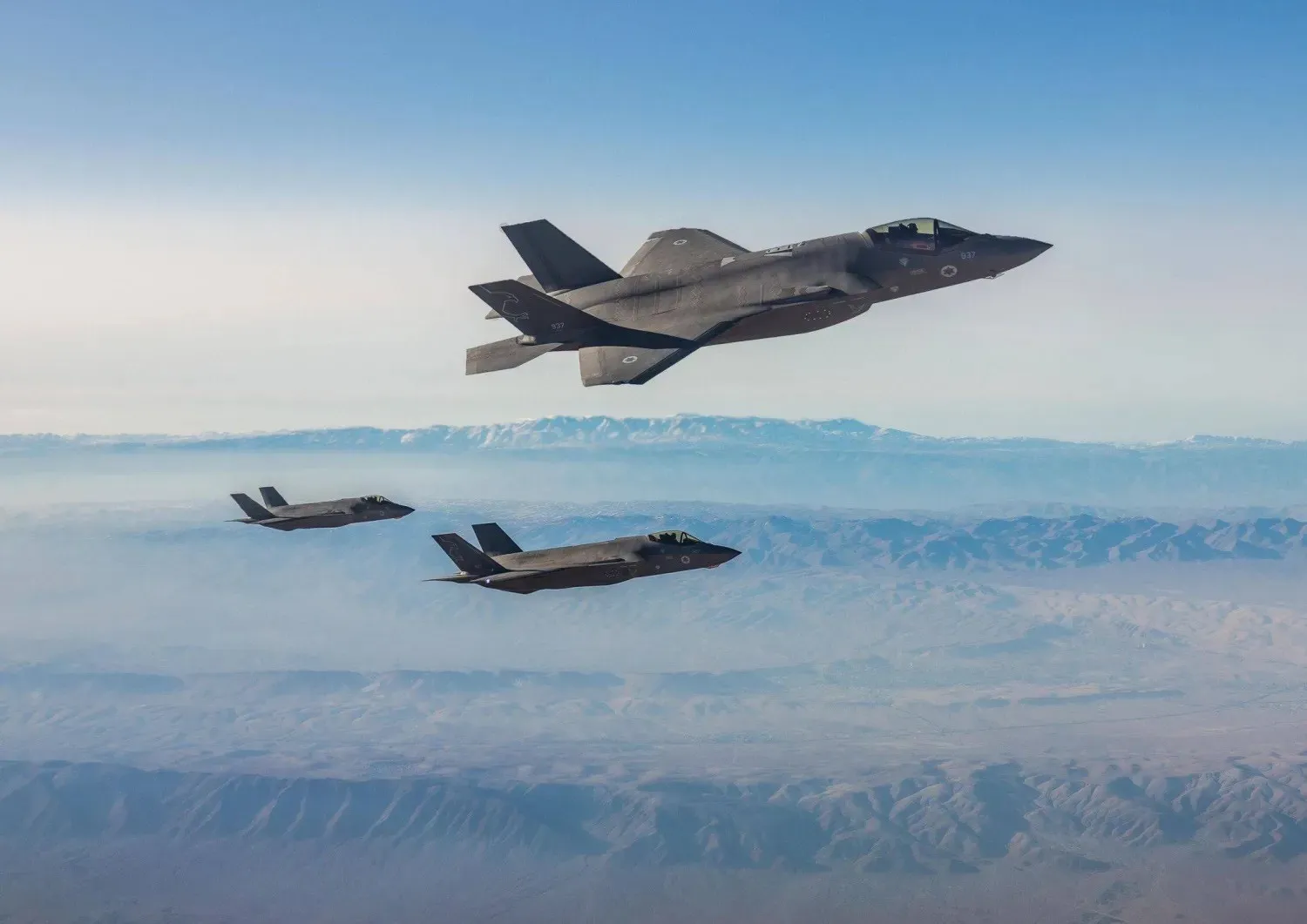
Israeli F-35 (“Adir”) aircraft during their participation in military operations against Iran (Israeli military)
TT

‘Hollywood-Style’ Narrative in Assassination Campaign Against Iranian Leaders

Israeli F-35 (“Adir”) aircraft during their participation in military operations against Iran (Israeli military)

Israeli officials are casting a series of alleged operations against senior Iranian figures as precise, intelligence-driven strikes, while analysts warn the narrative risks overstating their strategic impact and fueling a “false sense of victory.”

Among those cited in Israeli accounts are Ali Larijani, the head of the Supreme National Defense Council, and Esmail Khatib, Iran’s intelligence minister.

Israeli descriptions portray the operations as evidence of deep intelligence penetration within Iran’s Revolutionary Guard, often framed in dramatic, almost cinematic terms.

Officials say the operation against Larijani involved hundreds of personnel from military intelligence, the air force and special operations forces, relying on human sources and advanced surveillance technology.

He was reportedly tracked for months. After appearing at a Quds Day march last Friday, he was placed under continuous surveillance for 72 hours until what Israeli sources described as a “rare opportunity” - combining actionable intelligence, favorable conditions and intensive coordination - prompting the strike.

Following the operation, Israeli Prime Minister Benjamin Netanyahu is reported to have authorized the military to carry out assassinations of Iranian leaders without prior political approval, an extraordinary departure from standard procedure, which typically requires the PM’s authorization.

According to Israel’s public broadcaster, military intelligence recently gathered what it described as “dramatic intelligence” on Larijani’s location after he reportedly went into hiding early in the confrontation. A “golden tip” received Monday night enabled aerial tracking until a decision to strike was made, aided by improved weather conditions.

Channel 12 reported that Israeli aircraft entered Tehran’s airspace upon receiving the intelligence and remained on standby until authorization. The strike allegedly targeted his sister’s apartment using heavy munitions, destroying the building.

Larijani’s public appearance during the Quds Day march was cited as a key factor in the decision to act. Israeli accounts add that he had tried to evade surveillance by frequently changing locations and operating in secrecy, but intelligence services tracked him nonetheless.

Similar claims have been made regarding Iran’s Supreme Leader, Ali Khamenei. Israeli sources say they obtained precise, sometimes real-time, intelligence on his movements. For example, they say his security detail changed the timing of a meeting at the last minute - from Saturday evening, Feb. 28, to Saturday morning - yet the adjustment was reportedly known in advance.

Journalists at the Israeli newspaper Yedioth Ahronoth reported that Israel initially planned a strike for the original time but revised the operation accordingly.

Israeli commentators have questioned how Iran could fail to protect senior officials despite anticipating such threats and deploying extensive security measures. The apparent intelligence breaches raise doubts about the effectiveness of the Revolutionary Guard’s protective apparatus.

However, former Mossad officer Sima Shine, now a researcher at the Institute for National Security Studies in Tel Aviv, warned that such assassinations could prove counterproductive. She said Larijani was seen as a pragmatic figure capable of bringing together different factions within Iran’s leadership. His removal, she said, could empower hard-liners, intensifying resistance and prolonging the conflict.

Similarly, former Israeli military intelligence official Danny Citrinowicz said Tehran has sufficient depth in leadership to absorb such losses. He dismissed the idea that assassinations alone could significantly weaken the system or decisively shift the course of the conflict.



Türkiye Says Israel Using Security as Pretext to Acquire 'More Land'

Turkish Foreign Minister Hakan Fidan speaks during the opening ceremony of Antalya Diplomacy Forum in Antalya, Türkiye, April 17, 2026. REUTERS/Umit Bektas
TT

Türkiye Says Israel Using Security as Pretext to Acquire 'More Land'

Turkish Foreign Minister Hakan Fidan speaks during the opening ceremony of Antalya Diplomacy Forum in Antalya, Türkiye, April 17, 2026. REUTERS/Umit Bektas

Türkiye's top diplomat on Saturday accused Israel of creating an international "illusion" and using security concerns as a pretext to seize "more land," in the latest flare-up in escalating tensions between the two regional powers.

Israel and Türkiye have been trading near-daily diplomatic barbs over a range of regional conflicts, from Israel's war in Gaza to rising tensions linked to Iran.

"Israel is not after its own security. Israel is after more land," Turkish Foreign Minister Hakan Fidan said at the Antalya Diplomacy Forum in the Mediterranean resort city.

"Security is being used by the Netanyahu government as an excuse to occupy more land," he added, referring to Israeli Prime Minister Benjamin Netanyahu.

Speaking in English at a panel discussion, Fidan said Israel had created an "illusion" internationally by portraying itself as acting purely in its own defense.

"It has become very clear, especially in recent years, that it is more than that," he said.

From Palestinian lands including Gaza, the West Bank and East Jerusalem, and now extending towards Lebanon and Syria, Israel was pursuing "an onward occupation and expansionism in the region," Fidan said, according to AFP.

"I think this has to stop."

"Israel has to know that the only way to live peacefully in the region is to let other countries enjoy their own security, territorial integrity and freedom, and not to use power against them," he added.

Türkiye and Israel have frequently been at odds, including over Israel's military campaign in Gaza and differences over Syria's future.


Iran Command Says Has Closed Hormuz Again over US Blockade

A satellite image shows the ship movement at the Strait of Hormuz on April 2, 2026, in Space. EUROPEAN UNION/COPERNICUS SENTINEL-2/Handout via REUTERS
TT

Iran Command Says Has Closed Hormuz Again over US Blockade

A satellite image shows the ship movement at the Strait of Hormuz on April 2, 2026, in Space. EUROPEAN UNION/COPERNICUS SENTINEL-2/Handout via REUTERS

Iran's central military command announced on Saturday it would resume "strict management" of the Strait of Hormuz, reversing a decision to unblock the strategic channel as part of negotiations with Washington.

In a statement shared on state television, the headquarters said Washington had broken a promise by continuing its naval blockade of ships sailing to and from Iran's ports.

Until the United States restores freedom of movement for all vessels visiting Iran, "the situation in the Strait of Hormuz will remain strictly controlled," the statement said.

The announcement came after US President Donald Trump said the blockade of the Strait will remain and attacks will resume if no agreement is reached with Iran.


Australia, Japan Sign Contracts to Start $7 Billion Warship Deal

Australia's Deputy Prime Minister and Minister for Defense Richard Marles (R) listens to Japan's Minister of Defense Koizumi Shinjiro (L) during a Defense Ministers' Meeting at the Commonwealth Parliament Offices in Melbourne on April 18, 2026. (Photo by William WEST / AFP)
TT

Australia, Japan Sign Contracts to Start $7 Billion Warship Deal

Australia's Deputy Prime Minister and Minister for Defense Richard Marles (R) listens to Japan's Minister of Defense Koizumi Shinjiro (L) during a Defense Ministers' Meeting at the Commonwealth Parliament Offices in Melbourne on April 18, 2026. (Photo by William WEST / AFP)

Australia and Japan signed contracts on Saturday launching their landmark A$10 billion ($7 billion) deal to supply Australia with warships, Tokyo's most consequential military sale since ending a military export ban in 2014.

Defense Ministers Richard Marles and Shinjiro Koizumi signed a memorandum "reaffirming the Australian and Japanese governments' shared commitment to the successful delivery" of the warships, Marles said in a statement.

The deal struck in ⁠August anchors Japan's ⁠push away from its postwar pacifism to forge security ties beyond its alliance with the US to counter China.

Mitsubishi Heavy Industries is to supply the Royal Australian Navy with three upgraded Mogami-class ⁠multi-role frigates built in Japan from 2029. Eight more frigates will be built in Australia.

Japan's Defense Ministry posted on X that Koizumi and Marles welcomed the "conclusion of contracts for General Purpose Frigates, and confirmed to further strengthen bilateral defense ties" in the signing in Melbourne.

Contracts were signed for the first three frigates, to be built ⁠in ⁠Japan, before there is a "transition to an onshore build" at the Henderson shipyard near Perth in Western Australia, Reuters quoted Marles as saying.

Australia plans to deploy the ships - designed to hunt submarines, strike surface ships and provide air defense - to defend critical maritime trade routes and its northern approaches in the Indian and Pacific Oceans, where China's military footprint is expanding.