Iran ‘Unsuccessfully’ Targeted Diego Garcia Base, Reveals Source

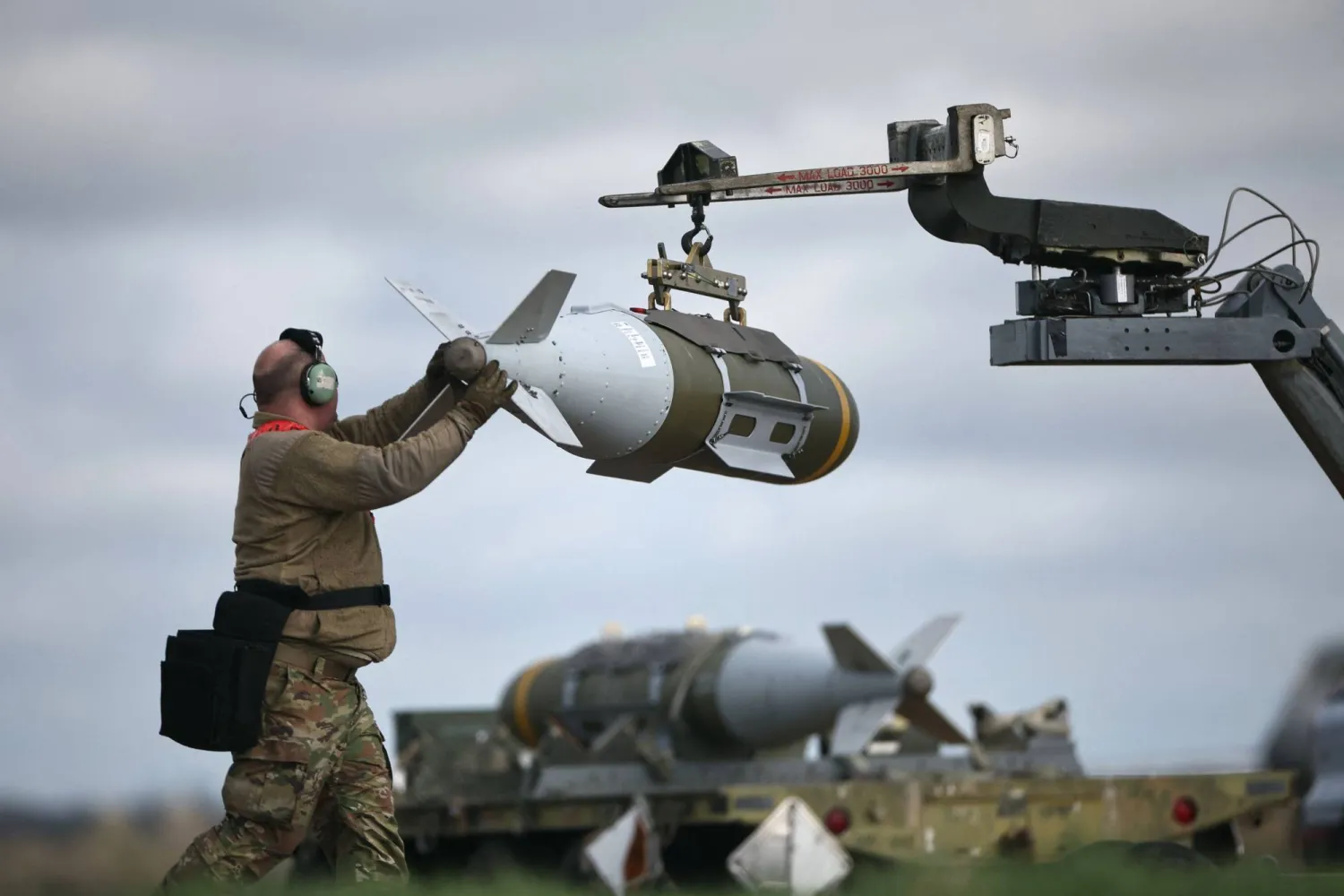
 US Military personnel take away Joint Direct Attack Munitions (JDAMs), removed from a US Air Force B-1 Lancer bomber at RAF Fairford in southwest England on March 15, 2026. (AFP)
US Military personnel take away Joint Direct Attack Munitions (JDAMs), removed from a US Air Force B-1 Lancer bomber at RAF Fairford in southwest England on March 15, 2026. (AFP)
TT

Iran ‘Unsuccessfully’ Targeted Diego Garcia Base, Reveals Source

 US Military personnel take away Joint Direct Attack Munitions (JDAMs), removed from a US Air Force B-1 Lancer bomber at RAF Fairford in southwest England on March 15, 2026. (AFP)
US Military personnel take away Joint Direct Attack Munitions (JDAMs), removed from a US Air Force B-1 Lancer bomber at RAF Fairford in southwest England on March 15, 2026. (AFP)

Iran was "unsuccessful" in targeting the joint UK-US Indian Ocean military base at Diego Garcia, a UK official source confirmed to AFP on Saturday, after the Wall Street Journal reported Tehran fired two ballistic missiles at it.

Diego Garcia, which is around 2,500 miles (4,000 kilometers) from Iranian territory, is one of the two bases the UK has allowed the United States to use for "defensive operations" in its war against Iran.

On Friday, the UK government said it would allow Washington to use its bases in Diego Garcia and Fairford in southwest England to target Iranian "missile sites and capabilities being used to attack ships in the Strait of Hormuz".

The UK official source confirmed that Iran's "unsuccessful targeting of Diego Garcia" took place before Friday's announcement.

The source did not confirm additional details about the attack.

The Wall Street Journal reported Friday, citing US officials, that while neither of the two ballistic missiles hit their target, the launch suggests that Tehran has missiles with longer ranges than previously thought.

The Pentagon declined to comment.

One of the missiles failed in flight, and the other was targeted by an interceptor fired from a US warship, though it was not clear if the missile was hit, the WSJ reported.

"Iran's reckless attacks, lashing out across the region and holding hostage the Strait of Hormuz, are a threat to British interests and British allies," a UK Ministry of Defense spokesperson said Saturday.

"This government has given permission to the US to use British bases for specific and limited defensive operations."

Iran has "always had missiles of that sort of range that we've known about, maybe not declared", former UK Royal Navy commander and defense expert Tom Sharpe told AFP.

The attack "shows that they can still move these mobile launchers around, undetected, spin up and fire without being struck", said Sharpe, adding however that they would not be a "game changer" in the war.

- 'Strategic messaging' -

"Depending on the weight of the warhead, Iran can increase the range of some of its missiles," explained Ali Vaez, Iran project director at the Crisis Group.

"But this was less about battlefield utility than strategic messaging -- signaling to the United States and Israel that misreading Iran's resolve and capabilities could prove a costly mistake," said Vaez.

US President Donald Trump has been critical of UK Prime Minister Keir Starmer's response to the war against Iran, initially refusing to be involved before allowing Washington limited use of the two bases.

American forces have stationed bombers and other equipment at Diego Garcia, a key hub for Asia operations, including the US bombing campaigns in Afghanistan and Iraq.

Trump has also slammed Britain's decision to hand back the Chagos Islands to Mauritius after holding it since the 1960s. Under that agreement, the UK would maintain a lease for the base on Diego Garcia, the largest of the islands.

Iranian Foreign Minister Abbas Araghchi told his UK counterpart Yvette Cooper on a Thursday phone call that any US use of British bases would be considered "participation in aggression", according to Tehran's foreign ministry.

In turn, Cooper warned Araghchi "against targeting UK bases, territory or interests directly", according to a UK foreign office statement.


Netanyahu’s Somalia Map Revives Fears of Partition

From the Somali capital, Mogadishu (Reuters)
TT

Netanyahu’s Somalia Map Revives Fears of Partition

From the Somali capital, Mogadishu (Reuters)

A map unveiled by Israeli Prime Minister Benjamin Netanyahu has sparked outrage in Somalia, which accused him of undermining its sovereignty and territorial integrity by depicting Puntland and Somaliland as separate states.

The map has reignited fears of partition in a country already grappling with deep divisions. Puntland remains at odds with the federal government, while Israel recognized the breakaway region of Somaliland several months ago.

Somalia rejects the map

Somalia's federal government "categorically rejected" what it called a "misleading map" displayed during Netanyahu's news conference on Sunday, saying it portrayed the country as fragmented.

It condemned the move as "a flagrant violation of Somalia's sovereignty, territorial integrity and internationally recognized borders."

In a statement issued by the Information Ministry on Wednesday evening, the government reaffirmed its unwavering commitment to national sovereignty and the unity of its territory and people.

It stressed that Somaliland and Puntland remain "integral and inseparable parts of the unified, sovereign Somali state."

The government warned that any attempt by foreign officials or outside parties to redraw Somalia's political map, misrepresent its borders or undermine its territorial unity would constitute a direct violation of international law and diplomatic norms.

It urged the international community and its partners to respect Somalia's independence and territorial integrity, pledging to uphold its constitutional duty to defend the country's sovereignty and national unity.

Netanyahu displayed the map, titled "Geopolitical Alliances in the Middle East," during an Israeli national security briefing on Oct. 18. It placed Puntland and Somaliland in geopolitical categories linked to Israel.

For Mogadishu, the controversy goes beyond the map itself.

Abdulwali Jama Barre, an African affairs expert and co-founder of the Somali Academy of Leadership and Global Affairs, said the government's response underscored its determination to preserve Somalia's unity and reject any treatment of its regions as independent states.

But Barre drew a distinction between the map's depiction and formal recognition of independence.

"Showing Somali territories under separate geopolitical classifications does not, in itself, mean the map formally declared them independent states," he told Asharq Al-Awsat.

"However, the Somali government viewed the depiction as fragmenting the country's political map and undermining its internationally recognized borders."

Barre said the dispute carried particular weight given Somaliland's contested political status, its ties with Israel and fears in Mogadishu that foreign involvement could weaken Somalia's unity.

The deeper concern, he said, is that foreign powers could increasingly treat Somali regions as entities separate from the federal state.

That risk would grow if symbolic gestures were followed by concrete steps or new formal arrangements amid the country's existing political disputes, he added.

Deep divisions

Somaliland's strategic location adds another dimension to the dispute.

The breakaway region stretches along 740 kilometers of the Gulf of Aden coastline, occupying a key position at the junction of the Indian Ocean and the Red Sea in the Horn of Africa. It is also home to the strategically important Port of Berbera.

Since breaking away from Somalia in 1991, Somaliland had failed to secure international recognition until Israel recognized it, a decision Mogadishu firmly rejects, with Arab countries backing its position.

The map controversy comes as tensions between Somalia's federal government and Puntland remain unresolved.

In May, Puntland President Said Abdullahi Deni declared that he no longer recognized Hassan Sheikh Mohamud as Somalia's legitimate president, accusing him of illegally abusing his presidential powers.

Deni called for an urgent gathering of Somalia's political parties to agree on an inclusive electoral process.

The dispute is part of a broader rift between Puntland and Mogadishu. Over the past year, the regional administration has repeatedly challenged Mohamud's positions and refused dialogue with him.

Deni has also joined the opposition Somali Future Council, which is demanding the government's departure.

At the time, Somalia's federal Interior Minister Ali Yusuf Ali, known as Hosh, sharply criticized Deni, calling him "an obstacle to the state, the country's unity and its development."

Barre warned that such internal divisions must be addressed through constitutional and political dialogue to prevent disputes between Mogadishu and regional administrations, particularly Puntland, from becoming an arena for foreign competition.

He urged Mogadishu to pursue diplomatic action on several fronts, beginning with a formal protest to Israel and a request for clarification about the map and the circumstances in which it was presented.

Somalia should also raise the matter with the United Nations, African Union, Arab League and Organization of Islamic Cooperation, seeking assurances of respect for its sovereignty and territorial integrity, he said.

At home, Barre stressed the need for renewed dialogue between the federal government and regional administrations, especially Puntland, to resolve their differences within an agreed constitutional framework.


Trump: Iran is Trying to Drive Up Oil Prices Before Midterm Elections

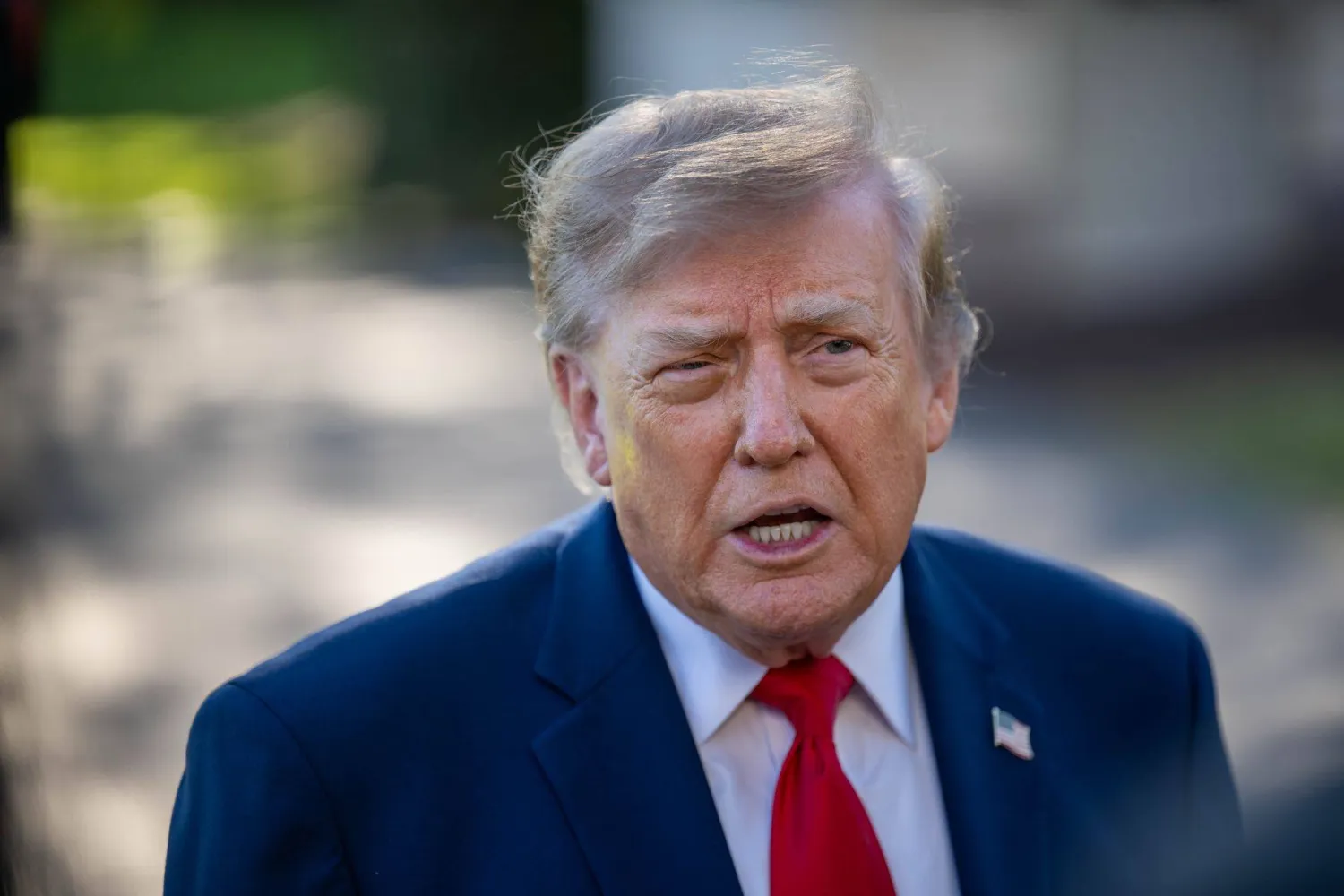
21 October 2026, US, Washington: US President Donald Trump speaks to the press at the White House before departing for South Carolina. Photo: Matt Kaminsky/ZUMA Press Wire/dpa
TT

Trump: Iran is Trying to Drive Up Oil Prices Before Midterm Elections

21 October 2026, US, Washington: US President Donald Trump speaks to the press at the White House before departing for South Carolina. Photo: Matt Kaminsky/ZUMA Press Wire/dpa

US President Donald Trump said on Thursday that Iran was doing all it could ⁠to drive up ⁠the price of oil before ⁠the US midterm elections.

"They are even making up fake hits, mines, and everything else," he said ⁠in ⁠a Truth Social post.

Iran's state television reported on Thursday that seven oil tankers were either struck by attacks or hit naval mines in the Strait of Hormuz overnight, possibly the largest single-day number of vessels damaged in the waterway since the Iran war started on Feb. 28.

Quoting a statement by the Revolutionary Guard's navy, the Iranian report said four of the tankers were transferring oil when they were targeted and caught fire. Three more were damaged and immobilized after hitting naval mines. The report didn't provide details about possible casualties or the tankers' flags.

Oil prices climbed about 2% to a five-month high on Thursday.

Brent futures rose $2.42, or 2.2%, to $111.24 a barrel at 10:45 a.m. EDT (1445 GMT), while US West Texas Intermediate (WTI) crude rose $1.14, or 1.2%, to $98.29.

That drove Brent into technically overbought territory for a third time in a week and set for its highest close since May 18.


French Justice Minister: 217 People Jailed Over Riots

France's Justice Minister Gerald Darmanin leaves after attending the weekly cabinet meeting at the Elysee Palace in Paris on October 22, 2026. (Photo by Ludovic MARIN / AFP)
TT

French Justice Minister: 217 People Jailed Over Riots

France's Justice Minister Gerald Darmanin leaves after attending the weekly cabinet meeting at the Elysee Palace in Paris on October 22, 2026. (Photo by Ludovic MARIN / AFP)

French courts have jailed 217 people after convicting them in fast-track trials linked to last weekend's rioting, the justice minister said Thursday, hailing the judiciary's "extremely firm" response.

Speaking outside the Fleury-Merogis prison on the outskirts of Paris, Gerald Darmanin said 2,700 people had been detained since Saturday.

More than 1,000 of them had appeared in court, he said, of whom "217 people have been imprisoned... and this figure is continuing to rise a lot."

Darmanin told reporters that of the 217 sent to jail "half had no criminal record", adding that "in general these are men aged between 18 to 25."

"This shows that prosecutors and judges are imprisoning people who, until now, were not known to the judiciary and are first offenders. It shows that the decisions of the judiciary are being applied in an extremely firm way," AFP quoted him as saying.

Darmanin has vowed to oversee expedited trials to rapidly clear the backlog of cases and to serve as a deterrent. New protests over grievances including the rising cost of living are planned this weekend.

But he has faced criticism from some lawyers who have accused the judiciary of lurching into repression.

France, like many European countries, faces problems with prison overcrowding but Darmanin said the solution was not "to imprison fewer people, but to create more space in prison."

As of September 1, there were 90,020 inmates in French prisons, well above the capacity of 63,348 places and a new record, according to ministry statistics.