Jordan Says 240 Missiles, Drones Fired at Kingdom Since Start of Middle East Warhttps://english.aawsat.com/arab-world/5253788-jordan-says-240-missiles-drones-fired-kingdom-start-middle-east-war
Jordan Says 240 Missiles, Drones Fired at Kingdom Since Start of Middle East War
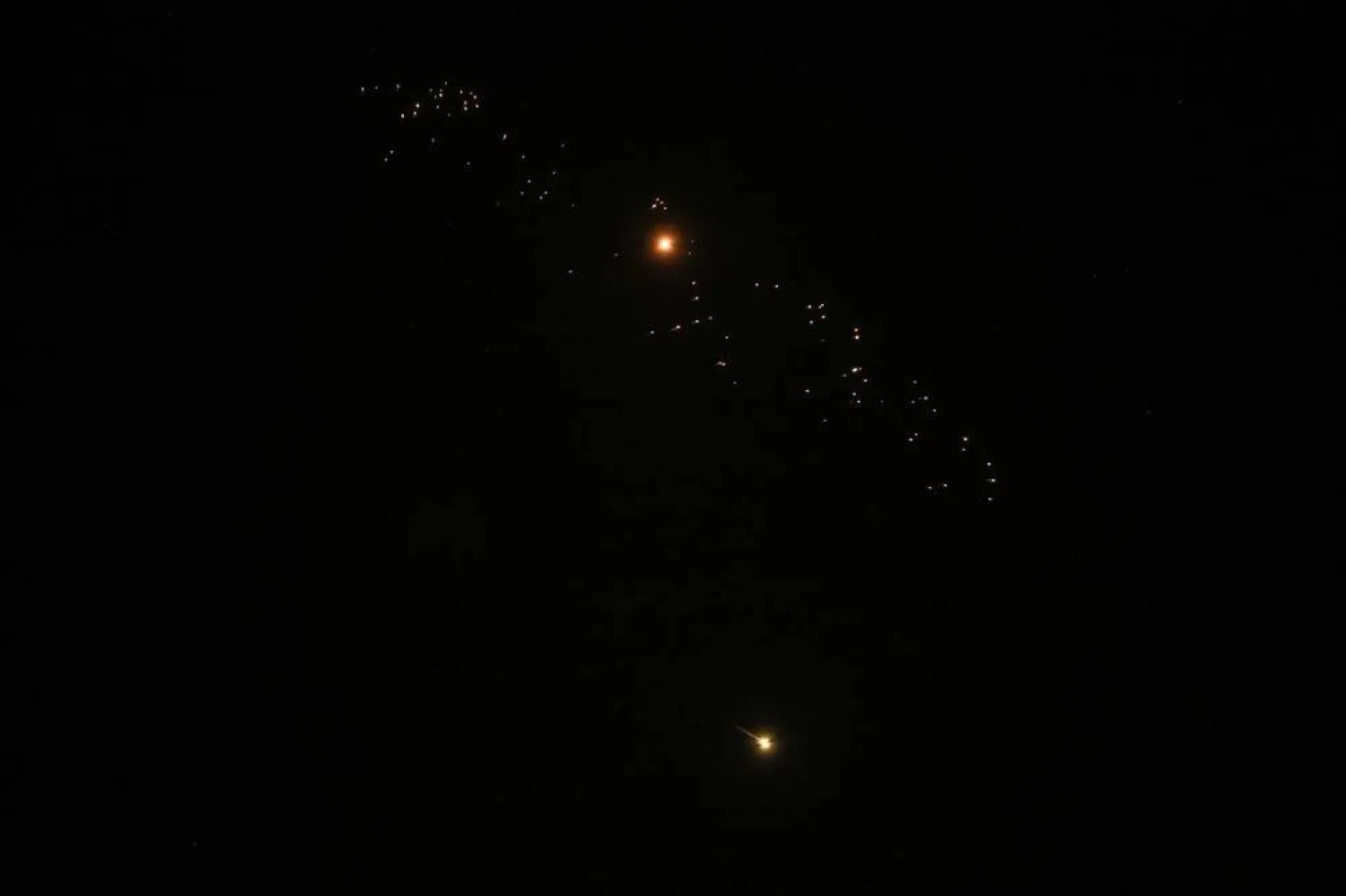
Streaks of fire and light cross the night sky as an Israeli interceptor strikes an Iranian missile amid the US-Israeli conflict with Iran, over Tel Aviv, Israel, March 18, 2026. (Reuters)
TT
TT
Jordan Says 240 Missiles, Drones Fired at Kingdom Since Start of Middle East War
Streaks of fire and light cross the night sky as an Israeli interceptor strikes an Iranian missile amid the US-Israeli conflict with Iran, over Tel Aviv, Israel, March 18, 2026. (Reuters)
The Jordanian army said on Saturday that 240 missiles and drones had targeted the kingdom since the Middle East war began last month, most of which were intercepted.
"The total number of missiles and drones fired towards the kingdom since the start of the war has reached 240," the army said in a statement.
"The Royal Air Force successfully intercepted and destroyed 222 missiles and drones, while 18 missiles and drones were not intercepted by the air defenses," it added.
The military's media office, meanwhile, said 36 missiles and drones had targeted the kingdom over the past week.
"Fourteen missiles and 21 drones were intercepted and destroyed, while defenses were unable to thwart one attack," it added.
Since the United States and Israel launched strikes on Iran on February 28, the Islamic republic has struck countries across the region, including Jordan.
Iran has targeted US interests in the region, but attacks have also hit civilian infrastructure.
Jordan has recorded no deaths since the start of the war, with health authorities previously reporting 29 injured, all of whom have since been discharged from hospital.
Sources Reveal to Asharq Al-Awsat How Hamas Identified Suspects in the Assassinations of Haddad and Oudahttps://english.aawsat.com/arab-world/5291336-sources-reveal-asharq-al-awsat-how-hamas-identified-suspects-assassinations
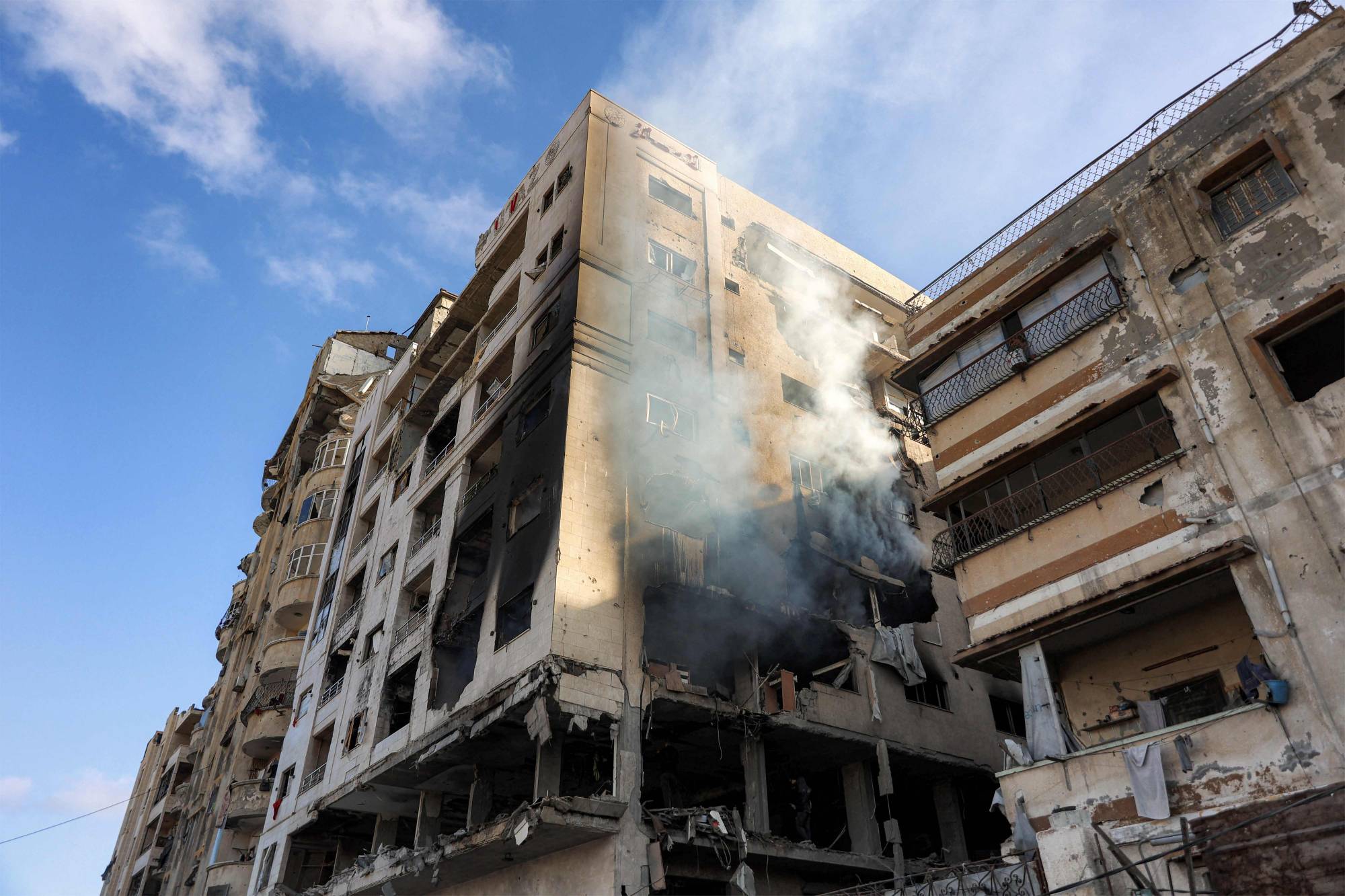
Palestinians inspect the site of a destroyed building as smoke billows following an Israeli airstrike in the Al Rimal neighborhood of Gaza City, Gaza Strip, 15 May 2026 EPA/MOHAMMED SABER
Sources Reveal to Asharq Al-Awsat How Hamas Identified Suspects in the Assassinations of Haddad and Ouda
Palestinians inspect the site of a destroyed building as smoke billows following an Israeli airstrike in the Al Rimal neighborhood of Gaza City, Gaza Strip, 15 May 2026 EPA/MOHAMMED SABER
The announcement by security bodies affiliated with Hamas in Gaza that they had executed a Palestinian convicted of "collaborating" in the killing of the late Izz al-Din Haddad, former commander of the Izz al-Din al-Qassam Brigades, the movement's armed wing, drew attention inside and outside Gaza. The announcement came nearly two months after Israel killed Haddad and his successor, Mohammed Ouda, in separate strikes less than two weeks apart.
Hamas sources told Asharq Al-Awsat some details of how suspects in the killings of Haddad and Ouda were identified, revealing that the movement's security services are preparing to announce another execution involving a second individual accused of providing information that helped facilitate Ouda's assassination.
Although a ceasefire was supposed to have taken effect in Gaza last October, Israel has continued to kill members and senior figures of Hamas and the Qassam Brigades.
A statement issued Wednesday evening by the so-called "Resistance Security" in Gaza said it had executed an individual identified only by the initials "M.M." after completing what it described as all "revolutionary procedures." The statement said the man had been convicted of collaborating with Israeli intelligence and providing information that led to several attacks resulting in the deaths of Palestinians, including leaders of armed factions, most recently Haddad.
Two Hamas sources, one with field knowledge and the other from the movement's security apparatus, separately described to Asharq Al-Awsat how the suspect was apprehended.
Went to the Hospital to Confirm Victims' Identities
The field source said the suspect was arrested immediately after Haddad's assassination on May 15, 2026, at the scene of the attack after being observed communicating with an Israeli intelligence officer.
The security source, however, said the suspect was arrested the following day after he was spotted at the attack site. The source said he was also seen at Al-Shifa Hospital on the day of the strike to verify the identities of those killed and wounded. He allegedly returned to the hospital the next day, searching the buildings for resistance members who had been injured in earlier airstrikes.
Both sources claimed the suspect confessed immediately after his arrest to collaborating with Israeli intelligence, which they said had recruited him to monitor several locations linked to the Haddad family. They said he admitted moving between those locations and being present at the scene after Haddad, his wife and his daughter were targeted while traveling in a vehicle on Al-Wahda Street east of Gaza City.
According to the security source, the 47-year-old suspect also confessed to providing information that contributed to the killings of around 30 fighters from the Qassam Brigades and other armed factions, most of them from the Sheikh Radwan Battalion. The source added that surveillance equipment and devices used to track entry and exit routes were found in his possession when he was arrested at Al-Shifa Hospital.
Smoke billows from a residential building that was hit by an Israeli strike the previous day in the Rimal neighbourhood of Gaza City on May 16, 2026.(Photo by Omar AL-QATTAA / AFP)
Intensive Surveillance of Mohammed Ouda's Wife
The two sources said Hamas is continuing efforts to track down and arrest individuals it describes as collaborators.
The security source said another suspect was arrested two days after the killing of Mohammed Ouda, who had assumed command of the Qassam Brigades' General Staff following Haddad's death before being killed by Israel on May 26.
The source said the detainee in the Ouda case was not a Hamas member and would also be executed after all "revolutionary procedures" had been completed.
According to sources in Gaza, the term "revolutionary procedures" refers to informing the suspect's family, the families of those allegedly killed as a result of information he provided, and the armed factions of the investigation's findings.
The Hamas security source said the suspect in Ouda's assassination admitted collaborating with Israeli intelligence and contributing to the killing of several prominent field operatives, in addition to his alleged role in Ouda's assassination. According to the source, the suspect's Shin Bet handler provided him with information related to the Haddad family's identity and whereabouts and specifically instructed him to monitor Ouda's wife.
The field source added that on the day Ouda was killed, his wife was under close surveillance by the alleged collaborator as she prepared the evening meal for the Day of Arafah fast. She reportedly left the family's newly rented apartment to prepare the meal while Ouda was on his way to join them. He later arrived and ate with his family before the apartment was struck, after the detained suspect allegedly confirmed to his handlers that they were all inside.
The source said Hamas security personnel had become suspicious of several individuals in the vicinity of the apartment targeted in the strike on Ouda and monitored the suspect for some time before arresting him.
According to the two sources, modern communication devices were seized from both suspects accused in the assassinations of Haddad and Ouda.
During the war and after the ceasefire, Hamas security services have executed several people convicted of collaborating with Israel in connection with a series of assassinations targeting senior leaders, including the late Qassam Brigades commander Mohammed Deif. According to the sources, some of those executed were Hamas members, although most were not affiliated with the movement.
Bomb Blast at Damascus Cafe Kills Fivehttps://english.aawsat.com/arab-world/5291322-bomb-blast-damascus-cafe-kills-five
A police vehicle near the site of what Syrian state media reported was a blast at a cafe in central Damascus, Syria, July 2, 2026. REUTERS/Yamaam Al Shaar
A police vehicle near the site of what Syrian state media reported was a blast at a cafe in central Damascus, Syria, July 2, 2026. REUTERS/Yamaam Al Shaar
A bomb went off at a cafe in central Damascus on Thursday, killing at least five people and wounding 16, Syrian authorities said.
The blast took place near the capital's Palace of Justice, a key government building, sparking scenes of panic in the busy area.
An AFP correspondent saw ambulances weaving their way through traffic with their sirens blaring as they headed to the site, and security forces cordoned off the area of the blast.
"The explosion that occurred in a cafe near the Palace of Justice in Damascus resulted from an explosive device planted in the location," state television said, after earlier reporting that authorities were seeking to determine the source of the blast.
Nour Khayyat, 40, who owns a shop selling batteries for solar panels near the site of the explosion, told AFP that "at about 3:00 pm (1200 GMT), I heard a powerful blast and the storefront shook".
"People rushed to the cafe and called ambulances," he added.
Mohammed al-Zahabi, the owner of a glasses shop next to the targeted cafe, was trembling as he told AFP that "after the blast, I felt strong pressure, and the whole place shook".
"I ran to the place and saw people lying on the floor with blood pooled around them everywhere," he added, saying the scenes recalled the blasts that Damascus experienced during the nearly 14-year civil war.
Damascus has been the site of multiple attacks and incidents since the new authorities took over following the toppling of longtime ruler Bashar al-Assad in December 2024.
The deadliest came in June 2025, when an attack on a Damascus church killed 25 people.
The suicide attack was later claimed by an Islamist group, while the authorities blamed it on the ISIS.
Sudanese Army Says It Shot Down Hostile Strategic Drone in White Nile Statehttps://english.aawsat.com/arab-world/5291309-sudanese-army-says-it-shot-down-hostile-strategic-drone-white-nile-state
Sudanese army soldiers parade in the streets of eastern Sudan's city of Gedaref on August 14, 2025 to mark the 71st anniversary of the formation of the Sudanese army. war. (Photo by AFP)
Sudanese Army Says It Shot Down Hostile Strategic Drone in White Nile State
Sudanese army soldiers parade in the streets of eastern Sudan's city of Gedaref on August 14, 2025 to mark the 71st anniversary of the formation of the Sudanese army. war. (Photo by AFP)
The Sudanese army announced on Thursday that it had shot down a hostile Chinese-made FH-95 strategic drone over the town of Tendelti in White Nile State, marking the second drone of the same model that the military says it has downed during the conflict.
In a statement posted on its official Facebook page, the Armed Forces' Office of the Official Spokesperson said Sudan's air defenses had successfully intercepted and shot down a hostile FH-95 strategic drone over the skies of Tendelti.
Tendelti is located in White Nile State in southern Sudan and borders North Kordofan State to the west, where the Rapid Support Forces (RSF) have intensified drone strikes on the state capital, El Obeid.
The RSF had not issued an official response to the army's announcement at the time of publication.
Several cities across central and western Sudan have recently witnessed a marked escalation in reciprocal drone attacks between the Sudanese army and the RSF.
In recent weeks, Tendelti has been repeatedly targeted in attacks attributed to the RSF. Similar strikes have also hit the cities of Rabak and Kosti in White Nile State, as well as Kadugli and Dilling in South Kordofan State.
Since the outbreak of the war in Sudan in April 2023, both sides have significantly expanded their use of drones, with attacks reaching cities far from the front lines. The increased use of unmanned aircraft has contributed to higher civilian casualties and further worsening the humanitarian situation in the affected areas.
لم تشترك بعد
انشئ حساباً خاصاً بك لتحصل على أخبار مخصصة لك ولتتمتع بخاصية حفظ المقالات وتتلقى نشراتنا البريدية المتنوعة