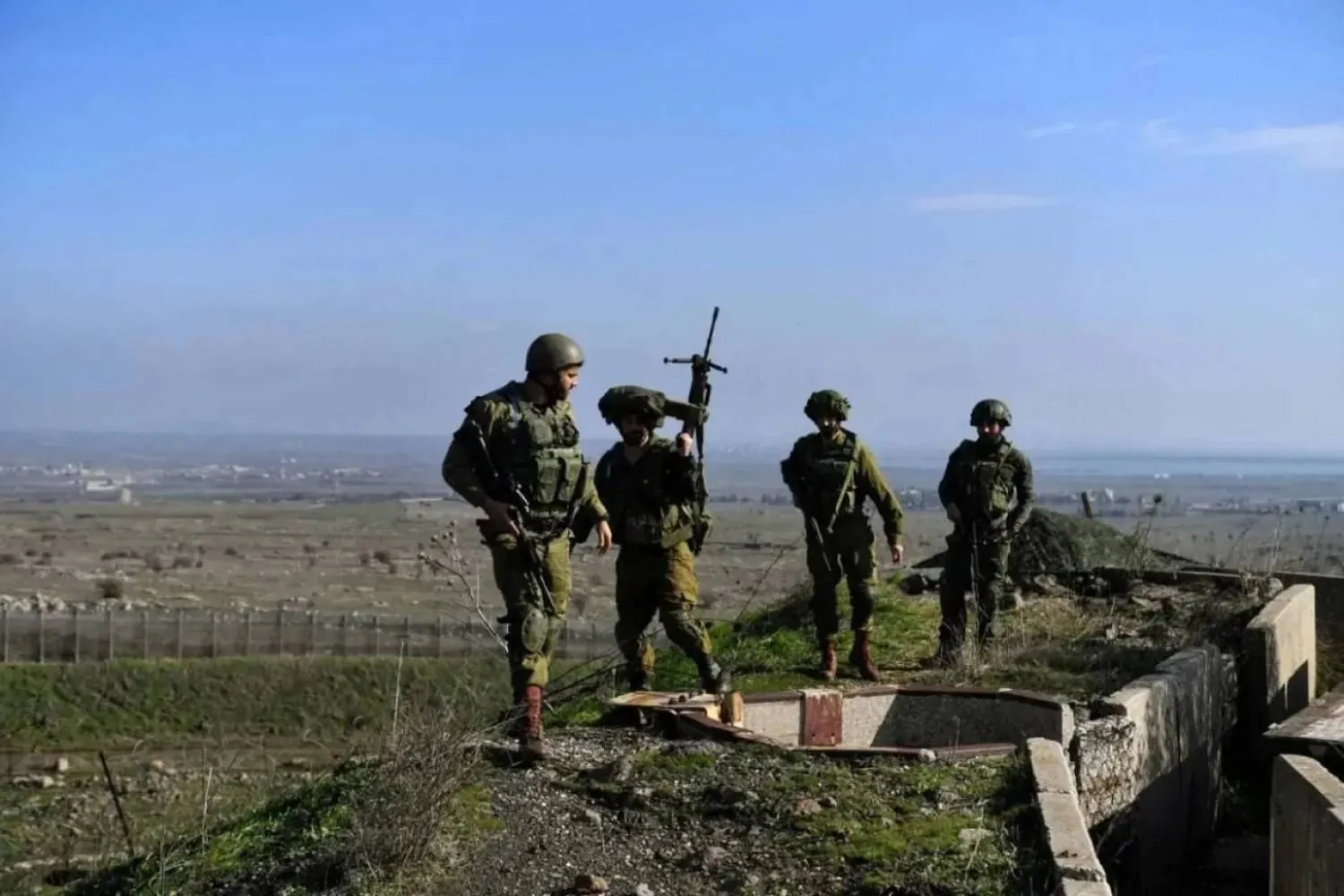

Damascus is treading carefully to avoid being pulled into the region’s escalating tensions, but Syrian-Israeli friction has resurfaced after Israel struck Syrian army sites and military infrastructure, claiming it was acting to “protect Druze citizens in Sweida.”
The attacks drew condemnations from Saudi Arabia and other Arab and Muslim states.
Sources close to the Syrian Defense Ministry told Asharq Al-Awsat that Israel is seeking to provoke Syria and drag it into war by stoking tensions in Sweida, which has seen a string of recent security incidents.
Syrian authorities said they had foiled an attempt to smuggle weapons and ammunition intended for hostile acts.
Israel carried out a series of strikes on Friday targeting Syrian army positions and infrastructure in southern Syria.
Syria TV, citing local sources, said one strike hit the former Transport Battalion site, now used as the finance headquarters of the 40th Division, opposite Brigade 12 in the city. The attack caused material damage.
Israeli Defense Minister Israel Katz threatened to hit Syria with greater force if necessary, saying he and Prime Minister Benjamin Netanyahu had instructed the military to strike Syrian government sites.
The Israeli military said it struck Syrian army weapons depots overnight and would not allow harm to come to the Druze in Syria, adding it would continue to act to protect them.
Syria’s Foreign Ministry condemned the strikes, calling them a new aggression based on flimsy pretexts and fabricated justifications, and a continuation of Israel’s escalation policy.
Saudi Arabia, in a Foreign Ministry statement, condemned “the blatant Israeli attack” on military infrastructure in southern Syria as a “flagrant violation of international law,” and urged the international community to act.
Egypt, Jordan, Qatar, Kuwait and the Gulf Cooperation Council also condemned the raids, stressing Syria’s sovereignty and calling for an end to such attacks.
Türkiye described the strikes as a “dangerous escalation” that must be stopped, urging adherence to the 1974 disengagement agreement, which established a ceasefire and separation of forces in the Golan under UN supervision.
The Arab League said the attack fits within “Israeli plans to destabilize Syria” and undermine regional peace and security.
Arab League Secretary-General Ahmed Aboul Gheit said the strikes were not only a “blatant violation” of Syria’s sovereignty but also aimed at dragging the region into broader confrontation.
He urged the UN Security Council to act to halt repeated attacks on Syrian territory and ensure respect for international law.
Unrest in Sweida
Sources close to the Syrian Defense Ministry said Israel is working to widen the regional war and pull Syria into it, pointing to what they described as a parallel disinformation campaign about an Israeli ground advance and false reports of rockets launched from Syrian territory toward the occupied Golan.
They said Syria remains intent on avoiding conflict unless required to ward off a greater danger, and that any such move would come under Arab and international political cover.
President Ahmed al-Sharaa said after Eid al-Fitr prayers on Friday that “what is happening now is a major event, rare in history,” adding that Syria is acting with precision to avoid being drawn into conflict.
Sweida province has seen mounting security tensions in recent days. Local media said Syrian internal security forces foiled an infiltration attempt by members of the National Guard in western Sweida, triggering clashes that killed four and led to the arrest of seven others.
The National Guard, formed in Sweida in August 2025, is a coalition of local armed factions under Sheikh Hikmat al-Hijri, opposed to the Syrian authorities that overthrew Bashar al-Assad.
In a statement on Friday, Syria’s Interior Ministry said special units carried out a “precise security operation” in Sweida, thwarting an attempt to smuggle weapons and ammunition for “hostile acts” by outlaw groups on the Bosra al-Sham-Bakka road.
The ministry said the operation followed the detection of infiltrators near internal security checkpoints and suspicious movements of hostile vehicles, as part of a “criminal plot” to undermine stability.
Clashes killed four members of the group, two were arrested, and weapons and ammunition were seized. The ministry said the operation is part of ongoing efforts to pursue “outlaw gangs” and reinforce security across the province.