


Policy Resilience and Transport Lifelines: Saudi Arabia’s Shield Against the Hormuz Crisis

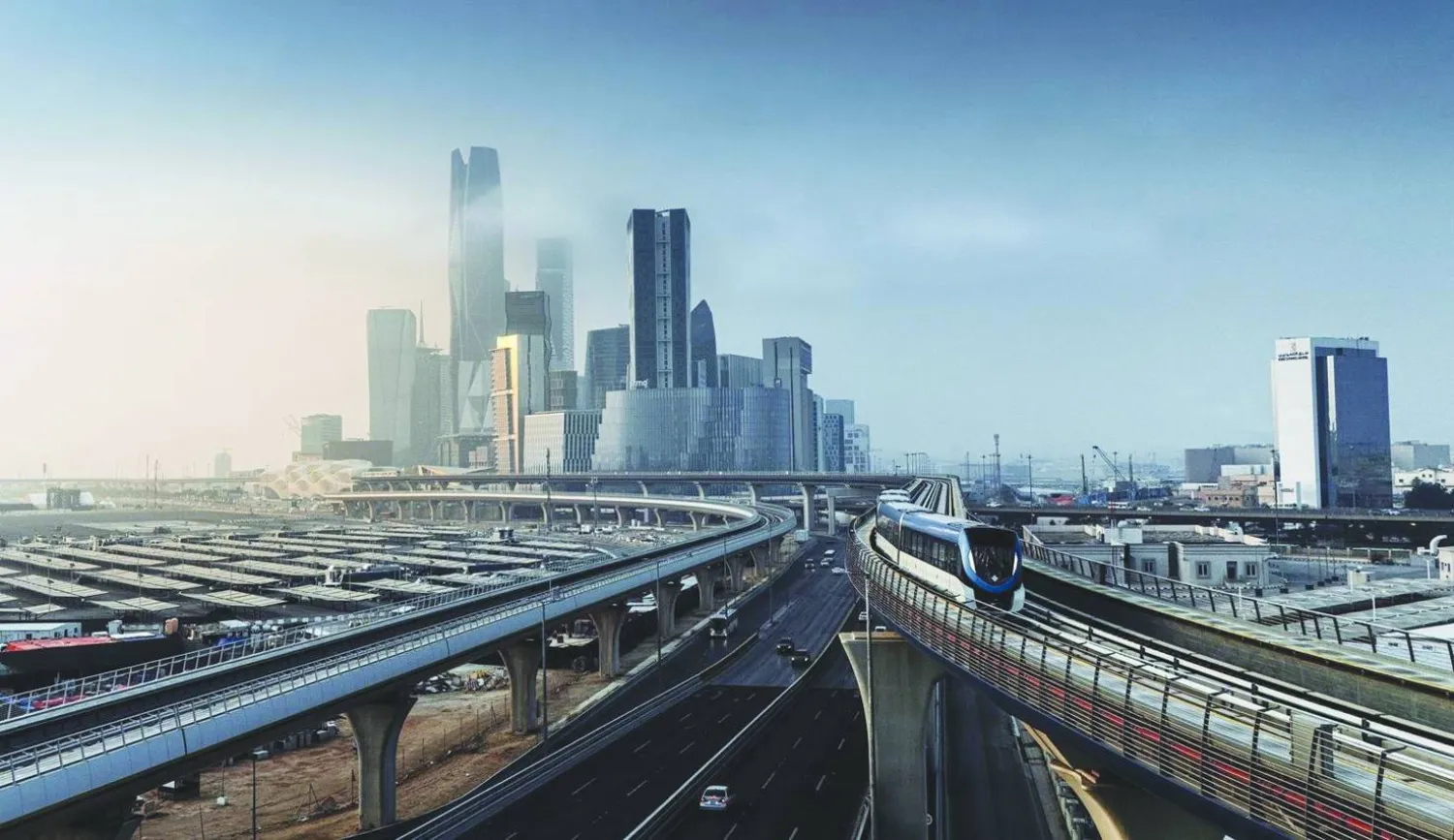
Saudi Arabia's capital Riyadh (SPA)
TT

Policy Resilience and Transport Lifelines: Saudi Arabia’s Shield Against the Hormuz Crisis

Saudi Arabia's capital Riyadh (SPA)

As the world grapples with unprecedented turbulence fueled by the US-Israeli-Iranian confrontation, and as global supply chains reel from the closure of the Strait of Hormuz, the Saudi economy has emerged as an exceptional model of resilience. This stability is no coincidence; rather, it is the fruit of proactive policies and early investments in diversifying transport arteries and logistics. This strategic integration has allowed the Kingdom to transform its geography from a point of dependency on threatened waterways into an impregnable economic fortress. Through land, sea, and air routes that have become "alternative lifelines," the Kingdom has not only ensured the flow of energy but also secured the region’s needs for food and medicine, cementing its status as a vital logistical hub amidst the surging waves of conflict.

Economic experts believe that the efficacy of Saudi economic policies, coupled with the cultivation of inherent strengths and diverse transport and export options, has contributed significantly to the economy's ability to withstand the repercussions of the ongoing regional conflict.

Policy Efficacy and Strategic Strength

In this context, Fadl bin Saad Al-Buainain, a member of the Shura Council and economic consultant, affirmed that the Saudi economy is characterized by strength, durability, and sustainability. He noted its capacity to adapt to emergency shifts by leveraging its fundamental assets, thereby mitigating the impact of the current crisis despite its high risks.

Al-Buainain emphasized that the sheer depth and scale of the Saudi economy allow it to absorb sudden shocks and even convert them into opportunities to address any emerging shortages. He pointed out that the strategic vision for the oil sector and "qualitative hedging" to ensure supply security have created critical alternatives for oil exports following the closure of the Strait of Hormuz.

According to Al-Buainain, the sustainability of exports has bolstered the reliability of Saudi Aramco and maintained government revenues, while maximizing gains from high oil prices to compensate for any reduction in exported volumes.
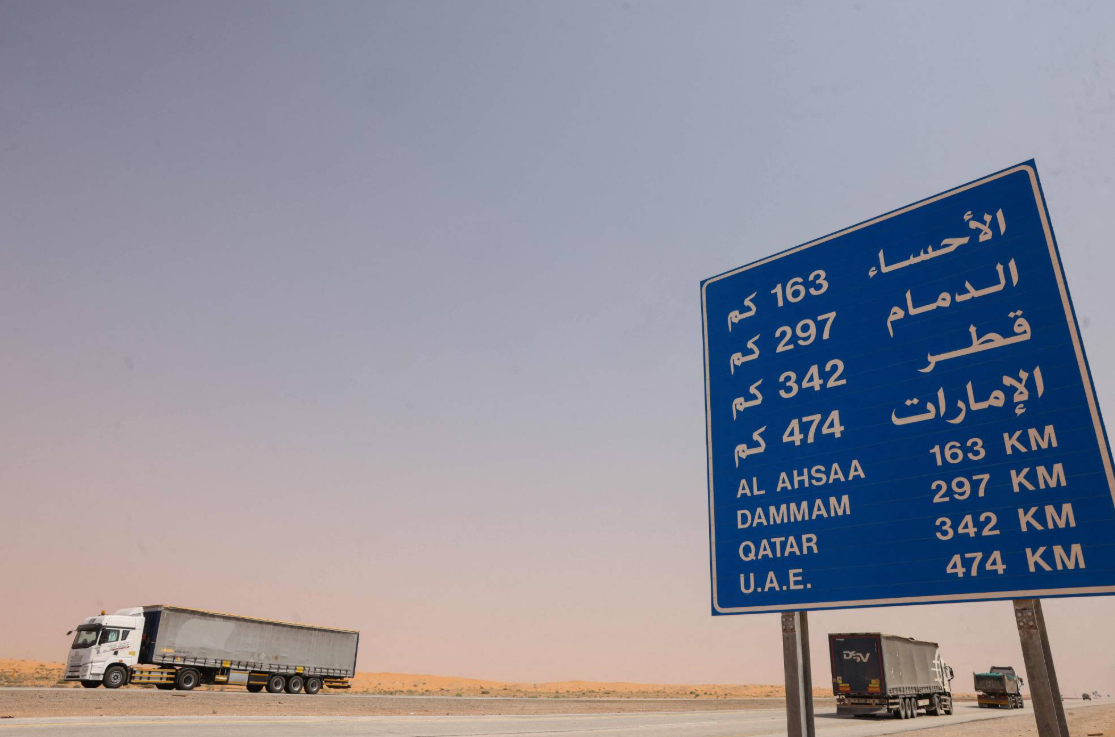
Trucks on the highway between Riyadh and Al-Ahsa, about 200 kilometers east of the Saudi capital (AFP)

The Pivotal Role of "Vision 2030"

Al-Buainain underscored the fundamental role of reforms stemming from Saudi Vision 2030 in enhancing economic diversification and strategic hedging across financial and oil sectors. He noted that prudent management, directly overseen by Crown Prince Mohammed bin Salman, served as the first line of defense against the crisis.

He cited S&P Global Ratings' affirmation of the Kingdom’s "A+" credit rating with a "Stable" outlook as the "strongest neutral evidence of economic durability and efficiency." He also highlighted the defensive aspect, stating: "The readiness of the military sectors was the most critical factor in protecting oil installations and achieving economic security," noting that the Kingdom’s Red Sea coastline has been vital in sustaining trade lines and protecting regional commerce.

A Logistical Platform and Humanitarian Responsibility

According to Al-Buainain, the Kingdom has transformed into a global logistics platform, opening its airports and ports as alternatives for neighboring countries. This has guaranteed the sustainability of food and medicine supply chains, providing much-needed stability to Gulf markets. In the energy sector, Saudi Arabia continued to meet customer demands and even offered additional barrels on the spot market, utilizing the East-West Pipeline and overseas storage reserves.

"In the transport and logistics sector, the Kingdom successfully managed the situation of stranded individuals, returning them to their home countries and ensuring the operation of Gulf airlines by opening alternative airports," Al-Buainain added.

He further revealed a massive humanitarian and logistical role played by Saudi ports in the Eastern Province, which provided food, medicine, and fuel to approximately 3,200 stranded ships and 40,000 sailors in the Arabian Gulf following Iranian threats to maritime safety. He stressed that "the Kingdom's humanitarian efforts do not waver, even under the darkest circumstances and in the face of barbaric acts that violate international law."

Stability in the Face of Crisis

For his part, Engineer Abdullah Al-Mobty, Chairman of the Abha Chamber and former Head of the Federation of Saudi Chambers, told Asharq Al-Awsat that the nature of the Saudi economy has made it resilient against the fallout of the US-Israeli-Iranian confrontation. He noted that the Kingdom has shown remarkable stability throughout historical crises thanks to a "clear vision set by the leadership to strengthen the economy through wise methodologies and plans."

Al-Mobty attributed this resilience to Riyadh’s role as a "reliable strategic depth," maintaining the best possible economic position even during a war of this magnitude. He noted that Saudi Arabia views proactive planning and foresight as an integral part of its commitment to the nation and its citizens' interests.
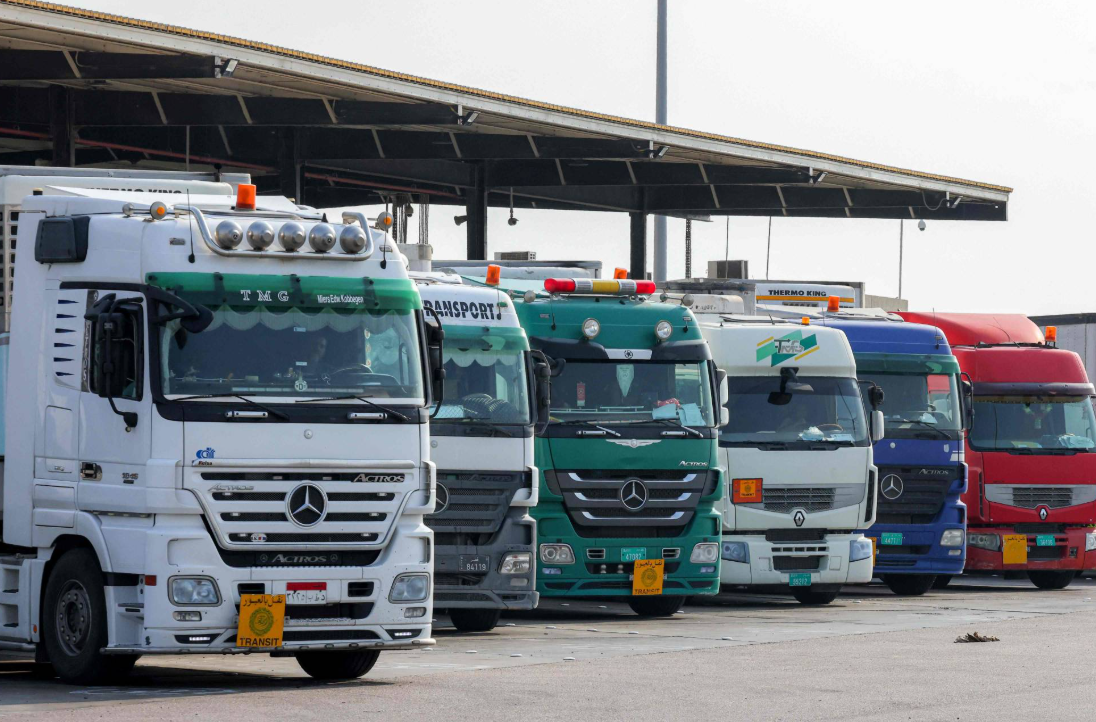
Trucks loaded with goods wait to cross into Qatar at the Salwa border crossing in eastern Saudi Arabia (AFP)

Land Transport Solutions

Al-Mobty emphasized that the Kingdom has never been an advocate of war; instead, its vision focused on creating strategic alternatives. He pointed to the Kingdom's ability to bypass the Strait of Hormuz by pumping crude via the Red Sea and securing the delivery of essential supplies to Gulf states through existing infrastructure.

"One of the immediate results we witnessed was the efficiency of the Saudi land transport sector," Al-Mobty stated. "It responded instantly and with massive capacity to cover the needs of the UAE and neighboring countries, both in passenger transport and securing supply chains. This proved the Kingdom’s success in turning its geographical location into an economic fortress for the region."

The Capacity to Absorb Shocks

Abdullah bin Zaid Al-Mulihi, CEO of Saudi Techno Excellence Company, stressed that the effectiveness of the Kingdom's plans in managing economic, trade, and investment sectors has granted it an exceptional ability to face the massive challenges currently paralyzing global and regional economies.

Al-Mulihi explained to Asharq Al-Awsat that Saudi economic policies are designed with high flexibility to absorb crises, citing the Kingdom's historical resilience during the 2008 global financial crisis. He noted that policies promoting diversification and advanced infrastructure, including land and sea ports, have optimized the Kingdom's unique geography.

"The multiplicity of transport and export options is what achieved this strategic resilience," Al-Mulihi said. He added that the Saudi land transport sector has become the "driving engine" of the region's economy, experiencing a strong boom as it secures the movement of goods and people, particularly to the UAE, reinforcing the sector as a primary pillar in confronting the current crisis.



World Bank Projects Lebanon Economy to Contract by 6.4% Due to War

People inspect a damaged building after an Israeli airstrike on the village of Ansar, southern Lebanon, 15 August 2026. (EPA)
TT

World Bank Projects Lebanon Economy to Contract by 6.4% Due to War

People inspect a damaged building after an Israeli airstrike on the village of Ansar, southern Lebanon, 15 August 2026. (EPA)

The World Bank on Friday projected that Lebanon's economy would contract by 6.4 percent this year, as the latest Israel-Hezbollah war derailed the country's efforts at recovery.

Lebanon has been dealing with an unprecedented financial crisis since 2019 and was still reeling from the 2024 Israel-Hezbollah war when the Iran-backed group drew it into the Middle East conflict by attacking Israel in March.

Israel responded with a heavy air campaign and ground invasion that Lebanese authorities say have killed more than 4,300 people.

Due to the war, "real GDP is projected to contract by 6.4 percent in 2026, reflecting the collapse in tourism, weaker consumption, disrupted supply chains, heightened insecurity, and prolonged displacement," the World Bank said in a report.

Inflation is also expected to rise to 17.5 percent this year, according to the report.

The World Bank said Lebanon's economy had strengthened before the latest conflict, with an estimated real GDP growth of 4.2 percent in 2025, "the fastest since the onset of the 2019 financial crisis".

"Advancing reforms -- particularly on banking sector restructuring and fiscal management -- will be critical to restoring confidence, protecting stability, and mobilizing the financing needed for reconstruction and recovery," Dahlia Khalifa, the World Bank's Middle East director, said.

The international community has been demanding that Lebanese authorities enact financial reforms in order to secure much-needed economic aid.

Last week, parliament passed amendments to a bank resolution law aimed at restructuring troubled banks and addressing the country's banking crisis.

The International Monetary Fund welcomed the law, describing it as "a very good step that reflects Lebanon's commitment to aligning its legislation with the best international practices".

Lebanon has been in discussions with the IMF, which said it would resume its meetings in Beirut next month.


Tunisia Olive Oil Exports Surge 55%, Bringing in $1.6 billion

Tunisian olive oil producer, Mustapha Mtiraoui, displays olives to be pressed at his oil mill in Kairouan, Tunisia February 24, 2024. REUTERS/Jihed Abidellaoui
TT

Tunisia Olive Oil Exports Surge 55%, Bringing in $1.6 billion

Tunisian olive oil producer, Mustapha Mtiraoui, displays olives to be pressed at his oil mill in Kairouan, Tunisia February 24, 2024. REUTERS/Jihed Abidellaoui

Tunisia's olive oil exports surged 55.3% to a record 368,000 metric tons in the first nine months of the 2025/26 season, bringing in $1.6 billion in export revenue, up 44.4% from a year earlier, official data showed on Friday.

The surge in olive oil shipments, a vital source of foreign currency and Tunisia's top agricultural export, will provide a much-needed boost to the country's finances as the government grapples with persistent economic and fiscal pressure.

The jump in exports was driven by strong global demand during the first nine months of the season, which began in November.

Extra virgin olive oil accounted for 83.6% of total shipments, the National Observatory of Agriculture said, Reuters reported.

The European Union remained the biggest destination, taking 57.1% of Tunisian olive oil exports, while North America accounted for 24%. More than 70 countries imported Tunisian oil during the period.

Exports to other markets included Saudi Arabia, which took 4.6%, Jordan with 3.1% and African markets at 3.8%, with Egypt accounting for 3.3%.

Bottled olive oil exports rose 50.8% to 51,500 tons, but bulk oil still accounted for the vast majority of shipments, underscoring Tunisia's challenge in capturing more value from one of its most important export products.


South African Rand Hits Strongest Level since Start of Iran War

South African Rand coins are seen in this illustration picture taken October 28, 2020. REUTERS/Mike Hutchings/Illustration
TT

South African Rand Hits Strongest Level since Start of Iran War

South African Rand coins are seen in this illustration picture taken October 28, 2020. REUTERS/Mike Hutchings/Illustration

The South African rand strengthened on Friday to its strongest level since the United States and Israel launched attacks on Iran on February 28, as rising gold prices and a weaker dollar boosted the commodity-linked currency.

At 1229 GMT, the rand traded at 15.9925 against the dollar , about 0.8% stronger from its previous close.

Gold, one of South Africa's main exports, rose to a more than three-month high on Friday and was on track for a third straight weekly gain.

The precious metal was supported by a weaker dollar and the US Treasury's announcement that it would increase buybacks of longer-dated securities, Reuters reported.

US Treasury Secretary Scott Bessent said he may further increase the government's repurchases of Treasuries. That came after the Treasury said it would double the size of buybacks on longer-dated securities over the next quarter.

The US dollar was set to end a bumpy week lower, making greenback-priced bullion more affordable for buyers overseas.

Like other emerging market currencies, the rand has been at the mercy of global market sentiment, particularly since the start of the Iran war.

On the Johannesburg Stock Exchange, the Top-40 index was last up 2.2%.

South Africa's benchmark 2035 government bond was also firmer in early deals, as the yield fell 0.5 basis points to 8.56%.